
HANDYMAN / TOTTENHAM
Handyman Tottenham.
List the problems.
Decide the next work.
We review which faults affect daily use, which need parts and which depend on another repair. We agree practical tasks with the condition and access understood.
Call line 24/7 · Work and availability confirmed for your address.
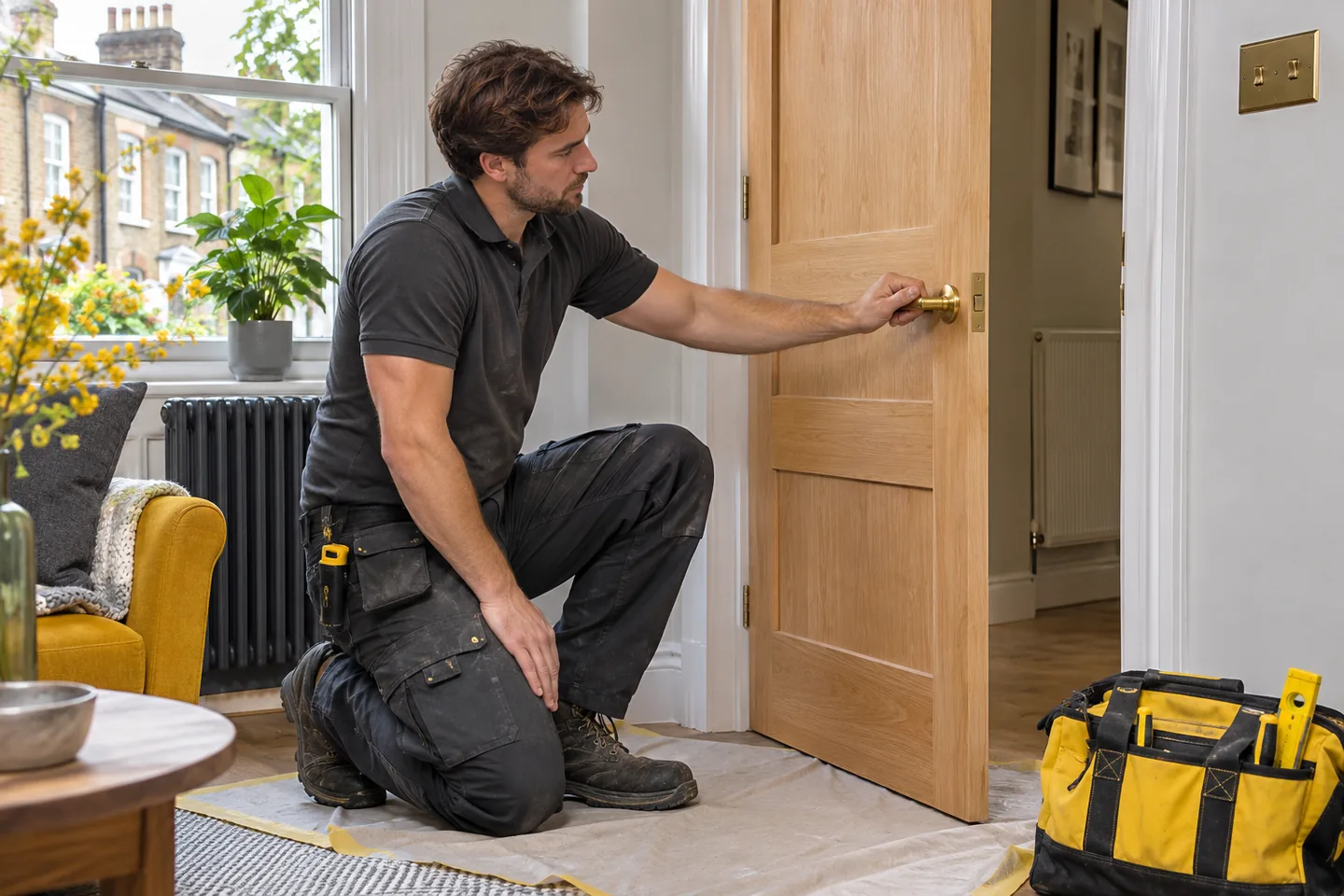
A priority list should still name each fault.
Can we agree priorities before reviewing the whole list?
Tell us which items prevent normal use and include the remaining tasks as well. We discuss the appropriate order with parts, access and trade requirements considered. Priority does not replace assessment, but it helps identify the decisions needed first.
Do you cover every Tottenham address automatically?
We review service availability for the full address and actual work through the enquiry. Tottenham includes different neighbourhood settings, so tell us the entrance and building arrangement. The area label alone does not reserve a visit or establish access.
THE WORK IN YOUR HOME
Start with what the household needs to use normally.
A repair list can feel urgent because several small things no longer work properly. The door handle is loose, the bedroom furniture needs building and a shelf has pulled away. We ask which items affect normal use and which can wait for a part. That makes the enquiry easier to review without pretending every task has the same materials, access or trade requirements.
For Tottenham handyman work, send each fault with its room and any useful photographs. Tell us what has already been tried and who can approve repair decisions. We can discuss the complete list, identify practical dependencies and confirm the available arrangement for the address. A task that needs further inspection or a compatible component remains a specific decision rather than an assumed addition to a general visit.
Useful details for your enquiry
- The fault, room and effect on everyday use.
- Your priorities and any task waiting for a part.
- Previous repairs or changes affecting the item.
- Clear views of the fitting and accessible support.
- Access contact and the person authorising changes.
PLAN THE WORK
Explore the time and labour budget.
Select the task, quantity and visit period. Assembly benchmarks and entered time assumptions stay visible; other repairs need an individual assessment.
Plan your Tottenham repair enquiry
Choose the work, enter quantities and review the assumptions. We confirm the repair, working time and availability before booking.
Assembly benchmarks assume complete product parts, instructions and a clear working area. For other repairs, a known condition does not establish a standard duration.
Compare the assembly work
Published London assembly ranges for one item. These are external planning benchmarks, not our recorded job times or guaranteed completion periods.
Time evidence: published London assembly ranges, checked 3 November 2026. Product, staffing and access differences require assessment. Carrying, missing parts and wall restraint are not automatically included.
Compare labour for the same working time
Comparison uses the selected day and visit period. These are labour categories at equal time, not fixed job prices. One-hour minimum; subsequent half hours. Materials, sourcing time, parking and congestion charges are separate. Rates include taxes. Daytime: handyman 08:00–18:00; plumbing/electrics 08:00–18:00 weekdays and 08:00–17:30 weekends. Outside-daytime availability needs confirming.
What changes the repair decision?
This compares the checks needed for the selected repair, not a scored difficulty or a promised duration.
Loose door hardware needs its fixing and closing function checked.
We look at the handle, plate and surrounding material, then review how the latch engages. A screw can loosen because its hole has worn or because another part of the fitting moves. We ask whether the door must be lifted or pushed unusually to close. That helps distinguish a hardware repair from a wider alignment problem.
Compatible replacement dimensions or suitable local fixing repair are discussed before new holes are made. Specialist door requirements must be considered before alteration. We protect nearby surfaces and check relevant opening and closing after agreed work. Old plate marks or exposed material are explained as finishing matters, with any remaining frame or component issue identified separately.
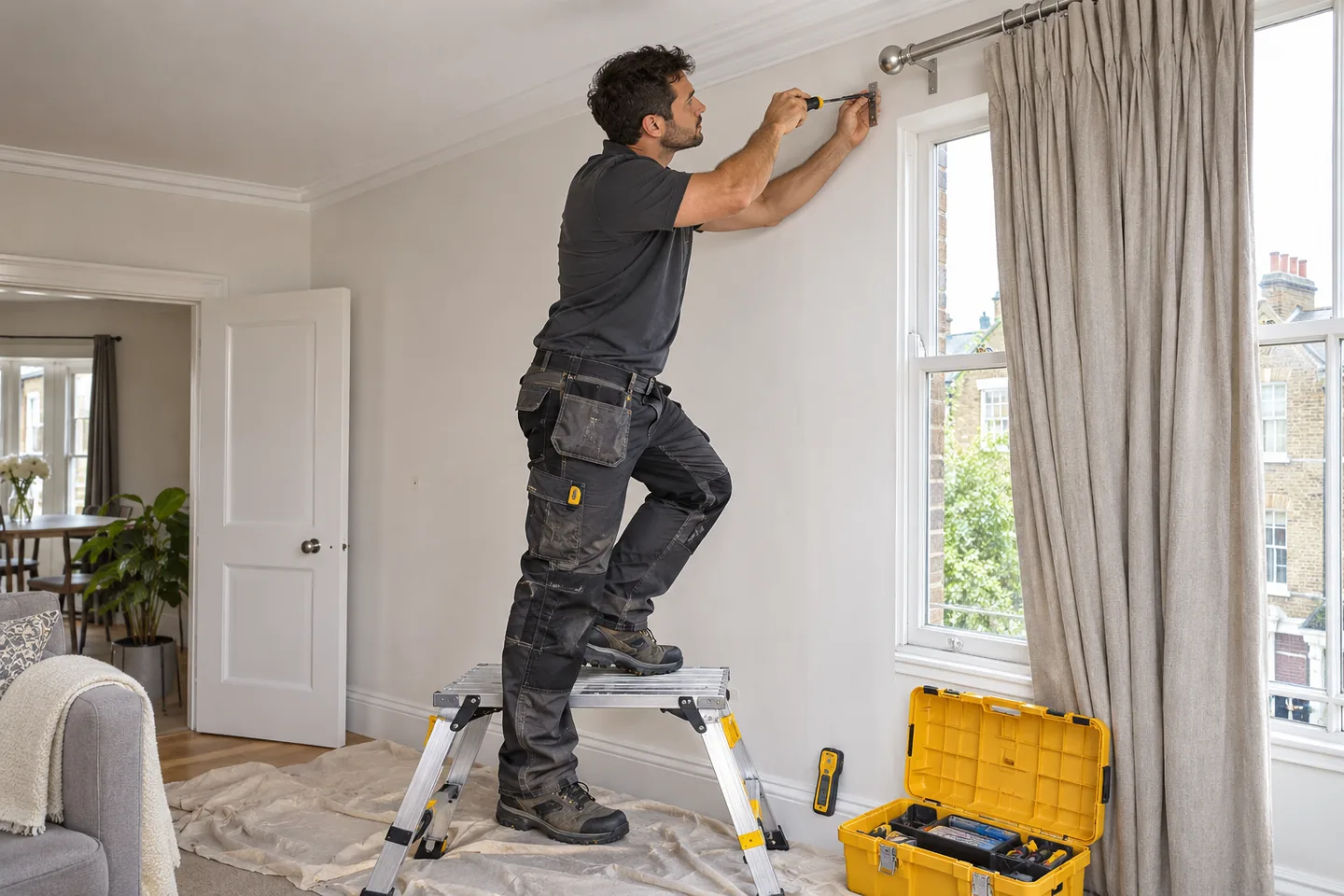
A shelf pulling away needs support assessed before normal loading.
We examine the bracket, fixing holes and accessible background. Tell us what the shelf is expected to carry and whether one connection or the whole arrangement moved. Damaged material may need preparation before reuse, while incompatible hardware may require a different attachment. The item dimensions help describe the arrangement but cannot prove the wall’s capacity.
We agree suitable preparation and position after assessment, using appropriate measuring and detection tools. Uncertainty about concealed features is explained before drilling. We check alignment and accessible connections once fitted and discuss any limit affecting use. Wider decoration around old holes needs its own agreed extent so the practical attachment repair has a clear boundary.
MATCH THE REPAIR
What decision does each priority need?
Use the fault and daily-use effect to prepare the enquiry, then review the practical repair requirements.
6 service options.
| Problem or task | What we inspect | Work to discuss | Related service |
|---|---|---|---|
| Door handle moves | Fixing material and closing action | Repair support or compatible hardware | Odd jobs ↗ |
| Shelf pulls away | Wall damage and intended contents | Assess suitable support before refitting | Hanging wall mounting ↗ |
| Small timber joint loosens | Original construction and material | Agree a suitable local repair | Carpentry services ↗ |
| Bed awaits assembly | Product supports and room | Follow specified connections and check use | Furniture assembly ↗ |
| Basin connection leaks | Pattern, access and isolation | Identify the joint before repair | Plumbing ↗ |
| Bath seal or wall patch fails | Movement, moisture and background | Resolve cause before making-good | Property maintenance ↗ |
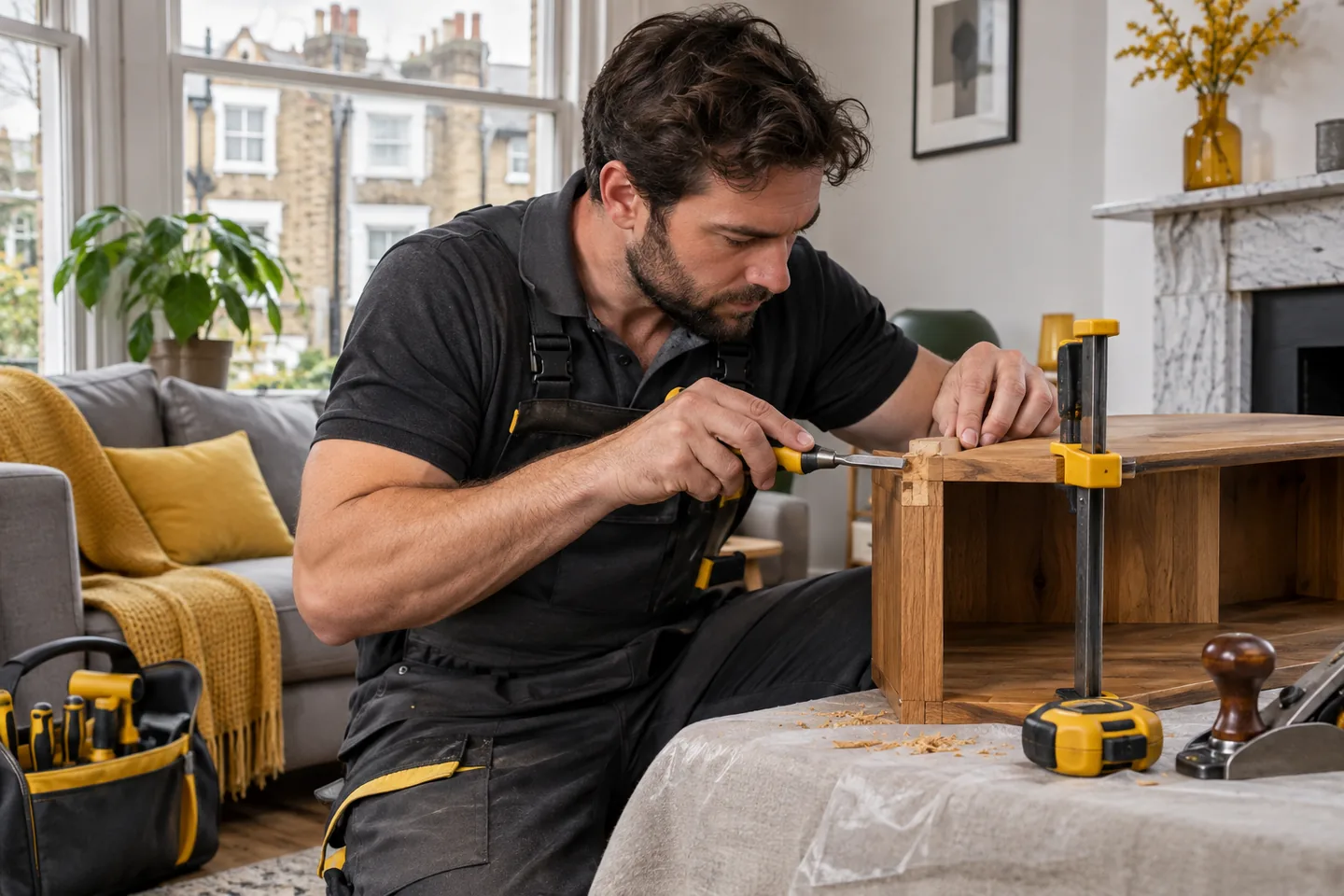
A chair or small timber joint needs its intended connection understood.
We inspect accessible rails, connectors and the material around them before proposing a repair. A loose joint can reflect damage from moving or earlier dismantling. Keep original fittings and explain any adhesive or hardware already added. We need to understand the construction and intended use before deciding whether an appropriate local repair can be established.
Suitable work may require careful component support, compatible fittings or material repair, depending on the item. We agree changes before altering the joint and use appropriate tools for its construction. Alignment and the repaired connection are reviewed afterwards. If damaged material leaves inadequate support for the proposed repair, we explain the replacement decision rather than disguise movement with another visible bracket.

Bed assembly needs the model and room prepared together.
We review the product instructions and identify rails, centre supports and slats before building. Packages need to remain with the correct model, especially where several items have arrived. Tell us about old furniture, available floor space and the route into the room. Carrying or removal requires discussion separately from the assembly task.
We follow the specified connections and check the frame before the mattress is returned. Moving storage features require product-specific attention. Missing supports or damaged components are identified before normal use instead of compensated for with unrelated screws. We explain what remains and check the assembled arrangement in its intended position, keeping room restrictions and product requirements clear.
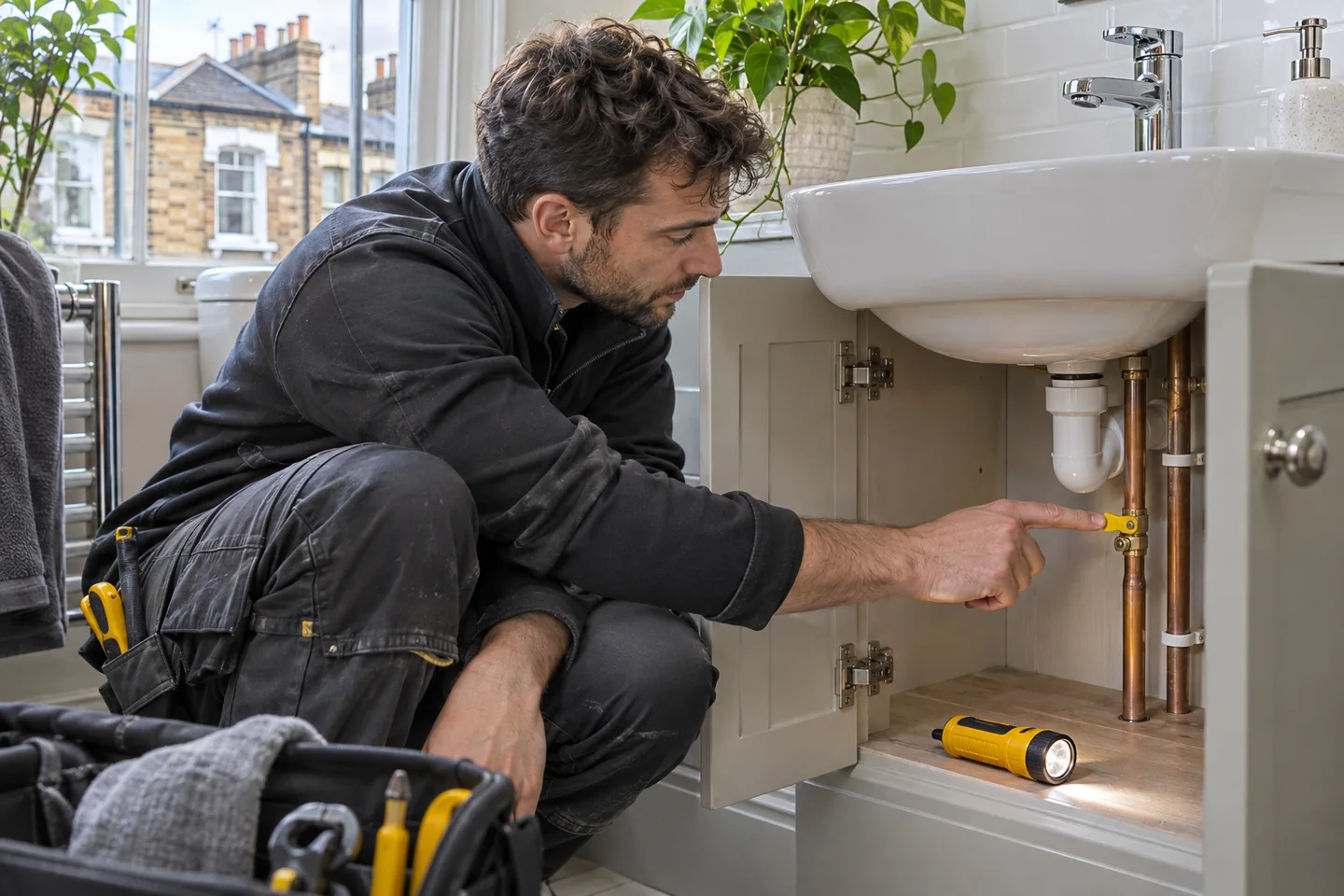
Water beneath a basin needs the operating pattern described.
Tell us whether water appears while the tap runs, when the basin drains or without use. We inspect accessible connections and nearby surfaces and confirm the relevant isolation before supply fittings are disturbed. Stored belongings or fitted panels may affect access, so include a view of the whole working area. The drip point alone may not identify the source.
We protect the cabinet and use suitable tools with compatible seals or components for the assessed joint. We check the repaired fitting under the relevant operating conditions. Continuing moisture, concealed faults and affected cabinet material are explained as separate decisions. A local visible repair should not be mistaken for a full inspection of every pipe serving the property.
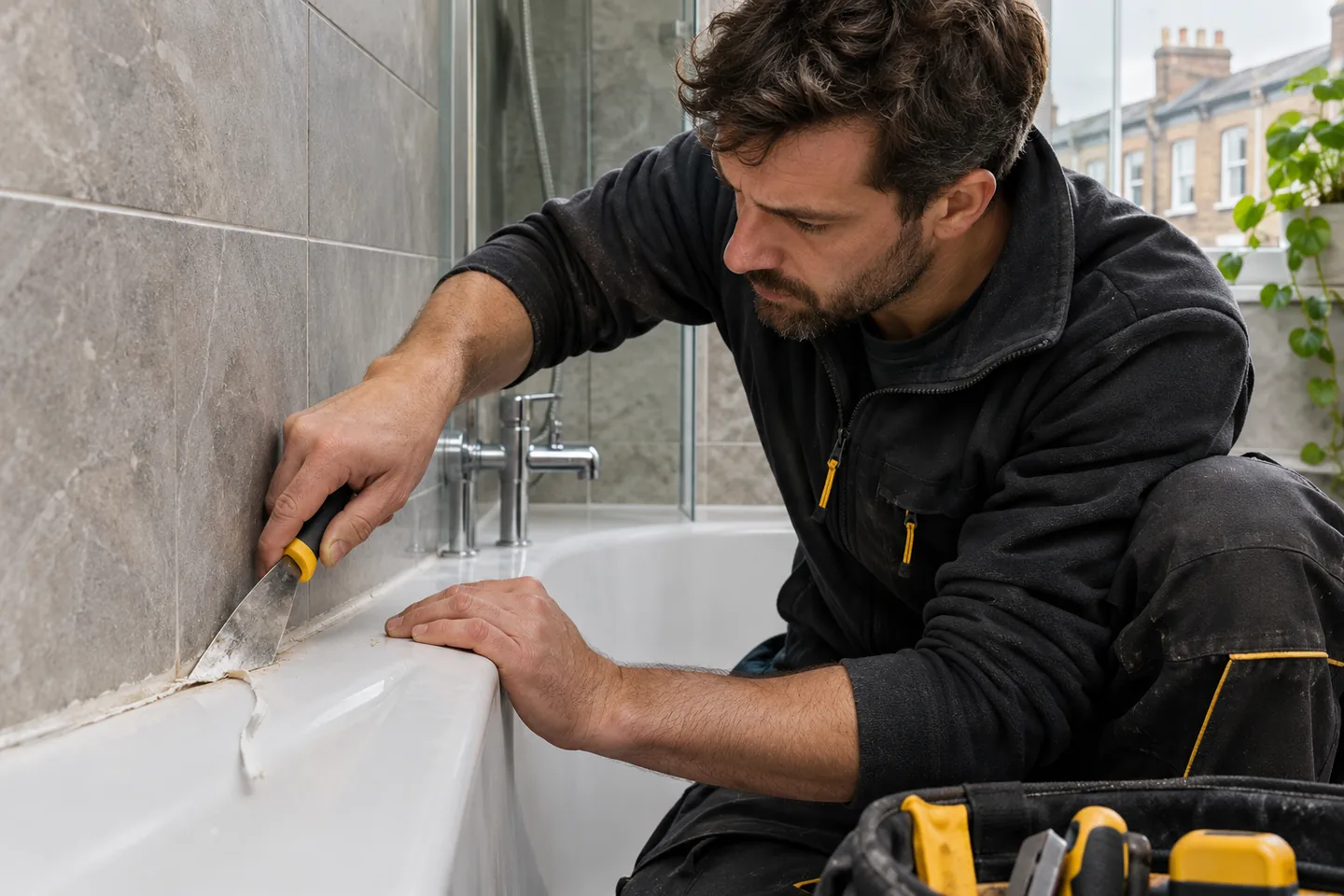
A failed bath edge needs a stable prepared joint.
We examine movement, moisture and adjacent surfaces before agreeing sanitary seal renewal. Repeated failure can require another repair before a replacement product will have suitable contact. Tell us about earlier work and any water appearing elsewhere. We discuss what can be removed and prepared and where plumbing or surface assessment is needed first.
For suitable renewal, we carefully clear old material, clean the accessible joint and follow the selected product’s preparation conditions. We shape the new edge and check continuity. Curing restrictions are explained before wet use resumes. The end of hands-on work does not determine the return-to-use period for every product, so that information forms part of the handover.
THE AREA / THE ACTUAL ADDRESS
Tottenham enquiries benefit from a precise local address.
Haringey’s neighbourhood planning evidence distinguishes places within the wider Tottenham area, including North Tottenham, Tottenham Hale and Seven Sisters with South Tottenham. Those local labels help orientation, but we need the actual property and entrance before discussing access or constraints. Known conservation, listing or management requirements should be supplied where an alteration is proposed.
Tell us the route to the fitting, any shared areas and how unloading or parking will be arranged. Describe the repair priorities and identify the contact who can approve a changed method or replacement part. We review the individual tasks and confirm the available service arrangement for that address. The local context supports preparation, while condition and intended use determine the practical repair decision. Include the room as well as the item on your priority list.
Address information: Haringey Council: neighbourhood planning evidence for Tottenham areas

Local wall damage needs its cause resolved before the finish.
We ask whether the patch follows impact, moisture or a failed fitting. Loose material and an unstable connection can affect preparation. We inspect accessible edges before agreeing removal or filling. Where a new bracket is planned, its support must be assessed separately from the cosmetic repair. A smooth patch alone does not establish an anchor position.
We protect immediate surfaces and use preparation products suited to the background and intended finish. Drying requirements and the repaired area are explained before decoration. Colour or texture matching can need a wider paint arrangement, particularly across older finishes. We discuss that extent instead of imply that every local repair automatically includes an invisible whole-wall result.

Priorities need a clear completion and outstanding-work review.
We return to the original list and check the relevant operation for each agreed task. A door should close as arranged, a drawer should travel and a repaired connection should have appropriate support. We identify work waiting for a part, additional assessment or approval. The household should not need to infer completion from whether an item was touched during the visit.
We explain care, curing and any use restriction, together with remaining decoration or material work. Tell us who should receive those details when another person manages the property. Packaging and larger waste need an agreed arrangement. A further maintenance enquiry can then begin from a clear account of what is complete and what decision comes next.
EMERGENCY LOCKSMITH ENQUIRIES
Access or security problems need a separate first discussion.
We take Tottenham locksmith enquiries through our call line 24/7. Explain whether you cannot enter, a lock is damaged or the door will not secure normally. Provide the full address and visible door details, with the person authorised to approve the work identified. We review the access problem with you, then confirm the visit options and explain how the proposed work will be priced.
A door that catches against its keep can affect locking differently from a damaged cylinder. We ask about the symptom at the key, handle and closing edge without asking you to remove security components. Tell us about a shared entrance, managing agent or specialist door requirement that needs considering before alteration.
Suitable repair or compatible replacement is discussed after assessment of the fitting and surrounding material. Related timber work, finishing or additional hardware is explained separately. We check relevant opening and locking operation following agreed work and identify outstanding limitations. If other household repairs are also priorities, their parts, access and working time remain individual decisions. The locksmith enquiry establishes its own approval and available-arrangement requirements so that an access fault is handled clearly rather than folded into an assumed general maintenance visit.
BEFORE YOU BOOK
Questions about the work here.
Can I describe priorities without diagnosing the fault?
Yes. Explain the item, room and effect on use, with photographs where accessible. We assess the relevant connection and materials before proposing work. You do not need to name a failed component to prepare a useful enquiry.
Will every priority be completed during the same visit?
We review parts, access, trade requirements and condition before agreeing the arrangement. Some tasks may need an additional component or assessment. We discuss what can proceed and identify outstanding decisions clearly.
Should I keep parts from an earlier repair?
Keep them with the relevant item where possible, including damaged fittings. They can help identify the original connection and compatible replacement. Tell us what was already changed so the present condition can be reviewed accurately.
Can a damaged shelf be fixed by a different plug?
The background and original hole damage need assessment. A compatible fixing may be part of the repair, but unsound material can require preparation or changed placement. We discuss the arrangement before drilling or normal loading.
Does Tottenham’s planning context describe my building?
The council identifies different local neighbourhoods within the wider area. The actual address, property status and alteration determine relevant checks. Give us known restrictions and access details rather than infer them from a broad place name.
Can I use a labour budget to decide the order?
It can help explore an entered working-time assumption, but the practical order depends on condition and dependencies. A leak source may need assessing before making-good. We review those tasks before confirming the work and price basis.
TELL US WHAT NEEDS ATTENTION
Discuss your Tottenham repair list.
Call 020 3746 0607 with the property address, the items needing attention and the available access. We review the work and confirm the arrangements before a visit is booked.
Original illustrative work scenes show the activities described; they are not photographs of completed customer jobs in this neighbourhood.