
HANDYMAN / FINSBURY PARK
Handyman Finsbury Park.
Shared space.
Clear repair decisions.
We review the fittings used by everyone: a kitchen door that drops, storage that will not close or a shared-room shelf coming loose. We agree the task and the person responsible for decisions.
Call line 24/7 · Work and availability confirmed for your address.
A shared room still needs an individual repair assessment.
Can several occupants combine their repair requests?
Send one organised list with the item and fault for each request. We review the parts and trade requirements, then discuss priorities with the authorised contact. A shared list should still identify who can approve changes while the work is being assessed.
Which borough should I mention for Finsbury Park?
The town-centre area spans parts of Islington, Haringey and Hackney according to the councils’ planning context. Give us the full address and postcode rather than guess from a local label. Property constraints and practical access need checking for the actual building.
THE WORK IN YOUR HOME
Make the shared list specific enough to act on.
Different occupants may notice different parts of the same fault. One person reports a stiff drawer, another says the cabinet moves and a third has found a loose screw. We ask for the item, room and observed behaviour together. That helps us prepare the assessment instead of turning several descriptions into an assumed number of unrelated repairs. Photographs of the whole fitting and accessible connections are particularly useful.
We take Finsbury Park enquiries for household repair, assembly and fitting, with separate trades discussed where required. In a shared or managed home, we need to know who provides entry, who can approve changes and which rooms must remain usable. We discuss those arrangements before booking and explain any preparation or part needed. A neighbourhood name alone does not establish the building access or confirm service availability.
Useful details for your enquiry
- One description for each item and its room.
- What happens during normal use and what has changed.
- Pictures showing the whole fitting and nearby surfaces.
- An access contact and an authorised repair contact.
- Rooms, entrances and facilities that must stay available.
MATCH THE REPAIR
One household list, different repair questions.
These examples help occupants combine observations without losing the individual task details.
6 service options.
| Problem or task | What we inspect | Work to discuss | Related service |
|---|---|---|---|
| Cupboard door drops | Hinge support and panel condition | Repair the connection before alignment | Carpentry services ↗ |
| Drawer catches when used | Runner, frame and loading symptom | Assess compatible repair and travel | Carpentry services ↗ |
| Bedroom door will not latch | Movement and specialist requirements | Agree suitable repair before alteration | Carpentry services ↗ |
| Furniture needs assembly | Model, working area and restraint | Prepare the product-specific arrangement | Furniture assembly ↗ |
| Shelf bracket moves | Intended use and wall condition | Assess support before refitting | Hanging wall mounting ↗ |
| Bathroom joint fails | Movement, moisture and users | Prepare suitable surfaces and explain curing | Tiling grouting re sealing ↗ |
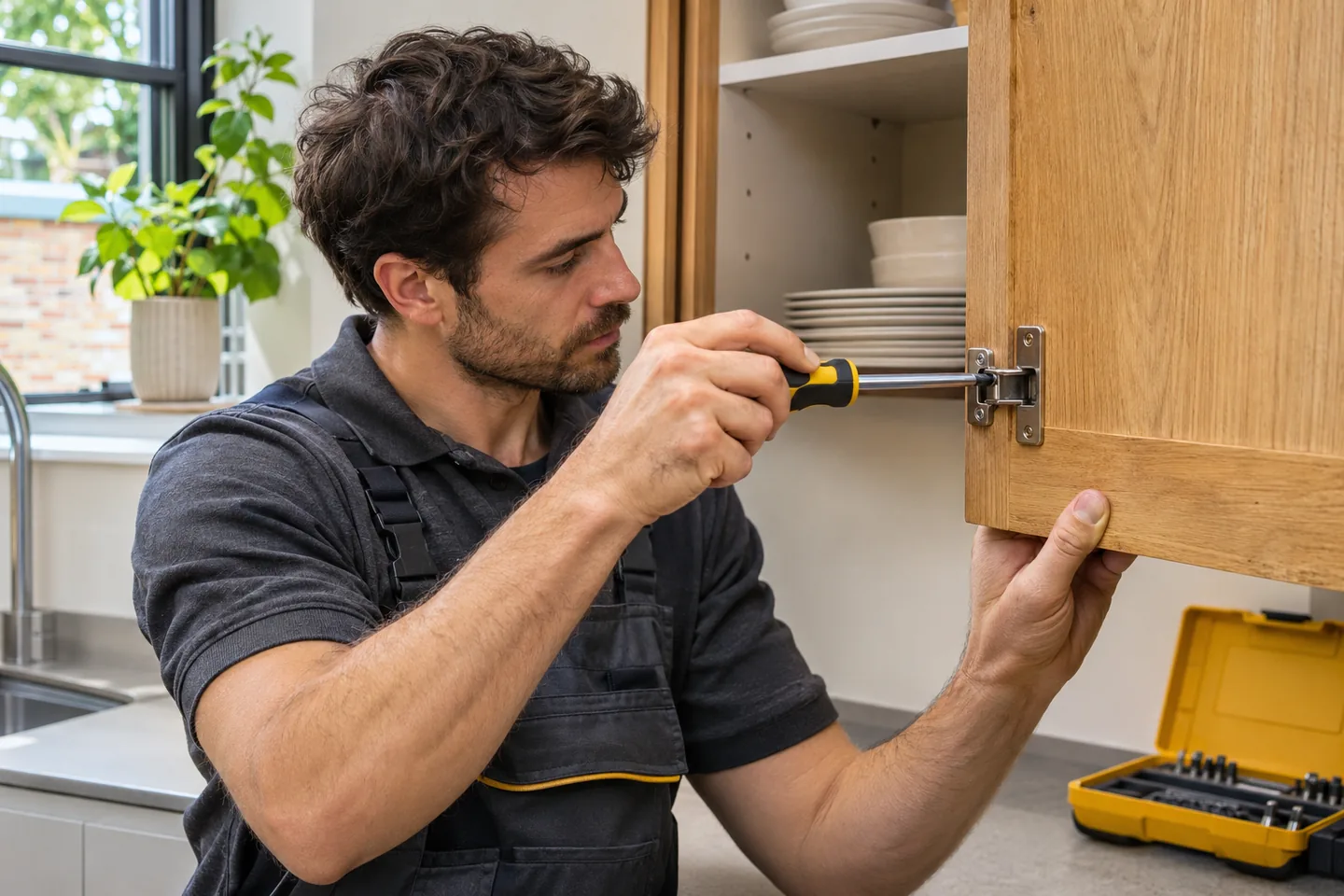
Kitchen hinges need the cabinet side checked before adjustment.
We support the cupboard front and inspect the hinge cup, plate and panel. A repeatedly loose screw can indicate worn material rather than an adjustment problem. We compare the movement with neighbouring doors and identify the available hinge settings. Keep detached parts and product references so that compatible components can be reviewed.
We agree a suitable fixing repair or replacement before aligning the front. We then check gaps, opening clearance and closing action, including any soft-close feature. Where damaged board cannot support the intended attachment, we explain the material required. A neat gap at the end of adjustment is not enough if the connection remains unsound.
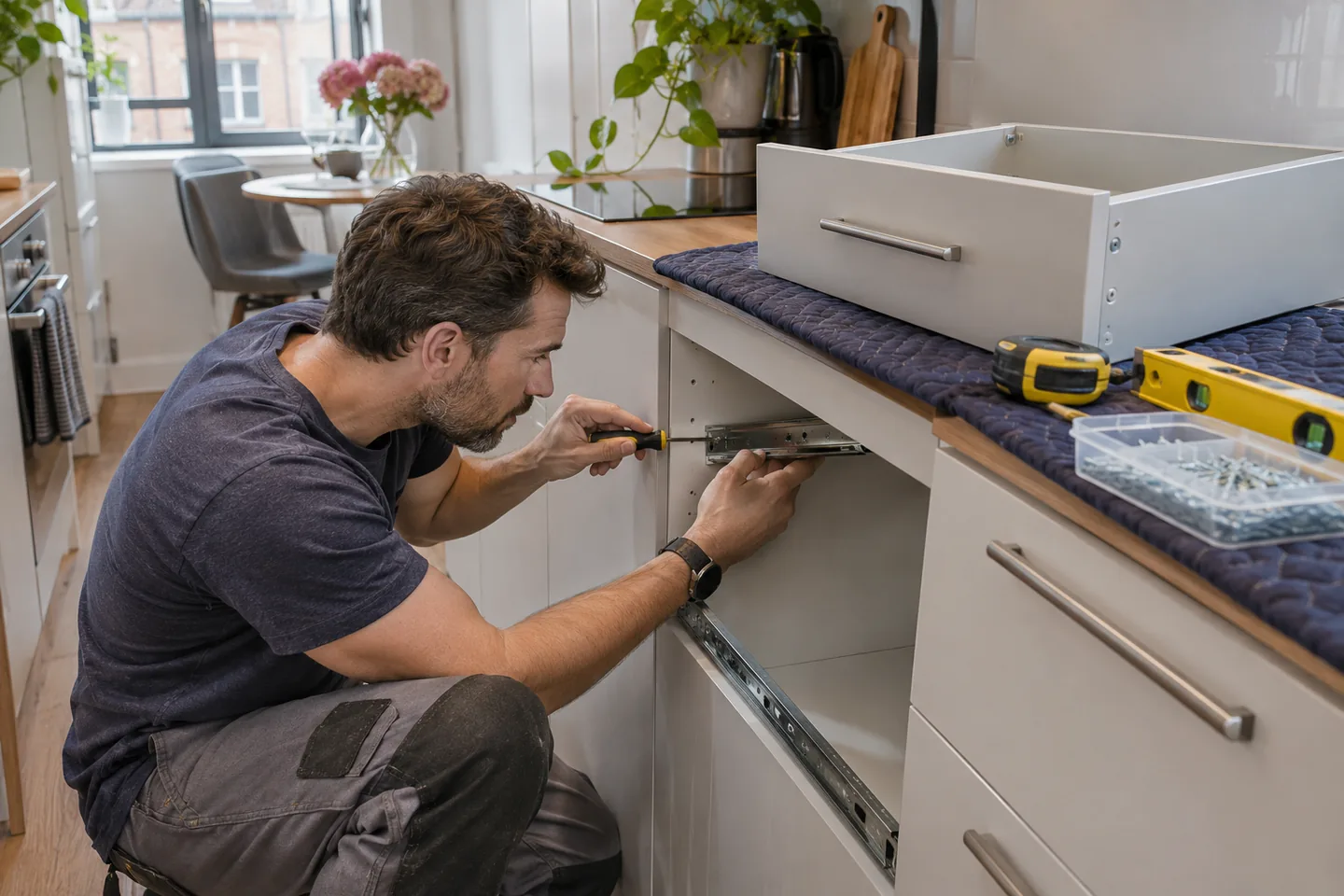
A shared drawer needs its support and travel considered together.
We ask whether the drawer catches empty, under normal loading or at one point in its travel. The runner, cabinet frame and surrounding connections are examined before the front is moved. A unit that rocks or has a loose back may affect several drawers. We do not assume that each symptom needs a separate runner replacement.
We use compatible components and the adjustment intended by the product. Worn fixing areas may require a material repair first. After the agreed work, travel, stops and clearances are reviewed. If a product-specific component is missing or unavailable, that remains a clear outstanding item rather than being replaced by an improvised connection without approval.
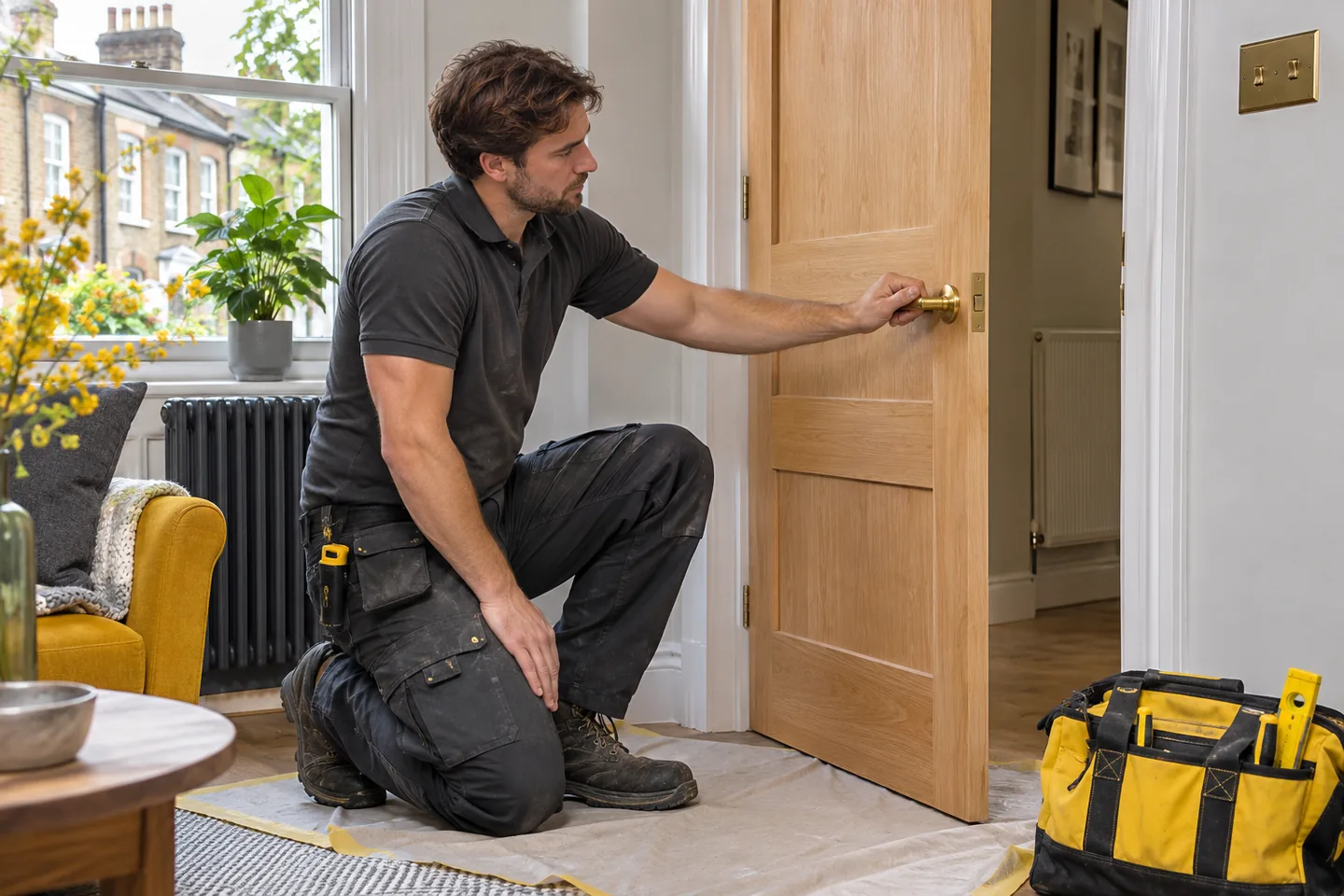
Room doors need their ordinary and specialist functions understood.
We inspect the door’s swing, hinges, gaps and latch relationship. A door can become difficult to close after a floor change or loose connection, while a handle can fail for a different reason. Tell us what happens and whether the fault is recent. We ask about fire-safety or other specialist requirements before an alteration is proposed.
Suitable repair or adjustment is discussed after accessible condition is reviewed. We protect adjacent surfaces and support components during the work. We check opening, closing and relevant engagement afterwards. Removing timber or changing hardware is not automatic, and any disturbance to the finish or remaining specialist concern is explained before additional work is agreed.
PLAN THE WORK
Explore the time and labour budget.
Select the task, quantity and visit period. Assembly benchmarks and entered time assumptions stay visible; other repairs need an individual assessment.
Plan your Finsbury Park repair enquiry
Choose the work, enter quantities and review the assumptions. We confirm the repair, working time and availability before booking.
Assembly benchmarks assume complete product parts, instructions and a clear working area. For other repairs, a known condition does not establish a standard duration.
Compare the assembly work
Published London assembly ranges for one item. These are external planning benchmarks, not our recorded job times or guaranteed completion periods.
Time evidence: published London assembly ranges, checked 3 November 2026. Product, staffing and access differences require assessment. Carrying, missing parts and wall restraint are not automatically included.
Compare labour for the same working time
Comparison uses the selected day and visit period. These are labour categories at equal time, not fixed job prices. One-hour minimum; subsequent half hours. Materials, sourcing time, parking and congestion charges are separate. Rates include taxes. Daytime: handyman 08:00–18:00; plumbing/electrics 08:00–18:00 weekdays and 08:00–17:30 weekends. Outside-daytime availability needs confirming.
What changes the repair decision?
This compares the checks needed for the selected repair, not a scored difficulty or a promised duration.
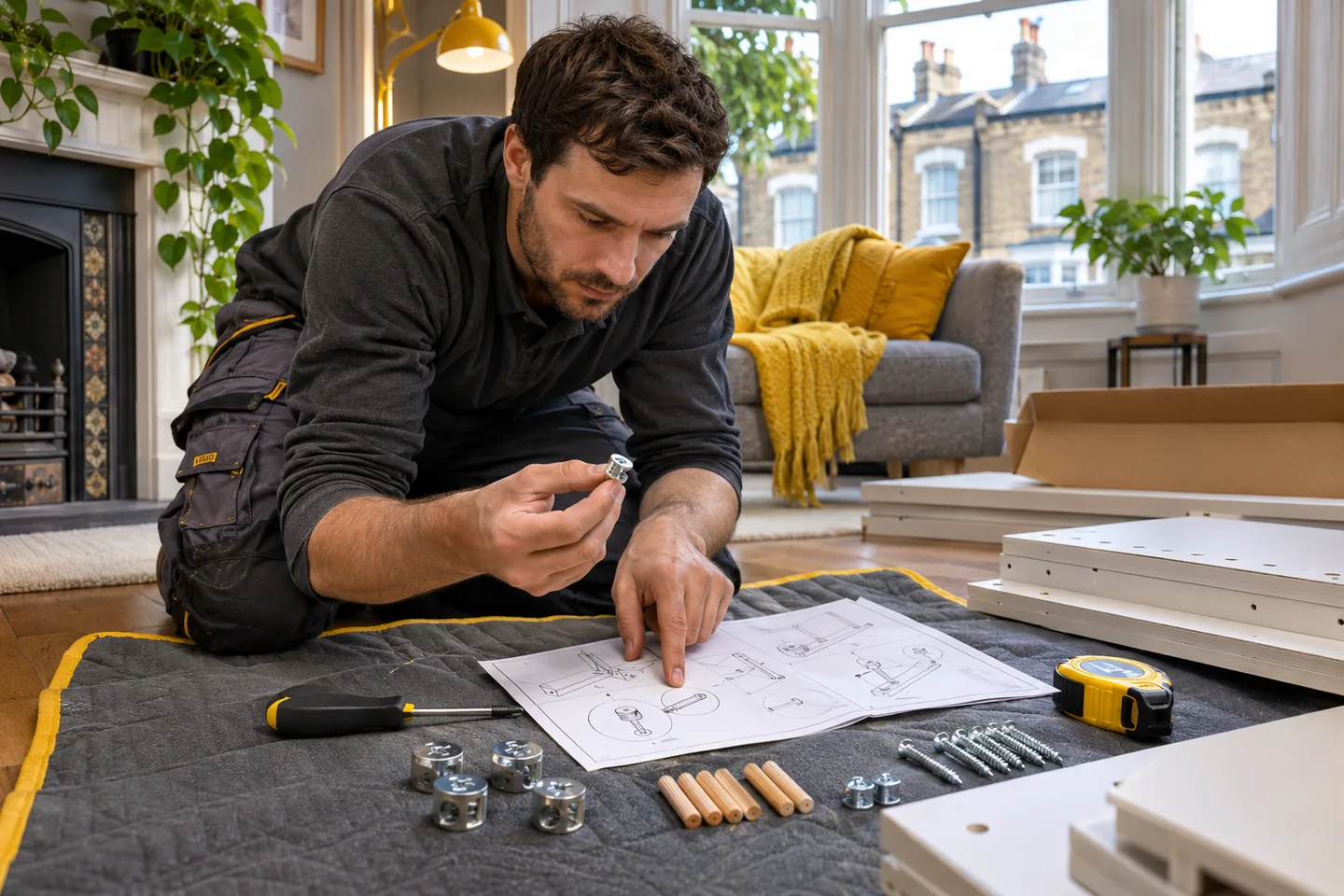
Storage assembly needs a room ready for the actual process.
We ask for product links, instructions and package details before discussing assembly. A bed frame or wardrobe needs room for its panels and connections during construction, not only its final footprint. Tell us whether belongings or existing furniture occupy that area and where the packs are stored. Carrying and clearing arrangements need separate discussion.
We sort hardware, follow the specified sequence and check alignment before moving parts are adjusted. Product-required restraints are reviewed with the actual wall and bracket. Missing parts or damaged panels are identified rather than worked around without permission. We check the relevant operation and explain any restriction before the occupant begins normal use.

Wall shelves need intended contents and a suitable background.
A shelf in shared use can acquire different contents over time. Tell us what it is expected to hold now, along with its dimensions and support details. We examine failed holes, brackets and accessible wall condition. Existing damage can require preparation before a new attachment is appropriate. The shelf length alone does not establish a safe capacity.
We agree position and compatible fixing arrangements after assessment, using appropriate measuring and detection tools. Uncertainty about concealed construction is explained before drilling. We check alignment and accessible connections and discuss any limitation on use. Wider decoration and redundant holes are separately agreed finishing work, not automatically included because another shelf is being mounted.
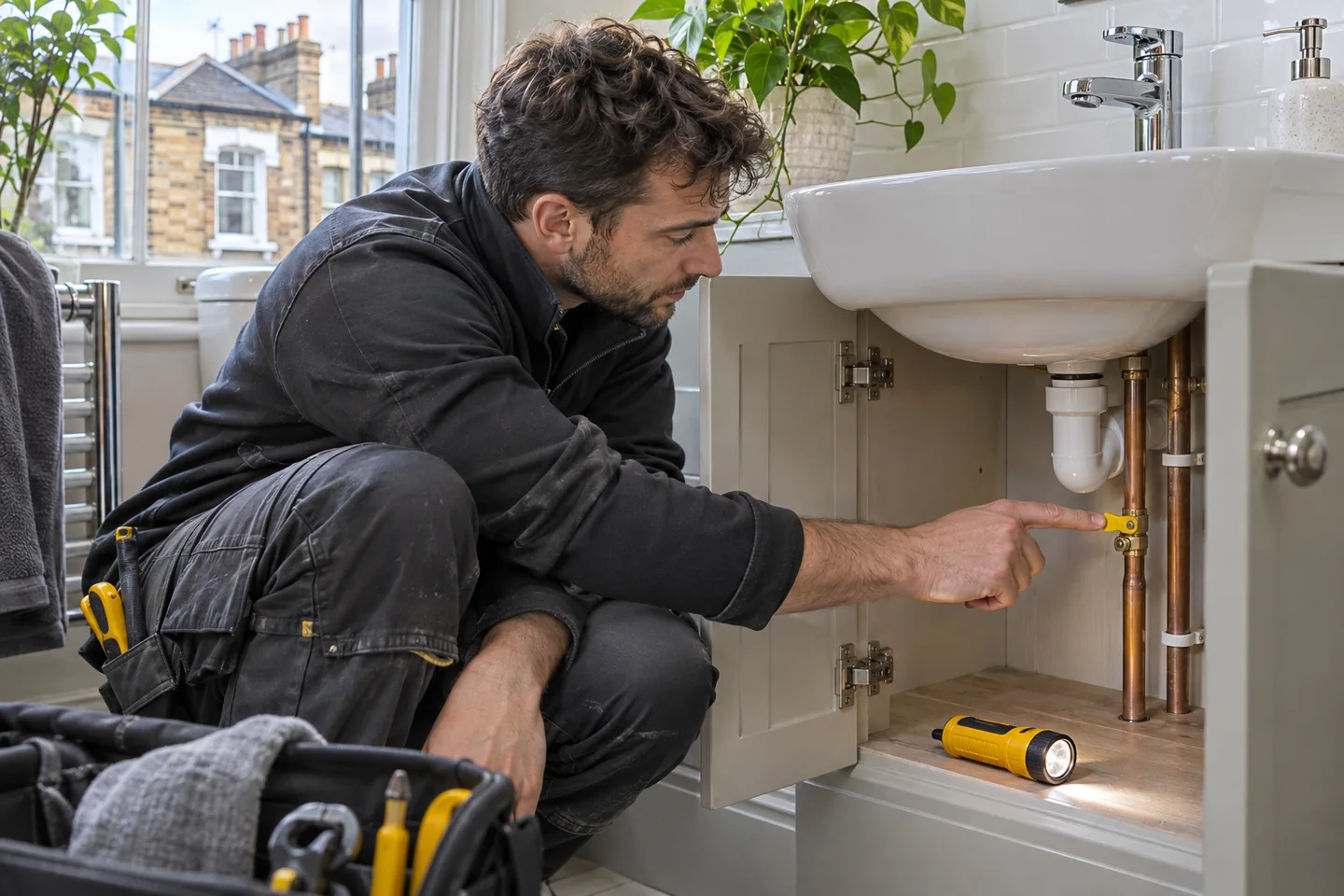
A basin connection needs the pattern of moisture described.
We ask whether water appears when the tap runs, the basin empties or the fitting is unused. We inspect accessible joints and nearby surfaces, and confirm the relevant isolation before disturbing supply components. Restricted storage or belongings around the fitting should be discussed during the enquiry. We do not ask occupants to expose concealed plumbing for us.
We protect the immediate area and use compatible seals or replacement parts with suitable tools. The agreed connection is checked during the relevant use, including drainage where appropriate. We explain any wider moisture, cabinet damage or concealed fault that needs further assessment. A visible local repair is not a whole-system inspection or proof that every source of damp has been established.
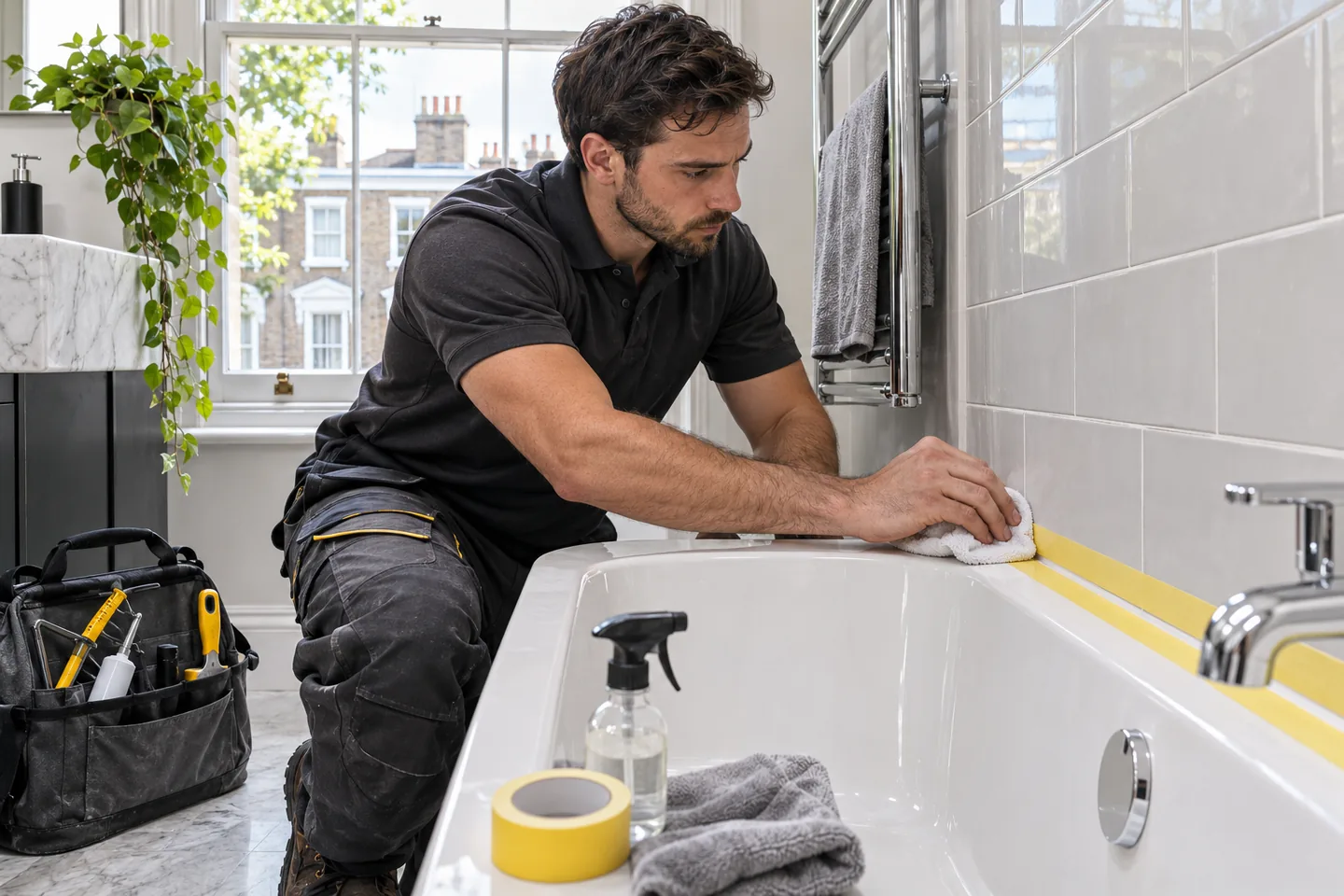
Bathroom joint renewal needs the use restriction passed to everyone.
We review movement, moisture and the adjacent surfaces before agreeing to replace a sanitary seal. Repeated failure can point to another condition needing attention first. Tell us which fitting is affected and whether others rely on it throughout the day. A prepared stable joint is necessary; covering the old bead does not resolve an underlying problem.
Where renewal is suitable, we remove old material carefully and prepare the accessible joint for the selected product. We shape and check the replacement edge, then explain curing requirements. In a shared home, identify who will communicate those restrictions to other users. The end of application work does not automatically mean that the bath or shower can be wetted immediately.

A shared handover needs one clear route for outstanding decisions.
We review completed tasks against their original symptoms and check relevant movement or operation. We identify missing components, background repairs or separate trades still required. Different occupants should not have to infer the outcome from whether tools have been removed. Tell us who should receive the repair summary and who can arrange the next decision.
We discuss care, drying or curing and the agreed condition of the working area. Larger waste and packaging require an understood arrangement. If the list expands into broader property maintenance, we can review the next work with priorities and access kept clear. The immediate handover still distinguishes what is ready for normal use from anything restricted or incomplete.
THE AREA / THE ACTUAL ADDRESS
A three-borough town centre makes the address the starting point.
Islington’s Finsbury Park planning information describes a town-centre area extending into Islington, Haringey and Hackney. We therefore ask for the actual address before discussing property constraints or access. The nearby station or the general neighbourhood name does not tell us which entrance, council information or management arrangement applies to the work.
Give us the floor, shared route and any restrictions affecting tools, furniture panels or a working vehicle. Tell us who can approve drilling or replacement fittings. We review the repair for that property and confirm the available service arrangement through the enquiry. Local geography helps us ask relevant questions, while the individual item, condition and authorised decision determine the practical work. If several occupants are involved, agree a single contact for changes and handover information.
Address information: Islington Council: Finsbury Park town-centre context
EMERGENCY LOCKSMITH ENQUIRIES
Shared entrances need clear authority for locksmith work.
We take Finsbury Park locksmith enquiries on our call line 24/7. Tell us whether access is lost, the lock is damaged or the door cannot be secured. Provide the full address and explain whether the affected entrance is private or shared. We discuss availability and the proposed price basis before any arrangement is agreed, without promising a standard arrival time.
The person making the call may need a landlord, freeholder or managing agent to approve replacement hardware. Identify that contact early. We ask about the symptom at the key and door without asking you to remove security components. Known specialist requirements applying to the entrance must be considered before alteration, particularly where other occupants depend on the same door.
After assessment, suitable repair or compatible replacement is discussed with the door material, keep position and surrounding connections understood. Any separate carpentry or making-good is explained. We check relevant opening and locking operation after agreed work and identify unresolved parts or limitations. The handover should reach the authorised property contact so that other occupants are not left with conflicting assumptions about keys, use or further work. A shared access enquiry remains distinct from ordinary internal fitting adjustment.
BEFORE YOU BOOK
Questions about the work here.
Do all occupants need to attend the enquiry?
One organised contact can send the list, but we need a person authorised to approve work and someone who can provide access. Tell us if those are different people and how a finding should be discussed during the visit.
Can a bedroom door be treated as ordinary timber?
Its requirements need establishing first. Tell us about any fire-safety or managed-building role. We assess the symptom and accessible hardware before proposing adjustment, trimming or component replacement.
Should everyone stop using the bathroom after resealing?
The actual product’s curing restriction applies to the repaired fitting. We explain that requirement and ask who will pass it to other users. Labour time is not a universal return-to-use period for every sealant.
Can mixed furniture be assembled from one combined box of fittings?
Keep fittings grouped by product where possible, with instructions and labels. Unidentified mixed hardware can prevent the intended connection being established. We assess missing or damaged parts before continuing rather than substitute by appearance.
Does the borough boundary affect the address enquiry?
It can affect which council’s property information is relevant. The full address is the useful starting point, since Finsbury Park’s town-centre area spans three boroughs. We also need the actual building entrance and management instructions.
Can the calculator guarantee a whole shared list?
No. The list needs individual conditions, products and access reviewed. Planning ranges or an entered working period support a budget, but they do not diagnose repairs or reserve a visit. We confirm the arrangement through the enquiry.
TELL US WHAT NEEDS ATTENTION
Discuss your Finsbury Park repair list.
Call 020 3746 0607 with the property address, the items needing attention and the available access. We review the work and confirm the arrangements before a visit is booked.
Original illustrative work scenes show the activities described; they are not photographs of completed customer jobs in this neighbourhood.