
HANDYMAN / STOKE NEWINGTON
Handyman Stoke Newington.
Keep useful details working.
A loose handle, a door rubbing its frame or a rail pulling away deserves a considered repair. We assess the existing material and agree what can be adjusted, repaired or replaced.
Call line 24/7 · Work and availability confirmed for your address.
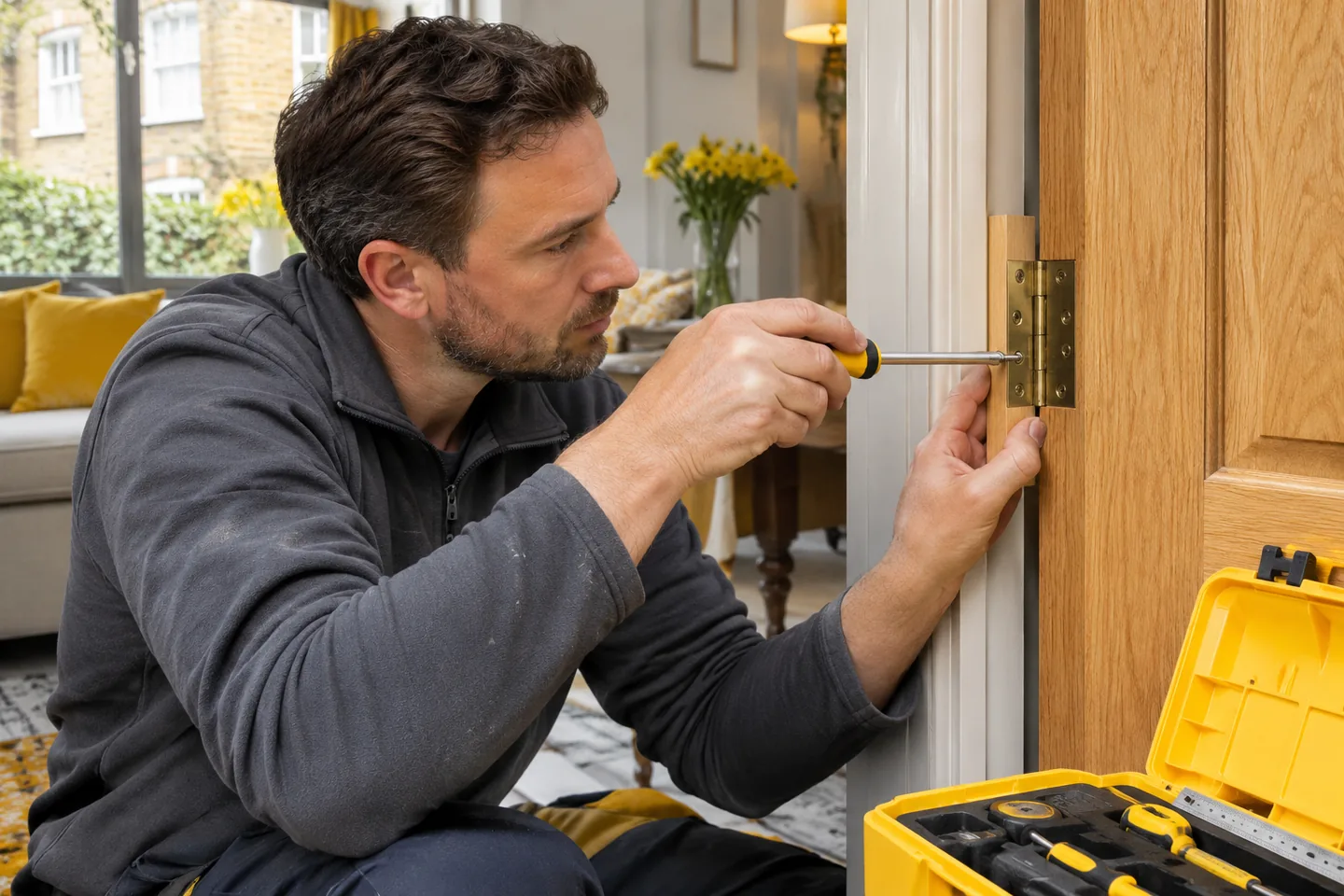
Practical attention to timber, hardware and everyday fittings.
Can you repair an interior door without replacing it?
We inspect the leaf, hinges, frame and latch to establish the cause. Adjustment or a local timber repair may be suitable when the material is sound. Tell us about any special status or requirements affecting the door, and send photographs of the contact marks and hardware.
Can you retain existing handles and fittings?
We can assess whether they remain serviceable and compatible with the repair. Worn mechanisms, cracked parts or damaged mounting material may limit reuse. We discuss that before selecting a replacement, including the visible marks a differently sized fitting might leave.
THE WORK IN YOUR HOME
Work with the fitting that is there
Replacing a whole item is not always necessary when one connection has failed. Equally, tightening a screw is not a repair when the material around it has broken down. We provide handyman help in Stoke Newington with an assessment of both the fitting and its background. That can mean a hinge adjustment, a compatible replacement part or an explanation that a more substantial repair needs consideration.
The details matter where finishes or existing joinery are to remain. We ask which surfaces you want retained and explain likely disturbance before removing hardware or cutting timber. A photograph of the whole item and a close view of the damaged area help us prepare. Tell us about previous repairs too: a filled fixing hole or replacement hinge can explain why a fault has returned.
Useful details for your enquiry
- Door movement and latch alignment checked before timber is removed.
- Handles, hinges and catches assessed for compatible replacement parts.
- Shelves, rails and brackets fixed only to suitable backgrounds.
- Furniture assembly and practical repairs with clearances checked.
- Finishing requirements explained alongside the mechanical repair.
A hinge needs support from sound material
We examine the hinge leaf, screw heads and timber around the fixing. A screw that turns without tightening can mean a stripped hole, but the condition of the surrounding frame must also be checked. The door is supported during assessment so the remaining fixings are not carrying unnecessary strain. We compare the gaps and movement before deciding which connection actually needs attention.
A suitable repair restores a dependable fixing rather than merely disguising the opening. The method depends on the timber, hole condition and hardware. We avoid assuming a longer screw is safe or appropriate behind an unknown frame. After adjustment or repair, the door is checked through its full swing and closing action. Related work is available through our carpentry service, including a discussion of any finish disturbed.
MATCH THE REPAIR
What we check before changing the fitting
The symptom guides inspection, but the material and hardware decide the repair.
6 service options.
| Problem or task | What we inspect | Work to discuss | Related service |
|---|---|---|---|
| Hinge screw spins | Frame material and hole condition | Restore suitable support before adjustment | Carpentry services ↗ |
| Latch needs a shove | Door gaps, return action and keep position | Correct alignment or match failed hardware | Carpentry services ↗ |
| Trim separates from wall | Background, moisture and profile | Prepare and attach a matching sound section | Carpentry services ↗ |
| Wall item moves | Mounting method and background condition | Use an appropriate support arrangement | Hanging wall mounting ↗ |
| Bookcase doors misalign | Carcass square and support contact | Correct assembly before hinge adjustment | Furniture assembly ↗ |
| Seal splits repeatedly | Movement and moisture source | Resolve underlying issue before resealing | Tiling grouting re sealing ↗ |
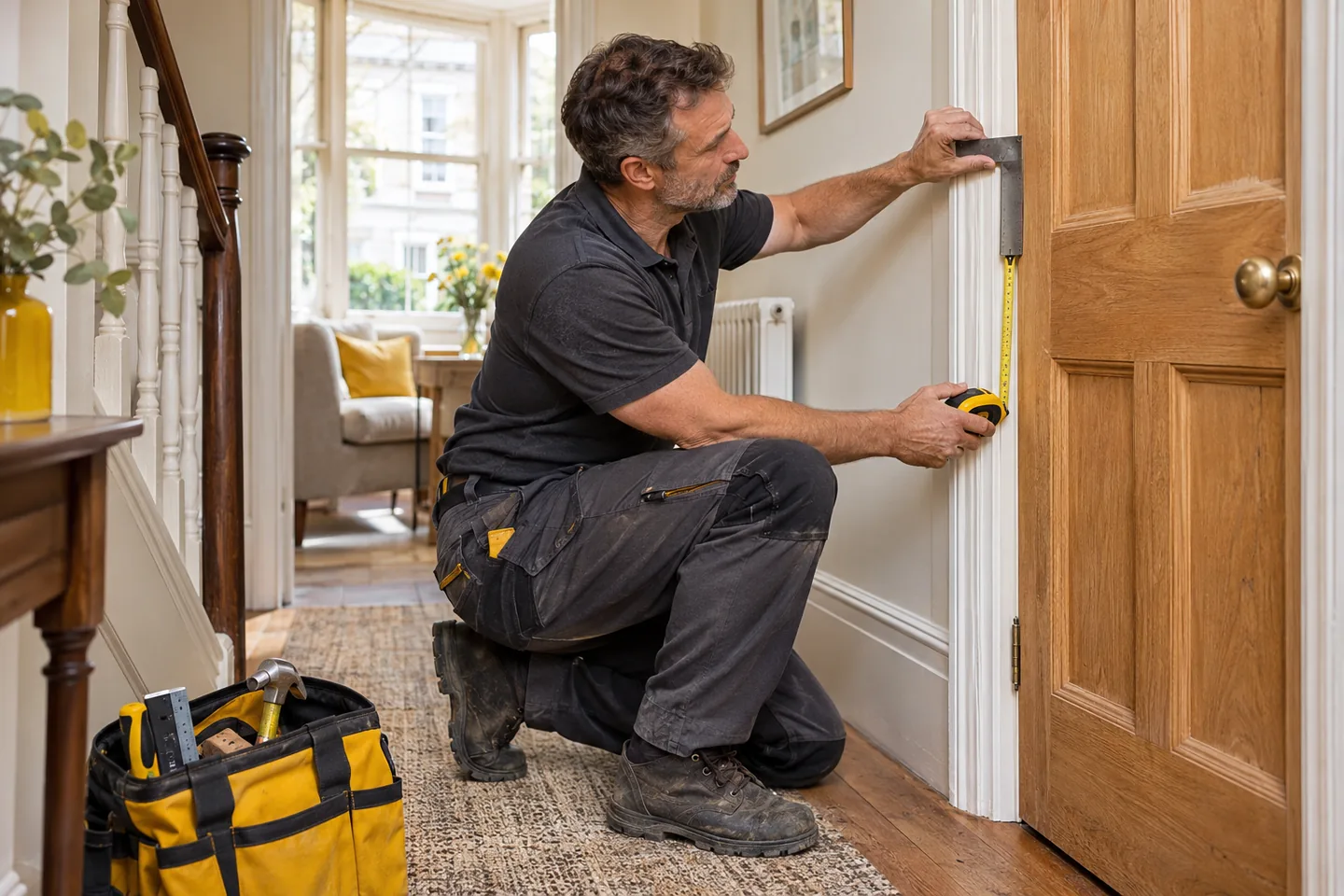
A latch should meet the keep without a shove
We check whether the latch withdraws fully, returns freely and lines up with its keep. A recently painted edge can bind, a loose strike plate can move and a dropped door can leave the latch rubbing. These faults should be distinguished before enlarging a recess. We also check the handle action while the door is open, with care to preserve access during testing.
Where the hardware is serviceable, suitable alignment work may restore normal operation. A worn latch or incompatible handle may require matched components. We explain any visible holes or timber work before changing the fitting. The completed door should close and latch without a repeated push or lift. If the assembly has fire or security requirements, the repair needs to respect those rather than treating the hardware as a decorative accessory.

Trim and moulding repairs need a close match
A broken piece of skirting or door trim is assessed for profile, thickness and how it meets the existing sections. We look for dampness or wall damage behind a loose length before reattaching it. If a piece must be replaced, a near match can still be conspicuous at a corner. Measurements and a clear side-profile photograph help us discuss available options before material is ordered.
We protect the neighbouring floor and finish while preparing the joint. Fixings or adhesive are selected for the trim and sound background, with concealed services considered before drilling. Once fitted, the junction may need filling and decorating; we explain that separately from the attachment itself. Our painting and decorating service can review the finishing area where local touch-up would leave a noticeable difference.
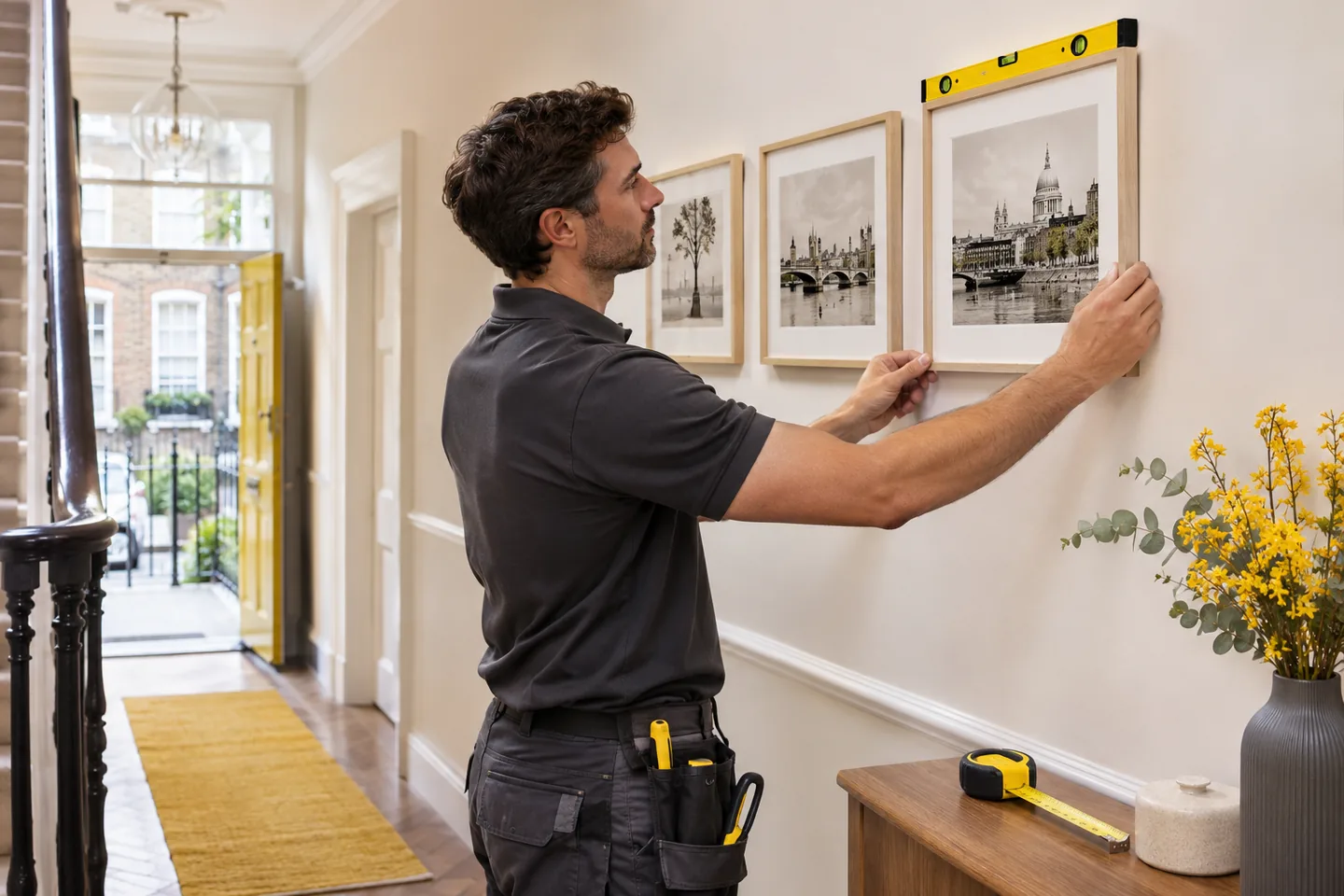
Picture rails and wall items need suitable attachment
An existing rail should not be assumed suitable for a newly purchased heavy object. We examine its attachment and condition, and ask for the item’s product details. For a new wall fitting, the background and likely concealed services are assessed at the intended position. Loose plaster or an old filled hole can affect the choice even when the surface looks tidy.
We agree the placement before marking out and select a suitable mounting arrangement for the assessed construction. Where the background is uncertain or damaged, we explain alternatives rather than adding more fixings around the same weak area. The final check includes the item’s seating, visible movement and clearance from surrounding objects. Our hanging service covers pictures, mirrors and related fittings, assessed individually rather than by a general wall rating.
THE AREA / THE ACTUAL ADDRESS
Stoke Newington: discuss retained details before alteration
Hackney Council’s Stoke Newington conservation-area description follows Church Street from the Clissold Park area and includes parts of the High Street and Abney Park Cemetery. It also identifies listed buildings within the designated area. That context is a reason to ask about your particular property and permissions, rather than assume every address has the same restrictions or construction.
Tell us if the work involves retained joinery, a listed building or an owner’s conditions for permanent fittings. We can discuss the practical repair, while any required consent should be established before alteration. Your postcode, entrance details and clear task photographs remain essential. Nearby information is available for Dalston, Highbury, Finsbury Park and Hackney, with the service links above providing detail about the individual work.
Address information: Hackney Council: Stoke Newington conservation area
PLAN THE WORK
Explore the time and labour budget.
Select the task, quantity and visit period. Assembly benchmarks and entered time assumptions stay visible; other repairs need an individual assessment.
Plan your Stoke Newington repair enquiry
Choose the work, enter quantities and review the assumptions. We confirm the repair, working time and availability before booking.
Assembly benchmarks assume complete product parts, instructions and a clear working area. For other repairs, a known condition does not establish a standard duration.
Compare the assembly work
Published London assembly ranges for one item. These are external planning benchmarks, not our recorded job times or guaranteed completion periods.
Time evidence: published London assembly ranges, checked 3 November 2026. Product, staffing and access differences require assessment. Carrying, missing parts and wall restraint are not automatically included.
Compare labour for the same working time
Comparison uses the selected day and visit period. These are labour categories at equal time, not fixed job prices. One-hour minimum; subsequent half hours. Materials, sourcing time, parking and congestion charges are separate. Rates include taxes. Daytime: handyman 08:00–18:00; plumbing/electrics 08:00–18:00 weekdays and 08:00–17:30 weekends. Outside-daytime availability needs confirming.
What changes the repair decision?
This compares the checks needed for the selected repair, not a scored difficulty or a promised duration.
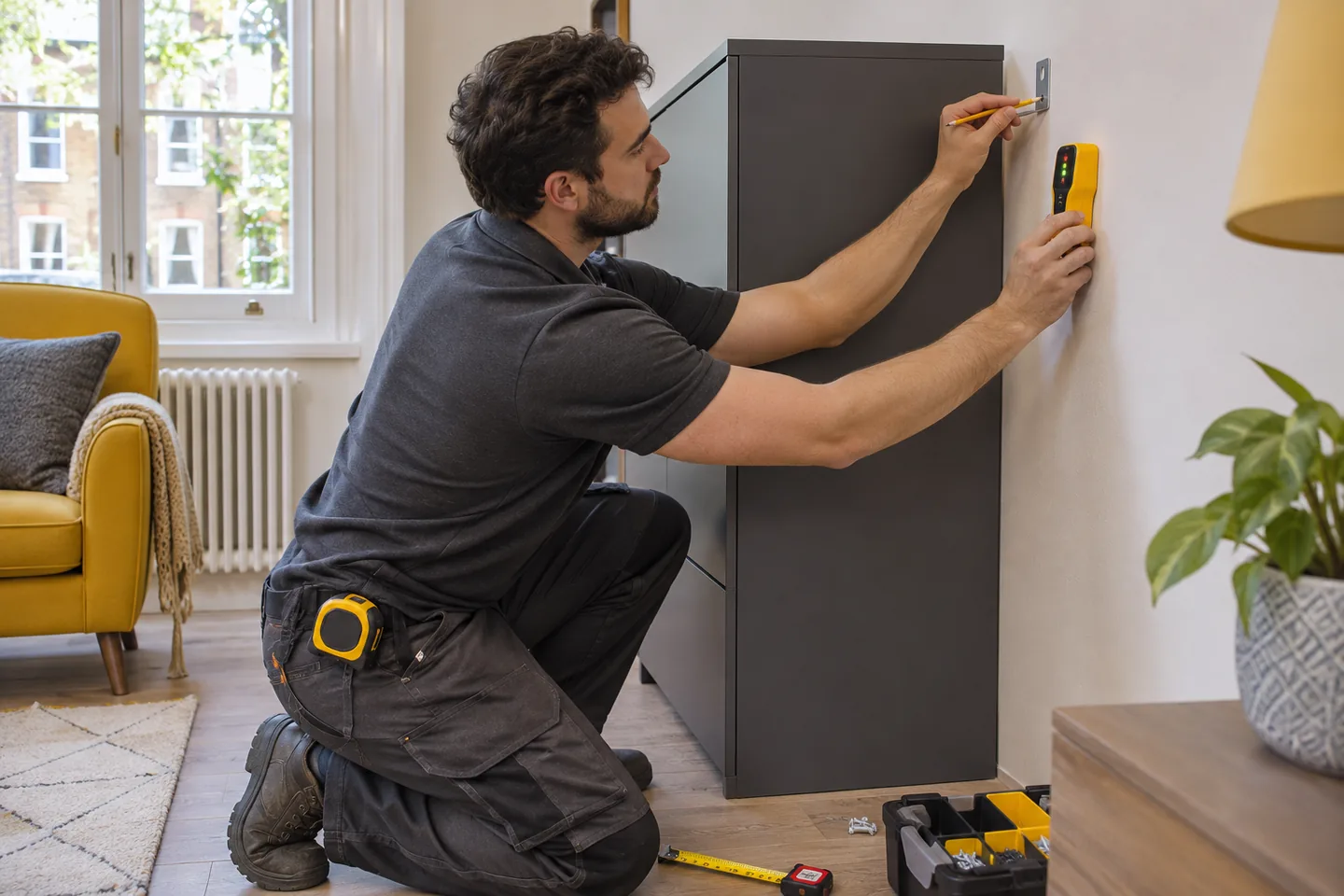
Cabinet catches can be small but important
A cupboard that swings open may have a failed catch, a misaligned door or hinge movement. We check the door’s position before fitting a stronger catch that would merely pull it against resistance. Magnetic and mechanical catches have different engagement needs, and their screws require sound material. A cracked mounting point may explain why the previous catch has repeatedly loosened.
Where replacement is appropriate, we position compatible hardware and check that it engages without forcing the door. We also inspect handle attachment and clearance at adjacent fronts. On furniture with specialist hinges or proprietary fittings, availability of the correct part can determine the repair. We explain any limitation caused by damaged board rather than hiding it behind a larger plate without agreement.
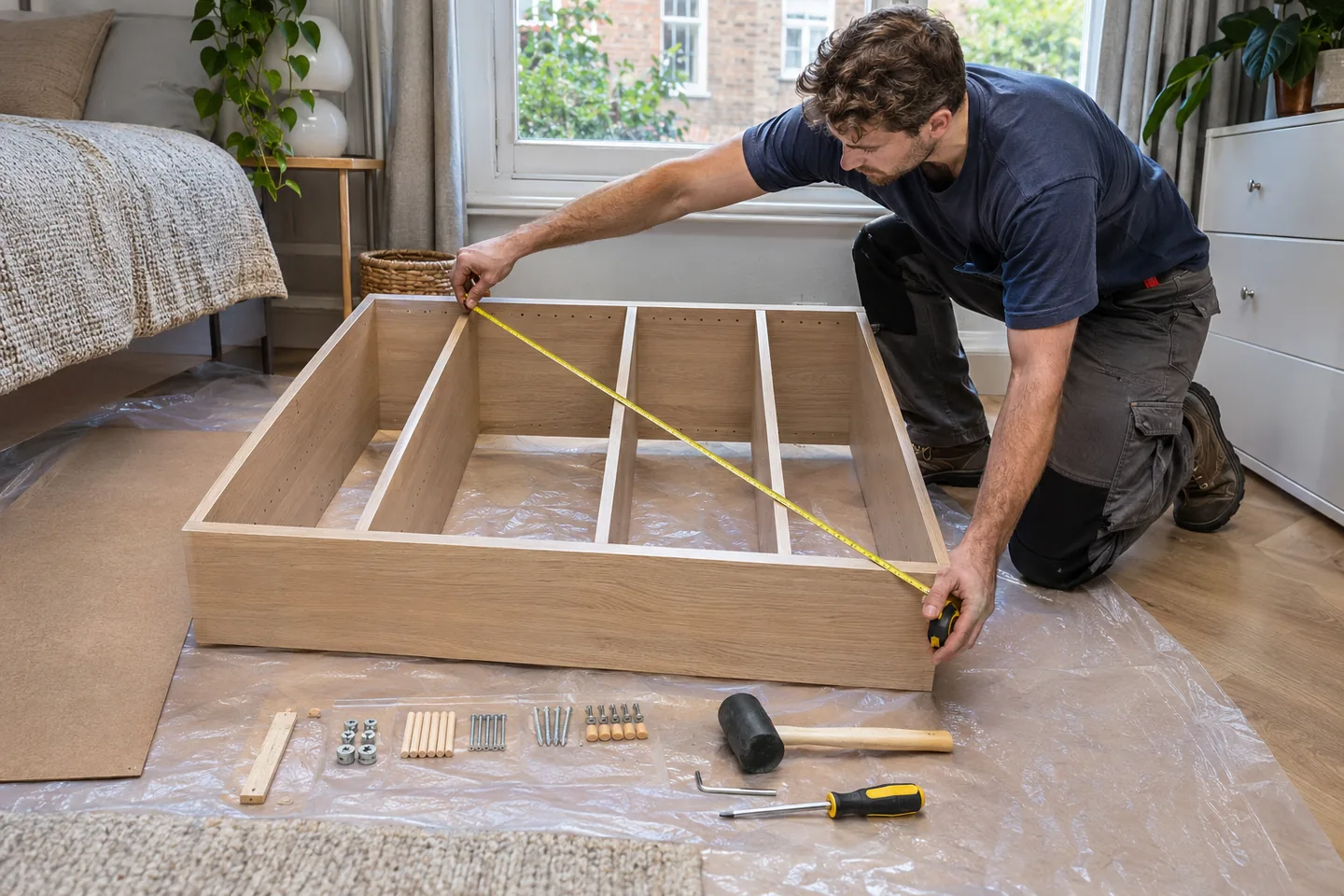
A supplied bookcase needs square assembly
We check the product instructions and component condition before assembling a bookcase. The finished dimensions must allow for skirting, sockets and access to the securing position. An apparently generous corner can be too small for the assembly sequence, so we plan the protected work area first. Shelves, backing panels and hardware are identified without assuming that similar panels are interchangeable.
Squareness affects shelf seating and door alignment where doors are provided. We check diagonals and support contact before final tightening, then follow the manufacturer’s securing requirements. Supplied wall plugs are not automatically right for the wall encountered. We explain any missing part or unsuitable location before the unit is loaded. Other supplied storage can be discussed through our furniture assembly service.

Basin and bath edges: check movement first
A failed seal can be the symptom of a moving fitting or a wet background. We inspect the junction and ask how long the problem has been present. Loose tiles, damaged grout or a leak from another connection may need attention before resealing. Adding a fresh bead over old material can hide the condition without creating a reliable joint.
For an appropriate reseal, we remove the failed material and prepare clean, suitable contact surfaces. The product is selected for the junction, and the surrounding finish is protected during application. We explain the curing and use instructions before the area is returned to service. If an accessible fitting is leaking, our plumbing work addresses that source; resealing addresses the surface joint where suitable.

Handover should include the finish and the function
We operate repaired fittings after the work area is cleared: handles turn, doors latch, catches engage and storage remains stable in its intended position. We look at the affected finish with you so any separate filling or decorating requirement is understood. A useful repair record identifies what changed, rather than simply saying the room has been done.
We leave relevant product instructions and unused proprietary parts available. Any unresolved defect, unavailable component or unsuitable background is explained clearly. If you want further work, it is reviewed as an additional decision. A longer property maintenance list benefits from that clarity, particularly when different people arrange access, authorise the work and use the fittings afterwards.
EMERGENCY LOCKSMITH ENQUIRIES
When the door fault reaches the lock
A handle or latch enquiry can lead to a lock assessment when the door no longer secures properly. Tell us whether the problem happens with the door open, whether the key turns and whether the handle returns. The condition of the hinges and frame can influence the mechanism, so a lock should be considered as part of the door arrangement. Avoid forcing stiff hardware while waiting for advice; a broken key can make a manageable access problem more difficult.
Our call line is available 24/7 on 020 3746 0607 for locksmith enquiries. We ask for the address, the type of door and whether access is available, then confirm the proposed work, availability and price. Where authority to enter or change hardware needs establishing, have the relevant information ready. Photos of visible parts can help if taking them is safe. After agreed work, we check opening, closing and locking together and explain any associated timber or alignment issue. If a new component changes how the door is operated, we make that clear at handover. Existing keys and removed hardware should remain available until the assessment and agreed replacement are complete.
BEFORE YOU BOOK
Questions about the work here.
Should I paint before the door is repaired?
Discuss the repair first if it may involve trimming, hinge work or timber filling. Some mechanical adjustments cause little disturbance, while others affect a visible edge. Planning the order avoids finishing an area that then needs further preparation.
Can you reuse the old screw holes?
Only where they remain suitable. Enlarged or damaged holes may need repair, and the background must support the fitting. We inspect the connection rather than assuming a previous installation establishes a safe fixing position.
What if replacement hardware looks different?
We discuss compatibility and the visible effect before fitting it. A different backplate, hinge or catch can expose old holes or paint marks. Where the original part is proprietary, obtaining the correct replacement may be preferable.
Can you fit a mirror above furniture?
Send the mirror details and a view of the wall and furniture. We assess the intended position, wall background and access for handling. The item needs a suitable mounting arrangement and clearance, not simply a position that looks balanced in a photograph.
Do you remove old fittings as part of replacement?
Include removal in your enquiry. We check how the existing fitting is attached and explain likely disturbance to the surface. Brittle finishes, hidden fixings or earlier repairs can affect how cleanly it can be removed.
How do I prepare a repair list?
Give each task a room, symptom and photograph. Note any parts already purchased and who can approve changes. Include access information and whether the property has requirements affecting permanent alterations or particular doors.
TELL US WHAT NEEDS ATTENTION
Discuss your Stoke Newington repair list.
Call 020 3746 0607 with the property address, the items needing attention and the available access. We review the work and confirm the arrangements before a visit is booked.
Original illustrative work scenes show the activities described; they are not photographs of completed customer jobs in this neighbourhood.