
FURNITURE ASSEMBLY / LONDON
Furniture assembly London.
From boxes to a usable room.
We assemble flat-pack and disassembled furniture, check the moving parts and discuss any wall-fixing requirements. Send the product details and quantity so we can plan the right visit.
Call line 24/7 · Appointment and work confirmed for your job.

Furniture assembly.
Work worth discussing.
Can you assemble furniture from different retailers in one visit?
We can discuss mixed furniture orders, including flat-pack and disassembled items. Send the product links, model names and quantities together. We review the assembly requirements and access before agreeing the working time; different items may need different fixings or room arrangements.
What do you need to assess a London furniture assembly job?
We need the full postcode, the furniture list, product instructions where available and information about access. Tell us whether the boxes are already in the assembly room, whether old furniture occupies the space and whether any items require anchoring to a wall.
THE SERVICE
The assembly is more than putting the panels together.
We assemble furniture for London homes and workplaces, from an individual bedside unit to a room containing several items. We review the furniture as a set of products with their own instructions and fittings. A tall wardrobe, a drawer chest and a bed frame need different checks, even when they arrive from the same shop. We discuss what you have ordered before deciding how to arrange the work.
The product information helps us prepare, but it does not show everything at the property. The available floor space, condition of the supplied components and wall construction can affect the job. We explain those points when reviewing your enquiry and raise any problem we find during assembly before making an alteration or using a different fitting. We can also discuss baby-proofing fittings alongside the furniture assembly. Send the product details so that we can assess the proposed attachment and work required.
Useful details for your enquiry
- Product links, model numbers and the number of each item.
- All boxes, instructions and supplied fittings kept with the furniture.
- Enough clear floor space to lay out and turn the components.
- Details of stairs, lifts, parking and building access.
- Wall-anchoring requirements and permission for any drilling.
We make space for the furniture and the work.
We start by looking at where the furniture is to stand and how it can be assembled in that room. A unit that fits once upright may still need additional space while the frame is being built. We discuss obstructions, nearby surfaces and whether the components can be turned without contacting a wall, light fitting or existing furniture.
We protect the immediate working area as appropriate and keep the fittings together rather than spreading them through the room. Tell us before the appointment if heavy boxes remain in a hallway or on another floor. Carrying arrangements, restricted access or removing existing furniture are separate matters to discuss; they are not automatically included by describing a job as assembly.
COMPARE THE WORK
Tell us the furniture, not just the number of boxes.
These details help us understand what the assembly involves. The table does not assign a fixed duration to a furniture category.
| Furniture | Details to share | What we examine | Checks after assembly |
|---|---|---|---|
| Wardrobe or tall storage | Model, dimensions, door type and wall-fixing instructions | Frame, hinges, rails and anchoring arrangement | Door clearance, alignment and required wall attachment |
| Bed frame | Model, size, centre support and slat system | Rail connections and mattress-support parts | Connections and the arrangement of supports |
| Chest of drawers | Number of drawers and runner system | Frame alignment, runners and fronts | Drawer travel, gaps and stops |
| Desk or table | Leg type, extensions and adjustable sections | Fixings, braces and operating mechanisms | Stability and movement of the supplied features |
| Previously dismantled item | Photos, fittings and any damaged joints | Condition of fixing holes and components | Whether the intended connections remain usable |
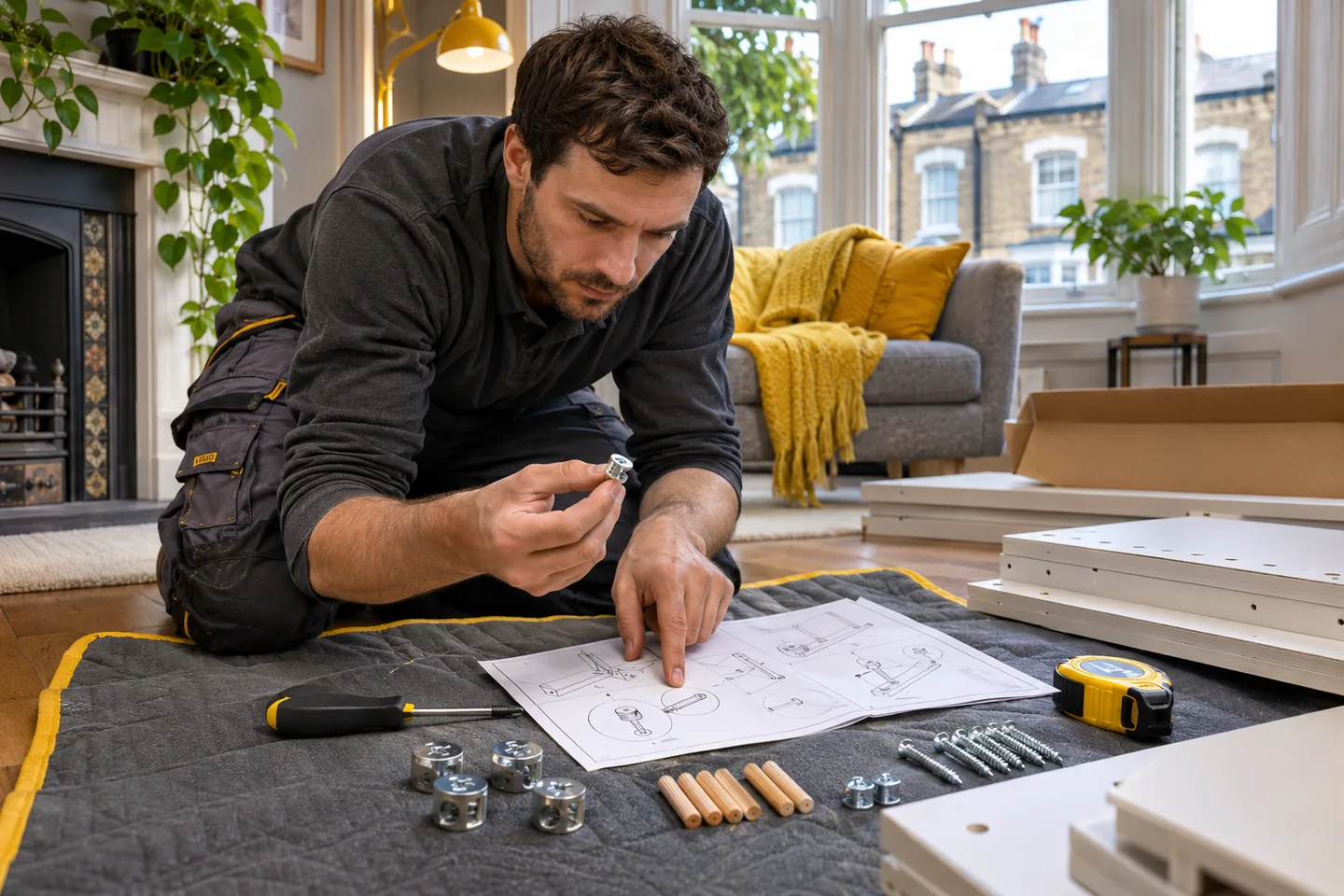
Components and instructions come before the screwdriver.
We check the available instructions against the main panels, rails and supplied fittings. Cam locks, dowels, screws and brackets can look similar while serving different connections. We sort them before joining the frame so that the intended hardware is used in the right position. A clear model number is useful where instructions are missing or several related products have arrived.
We also look for obvious damage, mismatched parts and incomplete packs. A chipped panel or missing rail may prevent the furniture being assembled as designed. We explain what we have found and discuss the next arrangement; we do not assume a substitute screw, extra hole or modified panel is acceptable. Keep retailer packaging and reference labels available until the contents have been checked.
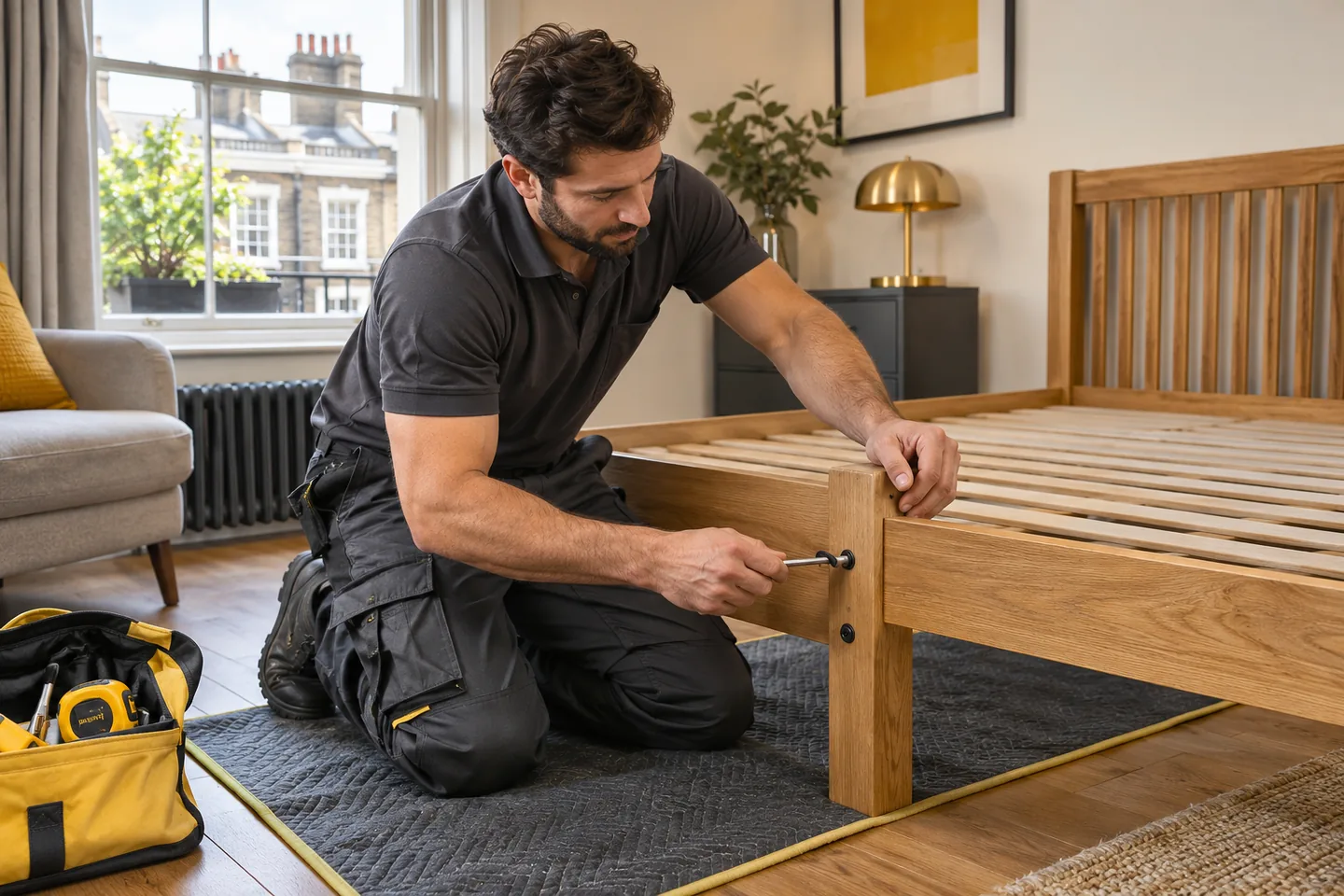
Frames, joints and the way the unit sits.
During assembly we bring the frame together in the order required by the product. We use hand tools and suitable driver bits for the supplied connections, taking care with the panel edges and the fixing points. Some fittings need seating or alignment before they are tightened. Excess force can damage board materials without making the joint more secure.
We check that the main frame is aligned and that the back, rails or other bracing parts are fitted as intended. The surface beneath the furniture also matters. An uneven floor can leave a unit rocking or affect door alignment. We discuss the product adjustment available and any condition of the room that cannot be corrected simply by tightening the furniture.

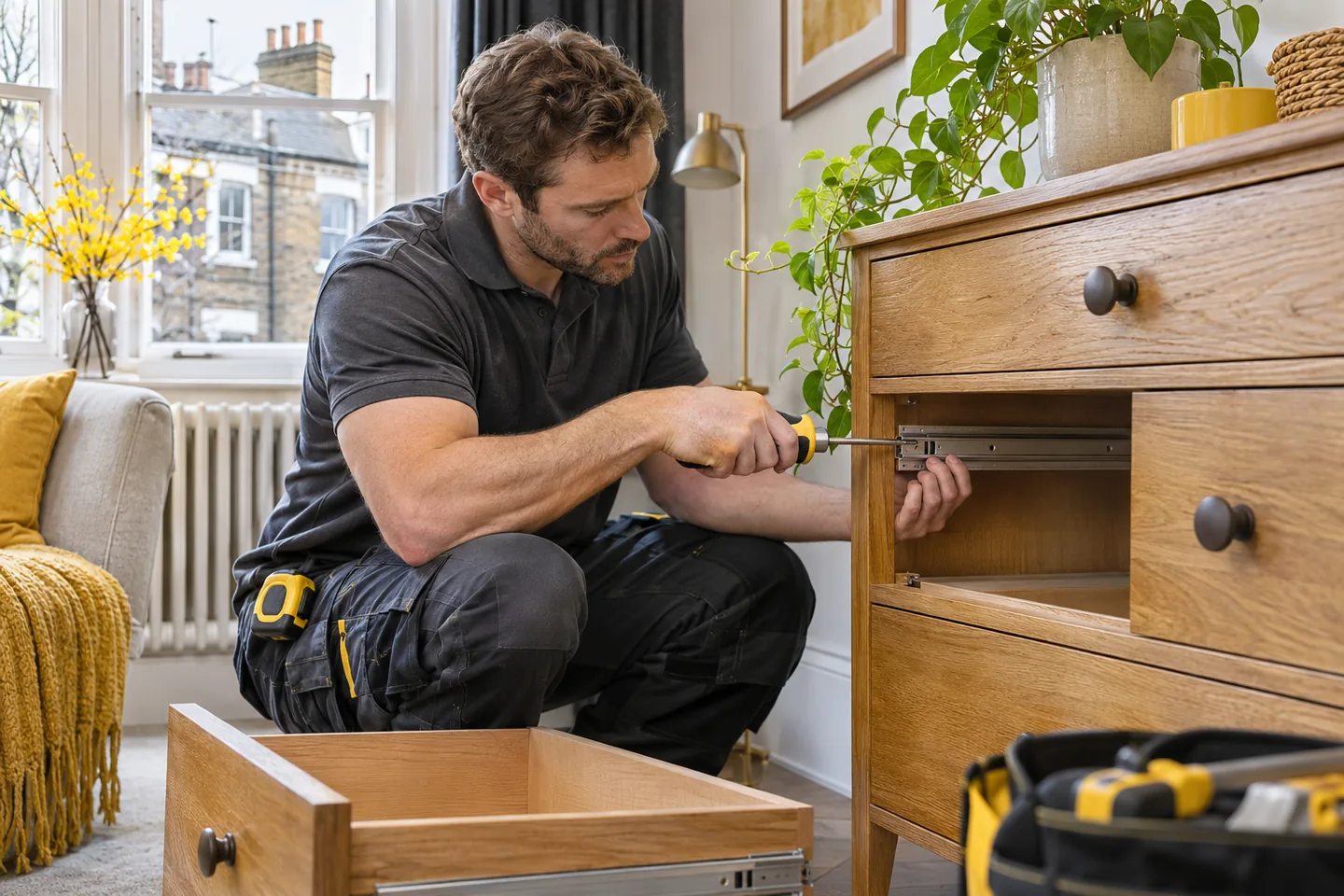
Drawers and doors need adjustment after assembly.
A drawer chest is not finished when its runners have been screwed to the panels. We check the drawer movement, how the fronts meet and whether the runners and stops operate as intended. The fixing positions and the alignment of the frame can both affect movement. We use the adjustment provided by the product rather than treating a stiff drawer as normal.
Cupboard and wardrobe doors need similar attention. We check hinge attachment, opening clearance and the visible gaps between adjacent doors. Where the product allows it, we adjust the hinges after the unit is in position. Existing uneven walls, an out-of-level floor or damaged components may limit the result; we explain those limitations before agreeing further changes.
PLAN THIS SERVICE
Plan the furniture and access
Use the details you know to prepare an enquiry. We assess the condition, materials, access and actual working time before a visit is agreed.
Plan the furniture and access
Select the work and add relevant quantities or measurements. The result helps us review your enquiry; the final repair and price still need confirming.
WHAT THIS WORK INVOLVES
Wardrobe / storage unit
Product model, frame dimensions, door type and anchoring instructions.
What we need to check
Limits & related work
Working time needs a job-specific assessment. Measurements and quantities describe the work; they do not establish a completion time or a confirmed price.
Explore a labour budget
- Furniture footprint can be calculated from entered width and depth; it is not the working clearance needed for assembly.
- Working duration requires the actual product and room assessment.
- A labour budget uses the working time you enter; we confirm the time required for your furniture before agreeing the work.
Your selections stay in this browser until you choose to email them. An email draft does not book a visit. Calculations add no assumed waste or hidden allowances.
Beds, tables and desks have their own connections.
We assemble bed frames with attention to the side rails, centre supports, slats and other parts specified by the manufacturer. The relationship between those components affects the way the frame is supported. We check that the connections are properly engaged and that the mattress support is arranged as described in the instructions, rather than stopping when the outer frame looks complete.
For desks and tables we review the leg fixings, cross rails and any moving or adjustable sections. We need space to turn the item safely during the work and to position it afterwards. Tell us about cables, fixed equipment or a particularly restricted room when booking. We discuss the actual product and intended position before assuming that a simple item description tells us everything required.
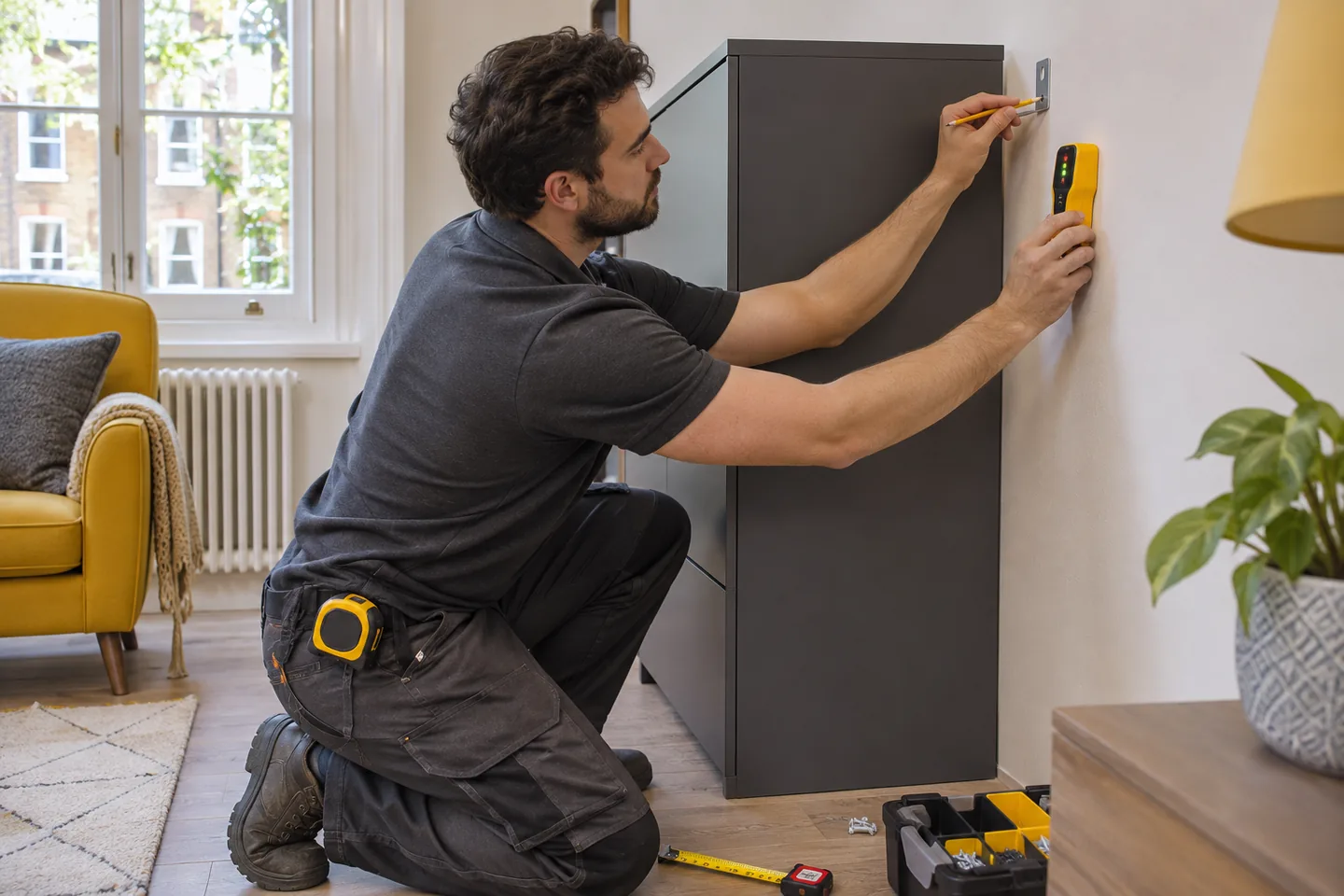
Tall furniture and wall anchoring.
Where a product requires an anti-tip fixing or other wall attachment, we review that requirement alongside the assembly. The supplied bracket does not by itself establish that the wall behind the furniture can take the intended fixing. We need to consider the wall construction, the fixing position and any concealed services before drilling. Tell us if the wall has been recently lined or repaired.
We discuss the item instructions, available bracket and suitable fixing arrangement for the property. Where the wall or its condition is uncertain, an assessment is needed before the furniture can be attached. Our hanging and wall-mounting service also deals with wall-fixed items. We do not describe an assembled unit as ready for normal use if a required anchoring arrangement remains unresolved.

Disassembled furniture needs a closer look.
Furniture that has already been taken apart may not arrive in the same condition as a new flat pack. We check whether the joints, screw holes and panel edges remain usable and whether the original fittings are present. Board materials can lose their fixing strength after damage or repeated dismantling. A replacement fitting will not always correct the condition of the material around it.
We discuss the practical repair or reassembly options once those conditions are understood. A broken timber connection or damaged cabinet part may need a carpentry repair in addition to assembly. Send photos of damaged areas before booking and keep loose hardware with the furniture. We need agreement before modifying an item rather than following its original assembly method.
We check the completed furniture in the room.
At the end of the agreed work we check the accessible connections and the way the furniture operates. Doors should open without an unexplained obstruction, drawers should move through their intended travel and the unit should stand as its design requires. We discuss any adjustment still needed because of the room, the supplied product or an unresolved anchoring requirement.
We gather the remaining fittings and instructions and explain anything that needs attention before the item is used. Spare hardware should not be confused with a component that has not been fitted. If the enquiry forms part of a broader list of odd jobs or property maintenance, tell us the full list beforehand so we can discuss the working time and any separate trades required.
BEFORE YOU BOOK
Questions about
the work.
Can you give a working time from the item count alone?
We need the products as well as the quantity. Two items may have very different panel counts, fittings and adjustment requirements. We review the models, instructions and access before discussing working time. The planner organises your list for that assessment.
What happens if a fitting is missing?
We identify the missing component and explain how it affects the assembly. Some fittings are specific to the product and need replacing through the supplier. We discuss whether the work can proceed without compromising the intended assembly. We do not assume that a different screw or an improvised bracket is an acceptable substitute.
Do I need to unpack all the boxes?
Keep the boxes and instructions available and tell us what has already been opened. The useful preparation is to have the correct packs in an accessible working area, with any loose fittings kept together. We can then check the product contents. If moving heavy packs is part of your enquiry, discuss that arrangement before the visit.
Is wall anchoring included automatically?
Tell us whether the product instructions require it. The work depends on the wall, bracket and suitable fixing position, so we discuss it with the assembly rather than assuming it can always be completed in the same way. If the wall condition is uncertain or permission is needed, that must be resolved before the fixing is agreed.
Can you reassemble a wardrobe after a move?
We can assess it, but the condition of the joints and panels matters. We need the original fittings, instructions where available and photos of any damage. Some connections cannot be reused as intended after the material around them has broken down. We explain any repair needed before proceeding with the reassembly.
Will you remove the old furniture or packaging?
Tell us about old furniture, empty boxes and disposal requirements when you enquire. Assembly does not automatically include removal or a waste service. We discuss the working area and the arrangements you need before the appointment, so that packaging or an existing item does not prevent the new furniture from being assembled and positioned.
TELL US WHAT NEEDS DOING
Send the list. We’ll discuss the assembly.
Call 020 3746 0607 with your postcode, furniture models and quantities. We’ll review the products, access and anchoring requirements before agreeing the work and available appointment.