
INTERIOR PAINTING & DECORATING
Painters & decorators
London.
Preparation matters.
Walls, ceilings and woodwork, from a single room to a fuller interior refresh. We assess the existing finish, prepare the surface and agree the right coating before the paint goes on.
Call line 24/7 · Working time and availability confirmed for your job.
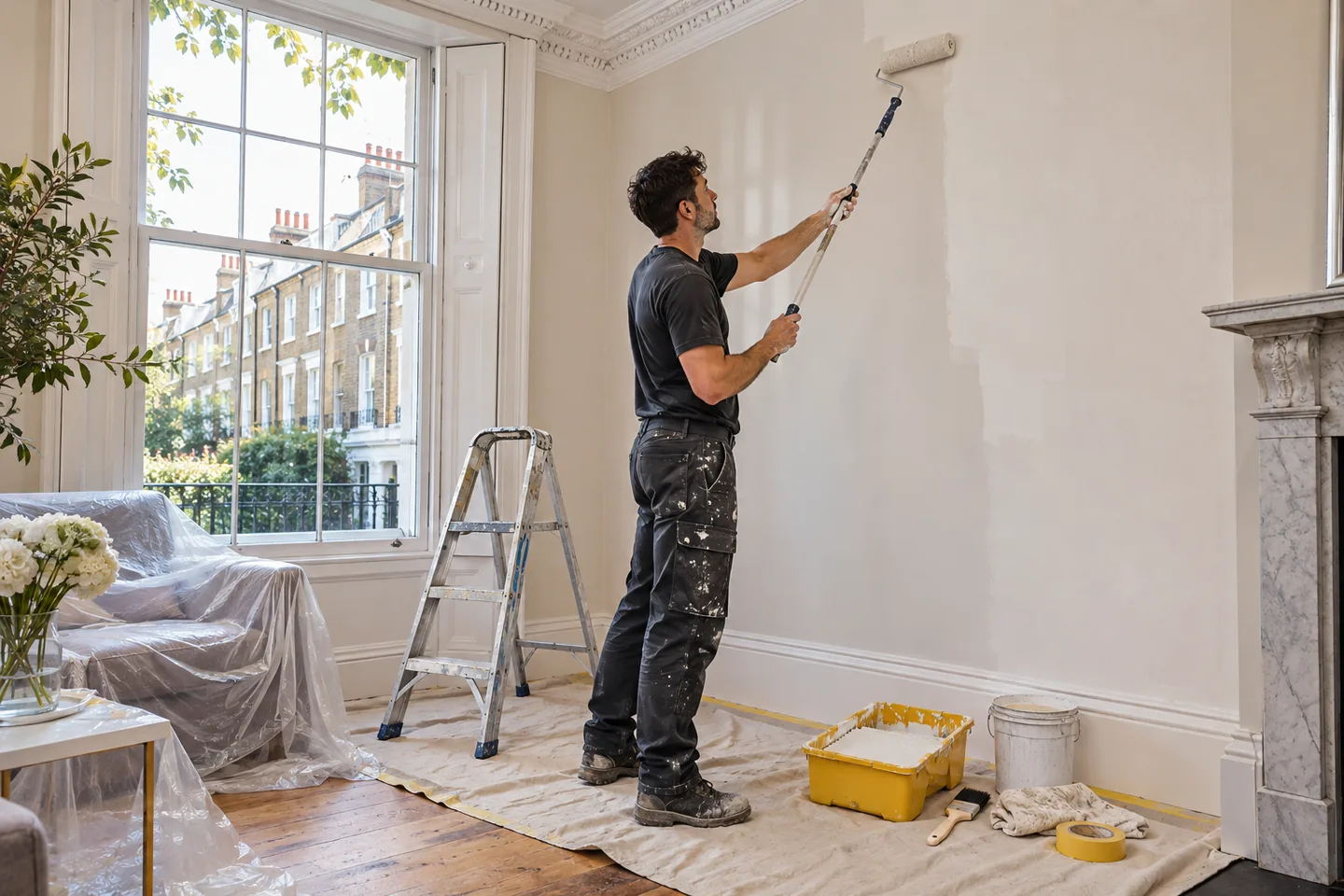
A better finish
starts underneath.
INTERIORS / LONDON
Can you decorate a room while the property is occupied?
We discuss furniture, access and which areas need to stay usable before arranging the work. The coating system and drying requirements affect the plan. Tell us who will be at the property and any restrictions on when we can work.
Can you quote from photos of my London property?
Photos, approximate measurements and the surfaces you want painted help us review an enquiry. We may still need to assess the background or access before agreeing a price. Call with your full postcode and show us any peeling paint, staining or previous repairs.
THE WORK BEHIND THE FINISH
Interior decorating.
Thought through from the start.
We provide painting and decorating in London for homes and other interiors. We work with the room you have: the existing wall finish, the condition of the timber, the light and the parts that need to remain in use.
A colour change on a sound wall can be relatively straightforward. Flaking coatings, patched plaster or a stain left after a leak need a different conversation. We check those differences before deciding what preparation and products the job needs. An extra coat cannot put a weak background right.
We can follow a colour scheme you have chosen or discuss the finish before you buy paint. Tell us whether the job includes walls, ceilings, doors, skirting and frames; these are separate surfaces, with different preparation and coating requirements. We make that distinction in the proposed work.
What we discuss with your enquiry
- The rooms and surfaces to be painted, with approximate measurements.
- The condition of the current finish and any recent repairs or water damage.
- Your chosen colours, paint products and any materials already supplied.
- Furniture, flooring, access height and protection around the working area.
- Drying requirements, room use and how we can arrange the visits.
PREPARATION IS PART OF THE JOB
The parts you may
never see again.
We prepare the immediate working area and the background before we start the finish. These tasks depend on the property; the same room size does not mean the same amount of work.

Protect the room
We look at how to reach the working surfaces without dragging equipment through unprotected areas. We discuss what furniture can be moved, what needs covering and where materials can be kept while the work is underway. Access to doors, windows and everyday facilities is part of that discussion.
We use suitable dust sheets and masking where the job requires them. The existing floor and finish determine what protection is appropriate. Fragile or poorly bonded paint can lift when masking is removed, so we do not assume every surface can take the same tape or treatment.
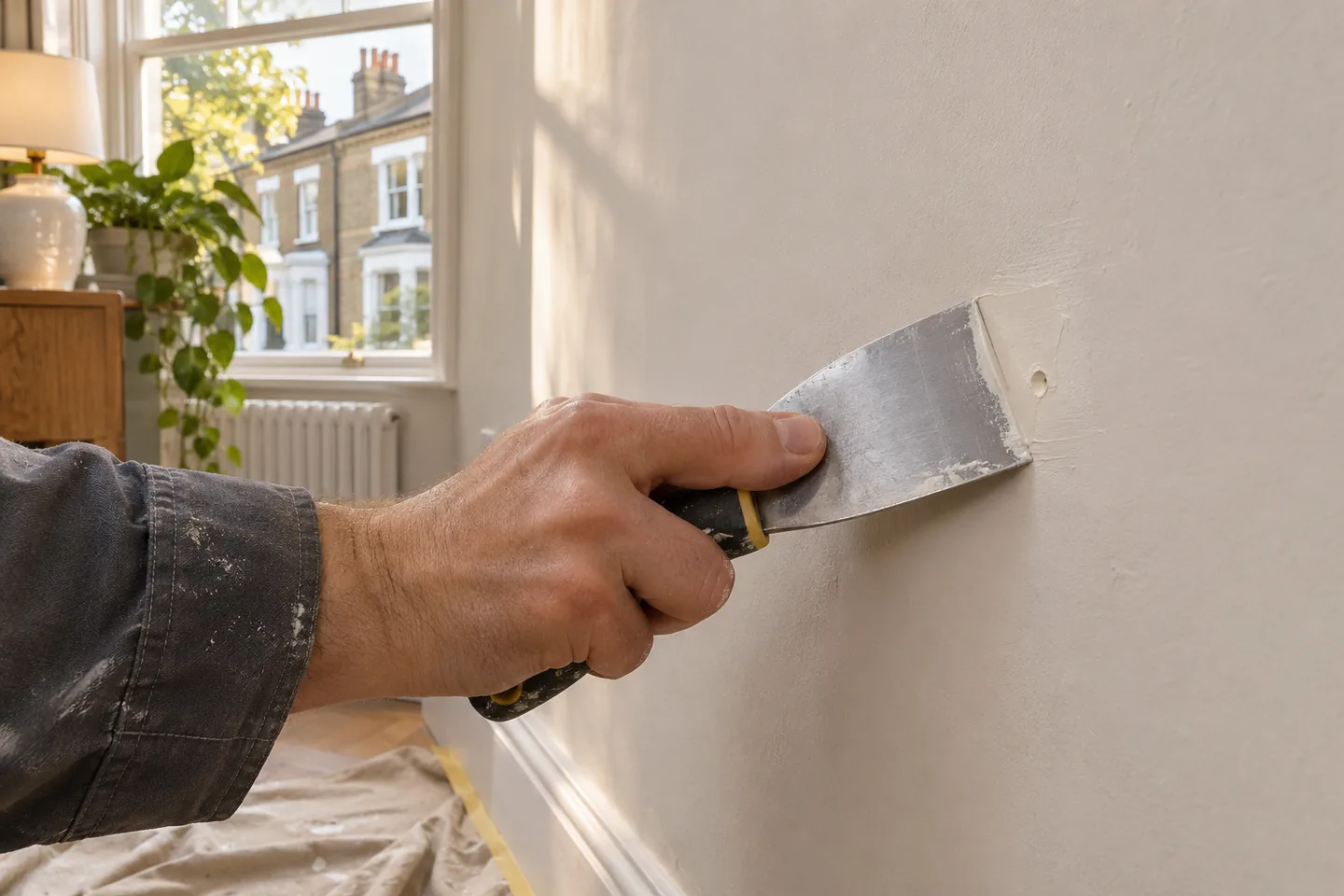
Repair the background
We check loose paint, previous filled areas and local defects before applying a new coating. Small holes or shallow imperfections can need filling, drying and smoothing. A crack that keeps returning or an area that feels loose may need investigation or a different repair before decorating can continue.
Where staining follows a leak, we need to know whether the source has been repaired and the background is ready for decoration. We discuss related water damage restoration or plumbing repairs where relevant. We do not treat fresh paint as a way to hide an unresolved moisture problem.
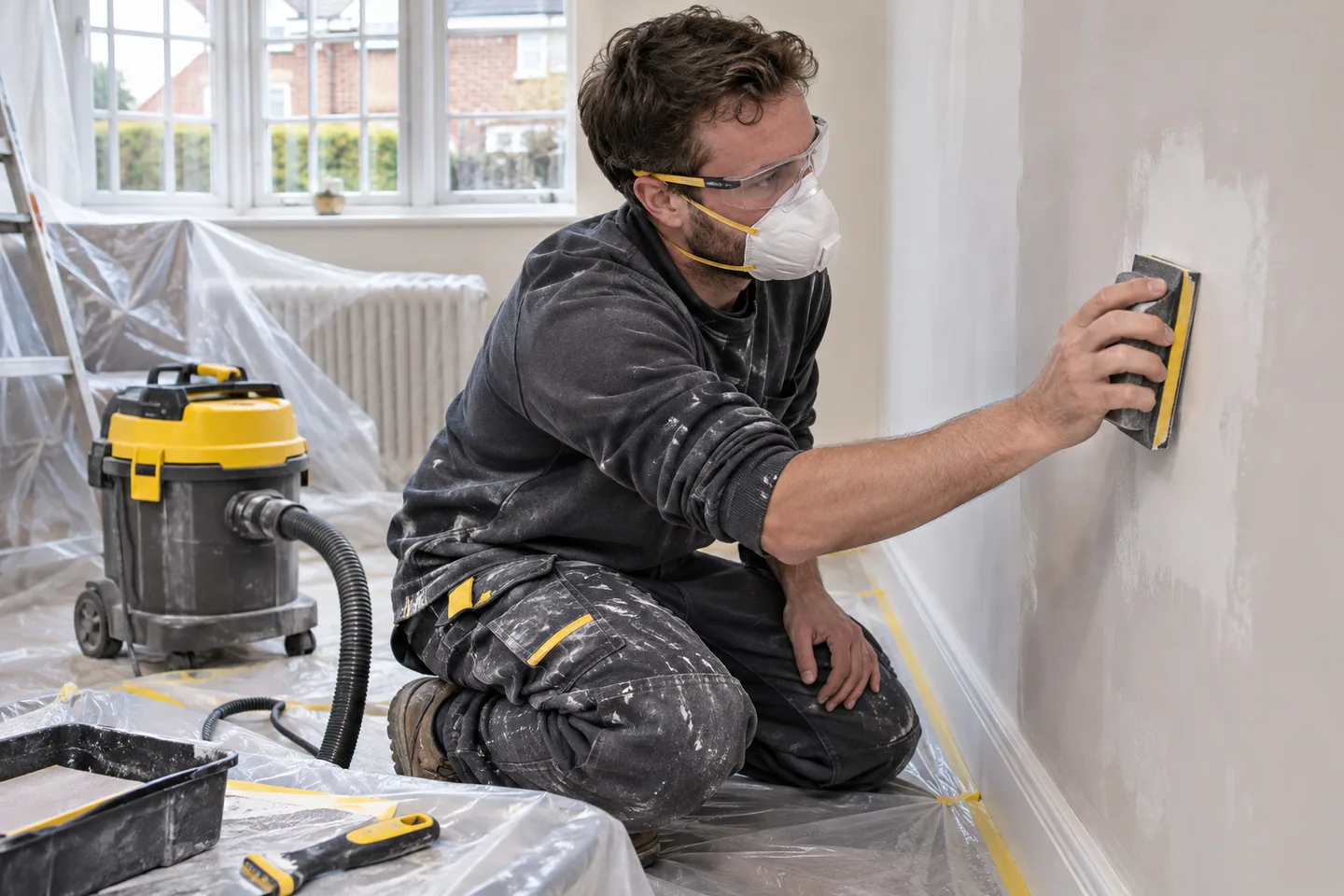
Prepare for adhesion
We use abrasives suited to the existing surface and the repair being prepared. Edges of old coatings, filled patches and timber details need a smooth transition rather than a ridge that shows through the finished paint. We remove preparation dust before coating; leaving it in place can affect the finish and adhesion.
An unfamiliar coating, extensive failure or an uncertain background needs assessment before we disturb it. We discuss any work beyond normal preparation when the condition becomes clear. New plaster, glossy finishes and previously stained areas also need the coating system checked rather than assuming the same wall paint will suit them all.
DIFFERENT SURFACES. DIFFERENT WORK.
The wall is only
part of the room.
We agree which surfaces are included, how they will be prepared and what finish is intended. A neat room depends on the small details meeting the larger painted areas.
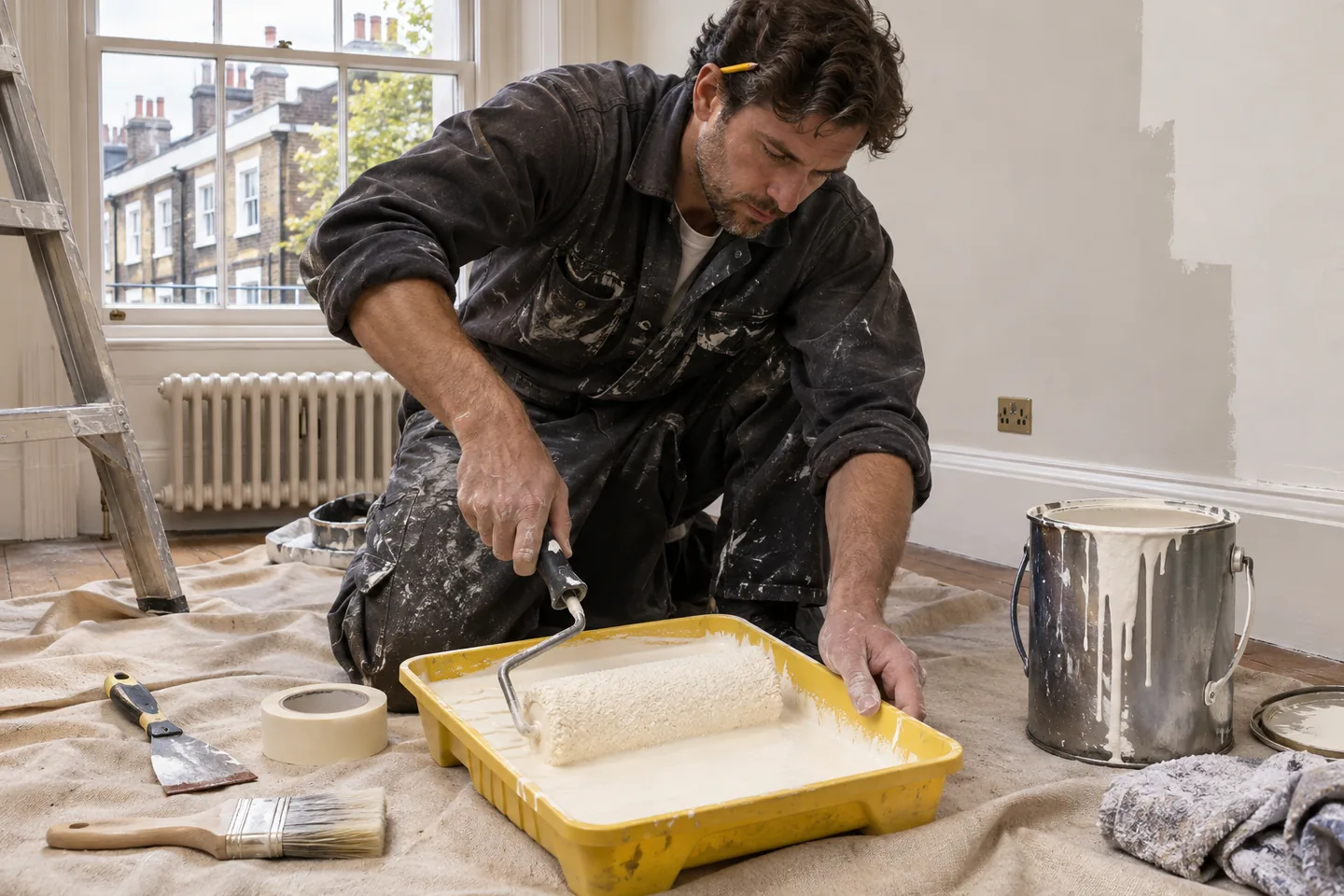
Walls & ceilings
We check the wall or ceiling finish for defects and uneven absorption. Once preparation is ready, we set out the edges and work the wider areas with rollers suited to the surface and paint. We follow the product’s application guidance and maintain even coverage across each continuous surface.
Coverage depends on the product, background and colour change. We discuss the number of coats with the proposed paint system. A ceiling, a heavily patched wall and a sound wall being refreshed may each need different work. The room calculator below separates ceiling area from the wall measurement.
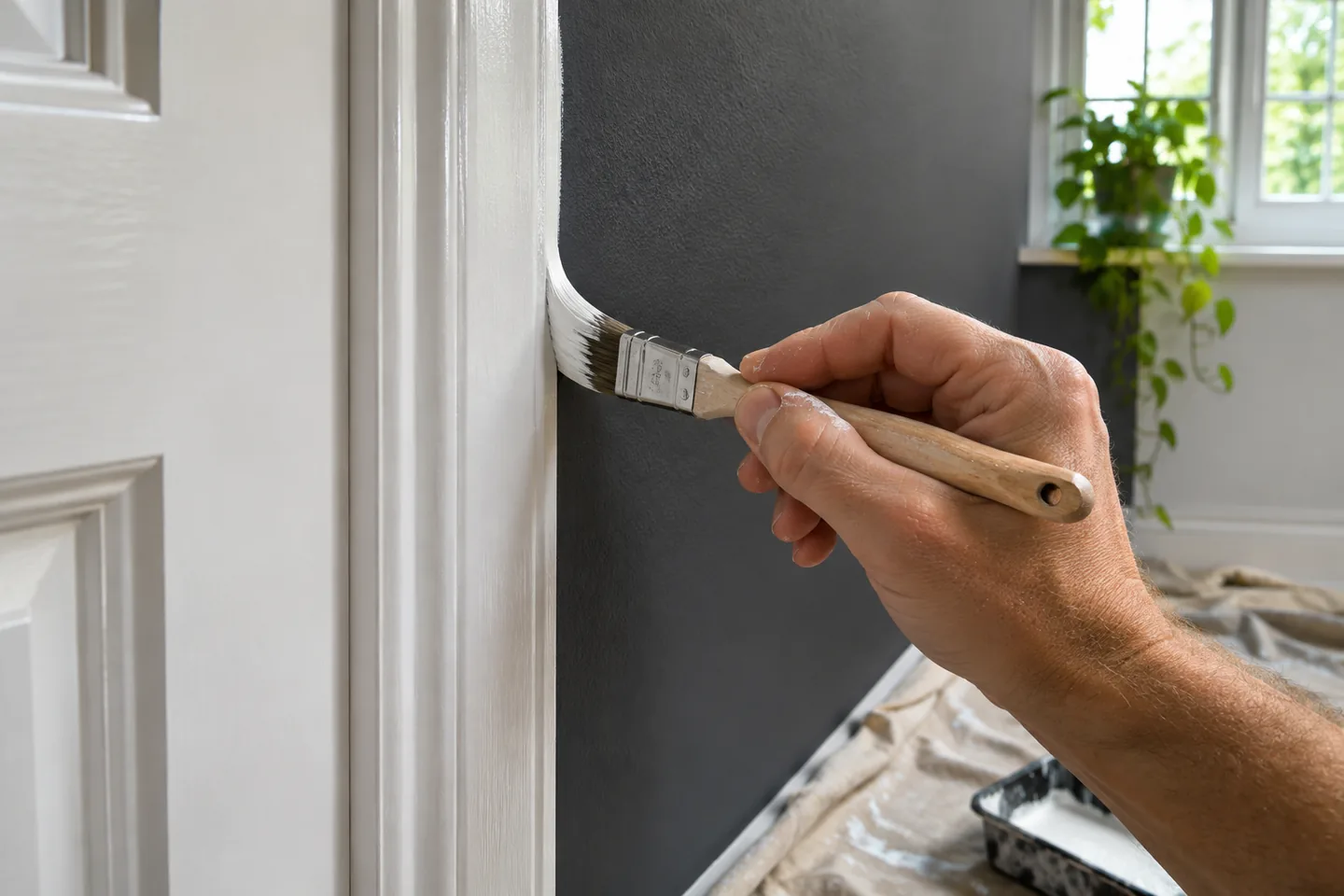
Edges & junctions
We use brushes suited to the detail when working around corners, ceiling lines, frames and other changes of surface. Those edges need care as well as the larger areas. Existing unevenness may limit the straightness of a junction unless the underlying defect is also repaired.
We discuss the boundary between surfaces and which elements are included before starting. Radiators, fitted units, switches and sockets can restrict access; painting a room does not automatically include removing fixtures or carrying out electrical or plumbing alterations. We raise that work separately if it is needed.

Doors, skirting & frames
We inspect the existing timber coating and the condition of the edges and joints. Loose paint, dents and previous repairs affect the preparation. Depending on the agreed finish, the work can include local filling, smoothing and a compatible primer or undercoat before the finishing product.
We use the product and tools appropriate to the timber detail rather than assuming wall emulsion is suitable for it. If a door catches or a fitting is loose, we discuss the carpentry repair before applying a new finish. We check accessible moving parts and explain when the coated item can be used normally.
CHOOSE THE RIGHT APPROACH
A finish that suits
the surface underneath.
This table compares the work we need to discuss. It is not a promise that one product will solve every background problem. We confirm compatibility and any preparation products before agreeing the job.
Showing all surfaces.
| Surface | What we consider | Preparation question | Useful enquiry details |
|---|---|---|---|
| Walls in sound condition | An interior wall paint suited to the room and intended use | Check the existing coating, surface cleanliness and product coverage | Colour, sheen and product details |
| Ceilings | A ceiling or interior paint appropriate to the existing background | Inspect patches and staining; check whether the cause needs attention | Ceiling area, access height and defects |
| Skirting, frames and doors | A compatible woodwork coating system | Check old finish, timber defects and any movement or catching | Existing coating and desired finish |
| Patched walls or new plaster | A system appropriate to the readiness and absorption of the background | Confirm the repair is ready; check priming requirements against the product instructions | Repair history and proposed product |
| Walls with stains or failed paint | Assessment before choosing the coating | Identify whether the cause or the loose background needs further work | What happened, previous treatments and photos |
MEASURE. PLAN. DISCUSS.
Bring the room
into the conversation.
Use your room measurements and the instructions for your chosen paint. The material calculator shows the maths; the visit planner separates product waiting from working time; the labour budget uses standard time-based labour rates.
Your decorating workbench
Three connected tools for a more useful enquiry. Change tabs to measure the room, discuss drying and explore a labour budget.
Schematic — not a measured drawing.
YOUR ROOM
Add measurements
We’ll calculate the wall area, any ceiling area and the paint quantity from the product coverage you enter.
Calculated quantity before any allowance for waste or additional preparation. Porous surfaces, colour changes and additional preparation can alter what is needed. Walls and ceilings may need different products; calculate them separately where relevant. Trims, doors and irregular surfaces are not measured by this room formula.
VISIT LENGTH
Assessment needed
We agree working time after reviewing the room and finish. We do not turn floor area into guessed labour hours.
Waiting = (coats − 1) × the recoat interval you enter. This is not a completion promise or total visit duration. Final curing, preparation products, room conditions and any additional coats need separate consideration.
INDICATIVE LABOUR
Individual assessment
Choose a working time to see a labour budget. Materials and other applicable costs are separate.
One-hour minimum; additional time charged in half-hour increments. Standard time-based rates only, including taxes. Paint, preparation materials, sourcing time, parking and congestion charges are additional where applicable. Bigger decorating projects need a job-specific quote. No package deals or discounts are applied.
The brief includes your latest calculated results. Uncalculated tabs are marked accordingly. Nothing is sent automatically; the email link opens a draft for you to review.
Where an online calculation stops
A measured area does not show peeling paint, porous repairs or the condition of a skirting board. The litres calculation uses the coverage you enter and adds no assumed wastage percentage. We review the product and background before confirming what to buy. Larger interiors and combined refurbishment work need an individual quote.
THE FINISH & THE HANDOVER
We check the detail.
You know what comes next.
We inspect the agreed painted surfaces for coverage, missed areas and the junctions around frames and other details. We look at the work in the light available in the room and address issues found in the finished coating. Existing uneven backgrounds can still affect the appearance where levelling or wider repairs were not part of the agreed work.
Where woodwork has been painted, we check the relevant operation and explain any restriction while the finish develops. We remove protection appropriately, gather the work materials and discuss the condition of the room before handing it back. Keeping the product information matters if later touching-up is needed.
We distinguish between touch-dry, recoat and final curing instructions. Those are product requirements, not interchangeable descriptions of when a room is ready for every use. We explain the relevant aftercare for the materials applied and any area that still needs attention.
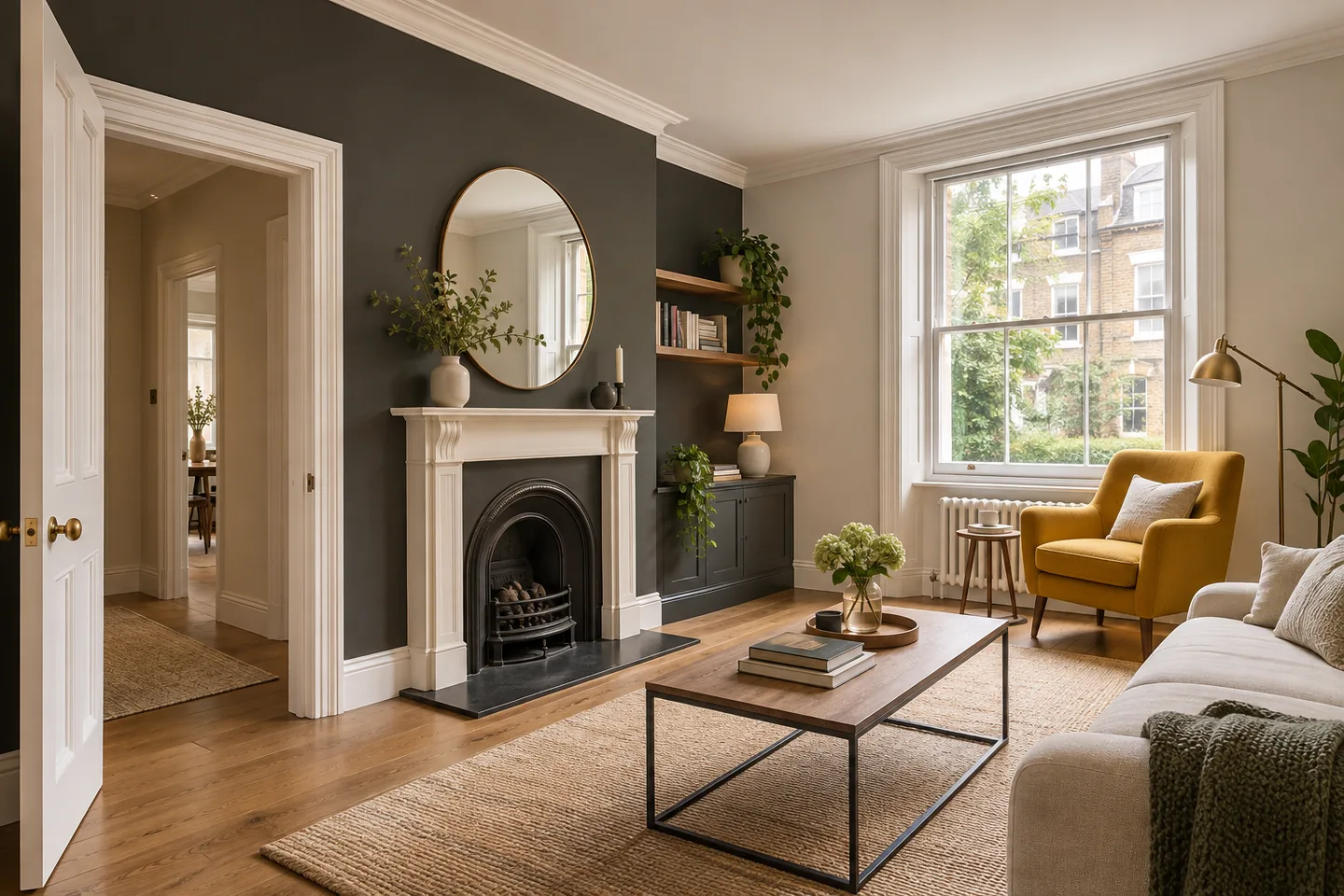
Illustrative interior finish created for this service page.
A PRACTICAL PLAN FOR YOUR PROPERTY
The paint is one part.
The arrangements matter too.
We organise the visit around the agreed work, the room and access to it. Clear information at booking helps us avoid discovering a preventable problem after the equipment arrives.
Materials, colours & matching
We discuss whether you will supply the paint or whether sourcing needs arranging. Share the product name, finish and colour reference, not just a photograph of a colour on a screen. We check the quantities and compatibility before the work starts. Paint and preparation materials are separate from an online labour budget.
Existing paint may have aged or come from a different batch. A local touch-up can remain visible even when the colour name matches. We discuss whether a local repair or repainting a wider continuous surface is more appropriate before committing to a small patch.
Access, room use & related repairs
Tell us about furniture that cannot move, high ceilings, stairwells, parking and any building restrictions. We need enough space for the agreed work and the appropriate access arrangement. A difficult area or work requiring different equipment needs discussion rather than an assumption that it is included.
For rented properties, establish permission and who can approve any additional repair. If the project also involves flooring or broader changes, we can discuss flooring services or property refurbishment so that the work is considered together. We confirm the order and arrangements for the actual job.
BEFORE YOU BOOK YOUR DECORATOR
Questions about
the room and the finish.
Does the paint quantity calculator tell me how much paint to order?
It gives a mathematical quantity from the room measurements, coat count and product coverage you enter. No extra allowance is included. Absorbent repairs, the colour change and different products for walls and ceilings can alter the purchase quantity, so we check the room and paint specification before confirming materials.
Will you paint over a stain left after a leak?
We first need to understand the cause, whether it has been repaired and whether the background is ready for decoration. A stain or damp area may need assessment and additional preparation rather than another coat of ordinary paint. We discuss that work and any related repair before choosing the finish.
Can you match paint already on the wall?
We can discuss a supplied colour reference and product, but an existing finish may have changed with age, wear or light. A fresh local patch may remain visible. We assess the area and explain whether a broader continuous surface needs repainting rather than promising an invisible touch-up from a colour name alone.
Does decorating include fixing a door that catches?
A catching door needs its movement and hardware checked before a new finish is applied. Painting alone does not correct the alignment. We can discuss the relevant carpentry work as a related service, agree what is needed and then plan the decoration around the repair.
How do you decide whether the room needs another visit?
We consider preparation, the proposed coating system and the conditions in the room. Filling, priming and finishing products can each have drying requirements. The labelled recoat interval helps plan waiting between coats, but it does not establish the total working time or guarantee completion within one visit.
Are floors, furniture and fittings included in the room measurement?
The calculator measures rectangular wall area and an optional ceiling. It deducts the door and window area you supply. It does not measure furniture, radiator surfaces, door leaves or detailed trims. We discuss those separately, along with protecting the room and which fixtures can remain in place.
LONDON INTERIORS
Tell us the postcode.
Show us the room.
We take painting and decorating enquiries across London. Share the full postcode, the rooms involved and the finish you have in mind so that we can check the service and available arrangements for your address. Our London area guide brings together the existing local Handyman pages; it does not guarantee an immediate visit.
LET’S DISCUSS THE WORK
A room ready
for a fresh finish.
Call 020 3746 0607 with the property details, or prepare a decorating brief above. We’ll discuss the surfaces, materials and available appointment before you book.