
HANDYMAN / NOTTING HILL
Handyman Notting Hill.
Consider the finish too.
A practical repair can affect the detail around it. We assess hardware, timber and fixing backgrounds, explain likely disturbance and agree the work before altering the item.
Call line 24/7 · Work and availability confirmed for your address.
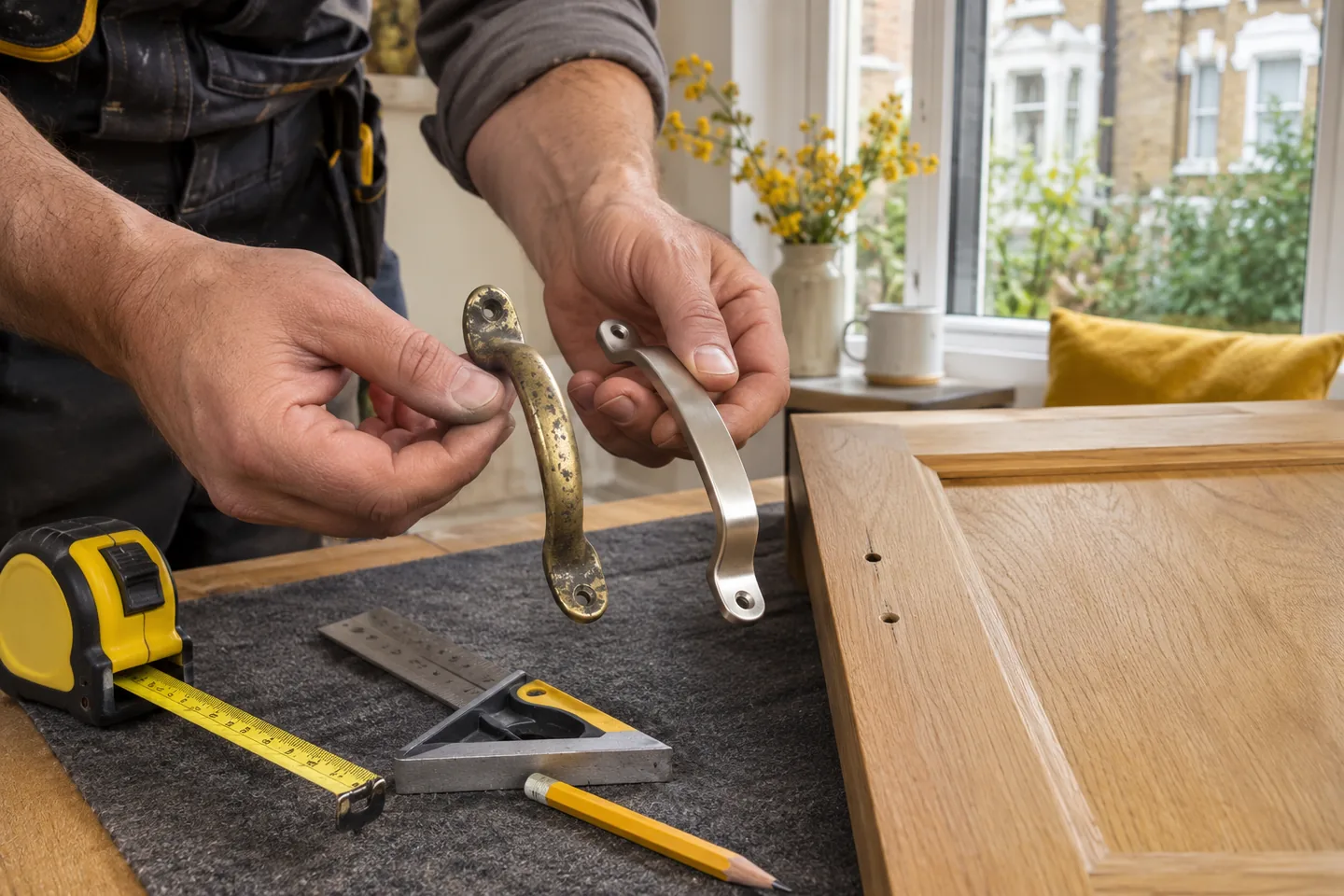
Functional repairs with attention to the surfaces you want to retain.
Can you replace hardware without leaving visible marks?
We compare the new fitting’s footprint with the old one and discuss likely exposed holes or paint lines. Some marks are only revealed during removal. We explain preparation and finishing options rather than promise that different hardware will cover every existing mark.
Does a Notting Hill property need permission for repairs?
Requirements depend on the particular property and work. Tell us if it is listed, subject to owner or building rules, or has details that must be retained. Establish required consent before alteration; we can then discuss the practical repair within that arrangement.
THE WORK IN YOUR HOME
Make the repair decision before the permanent change
A replacement handle may expose an old paint line. A new shelf may need a different hole pattern. A trimmed door edge may need finishing. We provide handyman help in Notting Hill with those consequences considered alongside the fault. Tell us which existing surfaces and fittings are to remain, and any property requirements that affect alteration.
We assess the actual material and connection rather than assume a particular construction from the address or appearance. A previous repair, damaged fixing hole or proprietary mechanism can influence the options. Photographs, product details and a clear description help us prepare, while inspection establishes what can be adjusted, repaired or replaced. We explain limitations before a visible fitting is changed.
Useful details for your enquiry
- Door and handle repairs assessed with the existing finish in mind.
- Mirrors, shelves and rails positioned before permanent fixing.
- Cabinet hinges and catches matched to the actual unit.
- Furniture assembly with protected surfaces and final clearances checked.
- Making good distinguished from wider decorative finishing.
Inspect the handle footprint before selecting a replacement
We examine the fixing positions, spindle and latch as well as the visible handle. A new backplate can be smaller, leaving holes or a different colour beneath the old fitting. Tightening may be suitable where the original hardware and timber remain sound, but a worn mechanism or cracked component needs a different decision. We test safely with the door open first.
Compatible replacement parts are discussed alongside the finish effect. We protect surrounding surfaces and avoid forcing screws into damaged material. After fitting or adjustment, the handle should return and the latch operate without rubbing. We check the door closed as well, keeping access safe. Our carpentry service can assess related timber repairs and alignment where those contribute to the fault.
MATCH THE REPAIR
Consider the repair and its visible effect
The mechanical decision and the finishing decision should be understood together.
6 service options.
| Problem or task | What we inspect | Work to discuss | Related service |
|---|---|---|---|
| Handle needs replacement | Spindle, footprint and existing holes | Choose compatible hardware and discuss marks | Carpentry services ↗ |
| Door rubs painted edge | Gaps, hinges and contact point | Adjust before agreeing material removal | Carpentry services ↗ |
| Mirror changes position | Mounting method and wall background | Agree sound support and making good | Hanging wall mounting ↗ |
| Cupboard front drops | Hinge specification and board condition | Repair connection before setting gaps | Carpentry services ↗ |
| Drawer front loosens | Box joints and runner resistance | Resolve movement before reattaching front | Carpentry services ↗ |
| Sealant splits | Movement and surface condition | Prepare suitable joint or address cause | Tiling grouting re sealing ↗ |

A catching door needs its geometry understood
We compare the gaps around the leaf, hinge movement and contact marks before proposing a cut. A door can rub because its fixings loosened, its frame changed or a floor covering reduced clearance. Removing timber from the wrong edge can leave the underlying movement untouched. We ask when the fault began and whether painting or flooring work preceded it.
Suitable adjustment is made with the leaf supported. If trimming is appropriate, we discuss construction, allowance and finishing before removing material. Specialist door requirements must be respected. Final checks cover the full swing and latch engagement without a shove. The exposed edge, if any, needs the agreed protection rather than being left as an unnoticed consequence of restoring movement.
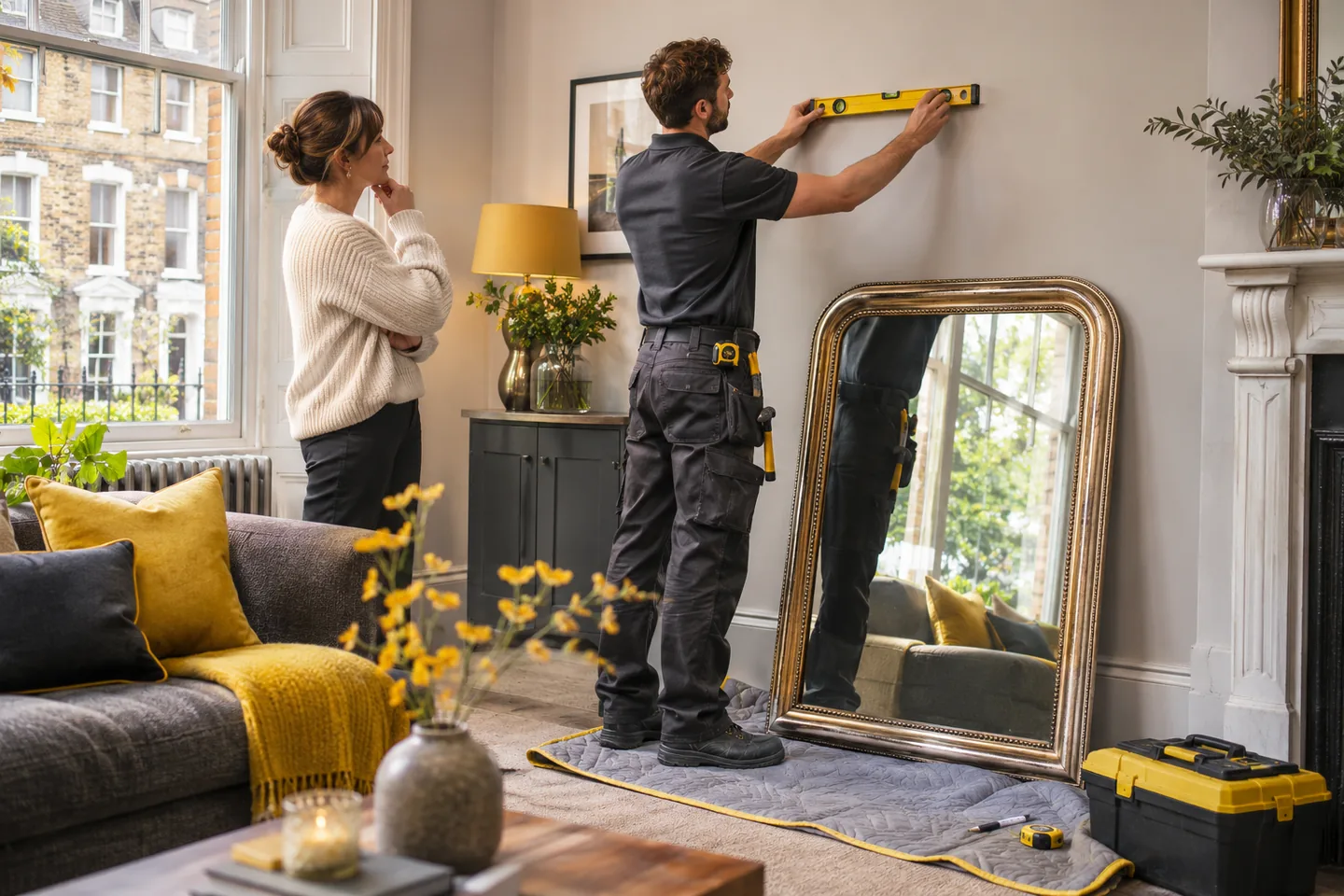
Wall fittings should have an agreed visual position
We establish the intended height and relationship to furniture before assessing the mounting points. A balanced position does not always coincide with a suitable fixing area. The wall background, patched holes and possible concealed services are considered alongside the item’s mounting instructions. We ask whether the location can change if the proposed point is weak or unsuitable.
Where fitting is appropriate, measurements and a level establish the positions before drilling. The attachment method follows the assessed construction and product. We check seating and visible movement afterwards. Our wall mounting service includes mirrors and shelves, with care taken to explain any old holes or marks left outside the new item’s footprint.

Cabinet hinges need specification as well as appearance
A hinge that looks close to the original can have a different opening angle or overlay. We inspect the cup, plate and board before selecting hardware. A dropped front may be caused by adjustment, wear or damaged mounting material. The door is supported while the connection is checked, and neighbouring fronts are considered so one adjustment does not create another clash.
Where suitable, compatible parts are fitted and the gaps set after the cabinet is confirmed sound and square. We check the full opening and closing action. If the board has deteriorated or a proprietary part is unavailable, we explain the options. Visible plates or new fixing positions are discussed before alteration rather than presented as an unavoidable surprise at the end.
THE AREA / THE ACTUAL ADDRESS
Notting Hill: confirm the property’s own requirements
The Royal Borough of Kensington and Chelsea publishes conservation-area maps and appraisals covering different parts of the borough. Notting Hill is a locality name, not a single set of construction or permission rules. Give us the exact address and tell us if the property has listed status, retained details or owner requirements affecting the proposed work.
We can then discuss a practical repair with those conditions understood. Required consent should be established before alteration, particularly where a permanent fitting or joinery change is proposed. Entrance, floor and shared-access details are also useful for handling furniture or mirrors. Nearby area information includes Kensington, Shepherd’s Bush, Paddington and Hammersmith. The repair method remains specific to the wall, timber and hardware at your property.
PLAN THE WORK
Explore the time and labour budget.
Select the task, quantity and visit period. Assembly benchmarks and entered time assumptions stay visible; other repairs need an individual assessment.
Plan your Notting Hill repair enquiry
Choose the work, enter quantities and review the assumptions. We confirm the repair, working time and availability before booking.
Assembly benchmarks assume complete product parts, instructions and a clear working area. For other repairs, a known condition does not establish a standard duration.
Compare the assembly work
Published London assembly ranges for one item. These are external planning benchmarks, not our recorded job times or guaranteed completion periods.
Time evidence: published London assembly ranges, checked 3 November 2026. Product, staffing and access differences require assessment. Carrying, missing parts and wall restraint are not automatically included.
Compare labour for the same working time
Comparison uses the selected day and visit period. These are labour categories at equal time, not fixed job prices. One-hour minimum; subsequent half hours. Materials, sourcing time, parking and congestion charges are separate. Rates include taxes. Daytime: handyman 08:00–18:00; plumbing/electrics 08:00–18:00 weekdays and 08:00–17:30 weekends. Outside-daytime availability needs confirming.
What changes the repair decision?
This compares the checks needed for the selected repair, not a scored difficulty or a promised duration.
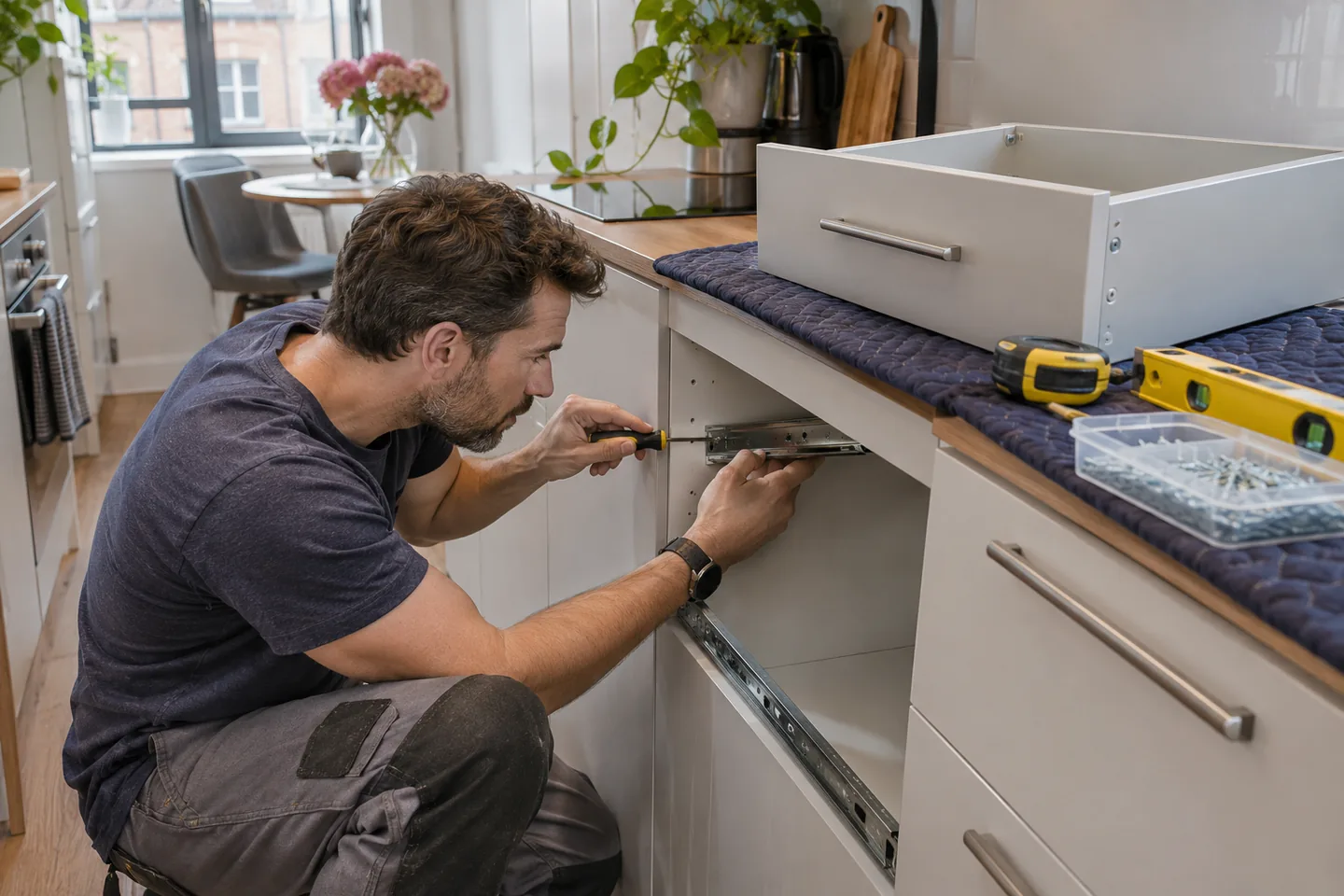
A loose drawer may need its joint repaired
We remove contents and examine the front attachment, corner joints, base and runners. A drawer can drag because the base has slipped, and that resistance can loosen the front when it is pulled. Replacing the handle alone would leave the cause unresolved. We use the intended runner release and support the box during removal.
Suitable repair follows the original construction and material condition. Compatible runners are selected by dimensions and mounting method where needed. We test stops, smooth travel and clearance to adjacent fronts after the box is sound. Damaged material may limit the available attachment, which is explained before a new hole pattern or reinforcing component is proposed.

Assemble new furniture without sacrificing the old surfaces
We plan a protected area large enough for the product’s sequence and handling. Finished panels are kept clear of grit and hard contact. The route and final footprint are checked against doors, skirting and sockets before assembly begins. Product components and hardware are identified from the instructions rather than matched by appearance alone.
We check square, support contact and prescribed restraint before aligning doors or drawers. A missing proprietary part is recorded rather than replaced with an uncertain substitute. Final operation is checked in the room, including clearances from existing furniture. Our assembly service can review the model and preparation requirements in advance, with any unsuitable location explained before the item is loaded.
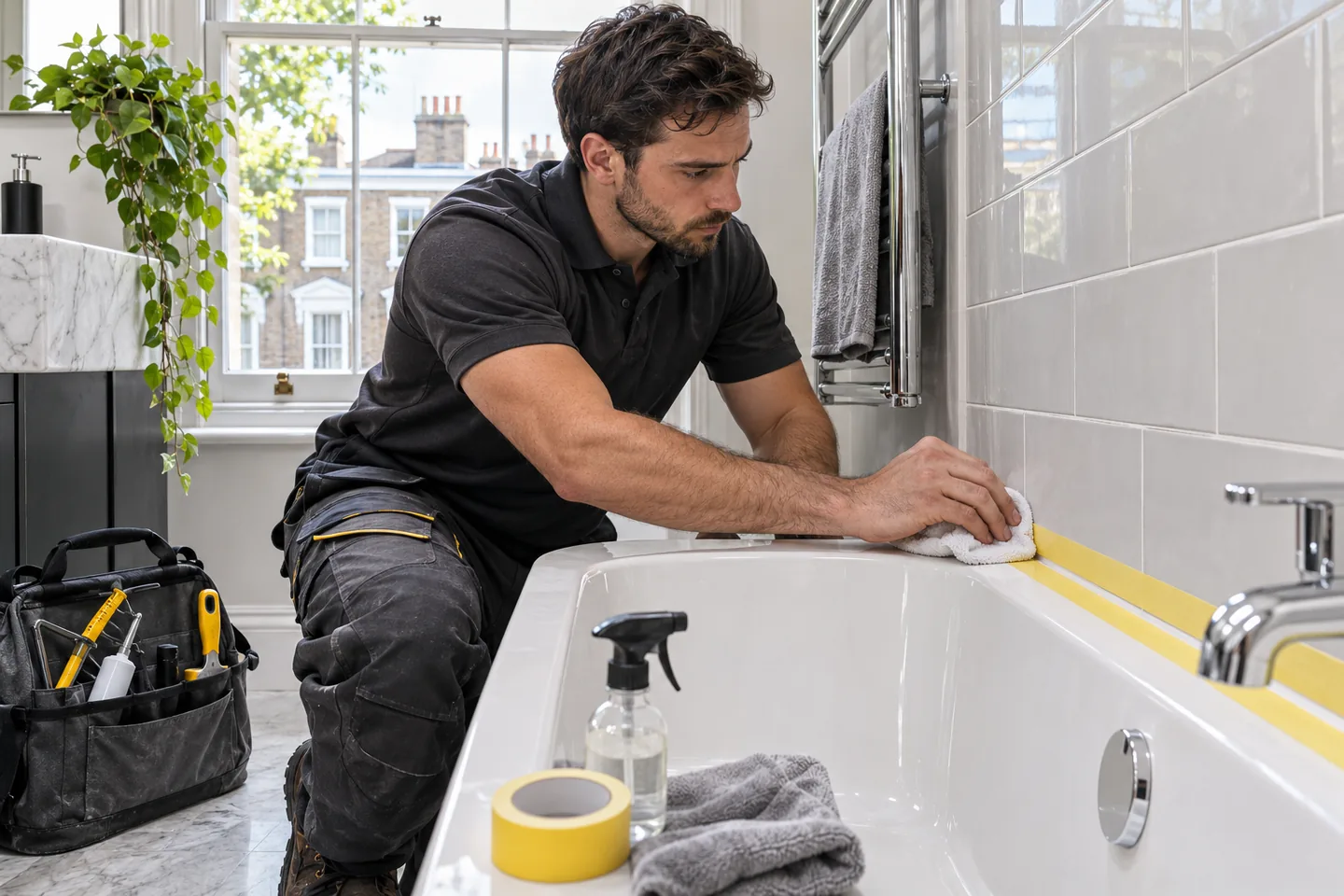
Sealant repairs need a suitable clean junction
We inspect the joint and adjacent finish for movement, moisture and deterioration. A split bead may reflect a loose fitting or water coming from elsewhere. New material should not cover old sealant, mould or a wet background. We explain when the surrounding issue needs attention before a surface repair can proceed.
Where suitable, failed sealant is removed and the contact surfaces prepared for a compatible product. Neighbouring finishes are protected, and the new joint formed carefully. We leave curing and cleaning instructions before normal use resumes. Our resealing service can assess the surface work, while an accessible leaking connection is a separate plumbing enquiry.
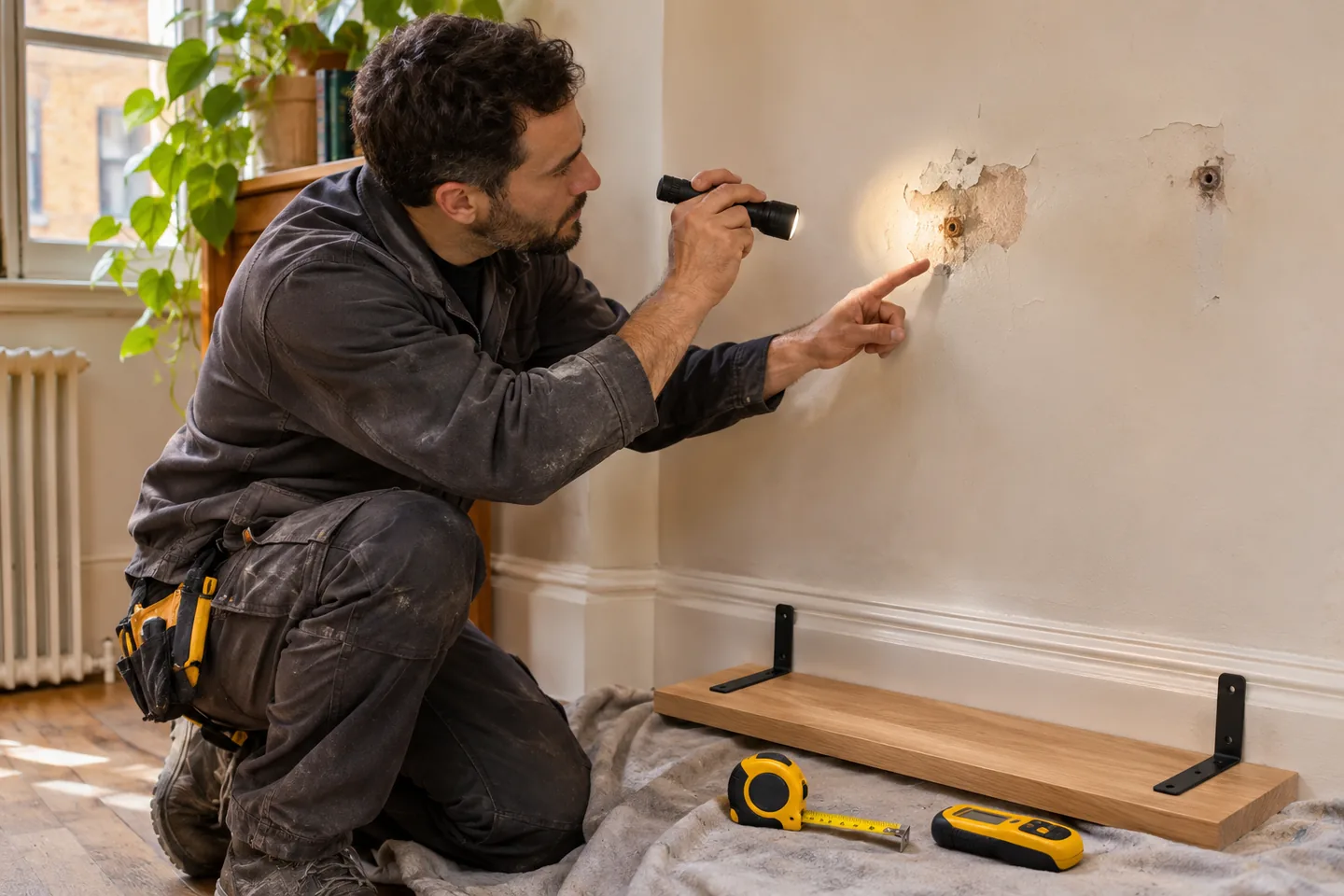
Decorative making good needs a defined area
A filled hole can remain noticeable because texture, sheen or colour differs from the surrounding surface. We discuss the intended result before local preparation. Loose paint, dampness and damaged plaster need addressing rather than simply receiving filler. Where an old fitting has been removed, the area of disturbance may be wider than its screw holes.
We explain whether local making good or a larger decorating area is appropriate for the finish wanted. After the practical repair, we operate the fittings and review any remaining marks or material requirements. Our painting and decorating service can consider a wider room, with preparation and coverage agreed clearly. Instructions and spare proprietary parts remain available at handover.
EMERGENCY LOCKSMITH ENQUIRIES
A lock replacement also affects the door detail
If a key or locking mechanism is unreliable, tell us whether the fault occurs with the door open and whether the property remains secure. Alignment and hardware condition need separate consideration. A stiff key should not be forced to pull a binding door into position. Keep existing keys and loose parts available, and tell us about any retained hardware or specific door requirements before replacement is considered.
We take locksmith enquiries through our call line 24/7 on 020 3746 0607. We confirm availability, proposed work and price for the address and access situation. Relevant authority to enter or alter the door may need establishing. Photographs of visible hardware can help when safely taken, particularly where dimensions and finish are important. After agreed work, we check closing, latching and locking together and explain any related frame or hinge issue. Where a new component has a different footprint or operation, that is discussed rather than left to be discovered later. Product information and any new key arrangement should remain available to the person responsible for access. Tell us whether other authorised users need keys, so the handover can include the practical access arrangement as well as the hardware.
BEFORE YOU BOOK
Questions about the work here.
Can you retain original hardware?
We assess whether it remains functional and compatible with the repair. Wear, broken components and damaged mounting material can limit reuse. We explain the findings before selecting an alternative.
Will you check permission requirements?
Tell us the property’s status and any owner or building conditions before work. Required consent should be established by the responsible party before alteration. We discuss the practical work with those requirements available.
Can a small painted patch be invisible?
The result depends on the existing colour, sheen, texture and ageing. We explain the likely finishing area rather than promise a perfect local match. Wider decorating may be appropriate for a consistent finish.
Can you remove an old mirror?
Include removal in the enquiry and send photographs of its attachment where visible. Adhesive and concealed fixings can affect removal and the wall beneath. We plan handling and discuss likely disturbance before proceeding.
Should I buy handles before assessment?
Send the proposed product details first if possible. Dimensions, spindle and fixing arrangements matter, as does the area it covers. A visually similar handle may not suit the existing door or latch.
Can several small repairs be combined?
Yes, give every item a room, symptom and photograph. Note retained finishes and any supplied parts. We review access and preparation for the actual list, with additional findings discussed before the work changes.
TELL US WHAT NEEDS ATTENTION
Discuss your Notting Hill repair list.
Call 020 3746 0607 with the property address, the items needing attention and the available access. We review the work and confirm the arrangements before a visit is booked.
Original illustrative work scenes show the activities described; they are not photographs of completed customer jobs in this neighbourhood.