
HANDYMAN / KENSINGTON
Handyman in Kensington.
Agree the detail first.
When an existing room needs a small repair, the connection and the visible finish both matter. We inspect what is sound, explain the preparation and agree how the repaired fitting should work with its surroundings.
Call line 24/7 · Work and availability confirmed for your address.

FITTING REPAIRS / MAKING GOOD
Can a repair keep the original visible hardware?
We inspect the hardware and its connection separately. Sometimes a compatible screw, plate or internal component allows the visible part to remain. Damage, unavailable parts or unsuitable geometry can prevent that. We explain both the practical repair and the likely visible result before agreeing the work.
Can a new fitting cover old holes?
It may, but we first need to establish suitable new fixing positions and sound material. A larger cover plate should not hide a weak connection. Redundant holes and surrounding finish may need separate making good, which we discuss before the new fitting is installed.
THE WORK IN YOUR HOME
Retain what works, repair what does not.
A replacement fitting can create more disruption than expected if its screw centres, projection or finish differ from the original. We discuss Kensington handyman jobs by examining those practical details first. Show us the damaged part and a matching item if one remains. We can consider whether a compatible repair is possible without assuming that an entire set of hardware or a whole unit needs replacing.
We also ask about the room’s finish and any restrictions on altering it. Mounting, furniture assembly, carpentry and resealing need different preparation even when the visible task is small. We identify what may show after removal, what support is available and what needs approval before proceeding. Where the condition cannot be established from a photograph, we explain the inspection needed rather than promise a particular repair or exact colour match.
Useful details for your enquiry
- Photograph matching fittings and retain any product markings.
- Tell us which surfaces must be protected and which finishes you want retained.
- Show the old fitting before removing it where it remains safe.
- Identify access panels or services behind the proposed work.
- Share any building or consent conditions before permanent alterations.
PLAN THE WORK
Explore the time and labour budget.
Select the task, quantity and visit period. Assembly benchmarks and entered time assumptions stay visible; other repairs need an individual assessment.
Plan your Kensington repair enquiry
Choose the work, enter quantities and review the assumptions. We confirm the repair, working time and availability before booking.
Assembly benchmarks assume complete product parts, instructions and a clear working area. For other repairs, a known condition does not establish a standard duration.
Compare the assembly work
Published London assembly ranges for one item. These are external planning benchmarks, not our recorded job times or guaranteed completion periods.
Time evidence: published London assembly ranges, checked 3 November 2026. Product, staffing and access differences require assessment. Carrying, missing parts and wall restraint are not automatically included.
Compare labour for the same working time
Comparison uses the selected day and visit period. These are labour categories at equal time, not fixed job prices. One-hour minimum; subsequent half hours. Materials, sourcing time, parking and congestion charges are separate. Rates include taxes. Daytime: handyman 08:00–18:00; plumbing/electrics 08:00–18:00 weekdays and 08:00–17:30 weekends. Outside-daytime availability needs confirming.
What changes the repair decision?
This compares the checks needed for the selected repair, not a scored difficulty or a promised duration.
A cupboard knob needs the right screw length
A knob can spin because its thread is worn, its screw is too long or the panel has compressed. We inspect all three before tightening. The door thickness and any washer or fitting supplied by the product affect the connection. We also check whether a replacement knob will clear adjacent fronts and match the existing hole arrangement.
We use compatible hardware and secure it without crushing the panel. Where the hole is damaged, a suitable panel repair or another fitting arrangement may be required. We check grip and door movement after fitting. A decorative backplate can cover marks, but the screw still needs a sound connection rather than simply a larger area of visible metal.
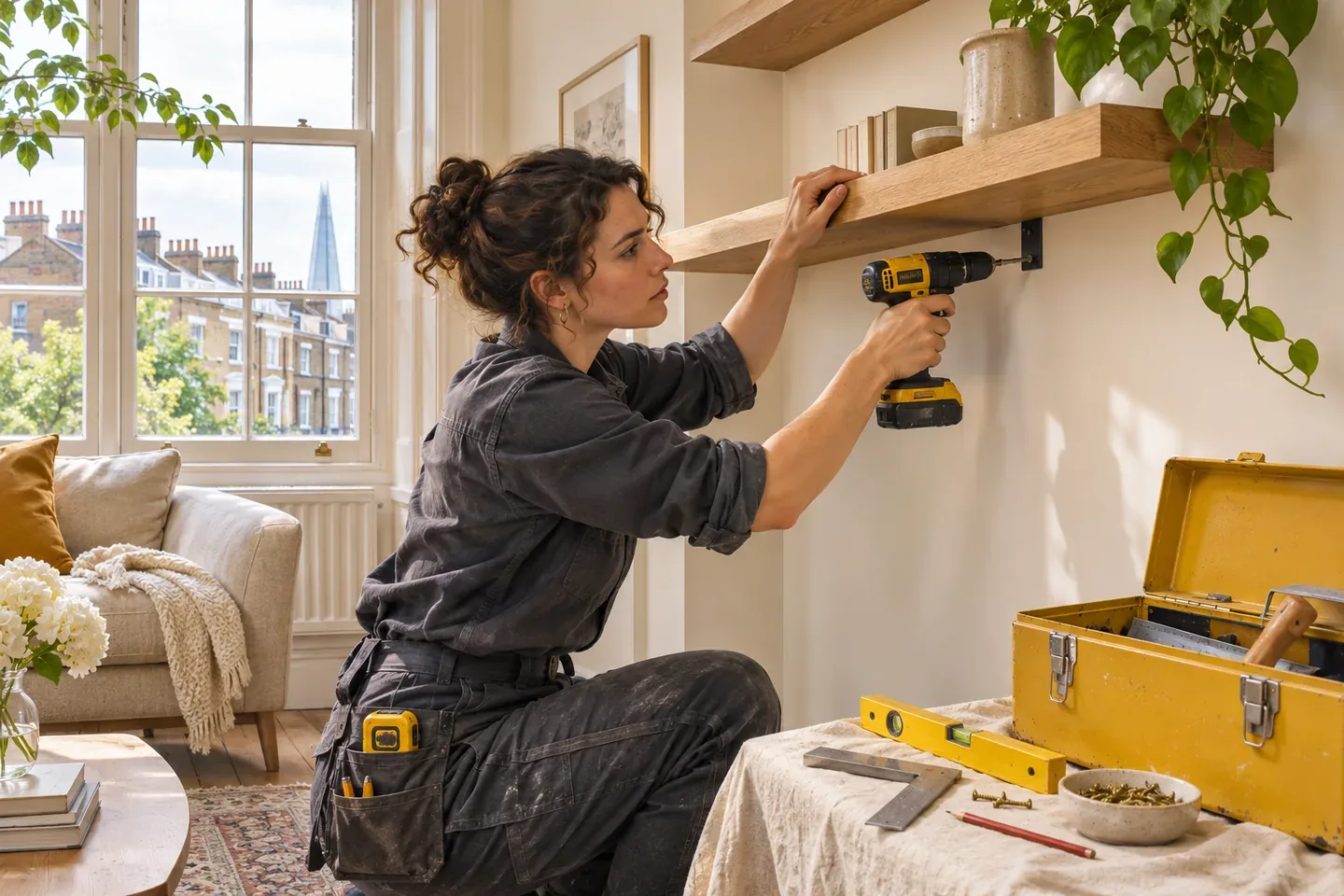
Glass shelves need their intended supports
We inspect a glass shelf for edge damage and identify the product’s support arrangement before handling it. Thickness, dimensions and the way the brackets grip matter. A shelf should not be cut or improvised around brackets that nearly fit. We discuss the intended contents and inspect the wall or cabinet supporting the fittings.
Where the shelf and system are suitable, we fit compatible supports, check bearing and install retaining details as instructed. We keep the handling area clear and protect nearby surfaces. The final check includes stable seating and clearance around exposed edges. Chipped glass or an unsuitable bracket system requires a different decision before the shelf is used.
MATCH THE REPAIR
The visible part and the connection
We assess both before agreeing a small repair.
5 service options.
| Problem or task | What we inspect | Work to discuss | Related service |
|---|---|---|---|
| Cupboard knob spins | Thread, screw length and panel | Restore compatible sound fixing | Odd jobs ↗ |
| Glass shelf moves | Edge condition and support system | Use intended compatible supports | Hanging wall mounting ↗ |
| Drawer front shifts | Handle and front connectors | Repair before final alignment | Carpentry services ↗ |
| Wall light needs work | Mounting and electrical requirements | Arrange appropriate electrical assessment | Electrics ↗ |
| Trim comes away | Material, background and finish | Prepare a suitable repair and decoration | Carpentry services ↗ |

A loose drawer handle can disturb the front adjustment
Pulling on a loose handle can wear its holes and add movement to an already loose drawer front. We inspect the handle screws, front connectors and box before adjusting the visible gaps. A front that shifts against the drawer is a different fault from runners that move unevenly. We empty the drawer so its travel can be checked.
We repair suitable fixing points and use compatible components, supporting the front while working. We then align it within the product’s adjustment and test complete opening and closure. The handle should remain secure without overtightening into damaged board. If the front panel has split around a connector, we explain the replacement or joinery repair needed before treating the alignment as finished.
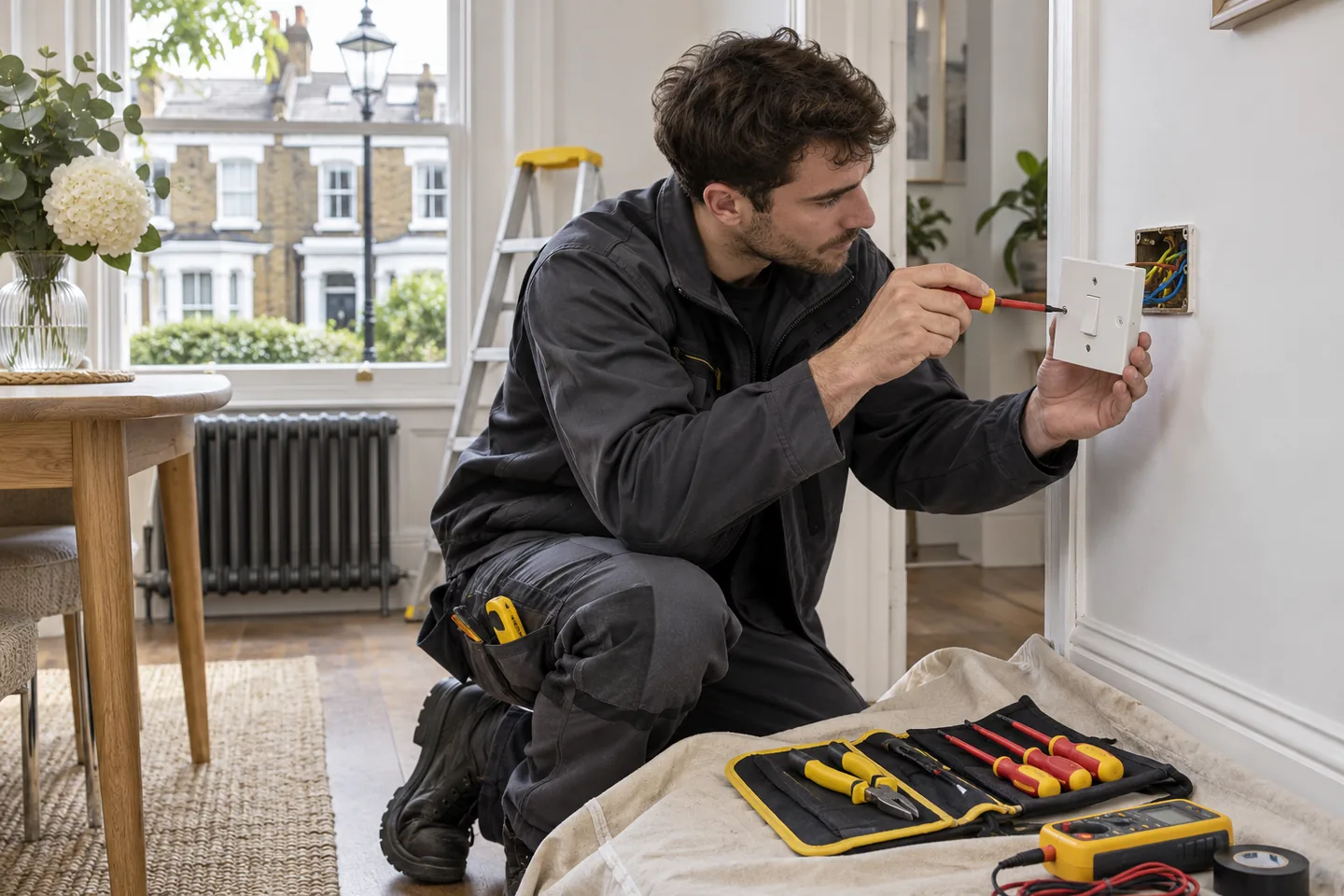
A wall light enquiry needs an electrical boundary
If your task list includes a wall light, tell us whether it is a decorative mounting issue or involves electrical connections. We need the product information and existing position before discussing work. The wall support, cable route and condition of the installation are different questions. We do not treat fixed wiring as incidental to hanging an object.
Any electrical work needs the appropriate assessment and agreed checks. Where a separate non-electrical mounting or making-good task is suitable, we coordinate the position and finish with those requirements. We keep access to the installation and explain what remains for electrical assessment. A straight fitting or neat wall patch does not establish that the electrical connection is suitable.

Furniture doors need the cabinet checked behind them
A sideboard door may catch because of hinge adjustment, loose mounting or a body that is no longer square. We inspect the carcass and floor contact before changing the front. Existing repairs and swollen board can affect screw holding. We compare the hinge type and opening geometry with the neighbouring door rather than assume the visible gap is the only problem.
For a suitable repair, we stabilise the body and restore sound compatible fixing before adjusting the door. We test its full opening, closing and any soft-close action. Product restraint requirements remain relevant if the unit is moved. Damaged panels or missing fittings need a decision before the sideboard is loaded, with visible repair expectations discussed separately.

Sealant beside stone needs compatible preparation
We identify the surfaces and inspect the joint before selecting sealant or a cleaning method. Stone and other sensitive finishes can mark or react differently from glazed tile. We also check for movement, loose edges and water arriving from another source. A suitable product must match the material and use, not only the preferred bead colour.
We remove failed material carefully, prepare the surfaces appropriately and allow the joint to dry. Where suitable, we apply a compatible continuous bead and explain curing instructions. We discuss any uncertainty about the finish before removal. Damaged background or ongoing movement needs resolving first, rather than expecting sealant to restore the supporting material.
THE AREA / THE ACTUAL ADDRESS
Kensington property information before alterations
The Royal Borough of Kensington and Chelsea publishes a Kensington Conservation Area map and a searchable planning map for property checks. If proposed work changes protected joinery or an external feature, establish the property’s status and necessary permissions before arranging alterations. Share any conditions affecting the repair with us so materials and fixing decisions can be considered appropriately.
For indoor tasks, tell us about the entrance, stairs or lift and the surfaces around the work. Glass shelves and large panels need a clear handling route; furniture repairs need space to support removed parts. We also ask about building access rules, shared passages and items that cannot be moved. With photographs, product details and the postcode, those arrangements help us discuss protection and preparation for the actual visit.
Address information: RBKC: Kensington Conservation Area map · RBKC: conservation areas and property search
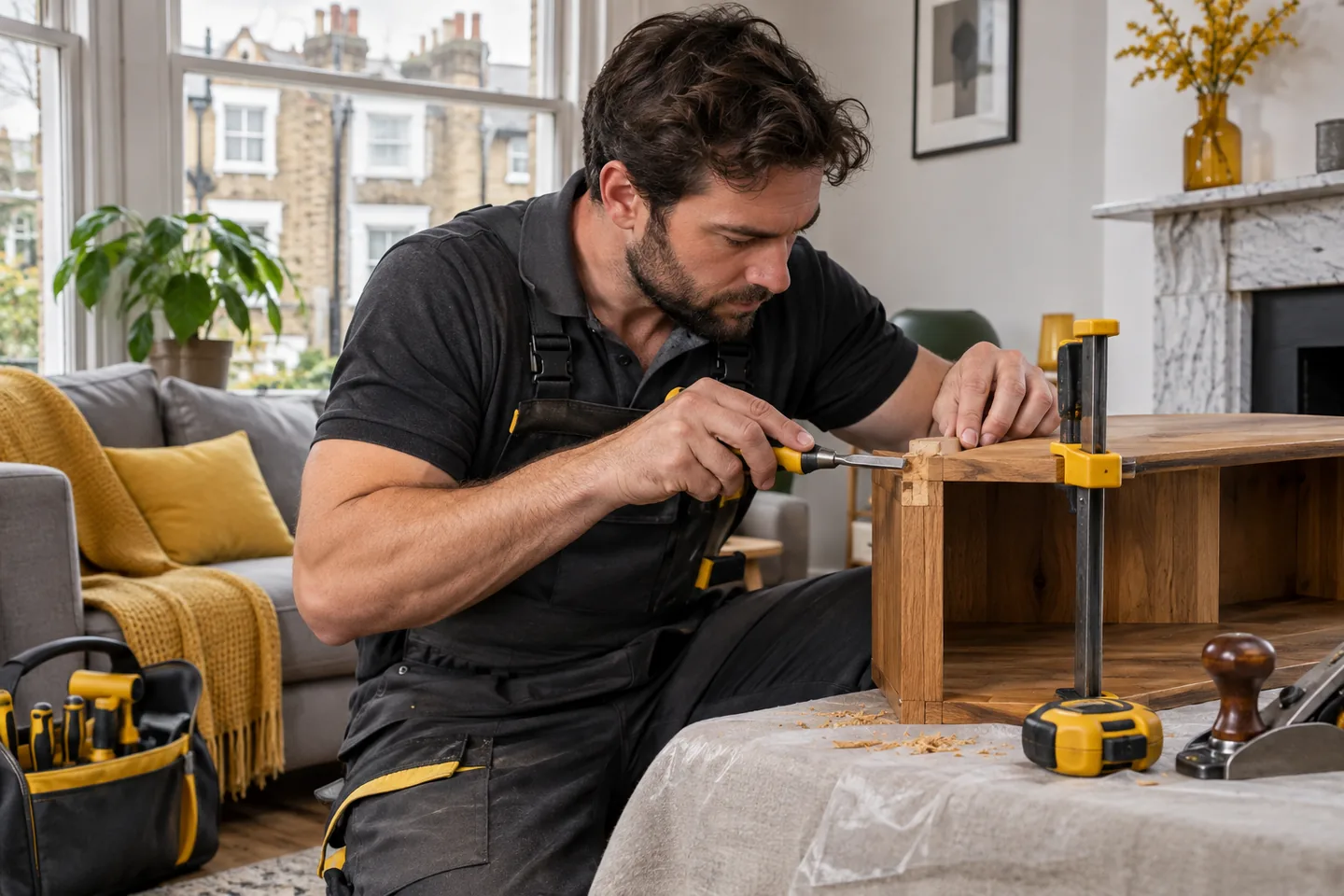
A small trim repair needs a defined finish
We inspect the damaged trim’s material and profile and check why it became loose. A veneered edge, painted timber moulding and laminate strip need different treatment. We agree what can be retained and whether matching material is available. Moisture or movement behind the trim must be considered before it is fixed back.
We prepare sound contact and use appropriate fixing or repair methods for the material. Exposed edges and joints are prepared for the agreed finish. We check clearances to doors and drawers afterwards. A local repair may remain visible against an aged coating, so we discuss decoration and colour expectations rather than leave an implied promise of an invisible patch.
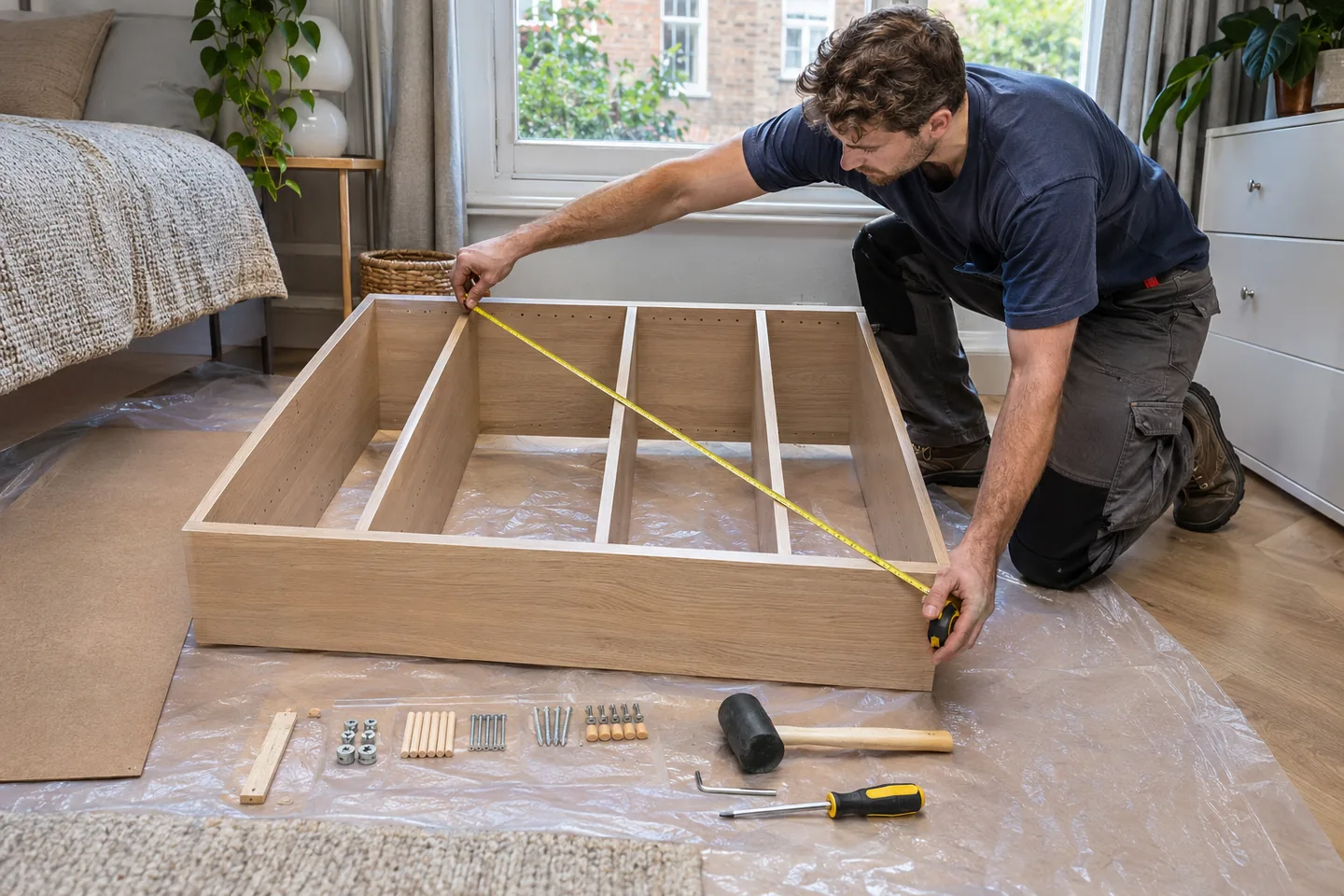
An upholstered bed still needs its frame checked
Upholstered panels can conceal connectors and make alignment harder to judge. We follow the assembly instructions, inspect the supplied hardware and protect the fabric during work. The frame, centre supports and slat holders need confirming before the mattress goes on. We also check the room allows access to the required fixing points.
We assemble square and tighten hardware appropriately without damaging covered panels. We check floor contact and any storage mechanism according to the product instructions. A missing support or damaged connector prevents completion even if the upholstery makes the frame look finished. We retain product information and explain any parts needed before normal loading.
EMERGENCY LOCKSMITH ENQUIRIES
Keep the lock enquiry specific to the entrance
Tell us whether the issue is a key, handle, latch or door that no longer meets its frame easily. We ask how it behaves with the door open and closed, whether damage happened recently and whether the property can currently be secured. A stiff key may reflect a mechanism fault or pressure from alignment, so choosing a cylinder from appearance alone is not enough. Avoid forcing the fitting or dismantling entrance hardware for photographs.
We take locksmith enquiries for Kensington alongside handyman repairs, with authority established for the actual door. Rented property, shared entrances and managed systems can require approval from the owner or building manager. Existing fire and security functions need to remain part of the decision. Our call line is available 24/7 on 020 3746 0607, with attendance and the proposed work confirmed for the circumstances. If hinges, frame timber or a strike contribute to the difficulty, we explain why those parts need assessment with the mechanism. After agreed work, the normal opening and secure-closing cycle is checked. The surrounding visible finish and any making good are discussed too, so a hardware change does not leave the extent of the repair unclear.
BEFORE YOU BOOK
Questions about the work here.
Can we use a similar-looking replacement handle?
We compare fixing centres, projection, thread and panel thickness. A visual match does not guarantee compatibility. Send the product details and photographs of an undamaged fitting if available before ordering a full set.
Can a glass shelf be shortened on site?
Do not assume it can be altered. Glass type and product design matter, and damaged edges can be hazardous. We discuss a suitable correctly sized product and its support arrangement rather than improvise by cutting an unidentified shelf.
Can you include a light in a handyman list?
Include it with the product and fault description. We distinguish mounting and making good from work affecting electrical connections. The latter needs the relevant electrical assessment and checks before the work is agreed.
Can sealant match natural stone exactly?
We discuss available compatible products and colours, but exact matching to a variable or aged surface is not assured. Material compatibility and preparation come first. Share the surface information before buying sealant.
Can we keep furniture in place during a repair?
We assess access and protection. A handle repair needs different space from a bed assembly or glass shelf installation. Tell us about heavy or delicate pieces that cannot be moved so the working area can be agreed beforehand.
How do we arrange Kensington work?
Call 020 3746 0607 with the postcode, photographs and finish requirements. Include access and approval details. Our call line is open 24/7; attendance and proposed work are confirmed for your enquiry.
TELL US WHAT NEEDS ATTENTION
Discuss your Kensington repair list.
Call 020 3746 0607 with the property address, the items needing attention and the available access. We review the work and confirm the arrangements before a visit is booked.
Original illustrative work scenes show the activities described; they are not photographs of completed customer jobs in this neighbourhood.