
HANDYMAN / ARCHWAY
Handyman Archway.
A changed room.
A considered repair.
Moving furniture or changing a room can expose old faults. We review the dismantled joints, redundant fixings and doors that no longer clear the layout before agreeing the next work.
Call line 24/7 · Work and availability confirmed for your address.

Make the repair part of the room change.
Can you assess furniture that was dismantled before a move?
Yes. Send the model, photographs of joints and any damaged panels, and tell us whether all original hardware remains. We assess the connections before agreeing reassembly. A unit that has been moved may need a different decision from an unopened flat pack.
What address information matters for an Archway enquiry?
Give us the full postcode and entrance rather than a station reference alone. The wider neighbourhood approaches different borough boundaries. We discuss the property, building instructions and route for the work, with availability confirmed for the actual address.
THE WORK IN YOUR HOME
When furniture moves, the repair list often becomes clearer.
A cabinet moved from one wall can reveal loose skirting and damaged fixing holes. A wardrobe taken apart for a move can arrive with worn connectors. We ask how the room and items have changed before planning the work. That history helps distinguish damage needing repair from a fitting that simply needs a new position. Photographs of the original components and intended setting are useful preparation.
We take Archway handyman enquiries for these practical room changes as well as individual repairs. We discuss what can be retained, the parts available and any separate finishing work. The agreed list should describe decisions rather than just count items: which furniture can be reassembled, where an attachment is suitable and what must be repaired before another fitting covers it. We confirm the practical arrangement for the actual property.
Useful details for your enquiry
- Items moved, dismantled or awaiting reassembly.
- Original connectors, instructions and product labels.
- The new positions and room dimensions where useful.
- Existing damage around joints or old wall fixings.
- Entrance, stairs and available clear working space.
Reassembly begins with the joints left after dismantling.
We look for damaged board edges, enlarged fixing holes and missing connectors before rebuilding a unit. Some fittings are designed for a specific product and cannot be replaced by a screw that happens to fit the opening. Keep components grouped by item and share model information. We also need to know whether the furniture was stable before dismantling or already had a problem.
Where the parts remain suitable, we follow the intended assembly sequence and check alignment as the frame comes together. Where a local repair or new component is needed, we explain it before altering the product. Moving parts and required restraints are reviewed after assembly. We do not describe a freestanding frame as complete if a necessary connection or wall attachment remains unresolved.
MATCH THE REPAIR
Which part of the room change needs assessment?
These examples help separate moving, assembly, repair and finishing decisions.
6 service options.
| Problem or task | What we inspect | Work to discuss | Related service |
|---|---|---|---|
| Wardrobe dismantled | Joint condition and original hardware | Assess reassembly or a component repair | Furniture assembly ↗ |
| New shelf position | Wall background and intended use | Agree fixing preparation before fitting | Hanging wall mounting ↗ |
| Desk rocks after moving | Frame braces and floor position | Repair the actual connection | Carpentry services ↗ |
| Door hits an obstruction | Swing, hardware and room layout | Distinguish repair from layout conflict | Carpentry services ↗ |
| Skirting uncovered | Profile and attachment condition | Agree local material and finish work | Carpentry services ↗ |
| Handle loosens repeatedly | Connector and panel material | Repair support before normal use | Odd jobs ↗ |
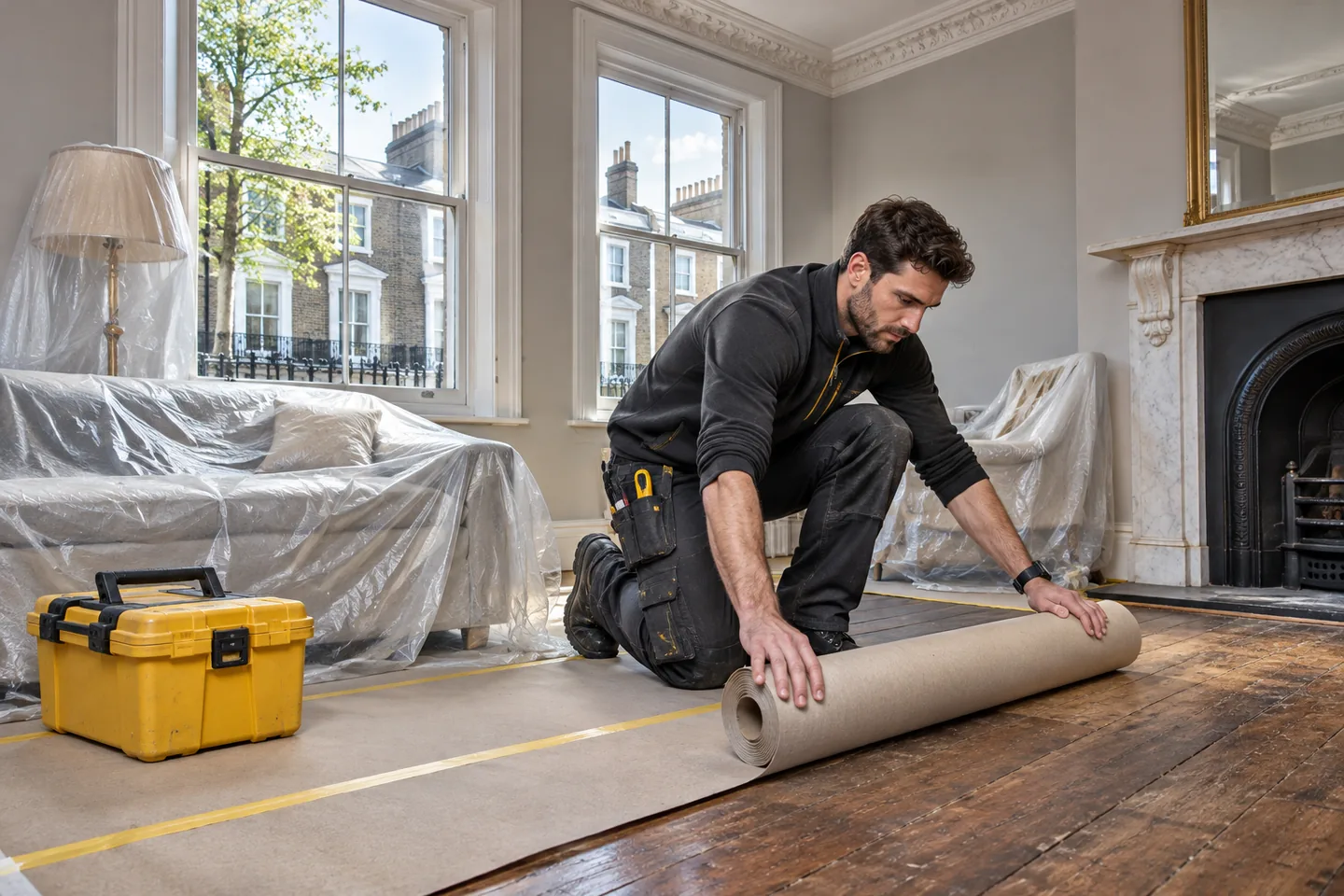
New furniture positions need access around them, not just a measured footprint.
We review the route into the room and the space needed while parts are being connected. A tall frame may fit upright but require additional clearance during the assembly method specified by the manufacturer. Tell us about ceiling restrictions, fixed furniture and packages on another floor. Carrying or removal arrangements need discussion rather than being inferred from the assembly request.
We set up a suitable working area and protect immediate surfaces as required. The components are handled and assembled in the order appropriate to the product. Once positioned, we check doors, drawers and supports against their intended operation. If the chosen location prevents a drawer opening or conflicts with a door swing, we raise that issue before treating the layout as agreed.
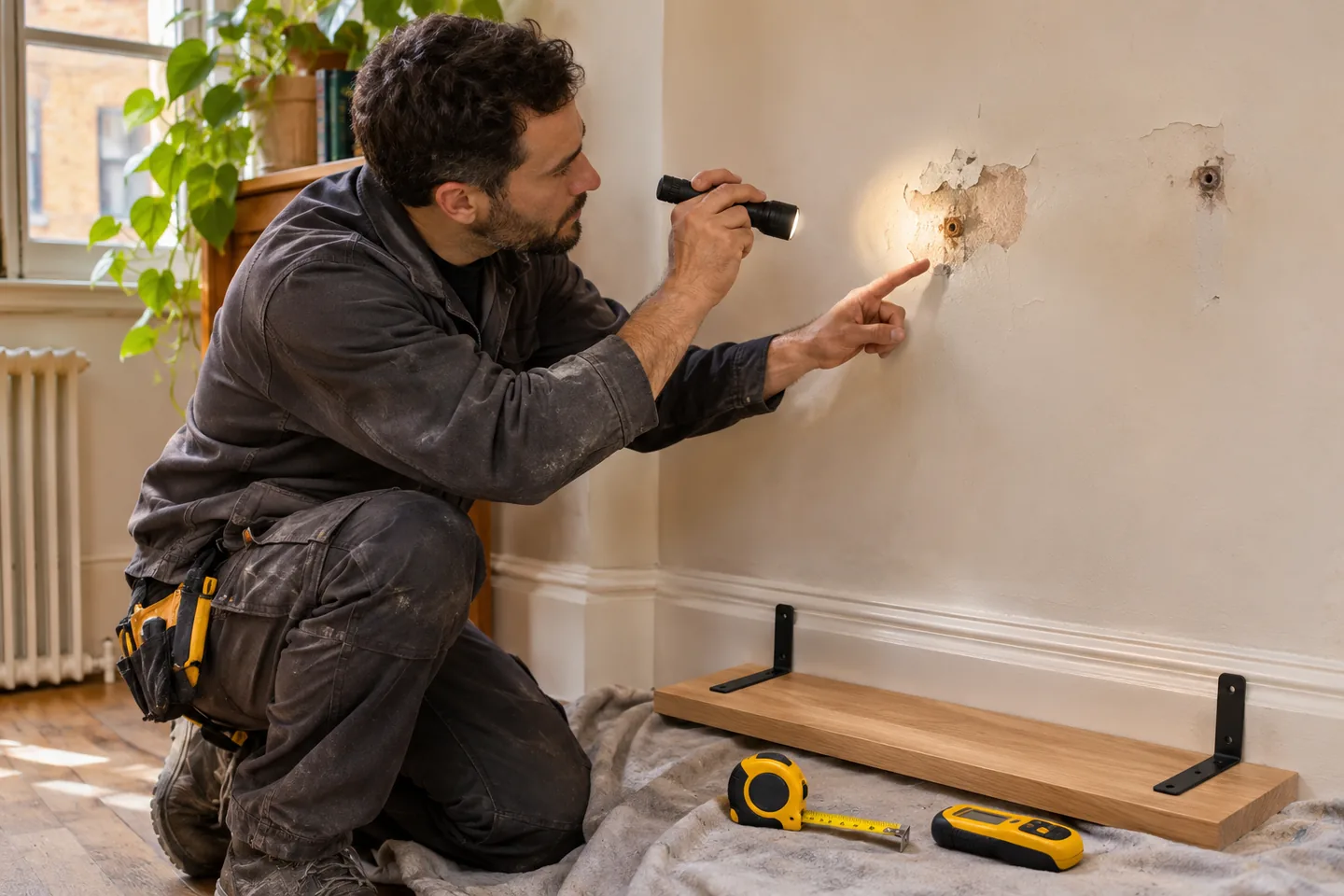
Old fixing holes are part of the wall condition.
A redundant bracket can leave loose plugs, damaged plaster or a patch with little sound material for another fixing. We examine the accessible area and ask what was previously attached. A new shelf should not simply inherit the old holes without assessment. The intended contents, product supports and proposed position all belong in the enquiry.
We discuss appropriate local preparation or a revised attachment position before drilling. Measuring and suitable detection help set out the agreed arrangement, with concealed construction limitations explained. The selected fixings need to suit the assessed background. After fitting, we check alignment and accessible connections. Wider wall decoration remains an agreed finishing task rather than an automatic part of every bracket change.
PLAN THE WORK
Explore the time and labour budget.
Select the task, quantity and visit period. Assembly benchmarks and entered time assumptions stay visible; other repairs need an individual assessment.
Plan your Archway repair enquiry
Choose the work, enter quantities and review the assumptions. We confirm the repair, working time and availability before booking.
Assembly benchmarks assume complete product parts, instructions and a clear working area. For other repairs, a known condition does not establish a standard duration.
Compare the assembly work
Published London assembly ranges for one item. These are external planning benchmarks, not our recorded job times or guaranteed completion periods.
Time evidence: published London assembly ranges, checked 3 November 2026. Product, staffing and access differences require assessment. Carrying, missing parts and wall restraint are not automatically included.
Compare labour for the same working time
Comparison uses the selected day and visit period. These are labour categories at equal time, not fixed job prices. One-hour minimum; subsequent half hours. Materials, sourcing time, parking and congestion charges are separate. Rates include taxes. Daytime: handyman 08:00–18:00; plumbing/electrics 08:00–18:00 weekdays and 08:00–17:30 weekends. Outside-daytime availability needs confirming.
What changes the repair decision?
This compares the checks needed for the selected repair, not a scored difficulty or a promised duration.
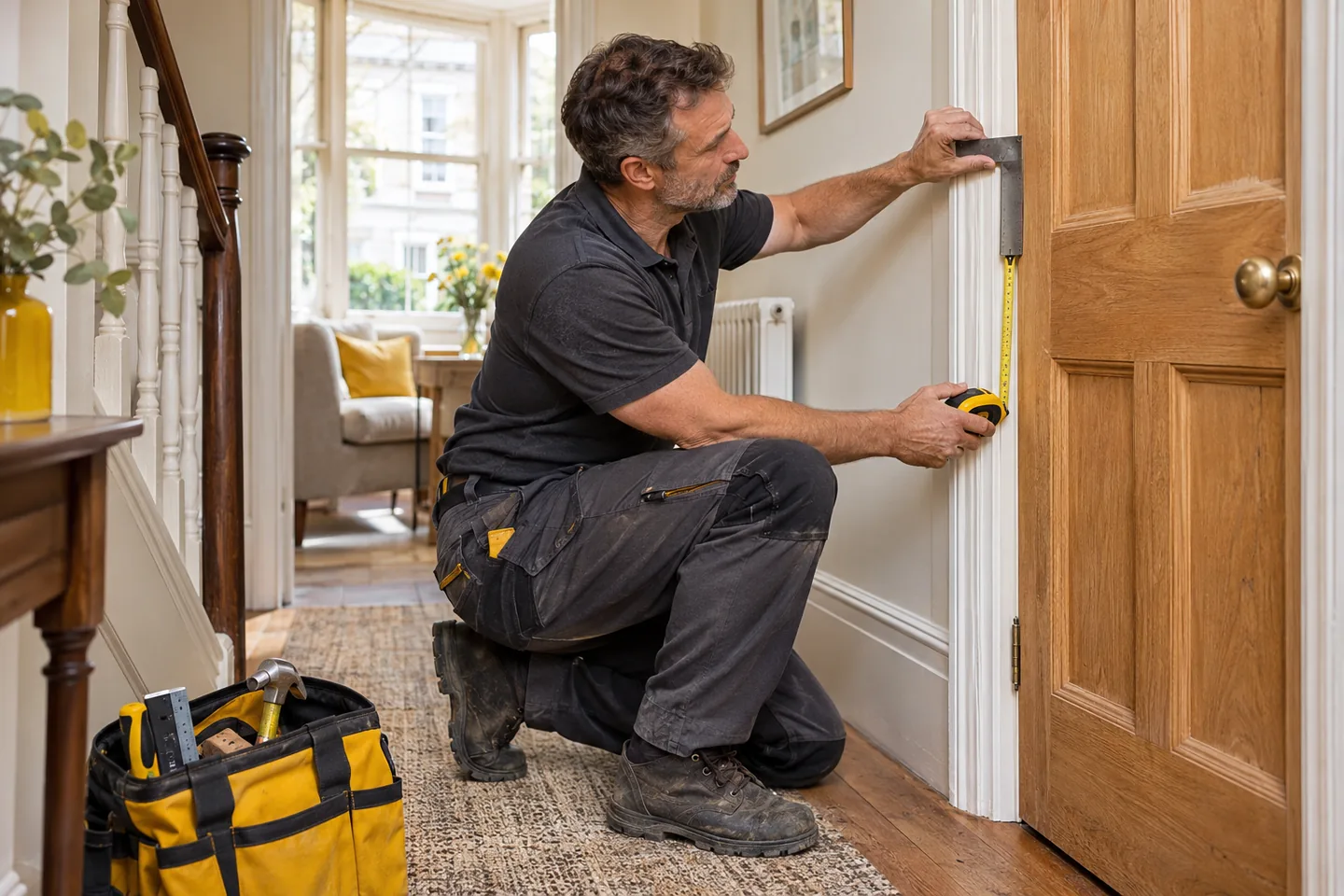
Doors need reviewing against the revised room layout.
We examine whether a door catches its frame, floor or the furniture now standing beside it. Those are different causes. Hardware and accessible timber are checked before material is removed. A moved cabinet may reveal a problem with the door that was previously unnoticed, but it may also simply occupy the required swing space. We discuss the distinction with you.
Suitable repair or adjustment is agreed with any specialist door requirements understood. We protect nearby finishes, support components and use compatible hardware where replacement is needed. We then check the closing action and relevant clearance together. Any making-good to an altered edge is explained, along with a remaining layout restriction that cannot be corrected by ordinary hinge adjustment.

A desk repair should include its braces and leg connections.
A desk that rocks after moving may have a loose joint, damaged connector or uneven position on the floor. We inspect the frame and intended supports before tightening accessible fittings. The top may conceal a missing rail or a connection that no longer holds. Product instructions and photographs of the underside help identify those details before the visit.
We repair or refit compatible components where appropriate and check the structure in its intended position. Adjustable or moving features need their own product-specific review. We explain any damaged material or absent brace that prevents a suitable local repair. Equipment connections and new electrical work are separate enquiries; rebuilding the desk does not automatically include alteration of sockets or wiring in the room.
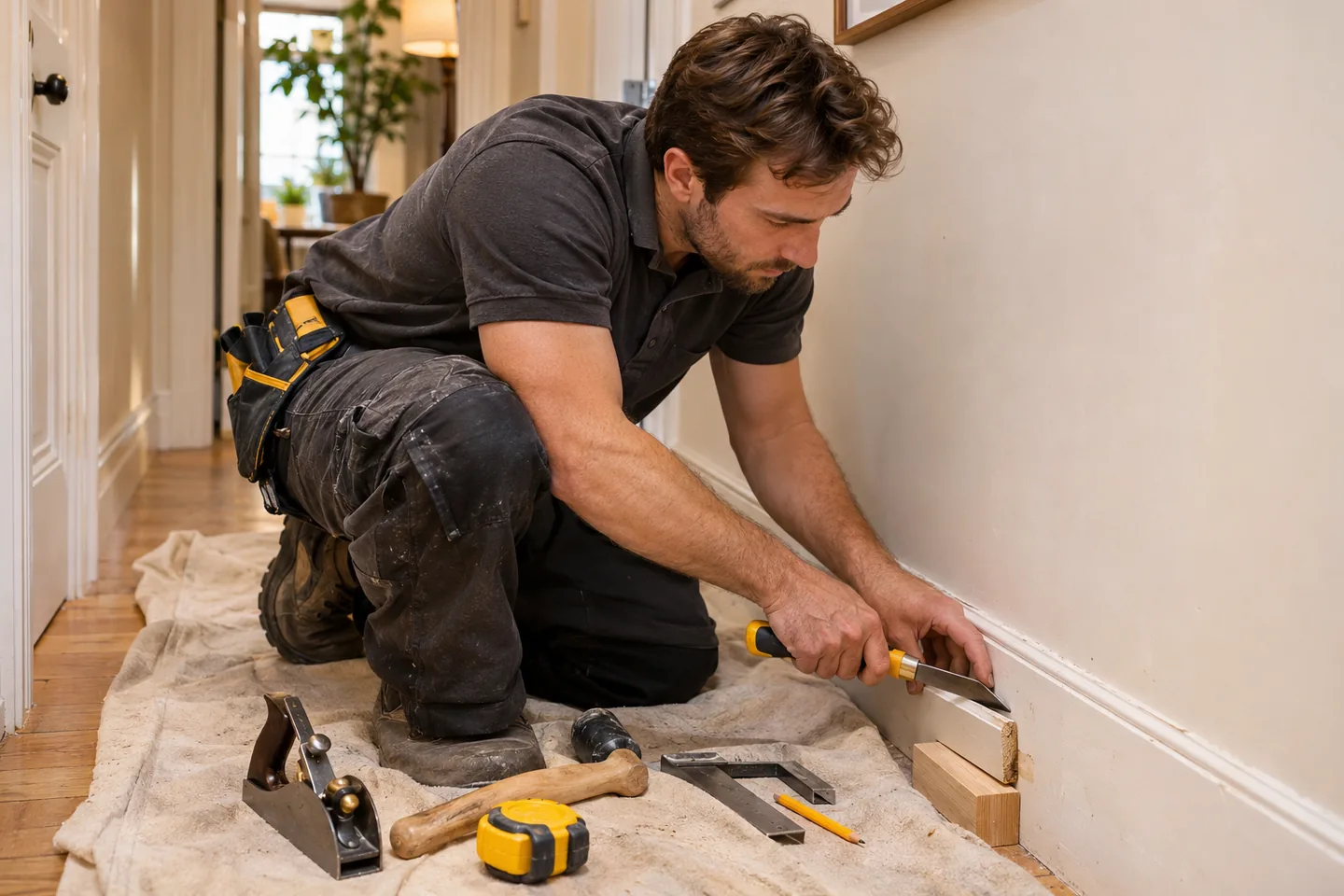
Skirting exposed by a move may need a local material decision.
We inspect loose or damaged sections and the condition behind their accessible edges. Previous impact, damp or failed attachment can affect the repair. The profile, available spare timber and surrounding finish determine whether a small replacement can be joined sensibly. We discuss that boundary before removing material, especially where a cabinet will no longer cover the area.
For agreed work, we measure the section, protect the floor and use tools suited to the profile and access. Attachment and joint fit are checked before preparation or painting is discussed. A matching colour or texture cannot be assumed across an aged finish. We explain whether a local touch-up or wider decoration would be needed for the appearance you want.
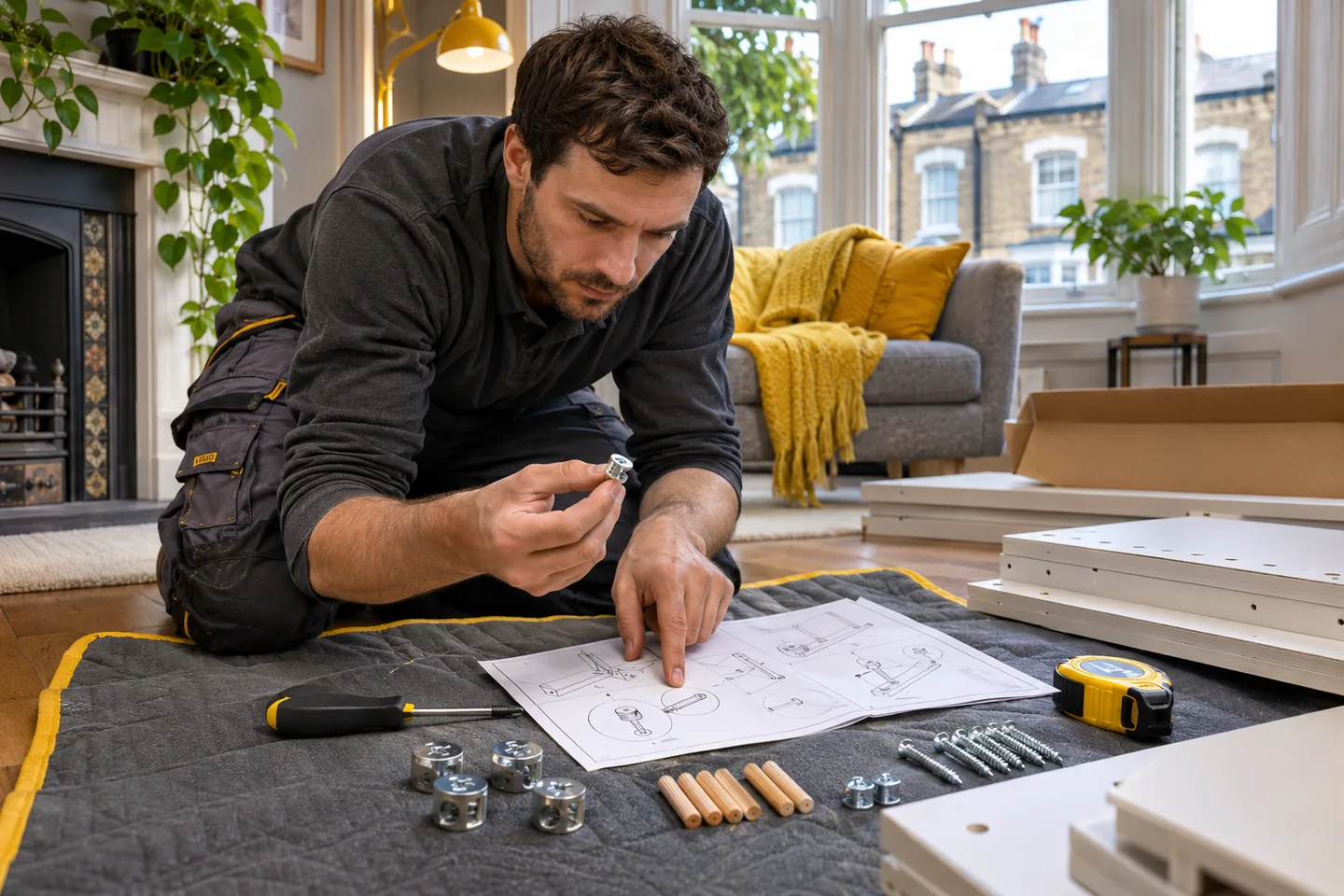
Loose handles and hinges should be repaired before storage is loaded.
We examine the connection between the hardware and its panel. A pull that turns or a hinge that drops may be attached to worn material. Filling the unit first can hide access and make the fitting harder to support. Tell us about the fault while the furniture is empty and keep any detached screws or plates with it.
We compare compatible hardware and agree any suitable fixing repair before adjusting the moving part. The door or drawer is checked for travel, gaps and clearance after the connection is sound. Where board damage requires a replacement component, that is explained rather than concealed by repeated tightening. A practical repair should address the support as well as the visible alignment.

Complete the room with the remaining tasks identified.
We check each agreed fitting in normal operation and review what has changed from the original list. That includes drawer travel, door movement and accessible support connections. A missing product part or wall requiring further preparation remains an outstanding item, not an invisible assumption that another visit will somehow resolve it. We discuss the next decision with the property contact.
Care instructions, drying requirements and the agreed waste or packaging arrangement are explained. If decoration or another trade follows, tell us what information needs passing on. We can discuss a broader property maintenance list, but the handover should still distinguish the items ready for use from the parts, permissions or work that remain to be arranged.
THE AREA / THE ACTUAL ADDRESS
Archway needs a building address, not a guessed boundary.
Islington Council publishes specific planning information for Archway, while the wider neighbourhood sits close to adjoining borough areas. We ask for the full address before discussing relevant property constraints. A nearby street or station reference is useful orientation but does not establish which entrance, council information or management arrangement applies to the fitting.
For room changes, describe the route from that entrance to the working space. Stairs, lift restrictions and turns in a corridor can affect how long furniture panels are handled. Tell us about permissions for drilling and any existing feature that must be retained. We review the product, property and available service arrangement together, with particular attention to how the work can be reached and prepared. Include product instructions with that information.
Address information: Islington Council: Archway planning context
EMERGENCY LOCKSMITH ENQUIRIES
An access problem comes before the room-changing plans.
We accept Archway locksmith enquiries on our call line 24/7. If you are unable to enter or secure the property, tell us that first and provide the full address. Describe the door and visible hardware, together with whether the key, lock or door movement appears affected. We discuss availability and the price basis for the actual enquiry before an arrangement is agreed, without claiming a fixed arrival period.
A recent move can also mean questions about existing keys or a lock whose condition is uncertain. We review the fitting and requirements rather than assume one cylinder suits every entrance. Tell us who is authorised to approve replacement and whether the door belongs to a managed or specialist arrangement. We do not treat shared entrance hardware as an unrestricted household fitting.
After assessment, suitable repair or compatible replacement is discussed, including any related timber or finish work. The surrounding material and keep position can matter to secure operation as much as the visible lock. We check relevant functions following agreed work and explain outstanding limitations. If furniture or other maintenance is planned at the same property, that work still needs its own preparation and agreement rather than being assumed within the access enquiry.
BEFORE YOU BOOK
Questions about the work here.
Should I discard old furniture connectors after moving?
Keep them with the relevant item, including any damaged parts. They help identify the intended arrangement and whether a product-specific replacement is needed. Do not mix hardware from several units into one unidentified container if it can be avoided.
Can a reassembled wardrobe use a different wall?
We review the product restraint and the new background. The old wall fixing does not establish a suitable arrangement elsewhere. Give us the proposed position and any known construction or services so that the attachment can be assessed.
Can you fill old wall holes before fitting a new shelf?
We can discuss the wall condition and intended new attachment together. Some damage needs suitable background preparation, while other holes are only a finishing issue. We agree the extent rather than assume the same repair serves both purposes.
Does moving a desk include rewiring the workspace?
No electrical alteration is automatically included. Share the equipment and connection requirements so we can identify an appropriate separate enquiry. The furniture frame and room wiring involve different assessment and trade arrangements.
Why do you need the entrance rather than just Archway station?
The station identifies a general area, not the building access, floor or route for panels and tools. The full address lets us discuss the actual property and available arrangement without guessing at a nearby entrance.
Can you promise the whole room will be finished in one visit?
We confirm the work after reviewing products, condition, access and required parts. Missing components or concealed damage may need a separate decision. We discuss priorities and remaining tasks rather than promise completion from the item count alone.
TELL US WHAT NEEDS ATTENTION
Discuss your Archway repair list.
Call 020 3746 0607 with the property address, the items needing attention and the available access. We review the work and confirm the arrangements before a visit is booked.
Original illustrative work scenes show the activities described; they are not photographs of completed customer jobs in this neighbourhood.