
HANDYMAN / BROMLEY
Handyman in Bromley.
Useful space, sound fittings.
Storage only helps when its shelves hold, its doors open and the items behind it remain accessible. We assess cupboards, furniture and everyday repairs with those details in mind, from the first measurement to the final movement check.
Call line 24/7 · Work and availability confirmed for your address.
STORAGE / FITTINGS / HOME REPAIRS
Can we add shelves inside an existing cupboard?
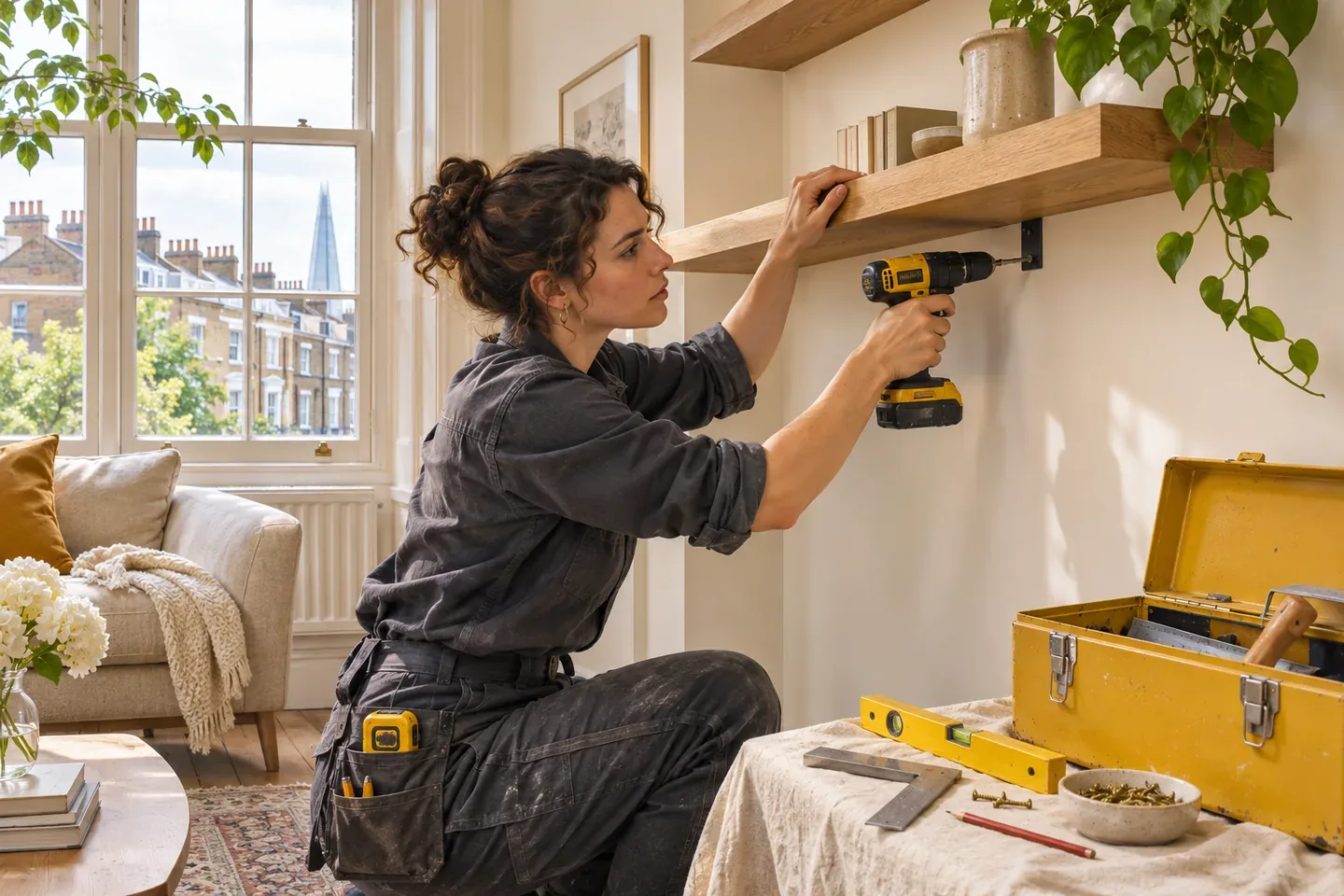
We assess the side panels, span and intended contents, then consider how the supports can be fixed. Thin backs and decorative liners may not provide suitable support. We also keep access to pipes, valves or electrical equipment and discuss whether a removable shelf is necessary.
Can a small job list include repairs to furniture and the building?
Yes. Tell us which items are movable furniture and which are fixed joinery. They can need different materials, fixing methods and permissions. We discuss the related jobs together while checking each one individually, including whether any leak or background movement must be addressed before a surface repair.
THE WORK IN YOUR HOME
Make better use of what is already there.
A cupboard does not always need replacing because one shelf has bowed or one door has dropped. We look at its construction, the condition of the fixing points and how you use it before proposing a repair. In Bromley, you can ask us about those small carpentry jobs alongside furniture assembly, hanging, resealing and other property maintenance. A clear photograph of the whole unit helps us see whether the visible damage is isolated or part of a wider problem.
We also discuss the space around the work. A new shelf should not block a service valve; a shoe cabinet should not narrow a doorway; a curtain pole needs enough clearance for the fabric to pass the window. These are decisions to make before materials are cut. Tell us your intended use, the things you need to keep and any changes planned for the room. We can then explain what needs measuring, what can potentially be retained and which questions require inspection before a repair is agreed.
Useful details for your enquiry
- List the items a new shelf or storage unit will carry, rather than describing the load as light.
- Show us the whole cupboard, including its back, plinth and nearby service fittings.
- Keep assembly instructions and product references available for matching parts.
- Tell us whether access to the room involves narrow stairs or a tight turn.
- Identify dampness or soft board before covering it with a new panel.
Choose shelf support from the contents upward
We measure the clear shelf span and examine what can carry its ends. Books, folded linen and bottles place different demands on the same board. Existing pin holes also need inspection: repeated repositioning can enlarge them, leaving a support that appears seated but can tilt under load. We discuss material, thickness and support spacing before cutting a shelf to fit.
The shelf is prepared with appropriate edges and fixed or seated on supports suited to the cupboard. We check that it bears evenly and does not obstruct hinges or prevent a door closing. Where services are behind it, we preserve the necessary access and avoid concealed drilling. If the side panels are weak, adding a thicker shelf alone is not enough; the support arrangement needs changing too.
MATCH THE REPAIR
Storage faults worth separating
We assess the failed connection and the way the storage is used before choosing materials.
5 service options.
| Problem or task | What we inspect | Work to discuss | Related service |
|---|---|---|---|
| Shelf bows | Span, board and contents | Change support or shelf specification | Carpentry services ↗ |
| Shoe cabinet tips | Floor contact and product restraint | Stabilise and secure before use | Furniture assembly ↗ |
| Wardrobe rail drops | Sockets, panel and unsupported length | Repair support before reloading | Carpentry services ↗ |
| Kitchen plinth falls off | Clips, panel and moisture | Restore removable fixing and investigate damp | Property maintenance ↗ |
| Shower bead splits | Movement and joint preparation | Resolve background faults before resealing | Tiling grouting re sealing ↗ |
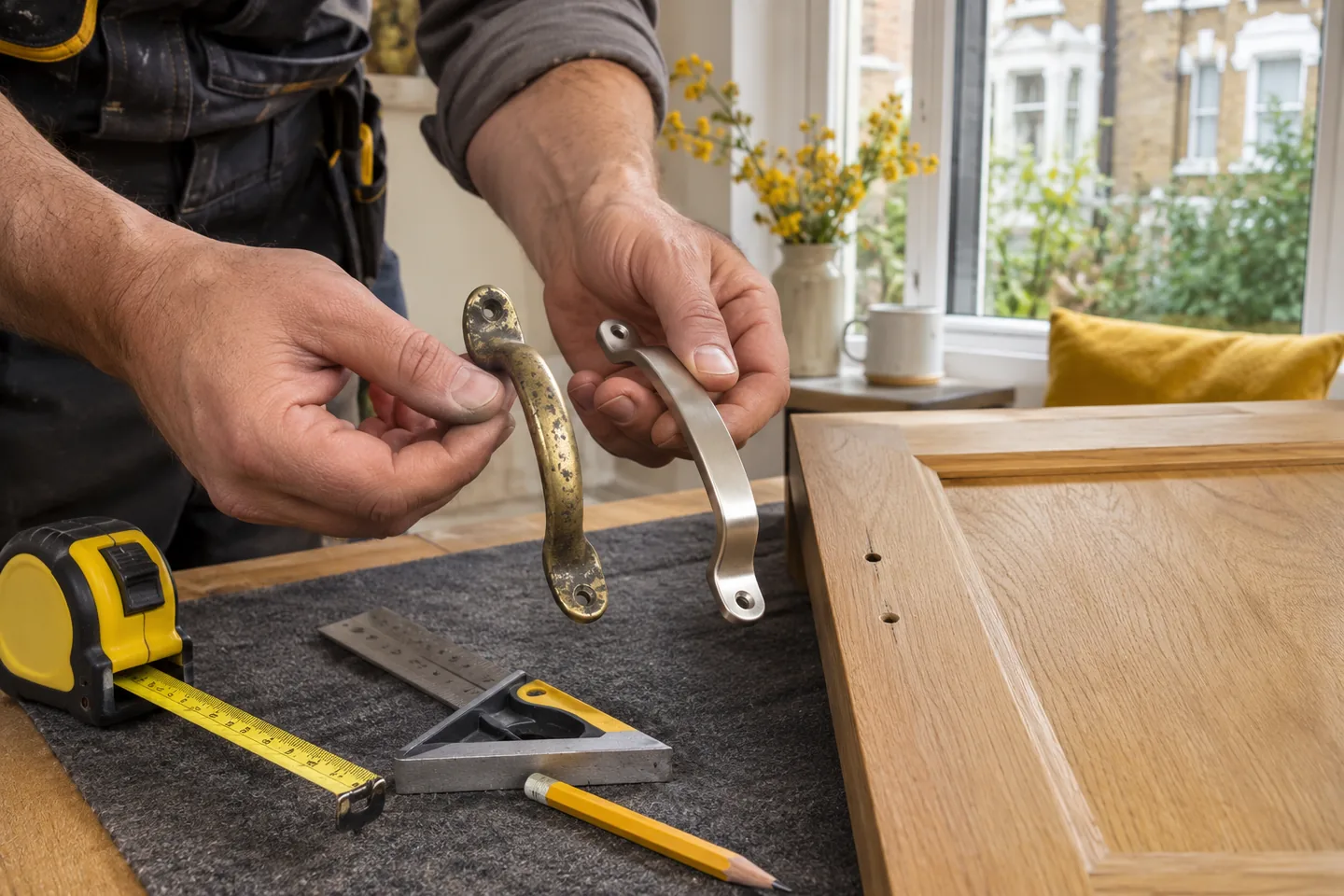
A shoe cabinet needs clearance at its feet
A shallow shoe cabinet can look ideal for a hallway but still conflict with skirting, a radiator or the swing of the entrance door. We check the finished dimensions and opening mechanism before assembly. Tilt-out fronts need space in front of the unit, and any wall restraint needs a suitable fixing point beyond the decorative finish.
We assemble the product square, fit the specified hardware and check its feet or wall mounting as the manufacturer requires. The cabinet must remain stable while its compartments are opened. We test the fronts in the actual hallway position and check the route past them. If the restraint cannot be fitted appropriately or the cabinet obstructs necessary passage, we discuss another position rather than treating the narrow depth as proof that it fits.
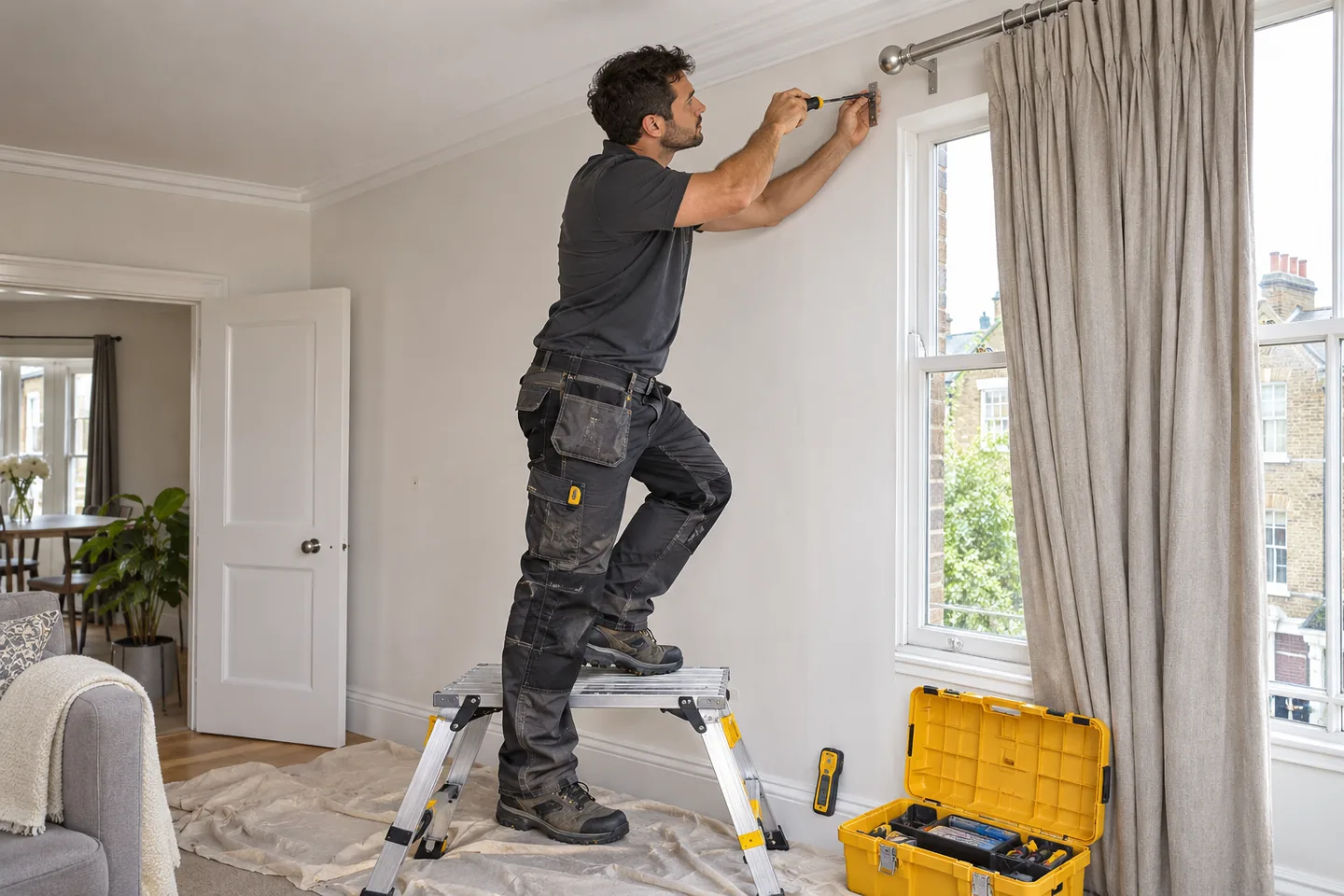
Check the rail before changing a wardrobe layout
A clothes rail that drops at one end can have a failed socket, weak side panel or an excessive unsupported span. We inspect both ends and the rail itself, including whether it has bent. A new socket in damaged board may pull away again. We also check the hanging height and whether clothes will interfere with drawers or doors.
For an agreed repair, we use compatible rail supports and sound fixing positions, or discuss additional support where the design allows it. We secure the fittings without splitting the panel and check that the rail is properly seated. The surrounding furniture needs to be stable before it is loaded again. A wider storage change may be more practical if the existing layout repeatedly concentrates weight on a weak panel.
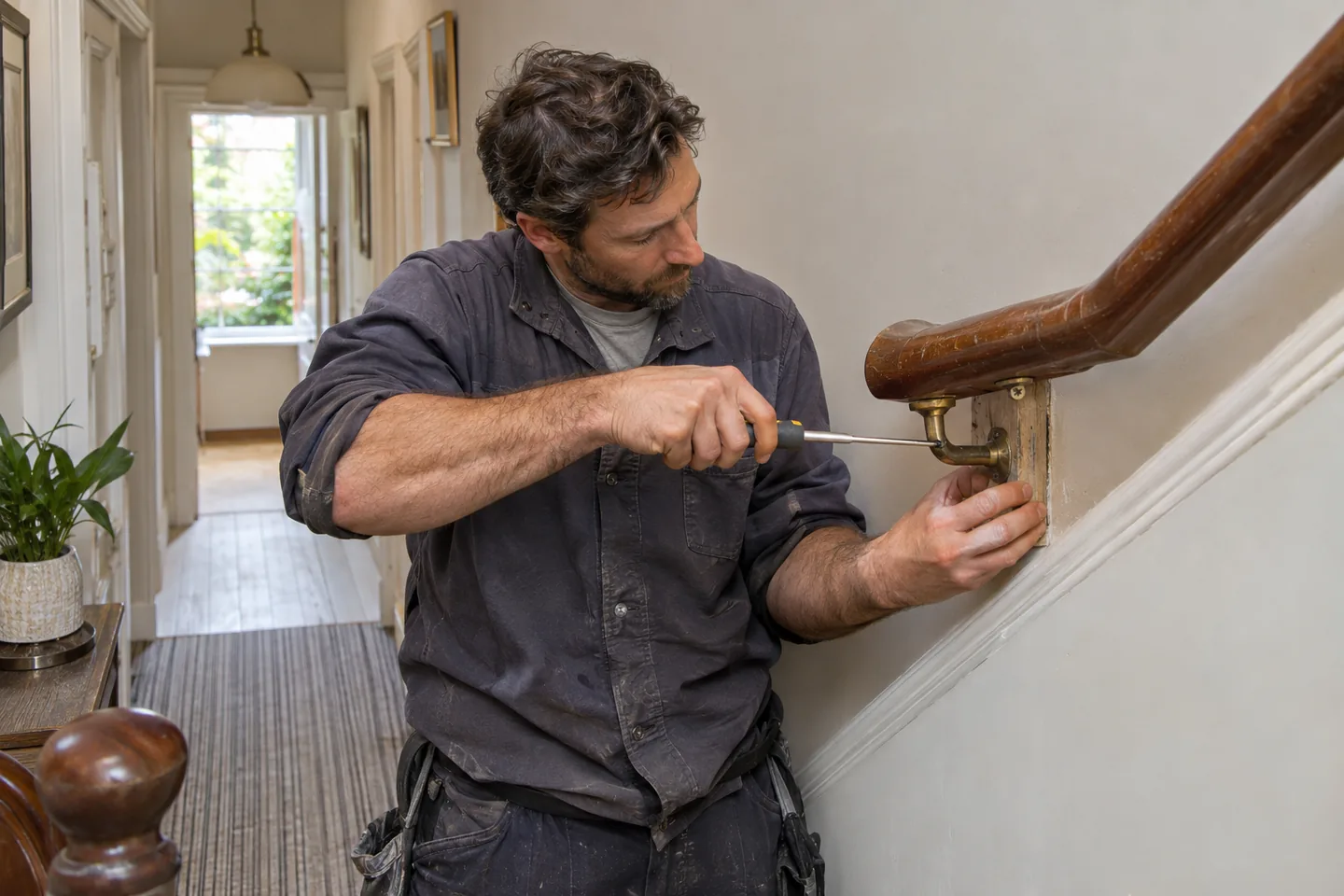
Loose stair-adjacent trim is different from a loose stair
A piece of decorative trim beside a staircase can loosen through impact, but movement in a tread or handrail requires a different assessment. We ask you to identify exactly what moves and inspect it before assuming a minor carpentry repair. A cover strip should not be used to hide a structural concern or a gap whose cause is unknown.
Where the work is a suitable trim repair, we prepare sound contact points, cut a matching section where practical and choose fixings with awareness of hidden services. Exposed edges need finishing and joints need preparation before decoration. We check that the repair does not project into the walking route. If the stair, balustrade or supporting construction is moving, we explain the need for a more appropriate investigation before cosmetic work proceeds.
THE AREA / THE ACTUAL ADDRESS
Check the building as well as the Bromley postcode
Bromley Council provides an interactive map for conservation areas and listed or locally listed buildings. It also publishes a Bromley Town Centre appraisal and management plan. If a proposed repair changes an external feature or protected joinery, check the individual address and relevant permissions before arranging the alteration. A local place name alone does not identify the controls applying to the property.
For storage and indoor fitting work, tell us about stairs, doorway turns and the room where panels can be unpacked. A flat-pack unit can require more assembly space than its final footprint suggests. We also need to know which cupboards contain services and what must stay accessible while work is done. Sharing those details, along with photographs and the postcode, helps us discuss a sensible working area and the preparation needed before the visit.
Address information: Bromley Council: conservation areas and property map
PLAN THE WORK
Explore the time and labour budget.
Select the task, quantity and visit period. Assembly benchmarks and entered time assumptions stay visible; other repairs need an individual assessment.
Plan your Bromley repair enquiry
Choose the work, enter quantities and review the assumptions. We confirm the repair, working time and availability before booking.
Assembly benchmarks assume complete product parts, instructions and a clear working area. For other repairs, a known condition does not establish a standard duration.
Compare the assembly work
Published London assembly ranges for one item. These are external planning benchmarks, not our recorded job times or guaranteed completion periods.
Time evidence: published London assembly ranges, checked 3 November 2026. Product, staffing and access differences require assessment. Carrying, missing parts and wall restraint are not automatically included.
Compare labour for the same working time
Comparison uses the selected day and visit period. These are labour categories at equal time, not fixed job prices. One-hour minimum; subsequent half hours. Materials, sourcing time, parking and congestion charges are separate. Rates include taxes. Daytime: handyman 08:00–18:00; plumbing/electrics 08:00–18:00 weekdays and 08:00–17:30 weekends. Outside-daytime availability needs confirming.
What changes the repair decision?
This compares the checks needed for the selected repair, not a scored difficulty or a promised duration.

A curtain pole needs room for the curtain stack
We measure the window and discuss how far the curtains should gather when open. Pole length is not just the glass width: brackets, finials and the fabric stack all need space. We inspect the proposed support positions and the weight of the curtains, including any central support specified for the pole. Window handles and nearby furniture affect projection.
After agreeing the position, we check the drilling area and fix into suitable material with the appropriate supports. We align brackets and secure the pole as intended, then test the rings and end fittings. Curtains should move without pulling a bracket sideways or catching the window. If the chosen product cannot achieve the necessary span or projection, we discuss a suitable alternative before making redundant holes.

Kitchen kickboards should be removable for a reason
A loose kickboard can be a broken clip, a distorted panel or feet that no longer line up with the original fixings. We remove it carefully and inspect the back, the supporting legs and the floor edge. Moisture damage needs to be understood before a new board is fitted. We also identify any ventilation or service access that the panel must preserve.
We cut or repair the panel where appropriate and fit compatible clips rather than permanently bonding it into the opening. The board should sit neatly without bearing on pipes or obstructing an appliance’s required ventilation. We check that it can be removed by the agreed method and that the edge is not left soaking against a wet floor. Leakage behind it is a separate repair, not something a better-looking plinth resolves.
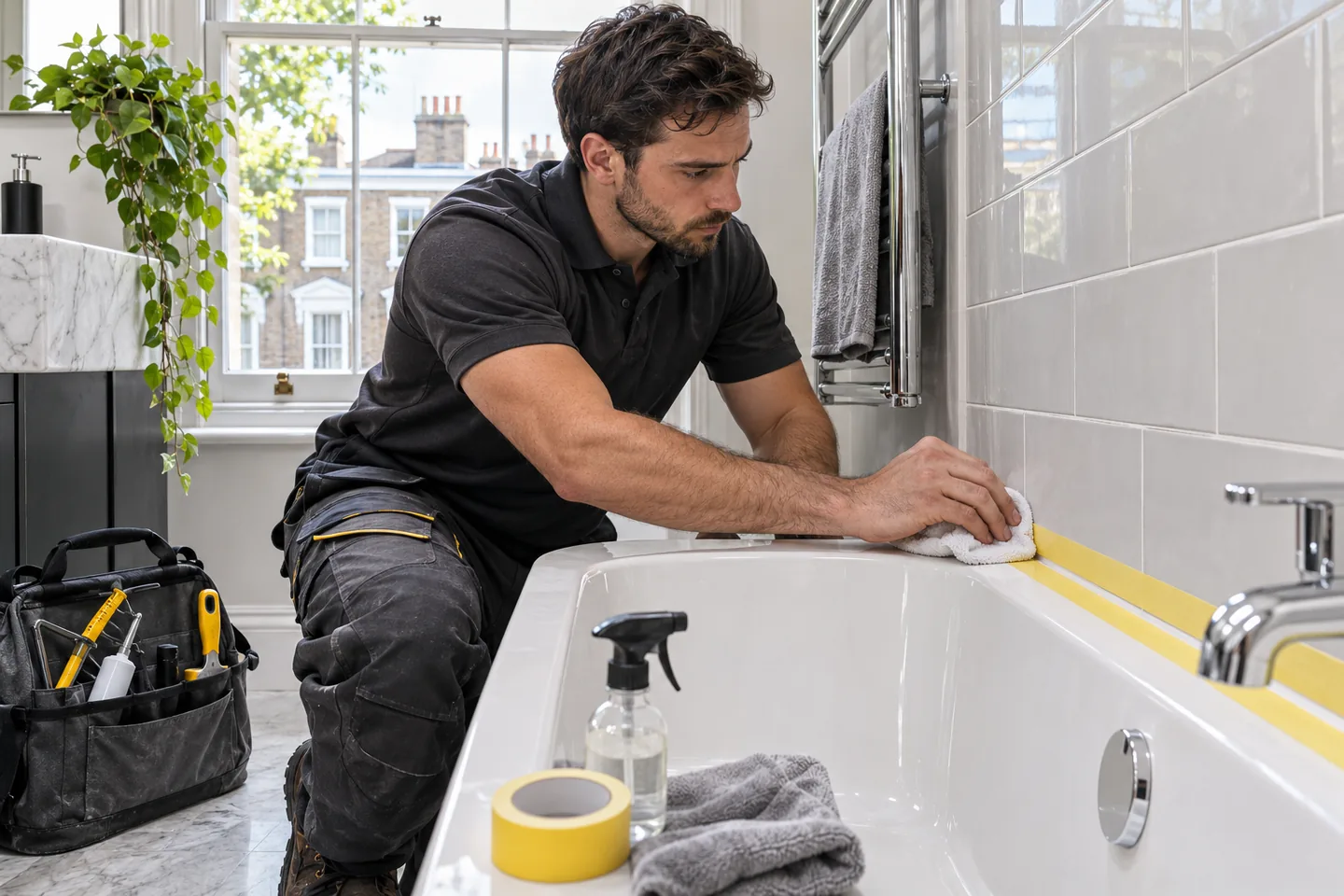
Prepare the shower corner before the new bead
A shower corner that keeps developing a split bead needs its movement and substrate checked. We inspect the tray or bath edge, tiles and existing joint. Missing grout away from the movement joint can allow water into a different route, so we distinguish the surfaces rather than apply silicone indiscriminately. Tell us how long the area has been wet and whether water appears elsewhere.
We remove failed material, clean the joint and allow appropriate drying before resealing. The chosen product and preparation must suit the surfaces. We tool a continuous bead and explain curing requirements before shower use. Loose tiles, ongoing movement or damp damage may require further work first. The handover includes which area has been resealed and what still needs observation or separate assessment.
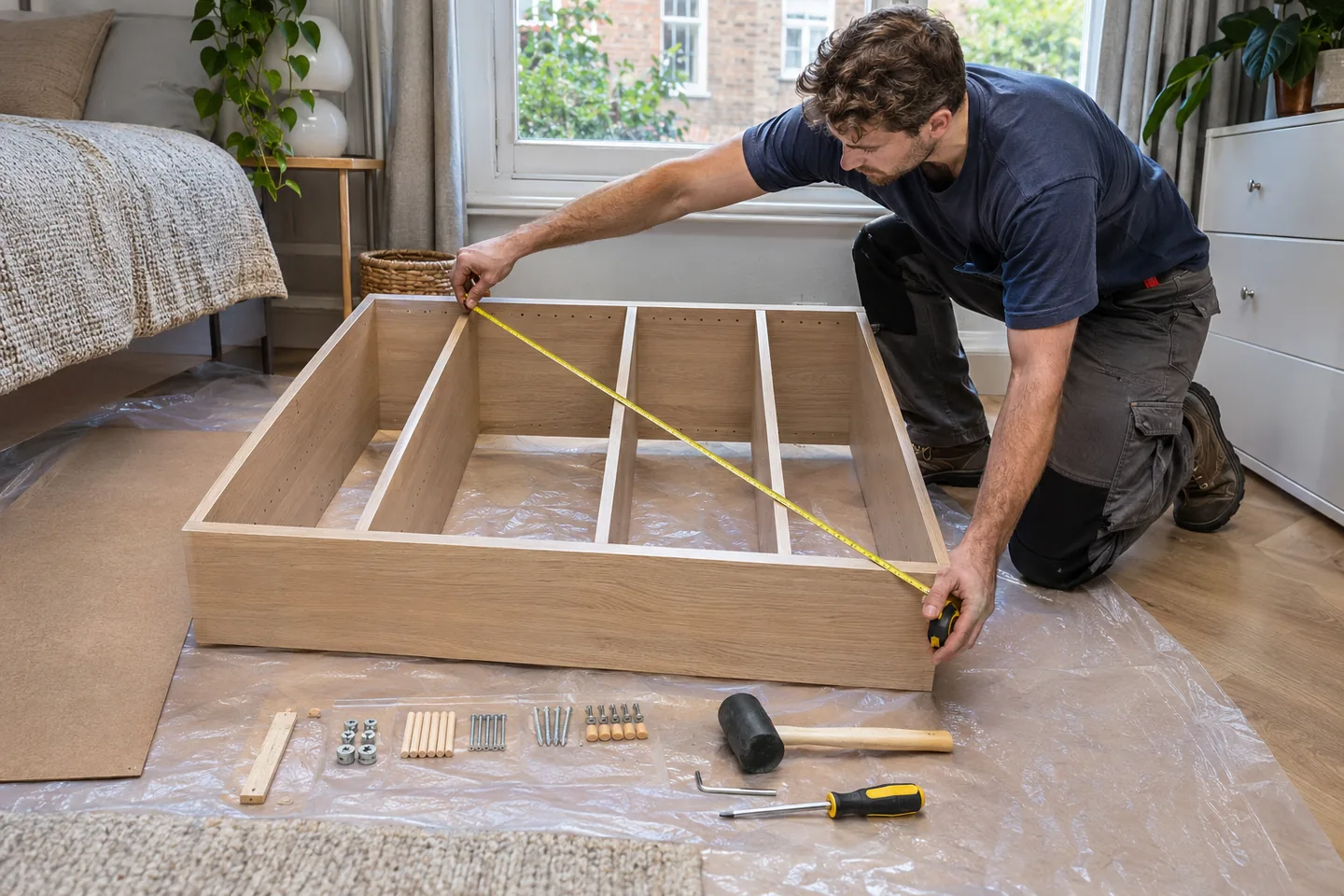
A bookcase assembly ends in its intended position
We check the parts list, panel condition and floor position before putting a bookcase together. Adjustable shelves depend on a square carcass and correctly seated supports. We fit the back and connectors as intended rather than leave the furniture flexible until it is loaded. Doors, if supplied, are adjusted only once the body is stable.
A tall bookcase needs the manufacturer’s restraint arrangement considered with the actual wall. We check skirting clearance and suitable fixing points, then confirm shelves and doors can be used without destabilising the unit. Missing hardware or an unsuitable wall requires a clear decision before loading. We retain instructions and useful spare fittings, and make sure the completed furniture does not block sockets or a route that needs to stay clear.
EMERGENCY LOCKSMITH ENQUIRIES
When a cupboard repair is really a locking question
Locks on entrance doors need a different discussion from a loose furniture catch. Tell us which fitting is involved and whether the door can be opened and secured normally. If a key is stiff, explain whether the problem changes when the door is open. That observation can help us distinguish a possible alignment issue from a mechanism fault, but we still need to inspect the actual arrangement. Avoid forcing a key that is bending or a handle that has stopped returning.
We can discuss locksmith enquiries for Bromley alongside other repairs, with authority and access established for the particular door. A shared entrance or managed system may require the landlord or managing agent to approve the work. Any fire or security function needs to be considered before hardware is altered. Our call line is open 24/7 on 020 3746 0607, and the available visit and proposed repair are confirmed for the enquiry. Where timber damage, a displaced strike or hinge movement is involved, we explain how those issues relate to the lock. The agreed work should be checked with the door operating normally, including secure engagement, rather than judging the result from a key turning while the door is held open.
BEFORE YOU BOOK
Questions about the work here.
Can an existing shelf be cut shorter?
We need to inspect its material, finish and support arrangement. A shortened board may expose an edge that needs finishing or remove an important fixing point. We discuss the intended span and contents before deciding whether alteration or replacement is more suitable.
Can we add storage above a radiator?
Heat, access and the product’s required clearances all matter. We assess the proposed arrangement rather than assume an empty space is usable. The shelf or cabinet must not obstruct controls, maintenance or ventilation that the heating equipment requires.
Do we need matching kickboard clips?
Usually the clip and leg arrangement need to be compatible. Keep an old undamaged clip if one remains, and send the kitchen or panel reference if available. We can inspect whether the existing system can be retained before ordering parts.
Can you fix furniture supplied without instructions?
Send the product name and photographs of the panels and fittings. We may be able to identify the assembly information, but missing instructions or components can prevent a reliable build. We establish those limitations before starting a complicated unit.
Is all stair-related work a handyman task?
No. Decorative trim may be suitable, while moving treads, handrails or supporting parts need an assessment appropriate to their function. Describe exactly what is loose. We do not cover movement with a cosmetic strip and treat the underlying issue as resolved.
How do we arrange Bromley work?
Call 020 3746 0607 with the postcode, task list and photographs. Include product details and any access restrictions. Our call line is open 24/7; appointment availability and the proposed work are confirmed for your enquiry.
TELL US WHAT NEEDS ATTENTION
Discuss your Bromley repair list.
Call 020 3746 0607 with the property address, the items needing attention and the available access. We review the work and confirm the arrangements before a visit is booked.
Original illustrative work scenes show the activities described; they are not photographs of completed customer jobs in this neighbourhood.