
HANDYMAN / LEWISHAM
Handyman Lewisham.
A clear repair list.
From a loose cupboard to a room being prepared for its next use, we assess the faults, agree the work and explain what remains. Practical maintenance starts with the actual condition.
Call line 24/7 · Work and availability confirmed for your address.
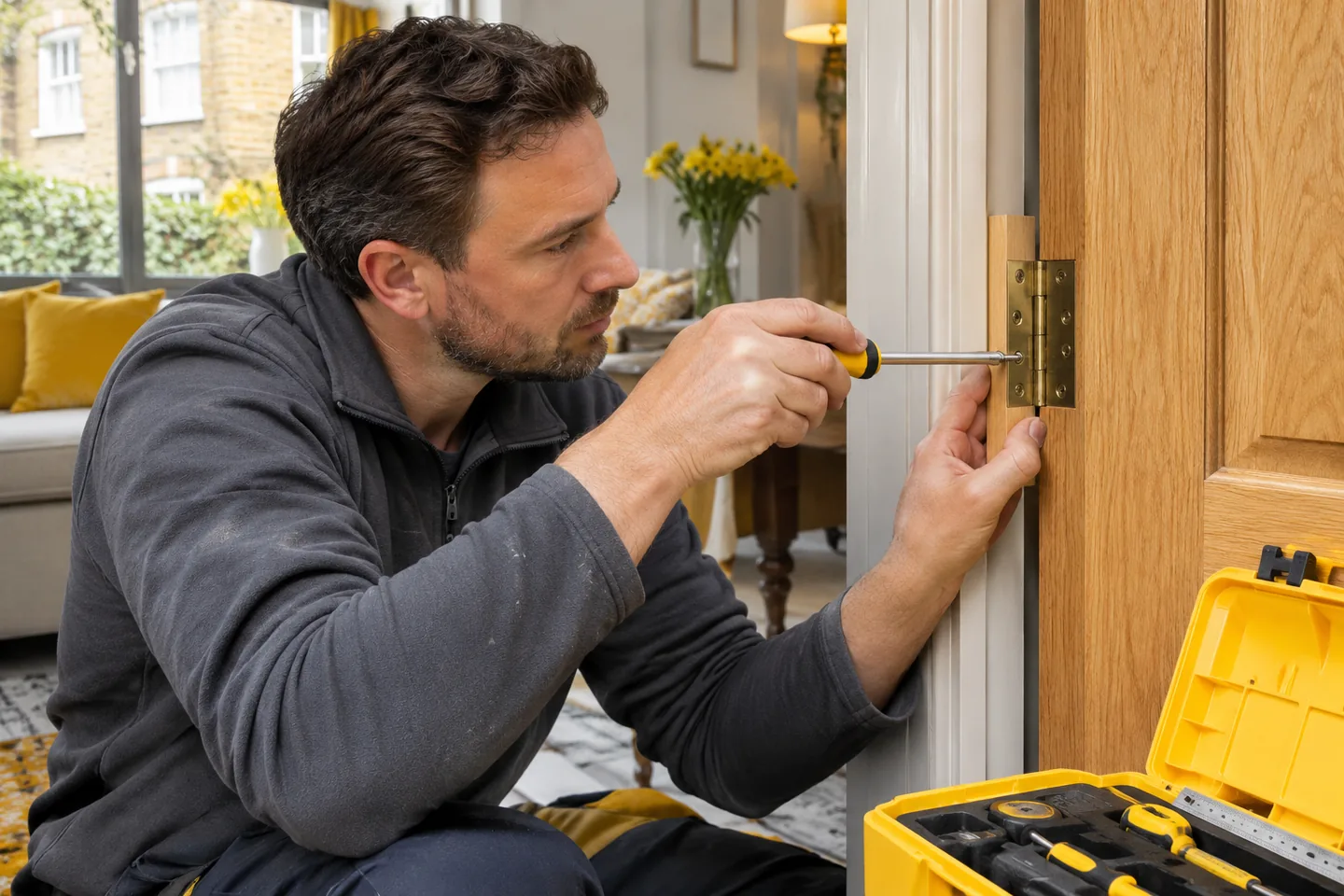
Room-by-room repairs with findings and next decisions made clear.
Can you review a repair list before a property handover?
We can assess an authorised list with room references and photographs. Say who can approve parts and provide access. A visit can reveal additional defects, so we explain those rather than assume permission to repair everything found.
Can you replace a cupboard hinge without the product name?
We can inspect the existing hinge and mounting, but the product information helps. Cup size, overlay and opening angle matter. Keep the old component and send close photographs; damaged cabinet material may also need attention before a new hinge is fitted.
THE WORK IN YOUR HOME
Make a useful list, then check the causes
A property list can say ‘door, drawer, tap’ without revealing what is wrong. We ask for the symptom, room and photographs for each item. For handyman work in Lewisham, that helps us prepare suitable parts and access rather than assume every door needs trimming or every tap needs replacement. Tell us who can approve changes if inspection reveals a different fault.
We work on practical household tasks including assembly, wall fittings, interior timber and accessible plumbing. The condition of the mounting material is checked alongside the component. Where a repair needs a proprietary part, preparation or further investigation, we explain it clearly. That is useful whether you use the property yourself or arrange work for another person.
Useful details for your enquiry
- Room-by-room repair enquiries with each symptom identified.
- Doors, hinges and latches checked as a working arrangement.
- Furniture and storage assembled with appropriate restraint considered.
- Accessible leaks investigated before cabinets or finishes are restored.
- Completed work distinguished from parts or decisions still outstanding.
Record the symptom at the right door
Several similar doors can have different faults. We identify the room and check gaps, hinges, handle action and latch contact for the reported item. A leaf that catches at the bottom differs from a latch that fails to retract. We ask what has changed recently and whether previous adjustments have been attempted, then support the door while inspecting loose hardware.
Suitable repair is agreed from the findings. Adjustment follows sound connections; trimming follows a construction and finish discussion. Specialist door requirements need to be provided and respected. We check full movement and normal latching afterwards. Our carpentry service can review associated frame or timber work where the fault extends beyond a simple fitting.
MATCH THE REPAIR
A clearer way to describe the repair
Useful descriptions identify the item and symptom, then allow inspection to establish the cause.
6 service options.
| Problem or task | What we inspect | Work to discuss | Related service |
|---|---|---|---|
| Bedroom door catches at top | Gaps, hinges and contact marks | Adjust sound connections or assess timber | Carpentry services ↗ |
| Kitchen front hangs low | Hinge and mounting board | Match component and repair support | Carpentry services ↗ |
| Drawer stops halfway | Box, runner and obstruction | Resolve cause before alignment | Carpentry services ↗ |
| Wardrobe packs delivered | Instructions, parts and final position | Assemble and assess restraint | Furniture assembly ↗ |
| Shelf moves when touched | Bracket and background | Establish suitable attachment | Hanging wall mounting ↗ |
| Basin cupboard drips after use | Accessible supply and waste | Repair source and test | Plumbing ↗ |

Cupboard fronts need stable connections
We support a dropped door and inspect the hinge cup, plate and surrounding board. A snapped hinge is a component failure; pulled-out screws may indicate damaged material. We check the cabinet’s support and neighbouring fronts before adjusting gaps. A change in one front can otherwise mask the movement of the whole unit.
Compatible hardware is matched to the cabinet arrangement. Where the material remains sound, replacement or adjustment can proceed as agreed. Deteriorated board may need a separate repair decision. We check opening clearance, gaps and closing action, and explain any visible plate or new fixing position before alteration. The result should be understood as a repair to a particular connection, not a guarantee about unrelated parts of the kitchen.
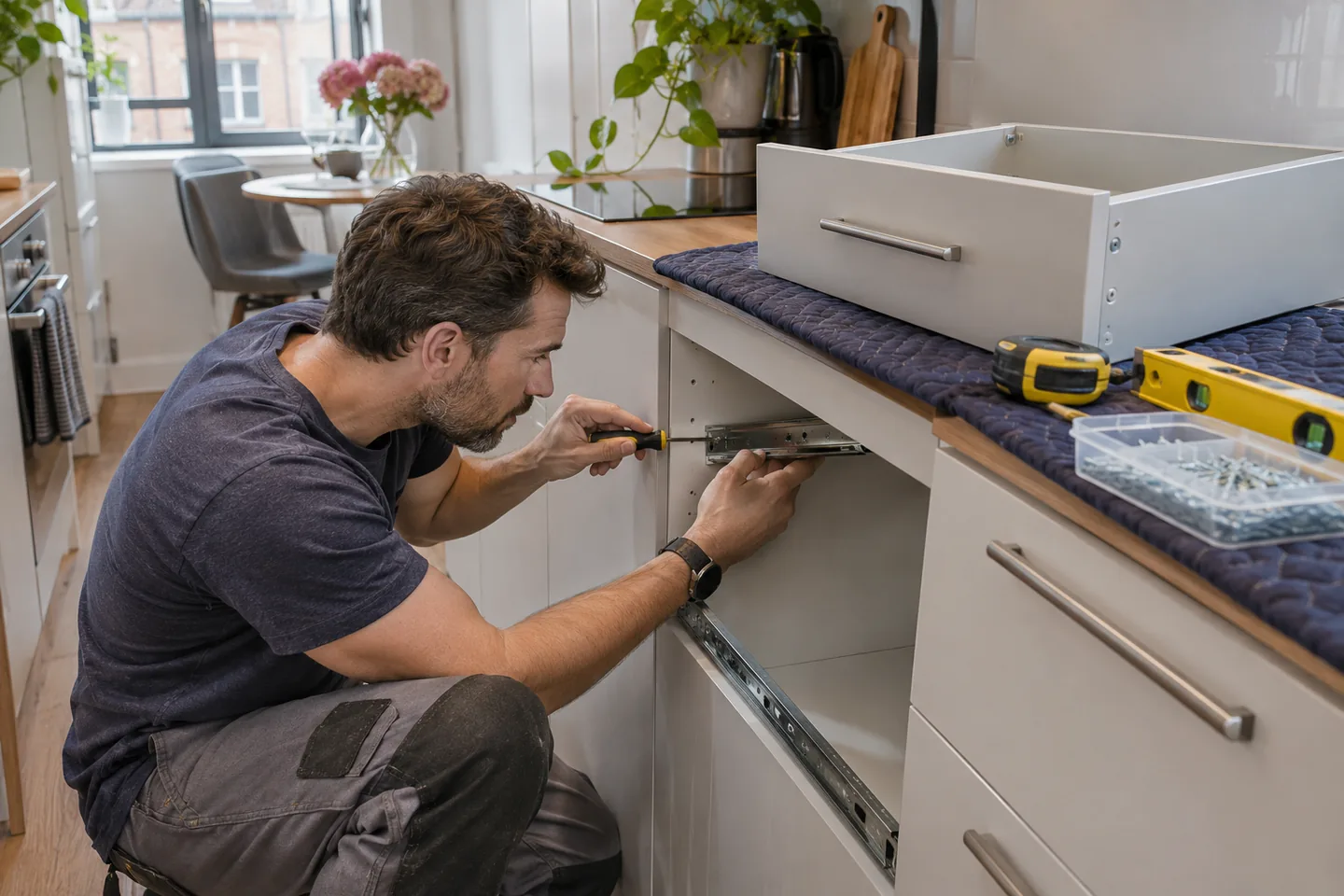
Drawer faults should be described beyond ‘stuck’
We ask where the drawer stops and whether it tilts or drops. With the contents removed, we inspect the box, bottom and runners. A loose object behind the drawer, a damaged stop and a bowed base can all interrupt travel. The intended release method is used for removal rather than forcing the mechanism past its catches.
Suitable repair restores the box and sound mounting before alignment. Replacement runners need the correct dimensions and fixing method. We check smooth travel and clearances after work, explaining any limit from damaged board or unavailable proprietary parts. A loose handle is checked as well, since repeated pulling against resistance can enlarge its mounting holes.

Furniture assembly needs a complete parts picture
We compare supplied packs and components with the instructions, noting damage or missing items before assembly. The final room and route are checked for space and handling. Some products require a larger assembly footprint than their finished size, and an assembled unit may not fit through the route its panels used. We plan the sequence accordingly.
The structure is checked square and supported correctly before fronts are aligned. Tall items need their prescribed restraint assessed against the actual wall. We explain unresolved parts or unsuitable mounting positions before loading. Our assembly service includes the final opening and clearance checks, with instructions and spare proprietary parts retained for the property.
THE AREA / THE ACTUAL ADDRESS
Lewisham town enquiries need a complete address
Lewisham Council’s local plan distinguishes its town-centre network and individual neighbourhoods. In a repair enquiry, saying Lewisham can mean the town or the wider borough, so provide the full postcode and address. Include the entrance, floor and contact arrangement rather than rely on the nearest landmark.
Tell us about shared access, furniture delivery locations and any owner or building conditions for permanent fittings. The actual wall, door and component are assessed individually; a neighbourhood label does not establish their construction. Nearby information includes Deptford, Blackheath, Nunhead and East Dulwich. If you are arranging work for another person, add the approval contact and room references to the photographs so the practical tasks can be reviewed clearly. Include any delivery or loading instructions you already have, particularly for long panels and bulky furniture components.
Address information: Lewisham Council: adopted local plan
PLAN THE WORK
Explore the time and labour budget.
Select the task, quantity and visit period. Assembly benchmarks and entered time assumptions stay visible; other repairs need an individual assessment.
Plan your Lewisham repair enquiry
Choose the work, enter quantities and review the assumptions. We confirm the repair, working time and availability before booking.
Assembly benchmarks assume complete product parts, instructions and a clear working area. For other repairs, a known condition does not establish a standard duration.
Compare the assembly work
Published London assembly ranges for one item. These are external planning benchmarks, not our recorded job times or guaranteed completion periods.
Time evidence: published London assembly ranges, checked 3 November 2026. Product, staffing and access differences require assessment. Carrying, missing parts and wall restraint are not automatically included.
Compare labour for the same working time
Comparison uses the selected day and visit period. These are labour categories at equal time, not fixed job prices. One-hour minimum; subsequent half hours. Materials, sourcing time, parking and congestion charges are separate. Rates include taxes. Daytime: handyman 08:00–18:00; plumbing/electrics 08:00–18:00 weekdays and 08:00–17:30 weekends. Outside-daytime availability needs confirming.
What changes the repair decision?
This compares the checks needed for the selected repair, not a scored difficulty or a promised duration.

Old wall fittings are assessed before reuse
A shelf or rail left in place may have hidden loose fixings or an unsuitable attachment for its current contents. We inspect the item, mounting pattern and background, asking how it is intended to be used. Existing holes and plugs are checked rather than accepted as evidence of suitable support. Nearby service routes remain relevant to any drilling.
Where work is suitable, we agree the position and use an attachment method appropriate to the construction and product. Weak areas may require another position or support arrangement. We check seating and visible movement afterwards. Our wall mounting service also reviews replacement mirrors and related fittings, with removal and making good identified in the original list.
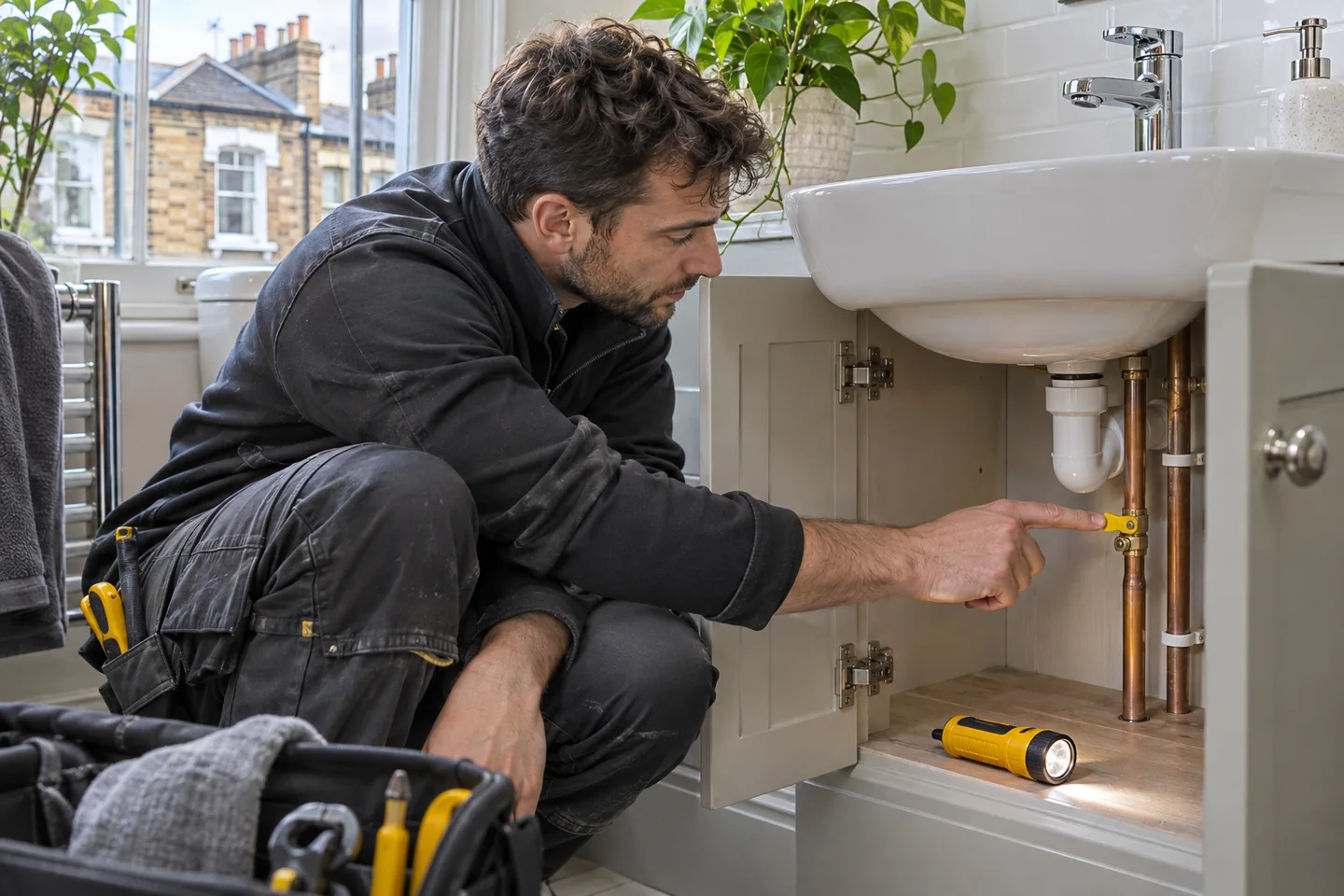
Accessible plumbing needs the timing of the leak
We ask whether water appears during filling, draining or while a fitting is idle. The affected unit is cleared and accessible joints inspected with the area protected. Water may track from another point before it drips. Isolation, corrosion and component condition affect the practical repair, so we confirm those before disconnecting anything.
For agreed local work, suitable parts are fitted and the area tested under normal use. We inspect again for fresh moisture before stored items return. A softened cabinet base or stained wall is assessed after the source is resolved. Our plumbing service covers accessible fitting faults; concealed sources may need further investigation rather than a cosmetic repair to the visible surface.
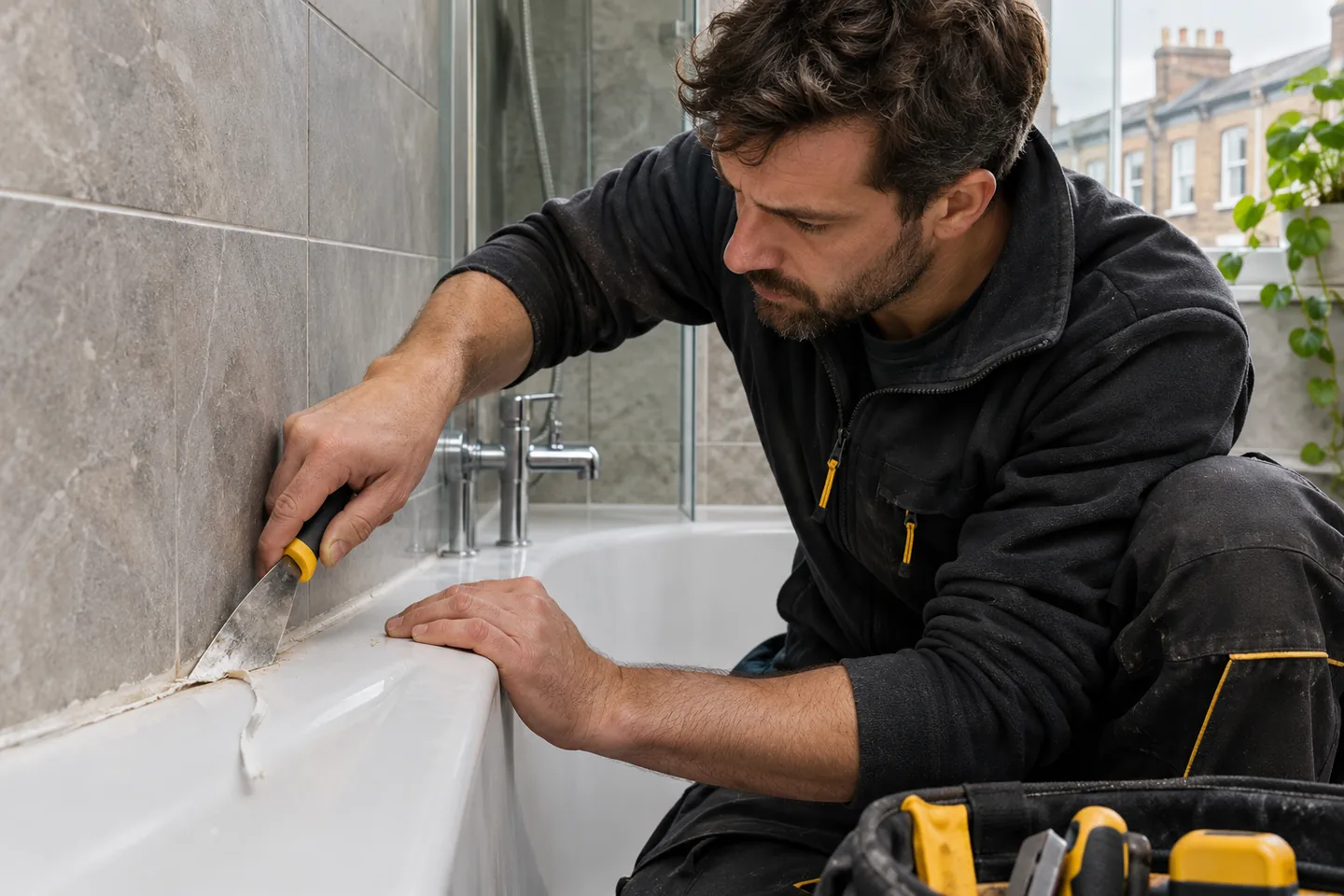
Sealant and small surface defects need preparation
A failed bath joint is checked for movement, adjacent damage and moisture before resealing. Old material is not simply covered. Where suitable, it is removed and the clean contact faces prepared for a compatible product. The same principle applies to small wall repairs: loose material and dampness need assessment before filling or painting.
We explain curing and use instructions and identify any wider finishing area required. Our resealing service and decorating service address different surfaces and preparation. A repair list should state the finish wanted so mechanical adjustment, local making good and full decorative work are not confused.

Handover is a record of the agreed work
We revisit the reported faults and operate repaired fittings after the tools are cleared. The door should latch normally, the drawer travel correctly and accessible water repairs remain dry during testing. We explain changed components and any instructions affecting use, including curing or loading requirements. Product information stays available for future maintenance.
Outstanding items are described by their reason: a missing part, damaged material, unsuitable position or further approval. That allows the responsible person to decide the next action. Our property maintenance service can review additional work, but it should have a clear description and authority rather than be assumed to form part of the original list.
EMERGENCY LOCKSMITH ENQUIRIES
Security faults should head the enquiry
If a door cannot be secured, put that information at the start of the call rather than only on a maintenance list. Tell us whether access is available, whether the key turns and whether the handle returns. We ask how operation changes with the door open, since alignment can affect the locking arrangement. Avoid forcing a stiff key or repeatedly shutting a door that may leave someone unable to regain access.
We take locksmith enquiries through our call line 24/7 on 020 3746 0607. We confirm availability, proposed work and price for the address and circumstances. Have the door type and relevant authority to access or alter it ready, with visible hardware photographs if safe. For managed properties, identify who can approve replacement components and provide any building requirements. After agreed work, we check opening, closing and locking together and explain related hinge or frame issues. Changes to keys or operation are made clear at handover, and relevant product information remains available. This helps the person managing the property keep the access arrangement clear for authorised occupants as well as record the repair.
BEFORE YOU BOOK
Questions about the work here.
Can a tenant give access for an owner’s repair list?
We need an agreed arrangement and a clear approval contact. Tell us which tasks are authorised and who can decide about parts or additional findings. Providing access does not automatically establish authority for every alteration.
Do photographs replace inspection?
They help us prepare and identify visible products, but hidden material condition and connections may need checking at the property. We explain findings that alter the proposed work before proceeding.
Can you use parts already left at the property?
We check their specification and condition against the fitting. Similar-looking components can be incompatible. Keep packaging and product details so the parts can be identified accurately.
Can small decorative damage be included?
Yes, describe the surface and intended result. We assess preparation and the area needed for a consistent finish. Filling a hole and fully matching the surrounding paint can involve different work.
What happens if a proprietary part is missing?
We identify it from the instructions where possible and explain the requirement. The appropriate replacement may need to come from the manufacturer. We avoid substituting an uncertain structural part simply to complete assembly.
How should urgent issues be marked?
Tell us directly about active water escape, inability to secure a door or an unsafe fitting. Describe routine items separately. We confirm availability and suitable arrangements for the actual enquiry.
TELL US WHAT NEEDS ATTENTION
Discuss your Lewisham repair list.
Call 020 3746 0607 with the property address, the items needing attention and the available access. We review the work and confirm the arrangements before a visit is booked.
Original illustrative work scenes show the activities described; they are not photographs of completed customer jobs in this neighbourhood.