
HANDYMAN / BLACKHEATH
Handyman Blackheath.
Repair with the detail in mind.
A worn hinge, loose trim or unreliable cupboard needs a repair that suits its material. We inspect the connection, discuss the finish and check the way the item works before handover.
Call line 24/7 · Work and availability confirmed for your address.
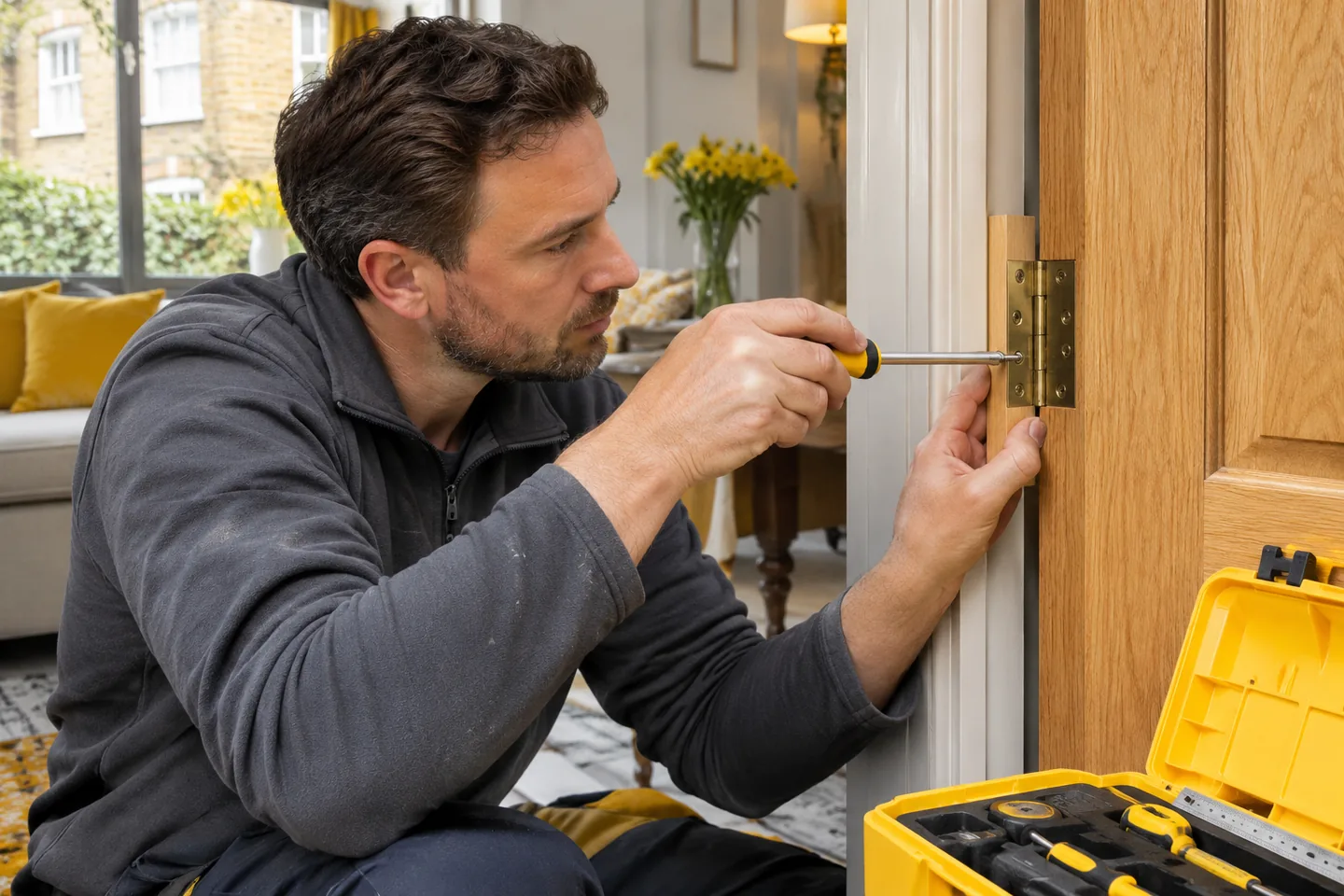
Practical timber and fitting repairs, assessed individually.
Can you adjust a Blackheath property’s existing internal doors?
We assess the leaf, frame, hinges and latch rather than assume the repair from the age or appearance. Tell us about retained details or specialist requirements. If trimming is proposed, construction and finishing implications are discussed before material is removed.
Can you repair a loose timber trim without replacing it?
We inspect the piece and the background to see whether reattachment is suitable. Breaks, moisture or failed wall material can change the decision. Send a profile photograph and show the whole affected length, including its corners.
THE WORK IN YOUR HOME
Understand what is failing before choosing what to keep
A useful fitting can often be retained when its fault is local, but only if the supporting material remains suitable. We provide handyman work in Blackheath with that distinction in mind. A loose hinge in sound timber, a split frame and worn hinge hardware each call for a different decision. We explain the findings and likely effect on the existing finish before alteration.
Tell us about details that must remain, previous repairs and any requirements affecting the property. We can review doors, cupboards, furniture assembly, wall fittings and accessible plumbing as a practical list. Photographs and dimensions help preparation, while the actual construction and condition establish the appropriate method. Where a part is unavailable or a background unsuitable, we make the next decision clear.
Useful details for your enquiry
- Interior door faults traced through gaps, hardware and contact marks.
- Timber trim assessed for profile, moisture and sound attachment.
- Cupboard and drawer hardware checked before replacement.
- Supplied furniture assembled with structural parts identified.
- Surface finishing and water-related work planned in the right order.
Start at the hinge connection
We inspect the hinge leaf and screws while the door is supported, looking for movement in the timber as well as the hardware. A screw that spins may have lost its hold, but the surrounding frame can also be split or previously filled. The gaps around the door help show how that movement affects the leaf. We ask what has already been tightened or changed.
A suitable repair restores support before the door is aligned. The method follows the material and hole condition, with concealed risks considered before changing fixing length. We check full swing and latch engagement afterwards. Our carpentry service can review related frame or timber work where a simple adjustment is not enough, including the protection needed for an affected finish.
MATCH THE REPAIR
Material and movement guide the repair
The visible symptom is a starting point. These checks establish what can appropriately be retained.
6 service options.
| Problem or task | What we inspect | Work to discuss | Related service |
|---|---|---|---|
| Hinge moves in frame | Timber and fixing condition | Restore support before alignment | Carpentry services ↗ |
| Door rubs an edge | Contact marks and surrounding gaps | Adjust or discuss suitable trimming | Carpentry services ↗ |
| Trim comes away | Profile, background and moisture | Reattach sound material or match replacement | Carpentry services ↗ |
| Catch will not engage | Door alignment and hinge mounting | Correct position before renewing catch | Carpentry services ↗ |
| Drawer twists in travel | Box joints and base | Restore square before runner settings | Carpentry services ↗ |
| Wall item needs replacing | Mounting pattern and background | Agree suitable attachment and finish | Hanging wall mounting ↗ |
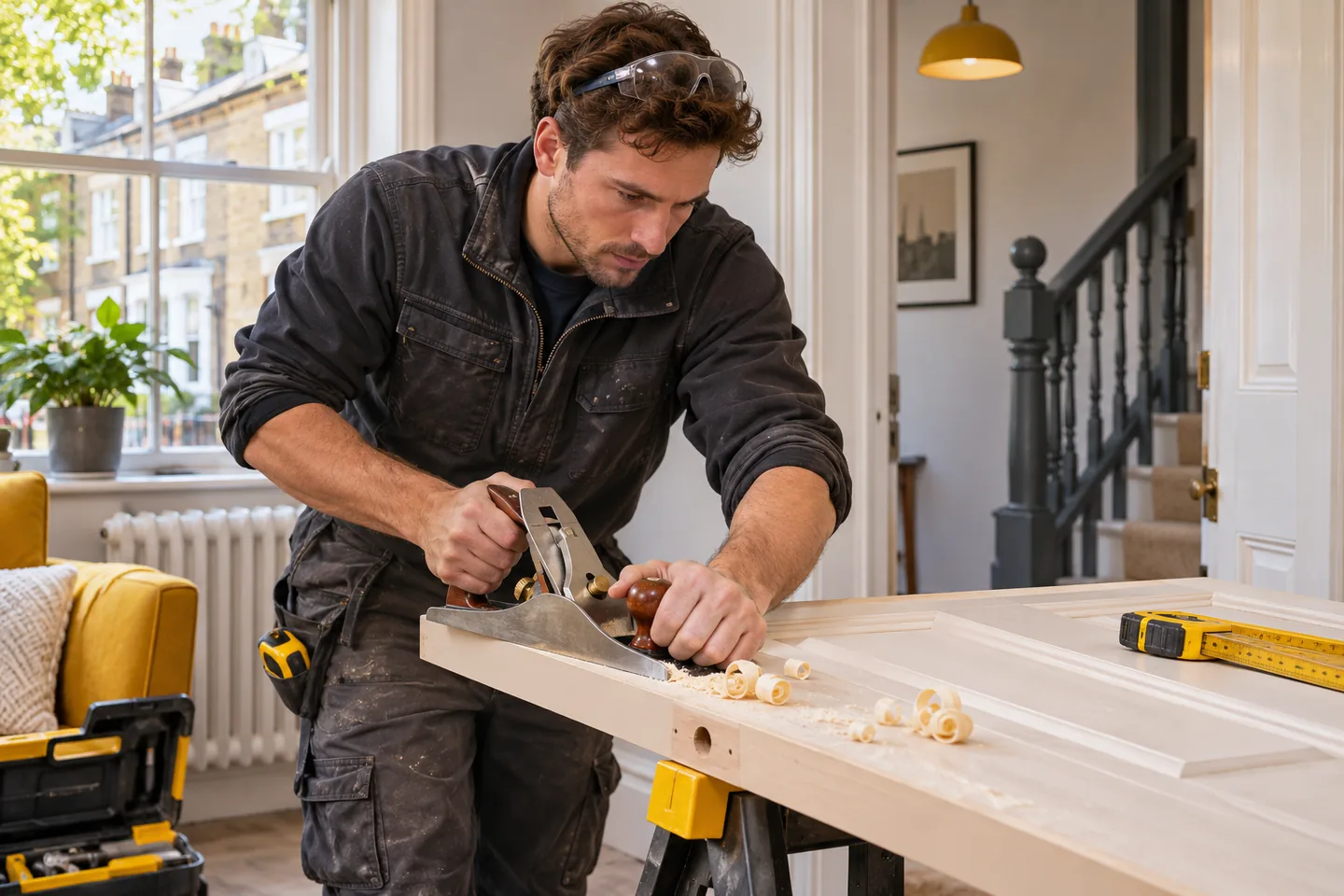
A door edge tells you where it is catching
We read the rubbed marks and compare them with the frame and floor. Contact at one corner can indicate a different issue from a tight edge along its length. New floor coverings and recent painting are relevant, but neither automatically explains every fault. We also check whether the latch operates freely when the door is open.
Where appropriate, alignment is corrected before trimming is considered. Material removal needs a discussion of door construction, permitted allowance and finishing. Specialist assemblies require their own suitable assessment. We test normal closing without a shove and check the full opening route, including nearby furniture. The agreed repair should address the cause rather than merely make the contact mark disappear.

Trim repairs need careful junctions
We measure skirting or architrave by profile and thickness as well as height. A replacement that appears close in a photograph can differ noticeably at a mitre or junction. Where the existing piece is loose, we inspect behind it for dampness and damaged wall material. The adjacent flooring and paint are protected during assessment and removal.
Suitable attachment follows preparation of sound surfaces and a fixing method appropriate to the background. We discuss any cut or replacement before it is made, then check fit at corners. Filling and decorating may remain necessary even when the trim is mechanically secure. Our decorating service can consider the finishing area where a local patch would not give the intended appearance.
PLAN THE WORK
Explore the time and labour budget.
Select the task, quantity and visit period. Assembly benchmarks and entered time assumptions stay visible; other repairs need an individual assessment.
Plan your Blackheath repair enquiry
Choose the work, enter quantities and review the assumptions. We confirm the repair, working time and availability before booking.
Assembly benchmarks assume complete product parts, instructions and a clear working area. For other repairs, a known condition does not establish a standard duration.
Compare the assembly work
Published London assembly ranges for one item. These are external planning benchmarks, not our recorded job times or guaranteed completion periods.
Time evidence: published London assembly ranges, checked 3 November 2026. Product, staffing and access differences require assessment. Carrying, missing parts and wall restraint are not automatically included.
Compare labour for the same working time
Comparison uses the selected day and visit period. These are labour categories at equal time, not fixed job prices. One-hour minimum; subsequent half hours. Materials, sourcing time, parking and congestion charges are separate. Rates include taxes. Daytime: handyman 08:00–18:00; plumbing/electrics 08:00–18:00 weekdays and 08:00–17:30 weekends. Outside-daytime availability needs confirming.
What changes the repair decision?
This compares the checks needed for the selected repair, not a scored difficulty or a promised duration.

Cupboard hinges and catches should work together
We inspect door position before fitting a stronger catch. A front that sits proud may have a hinge adjustment issue or damaged mounting, and a catch should not pull it forcibly into line. We support the door to examine the cup, plate and board. The cabinet’s square and support contact are also checked where several fronts have changed alignment.
Compatible hardware is selected by the actual specification. Where material remains sound, adjustment or replacement is tested through the full opening and closing movement. Damaged board or proprietary parts can limit the repair, which is explained before alteration. We check gaps and nearby handle clearance so the fitting works in its normal setting rather than only with neighbouring doors held out of the way.
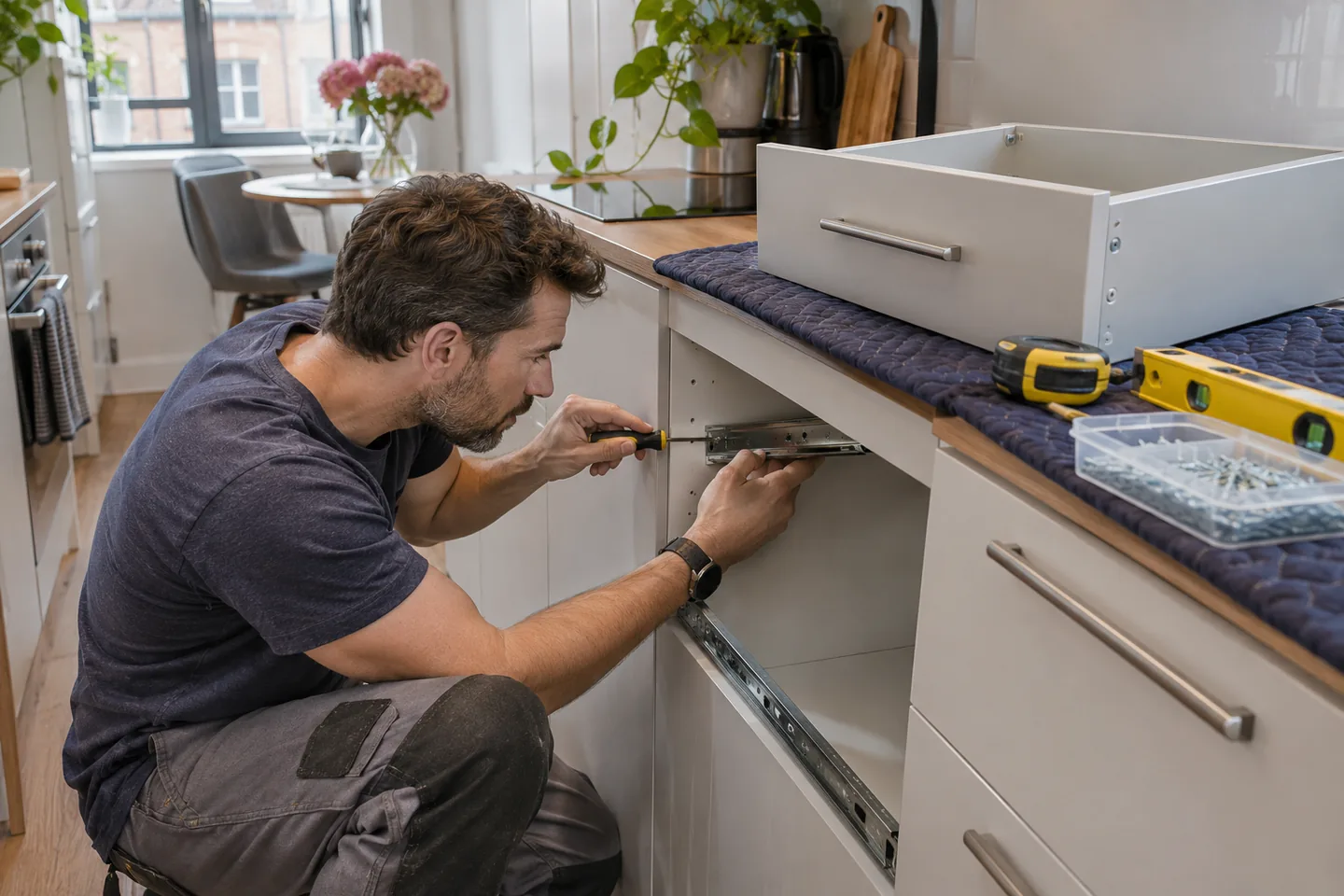
A drawer box needs its joints to stay square
The drawer is emptied and inspected for loose corners, a slipped base and damage around the runner connection. A box that racks can bind even when the runners themselves move freely. We look for the point where travel changes and use the intended release to remove it. Extra force on the front can enlarge an already weakened connection.
Suitable repair follows the original construction and sound material. Replacement runners require compatible dimensions and mounting clearance where they are needed. After work, we check stops, travel and adjacent gaps. If the board has deteriorated or a bracket is unavailable, we explain the remaining requirement. A tightened handle alone is not treated as resolution of the drawer’s movement problem.
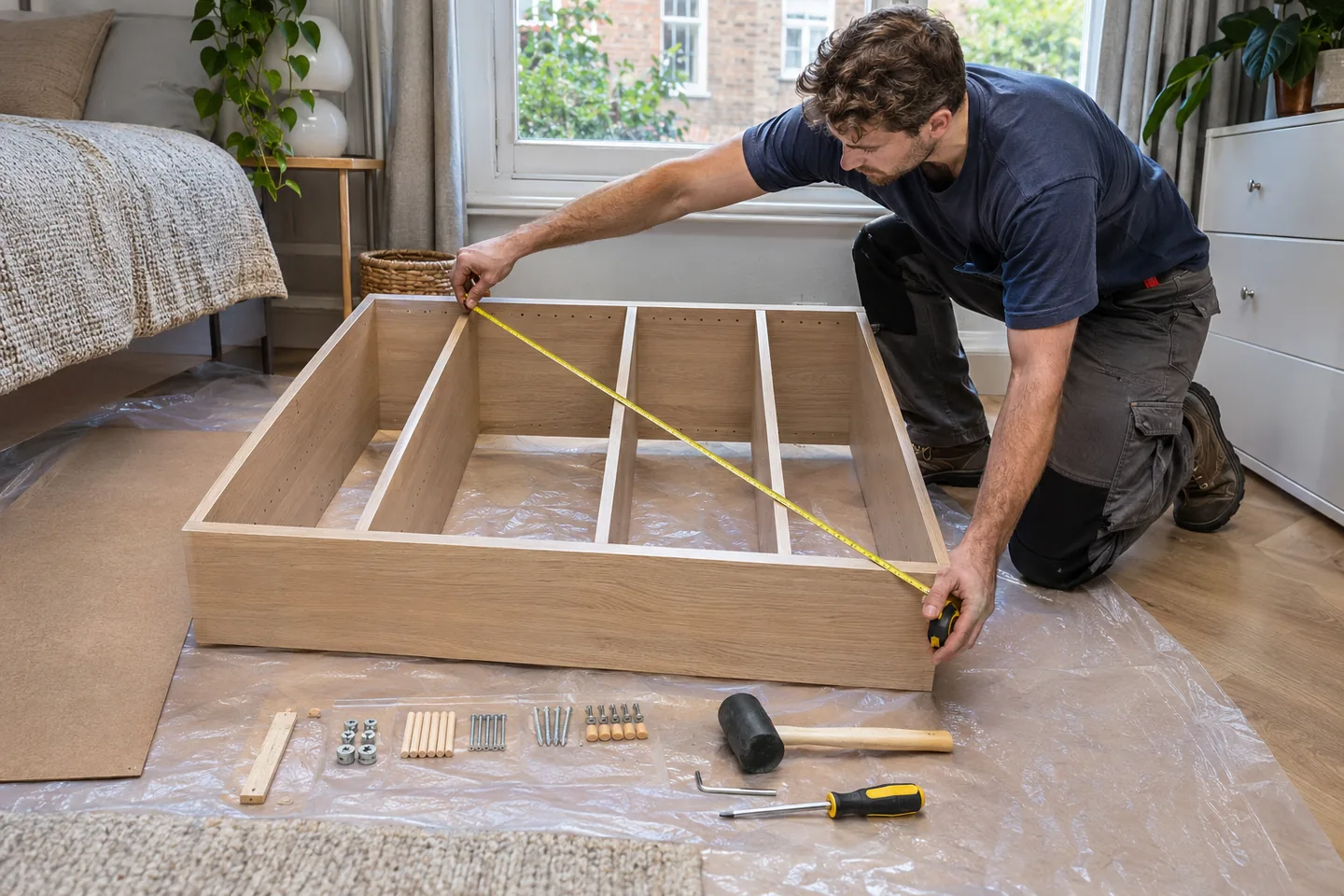
Furniture assembly should preserve structural intent
We identify rails, backing panels and hardware from the instructions before joining them. A part that looks decorative may provide structural support. The assembly area and route are checked against the final room, with finished surfaces protected. Missing or damaged components are recorded early rather than discovered after the unit is loaded.
We establish square and support contact before final alignment. Tall items need their prescribed securing arrangement assessed against the wall. Supplied plugs are checked for suitability rather than automatically used. Our assembly service includes normal door and drawer operation, with product information and proprietary spares retained for future use. Any unresolved requirement is explained before handover.
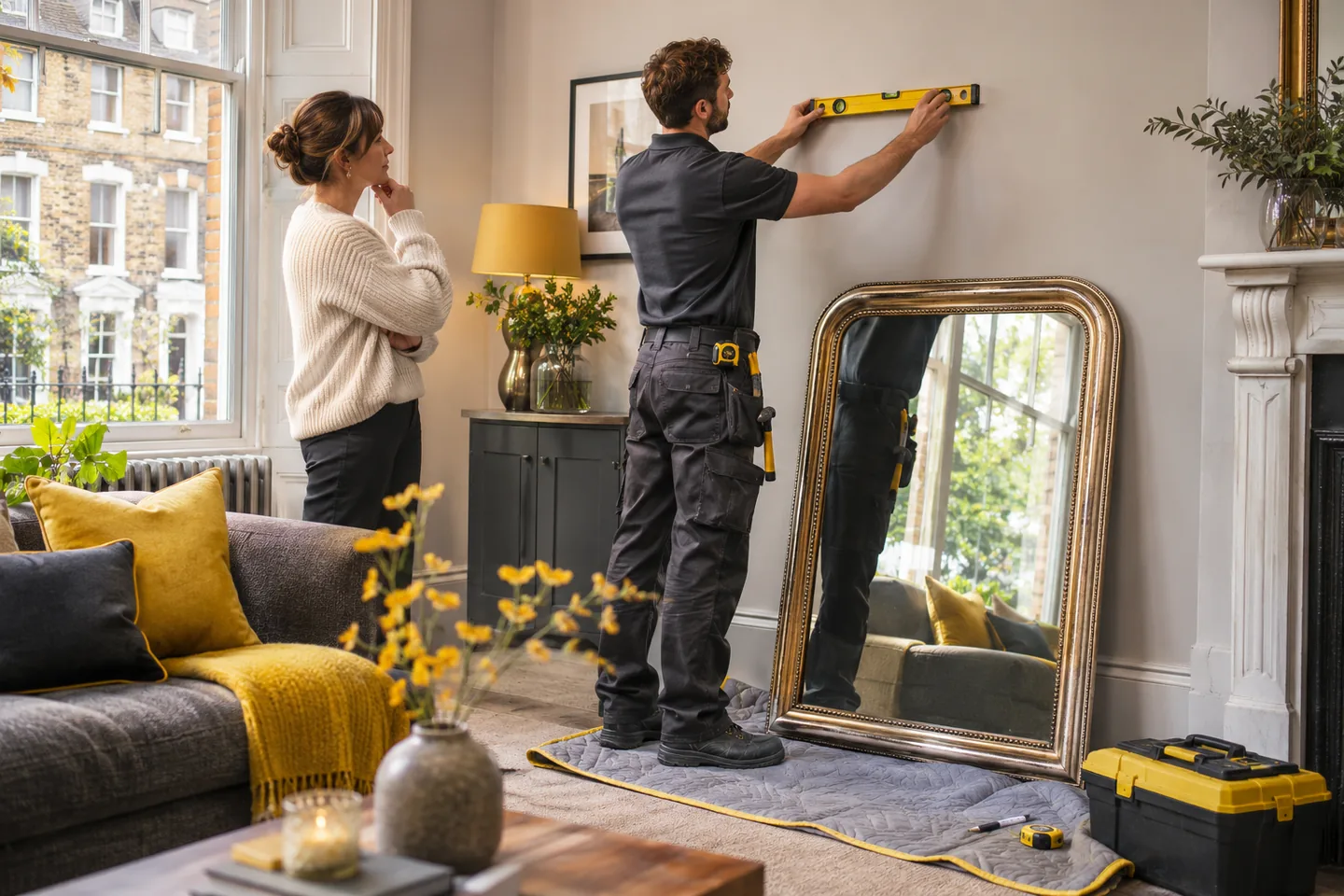
Wall items must suit their background
We consider the product’s mounting pattern and intended use alongside the actual wall. Old holes, patched plaster and nearby services can affect the position. A previous fitting is not proof that the same area suits a different shelf or mirror. We agree the visual placement before permanent marking, subject to a suitable attachment being possible.
Where appropriate, fixings are selected for the assessed construction and item. Weak material may require another position or support arrangement. We check seating and visible movement afterwards and discuss old marks left outside the new footprint. Our wall mounting service covers related rails and brackets, each assessed for its own function.

Moisture changes what can be finished
A stained trim or swollen cupboard needs the water source considered before surface repair. We ask when moisture appears and inspect nearby accessible fittings where relevant. A wet background or moving joint is unsuitable for a cosmetic cover. Accessible plumbing, damaged material and a new seal are separate decisions with a sensible order.
After the source is resolved, we assess the surface for repair or replacement and explain preparation. Our plumbing service and resealing service address the relevant tasks. Final checks revisit operation and any product curing instructions. We identify remaining parts or finish work so the next action is clear rather than hidden by a fresh appearance.
THE AREA / THE ACTUAL ADDRESS
Blackheath: the address determines the relevant authority
Lewisham Council describes Blackheath as crossing Lewisham and Greenwich, and Greenwich’s own information notes the shared setting. That makes a precise address important when a question concerns property permissions. Do not assume the authority or a building’s status from the locality name alone.
Tell us about retained details, owner conditions and any required consent before permanent alterations are planned. Entrance, floor and handling-route information is useful for furniture and mirrors. The repair method follows the actual timber, wall and fitting condition, not an assumption about all homes in Blackheath. Nearby information includes Greenwich, Lewisham, Deptford and East Dulwich. A full-room photograph and close views of the failed connection help turn the enquiry into a practical discussion. If a large component must pass a tight landing, include a photograph of that route too.
Address information: Lewisham Council: Blackheath · Royal Borough of Greenwich: Blackheath
EMERGENCY LOCKSMITH ENQUIRIES
Lock operation and timber condition belong together
A lock can be affected by a door that has moved in its frame, but a stiff mechanism should not be assumed to be only a carpentry problem. Tell us whether the key turns with the door open, whether the handle returns and whether the property remains secure. Avoid forcing the key to draw the leaf into position. Retain any broken component and tell us about hardware or finishes that must be considered before replacement.
We take locksmith enquiries through our call line 24/7 on 020 3746 0607. We confirm availability, proposed work and price for the address and circumstances. Have relevant authority to access or alter the door ready, with photographs of visible parts if safe. Requirements affecting a shared or specialist door should be provided before work is selected. Following agreed repair or replacement, we check closing, latching and locking in the normal position and explain any associated frame or hinge issue. Changes in operation, keys or visible footprint are discussed clearly. Product information remains available so the person responsible for the property can manage access and identify the hardware for future maintenance.
BEFORE YOU BOOK
Questions about the work here.
Can original fittings be retained?
We assess function and condition before deciding. Serviceable hardware may remain, while broken mechanisms or damaged mounting material can require replacement. Tell us which details matter to you before parts are selected.
Will a timber repair need painting?
It can disturb the finish or expose an edge that needs protection. We explain likely areas and the intended result before work. Mechanical repair and decorative matching should be understood separately.
Can you use a replacement hinge I have bought?
We check dimensions, opening arrangement and compatibility with the existing cabinet or door. Similar appearance is not enough. Keep packaging and the old component available for comparison.
Can a trim profile be matched exactly?
Availability and the existing detail determine the options. Send dimensions and a clear side view. We discuss a close match, replacement extent or another approach before material is cut or ordered.
Do you need the furniture instructions?
They are very useful for identifying structural components and proprietary parts. Send the model if the instructions are missing. We still inspect the supplied components for condition and completeness.
What should I say about property requirements?
Tell us about listed status, retained details, owner conditions and specialist doors before alteration. Required permission should be established by the responsible party. We can then discuss the practical repair with those requirements understood.
TELL US WHAT NEEDS ATTENTION
Discuss your Blackheath repair list.
Call 020 3746 0607 with the property address, the items needing attention and the available access. We review the work and confirm the arrangements before a visit is booked.
Original illustrative work scenes show the activities described; they are not photographs of completed customer jobs in this neighbourhood.