
HANDYMAN / ROMFORD
Handyman Romford.
Put the everyday
back in working order.
We repair the loose connection, investigate the sticking part and fit the item with its surroundings in mind. Send the faults together so we can discuss the right work for your Romford property.
Call line 24/7 · Work and availability confirmed for your address.

The connection matters as much as the finish.
Can you assess several jobs at a Romford property together?
We can review the complete list and discuss priorities, parts and the trades involved. Keep repairs separate in your message: the room, item and fault are more useful than a single total of small jobs. We confirm which tasks can sensibly share a visit.
What should I tell you about access near Romford town centre?
Give us the actual entrance and any delivery or parking instructions. A location near Market Place does not establish where a work vehicle can stop. We discuss unloading and parking separately and check the arrangement for the address before agreeing the visit.
THE WORK IN YOUR HOME
A useful visit starts with a useful repair list.
We take handyman enquiries in Romford for individual repairs and groups of household tasks. A cupboard door that drops, a wardrobe waiting in boxes and a bathroom joint that has split do not require the same preparation. We ask what is wrong, what the item is made from and what has already been tried. That information lets us distinguish a straightforward fitting enquiry from a repair that needs parts or further assessment.
We also discuss the practical setting. The person answering the door may not be the person who can approve replacement materials. A delivery may still occupy the room where assembly is planned. A repair behind a washing machine may have restricted access. We bring those questions into the enquiry before agreeing the visit, then keep any additional work connected to what is actually found.
Useful details for your enquiry
- A separate description and photograph for each fault.
- Product links for furniture or replacement fittings.
- Which parts and materials are already at the property.
- The entrance, parking arrangement and working room.
- The person who can authorise repair decisions.
MATCH THE REPAIR
Describe the fault, then choose the service.
These examples help us prepare an enquiry. They do not establish a fixed duration or permission to alter a fitting.
6 service options.
| Problem or task | What we inspect | Work to discuss | Related service |
|---|---|---|---|
| Cupboard front drops | Hinge, plate and cabinet side | Repair support before alignment | Odd jobs ↗ |
| Door rubs the floor | Swing, hinge and recent floor changes | Assess adjustment before trimming | Carpentry services ↗ |
| Shelf bracket loosens | Background and original holes | Agree a suitable support arrangement | Hanging wall mounting ↗ |
| Furniture arrives in packs | Model, components and room | Plan assembly and restraint separately | Furniture assembly ↗ |
| Water beneath basin | Leak pattern, access and joints | Identify the affected connection | Plumbing ↗ |
| Bath edge splits | Joint, movement and moisture | Prepare the background before resealing | Tiling grouting re sealing ↗ |
Cupboard doors: find what is moving before adjusting the hinge.
We examine the hinge cup, mounting plate and material holding the screws. A door can sag because a screw has loosened, because its hole has worn or because the cabinet itself has moved. We support the door while checking the connection so that its weight does not pull further on damaged board. A photograph of the open hinge and surrounding cabinet side helps us identify the hardware before attending.
Once the attachment is sound, we use the adjustment available on the actual hinge to align the front with its neighbours. Replacement parts need compatible dimensions and movement; a similar appearance alone is insufficient. We check opening clearance, gaps and closing action afterwards. If the board cannot hold an appropriate local repair, we explain the replacement material required rather than hiding the failure behind repeated adjustments.
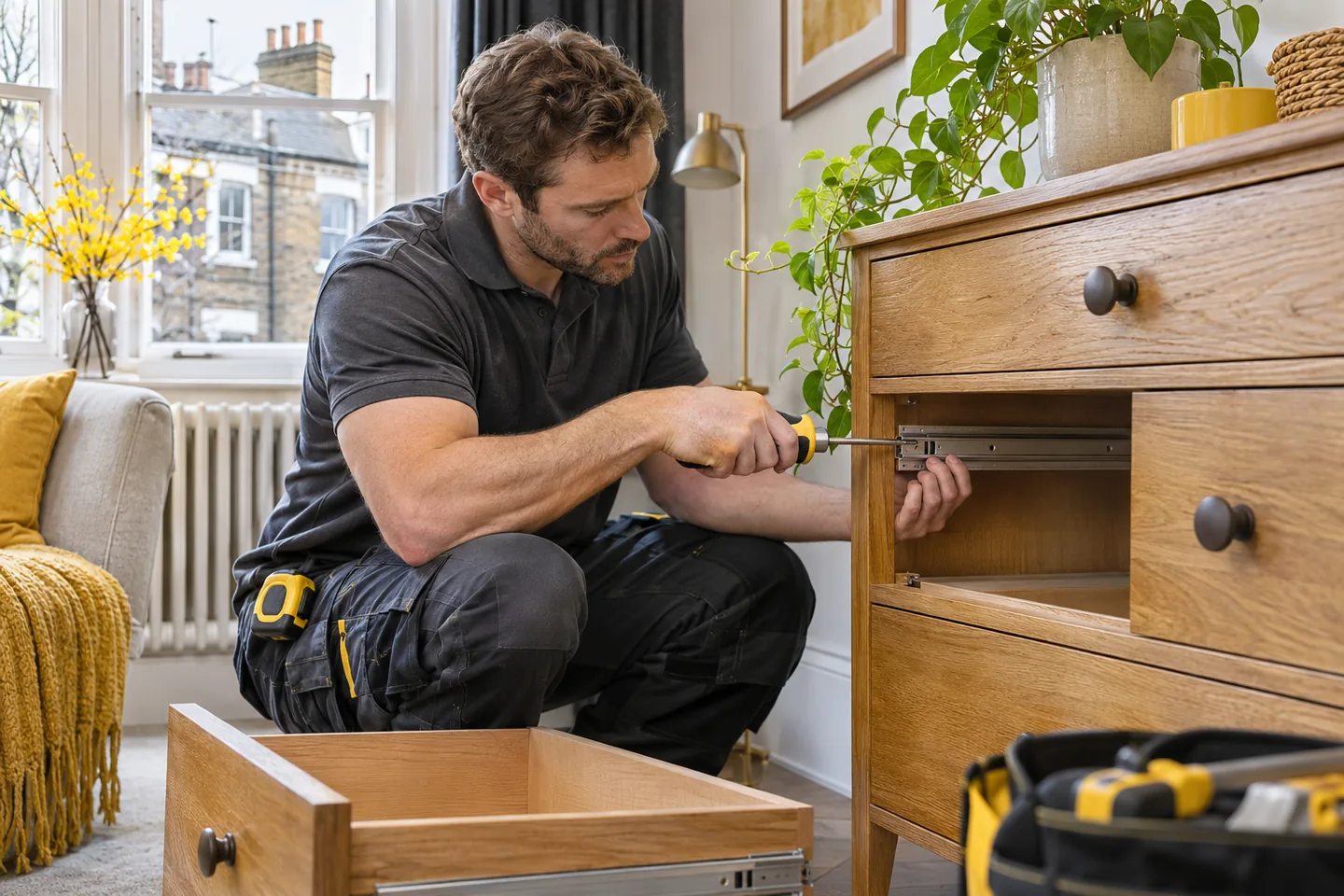
A new chest of drawers needs more than an empty corner.
We ask for the model and instructions before discussing assembly. The footprint of the finished chest is different from the room needed to lay out panels, fit the back and turn the frame. Keep boxes and loose fittings together, and tell us whether they are already in the intended room. We agree any carrying or furniture-moving requirement separately instead of assuming it is covered by the product count.
We sort the connectors, build the frame in its specified order and check alignment before fitting drawers. Runner position, stops and the squareness of the carcass affect movement. We use suitable driver bits and controlled tightening so that board edges and cam fittings are not damaged. Any required wall restraint needs the correct bracket and an assessed fixing position. We finish by checking travel and explaining any unresolved component or anchoring issue.

Door catches are a symptom, not an instruction to plane the edge.
We observe the door through its swing and look at where it meets the frame, latch and floor. Recent decoration, a changed floor finish or movement at a hinge can explain a new obstruction. We inspect accessible screws and timber around the hinge leaves before proposing adjustment. Removing material too early can leave an unnecessary gap without addressing the faulty connection.
If trimming is appropriate, we discuss the edge, remaining finish and any specialist door requirements first. Fire-resisting doors cannot be treated as unrestricted timber. We protect nearby surfaces and support components during the agreed work. Our final checks cover opening, closing and latch engagement together. We also explain any making-good needed where an altered edge or replacement fitting leaves exposed material.
PLAN THE WORK
Explore the time and labour budget.
Select the task, quantity and visit period. Assembly benchmarks and entered time assumptions stay visible; other repairs need an individual assessment.
Plan your Romford repair enquiry
Choose the work, enter quantities and review the assumptions. We confirm the repair, working time and availability before booking.
Assembly benchmarks assume complete product parts, instructions and a clear working area. For other repairs, a known condition does not establish a standard duration.
Compare the assembly work
Published London assembly ranges for one item. These are external planning benchmarks, not our recorded job times or guaranteed completion periods.
Time evidence: published London assembly ranges, checked 3 November 2026. Product, staffing and access differences require assessment. Carrying, missing parts and wall restraint are not automatically included.
Compare labour for the same working time
Comparison uses the selected day and visit period. These are labour categories at equal time, not fixed job prices. One-hour minimum; subsequent half hours. Materials, sourcing time, parking and congestion charges are separate. Rates include taxes. Daytime: handyman 08:00–18:00; plumbing/electrics 08:00–18:00 weekdays and 08:00–17:30 weekends. Outside-daytime availability needs confirming.
What changes the repair decision?
This compares the checks needed for the selected repair, not a scored difficulty or a promised duration.
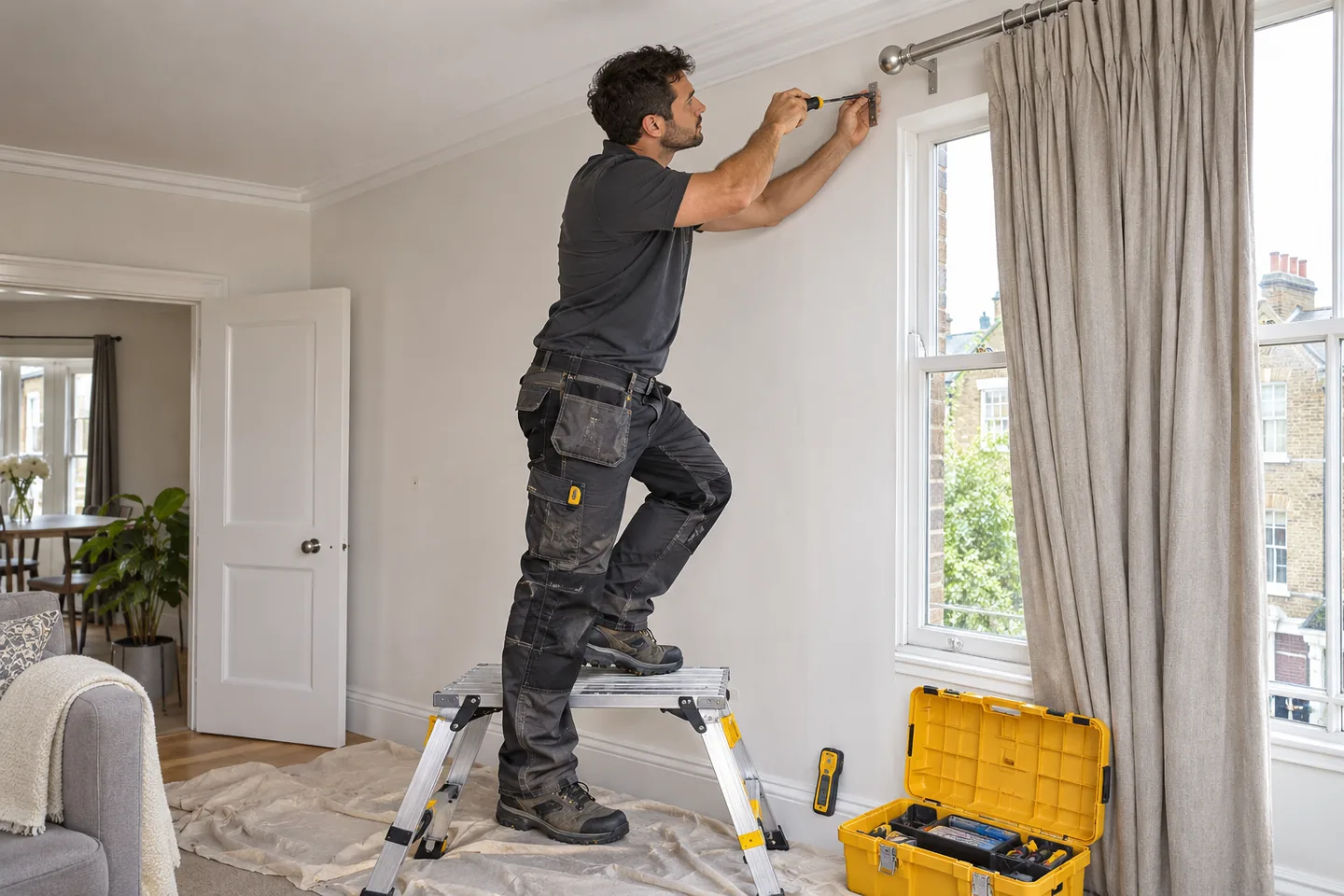
Shelves need a fixing arrangement suited to the background.
For a shelf enquiry, tell us its dimensions, intended contents and the proposed wall position. We inspect the accessible surface and consider whether the support is masonry, a partition or another construction. An old hole with crumbling edges is a repair issue in its own right. We use the available service information and appropriate detection before drilling, while recognising that concealed construction can limit what can be established.
We mark the agreed height and bracket positions using a tape and level, then select compatible fixings for the assessed material. The supplied screws are not automatically suitable for every wall. After fitting we check the bracket connections, shelf alignment and intended arrangement. We discuss any limitation on use; the length of a shelf or an advertised anchor rating does not establish the capacity of the actual wall.
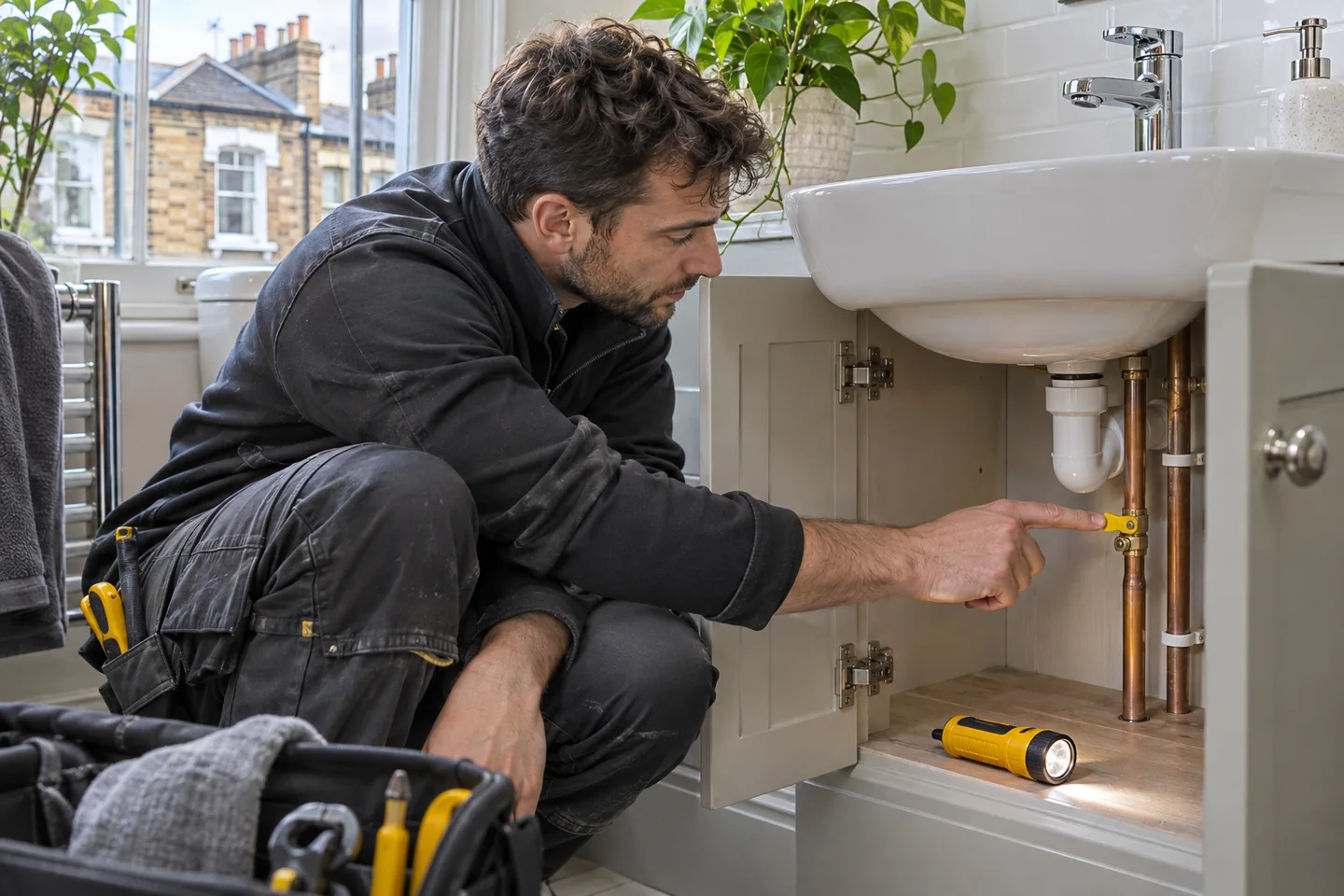
Under-basin repairs begin with the way the water appears.
We ask whether the leak occurs when the tap runs, when the basin empties or while the fitting is unused. Those observations help us prepare without asking you to dismantle the plumbing. We inspect the accessible joint and nearby surfaces, and identify the relevant isolation arrangement before disturbing a supply connection. Restricted cabinet space and old seized parts can change the proposed repair.
We protect the cabinet and floor and use suitable grips or spanners with components compatible with the existing fitting. More force is not a substitute for the right seal or thread. After the agreed repair we check the connection under relevant operating conditions, including drainage where a waste joint was involved. If water is reaching the cabinet from somewhere concealed, we explain the further investigation rather than describing a visible joint repair as a complete diagnosis.

Renewing a bathroom seal requires a prepared joint.
We review the failed edge and the fittings beside it before removing sealant. Movement, persistent damp or a loose surface can prevent a replacement from bonding properly. Tell us if the same joint has already failed repeatedly. We discuss whether the background can be prepared and whether plumbing or other repair needs to happen first; a fresh bead cannot stabilise a moving fitting.
Where renewal is suitable, we remove the old material carefully and clean the accessible joint for the chosen product. Preparation and drying conditions follow that product’s requirements. We shape the new sanitary sealant to the joint and check the continuous edge and contact with the prepared surfaces. We explain when the fitting may be used again. Application time and curing time are different, so a labour budget is not permission to wet the seal immediately.
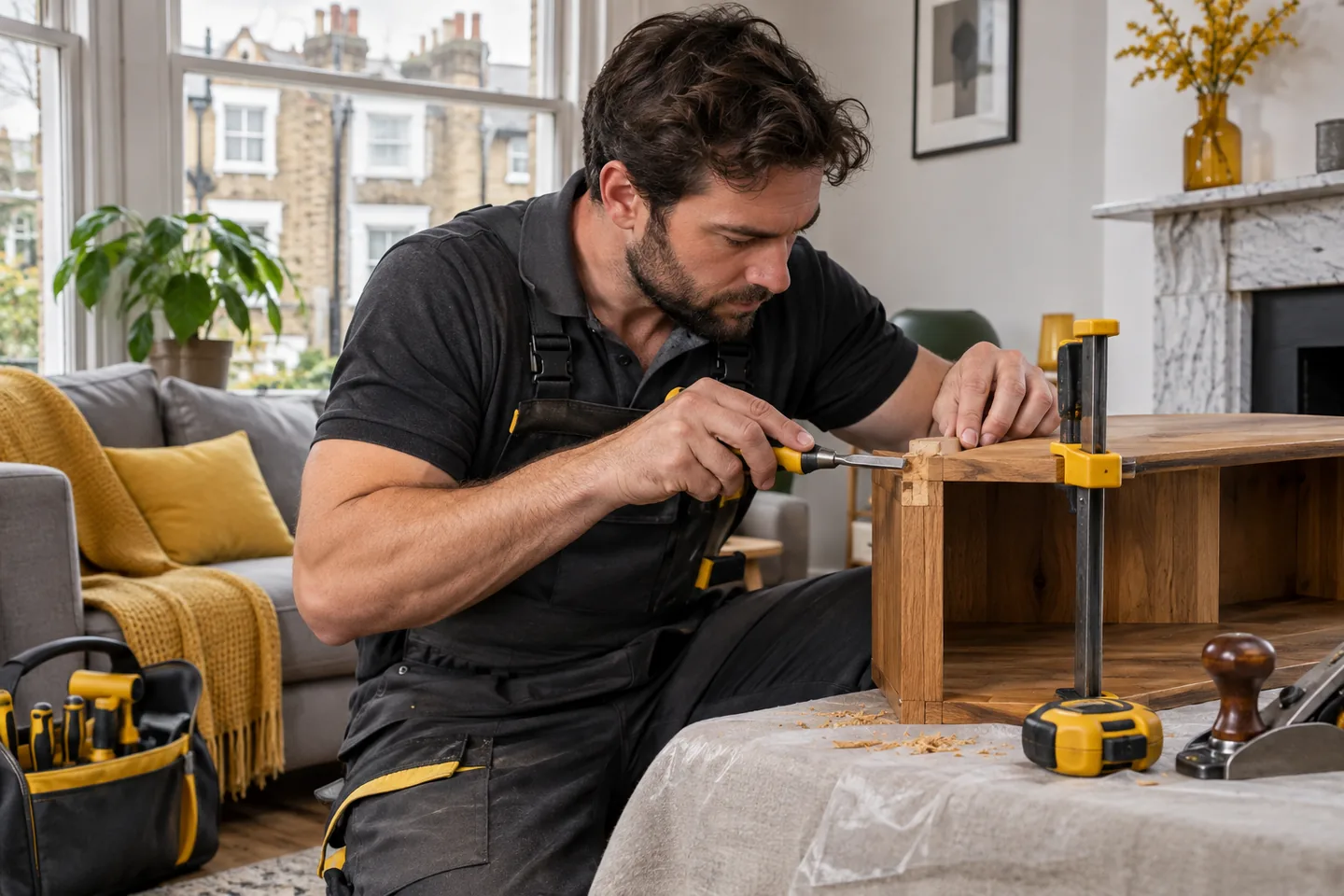
Small timber repairs need a defined finishing point.
For damaged skirting or a loose trim, we examine the surrounding material and its original attachment. A local section can be affected by a wider loose fixing or previous moisture. We discuss the length to be repaired, the profile and how a new section would meet the existing finish. Exact matching may depend on available material, so tell us whether any spare timber remains.
We measure and mark the agreed repair, protect the adjoining floor and use tools suited to the profile and access. We check the attachment and joint before discussing filling, preparation or painting. Those finishes need their own agreed extent. A practical timber repair does not automatically mean redecorating the entire wall, but we can explain where a wider finish would avoid an obvious patch.
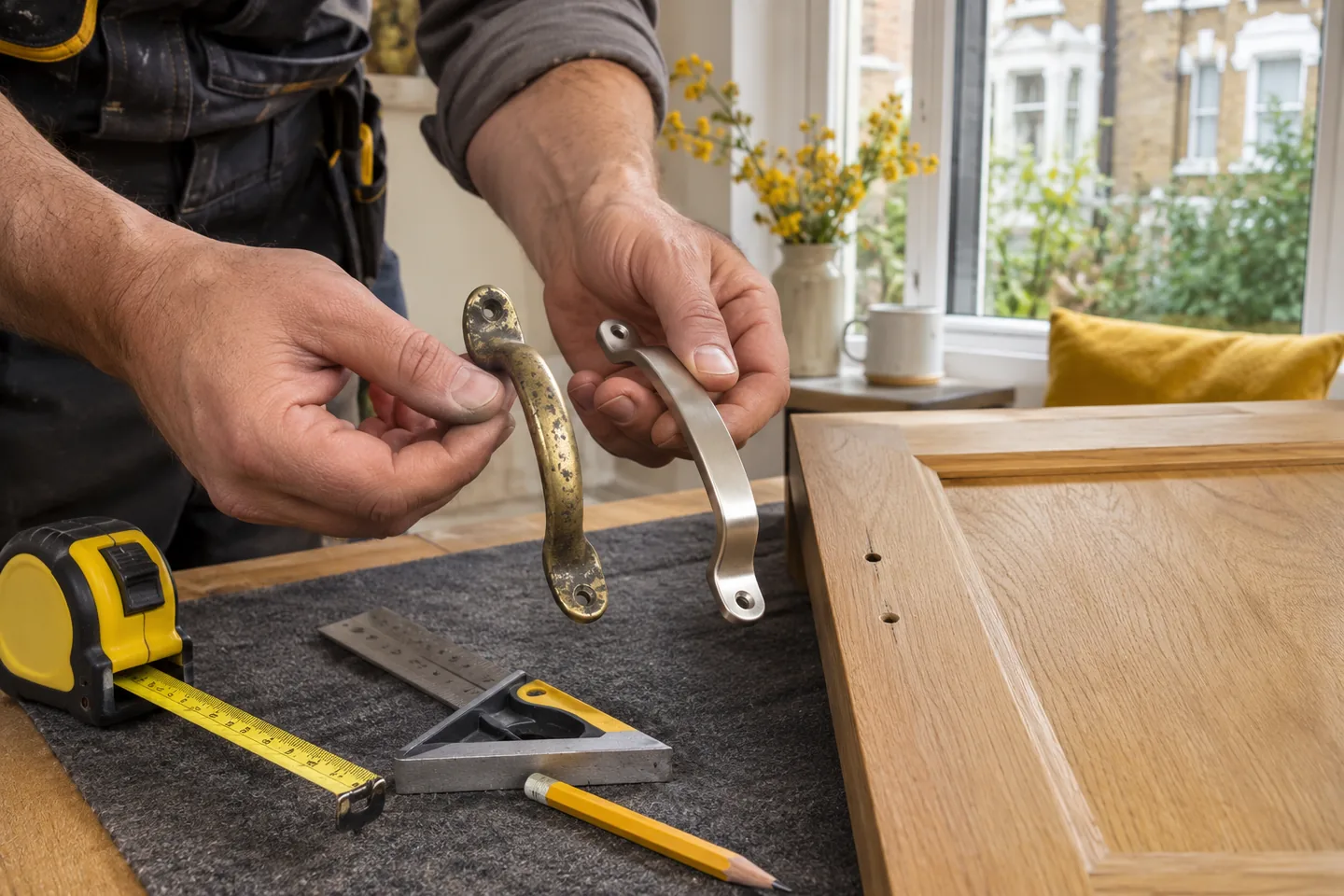
We check the result against the way the fitting is used.
We review each completed task with its original symptom in mind. A drawer needs to travel, a latch needs to engage and a repaired connection needs to remain properly attached during normal operation. We look at accessible adjacent material for disturbance from the work. Where the condition has prevented a proposed task from proceeding, we explain that finding instead of marking an incomplete item as finished.
We discuss remaining parts, product-care requirements and any curing restriction. Tell us who should receive that information if you are arranging work for someone else. Small task debris and any larger waste arrangement should be understood before the visit. If your list develops into wider room repairs, our property maintenance or refurbishment service can be discussed separately, with the individual dependencies kept clear.
THE AREA / THE ACTUAL ADDRESS
Romford access starts with the actual entrance.
Havering Council’s Romford conservation appraisal describes a town-centre setting containing pedestrianised and partly pedestrianised spaces. That context makes the entrance and unloading arrangement useful enquiry details. We ask for the door you use, rather than assuming the nearest road shown on a map is a suitable place to stop. Tell us about a rear access, stairs or instructions from a building manager where these apply.
The appraisal is also a reminder to check the status of the particular property when alterations affect existing features. It does not mean every Romford home lies within the conservation area. We discuss the proposed repair, property permissions and materials for your address. The council source provides geographic and planning context; our service availability and practical visit arrangements still need confirming through the enquiry.
Address information: Havering Council: Romford conservation appraisal
EMERGENCY LOCKSMITH ENQUIRIES
A sticking lock needs its door considered too.
We take locksmith enquiries on our call line 24/7. Tell us whether you are locked out, the lock is difficult to operate or the door no longer lines up with its keep. Include the full Romford address, door material and any information about the existing lock. We confirm the available arrangement for the actual enquiry; calling does not establish an arrival time or a fixed charge.
A key that turns reluctantly can involve the cylinder, the door alignment or other hardware. We discuss the symptom before assuming that the visible lock must be replaced. If access or security is affected, explain that first and leave damaged components undisturbed. For managed premises, identify the person authorised to approve the work and any requirements applying to the door.
We review appropriate repair or replacement after the fitting has been assessed. Compatibility and the condition of the surrounding door matter as well as the new part. Any carpentry, finishing or specialist requirement needs to be identified separately. We explain the proposed action, price basis and availability before an arrangement is agreed, then discuss the operation and any remaining concern with the person responsible for the property.
BEFORE YOU BOOK
Questions about the work here.
Can we prioritise repairs if not everything is ready?
Yes. Tell us which faults affect daily use and which items are waiting for parts. We review the order with you before agreeing work. An unavailable component may mean a particular task needs a separate arrangement rather than an improvised replacement.
Should I buy new cupboard hinges before contacting you?
Send photographs and any product reference first. Hinge geometry and mounting details need to suit the existing furniture. We can discuss the required part after reviewing the connection; buying by appearance alone can leave you with unsuitable hardware.
Can a shelf go back into its old holes?
We assess the hole condition and the wall material before deciding. A failed attachment may have damaged the support, so reusing the position is not automatic. We discuss a suitable local repair or alternative fixing arrangement.
What product information helps you plan the assembly?
Keep them with the product, along with model labels and all supplied fittings. If the instructions are missing, share the exact model when enquiring. We need the intended assembly method and anchoring requirements, not just the retailer name.
Is loading near the property the same as parking for the repair?
No. Tell us the address and any known restrictions so we can discuss both. We check the actual stopping or parking arrangement; access to a nearby shopping street does not establish permission to leave a vehicle during the work.
Can you give a labour total from photographs?
Photographs help us review likely tasks and parts, but concealed conditions or restricted access may need inspection. Any online budget uses its stated working-time assumptions. We confirm the actual repair arrangement and applicable additional costs before booking.
TELL US WHAT NEEDS ATTENTION
Discuss your Romford repair list.
Call 020 3746 0607 with the property address, the items needing attention and the available access. We review the work and confirm the arrangements before a visit is booked.
Original illustrative work scenes show the activities described; they are not photographs of completed customer jobs in this neighbourhood.