
HANDYMAN / BATTERSEA
Handyman in Battersea.
Details that work together.
A room can need several small repairs without needing a complete refurbishment. We inspect how each fitting is supported, what it moves against and which surrounding finishes need protection before we agree the work.
Call line 24/7 · Work and availability confirmed for your address.
MOUNTING / JOINERY / ROOM REPAIRS
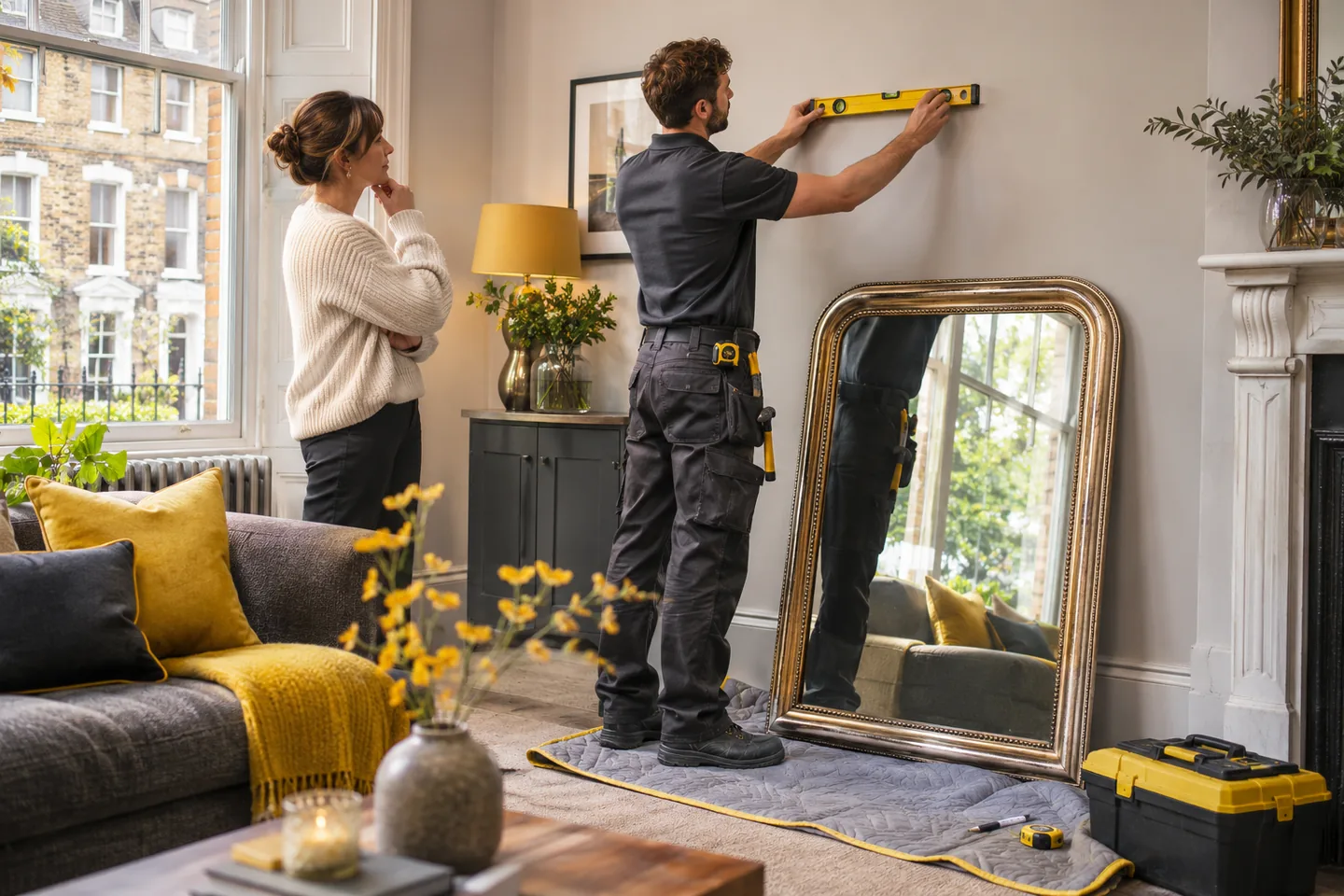
Can we fit a large mirror in a Battersea living room?
We need its weight, fixing arrangement and intended position, plus a view of the wall and nearby fittings. We assess the supporting material and access for lifting before agreeing the installation. A heavy mirror needs a suitable fixing system and handling space, even when the wall already has a picture hook.
Can a list of small jobs include resealing?
Yes, but the sealant work needs its own preparation and curing arrangements. We inspect the joint for movement or damp damage and remove failed material before applying a suitable new bead. If other tasks create dust nearby, we plan their order so the clean, dry joint is not contaminated.
THE WORK IN YOUR HOME
Plan the repair around the finished room.
A mirror, cupboard and door can all be sound products yet work poorly in their particular positions. The mirror might obstruct a switch, the cupboard door might strike a handle and the room door might catch a new threshold. We approach handyman work in Battersea by looking at those relationships as well as the individual item. Tell us how you use the room and what has changed since the fitting last worked properly.
We can discuss hanging and mounting, furniture assembly, small carpentry repairs and resealing in the same enquiry. Where a task depends on another repair, we make that clear: a loose bath panel is different from water escaping behind it, and a sticking drawer is different from a cabinet distorted by a leak. Photographs of the whole arrangement, measurements and any instructions give us a useful starting point. We confirm what needs inspection and what parts or access may be required before treating a small job as straightforward.
Useful details for your enquiry
- Mark the preferred position of a mirror with removable tape rather than drilling exploratory holes.
- Check that cupboard and room doors can reach their full opening positions.
- Keep product instructions, unused brackets and spare connectors together.
- Tell us about movement, damp patches or repairs hidden by a removable panel.
- Arrange approval for work affecting a shared entrance or protected building feature.
Hang a mirror from the support it actually has
We examine the mirror’s frame, hanging points and supplied hardware before setting its height. The glass and frame need to be sound enough to handle, and the hanging arrangement must correspond to the product. A wire, pair of brackets and a wall rail each distribute the load differently. We also check reflected sightlines, clearances to switches and the space required to lift the mirror onto its supports without catching the ceiling or a shelf.
After assessing the wall, we set out suitable fixing positions and check the drilling area for concealed services. We protect furniture below and keep the lifting route clear. The finished installation should sit as intended without bearing on a socket, skirting projection or loose decorative trim. We check engagement at every support and any retaining arrangement. If the supplied hanger or the wall is unsuitable, the decision is to change the support arrangement before lifting, rather than improvise once the glass is in the air.
MATCH THE REPAIR
Small repairs, different checks
We use the behaviour of the fitting to decide what needs attention. These examples show why the visible symptom does not always identify the repair.
6 service options.
| Problem or task | What we inspect | Work to discuss | Related service |
|---|---|---|---|
| Mirror tilts away from the wall | Hanger engagement, frame and wall support | Correct the support before rehanging | Hanging wall mounting ↗ |
| Cupboard handle strikes its neighbour | Door arc, hinge type and carcass position | Adjust or change the relevant fitting | Carpentry services ↗ |
| Worktop bead splits repeatedly | Joint movement and edge condition | Resolve movement before resealing | Tiling grouting re sealing ↗ |
| Dining table rocks | Underframe joints and floor contact | Stabilise joints before adjusting feet | Furniture assembly ↗ |
| Drawer drops when opened | Runner catches, box shape and base | Repair the failed part rather than force closure | Odd jobs ↗ |
| Bath panel will not stay in place | Clips, supports and moisture damage | Restore removable support and assess leaks | Property maintenance ↗ |

Cupboard doors need a clear arc, not just even gaps
A cupboard door can look neatly aligned while its handle hits a neighbouring unit. We open it through its travel and compare the hinge type, hinge positions and actual obstacle before adjusting anything. The carcass may have moved, the wrong hinge may have been fitted or an added handle may now occupy the clearance. We inspect the mounting plate and board around its screws to see whether adjustment will remain secure.
We support the door during hinge work and make changes within the fitting’s intended adjustment. Damaged screw holding needs a repair appropriate to the panel; simply tightening a screw into crumbled board will not create a stable hinge. We then check the closed gaps, full opening angle, shelf clearance and any soft-close action. Where the product geometry cannot give the required clearance, we explain the part change or revised arrangement instead of pushing the adjustment beyond its useful range.
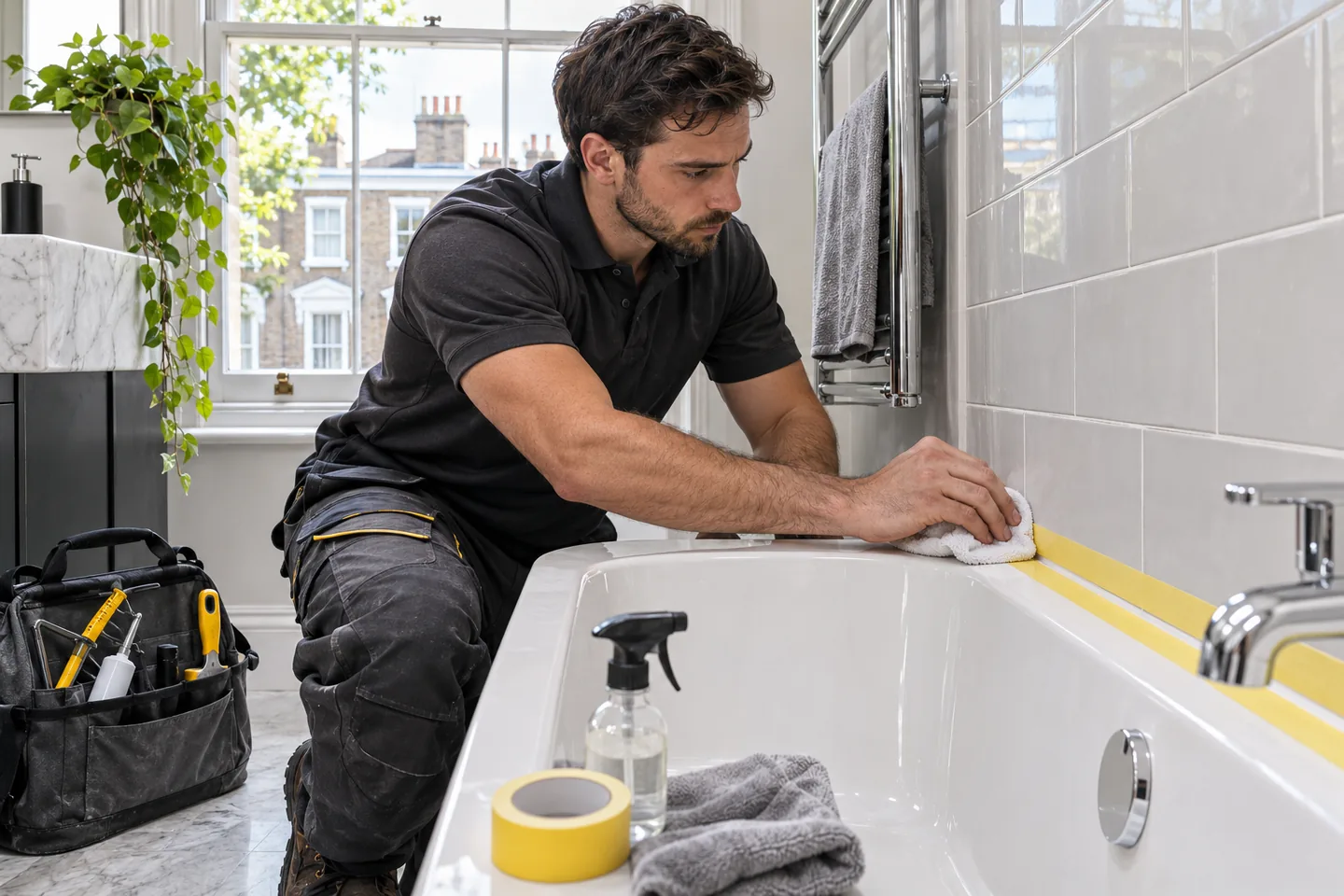
A worktop joint should be clean before it is sealed
A dark or split bead along the back of a worktop needs more than another layer on top. We inspect the gap, the condition of the adjoining surfaces and any signs that water has swollen the worktop edge. A joint that opens when pressure is applied may need its support corrected first. We discuss what can be removed without damaging a splashback or painted surface and whether old sealant has contaminated the edges.
For an agreed reseal, we remove the failed material, clean the joint and allow it to become suitably dry. The sealant must be compatible with the surfaces and the exposure it will receive. We apply and tool a continuous bead with attention to the corners, then explain the product’s curing instructions before the area is used. Any remaining movement, soft board or water source requires further work; a tidy line cannot make a damaged substrate sound.
PLAN THE WORK
Explore the time and labour budget.
Select the task, quantity and visit period. Assembly benchmarks and entered time assumptions stay visible; other repairs need an individual assessment.
Plan your Battersea repair enquiry
Choose the work, enter quantities and review the assumptions. We confirm the repair, working time and availability before booking.
Assembly benchmarks assume complete product parts, instructions and a clear working area. For other repairs, a known condition does not establish a standard duration.
Compare the assembly work
Published London assembly ranges for one item. These are external planning benchmarks, not our recorded job times or guaranteed completion periods.
Time evidence: published London assembly ranges, checked 3 November 2026. Product, staffing and access differences require assessment. Carrying, missing parts and wall restraint are not automatically included.
Compare labour for the same working time
Comparison uses the selected day and visit period. These are labour categories at equal time, not fixed job prices. One-hour minimum; subsequent half hours. Materials, sourcing time, parking and congestion charges are separate. Rates include taxes. Daytime: handyman 08:00–18:00; plumbing/electrics 08:00–18:00 weekdays and 08:00–17:30 weekends. Outside-daytime availability needs confirming.
What changes the repair decision?
This compares the checks needed for the selected repair, not a scored difficulty or a promised duration.
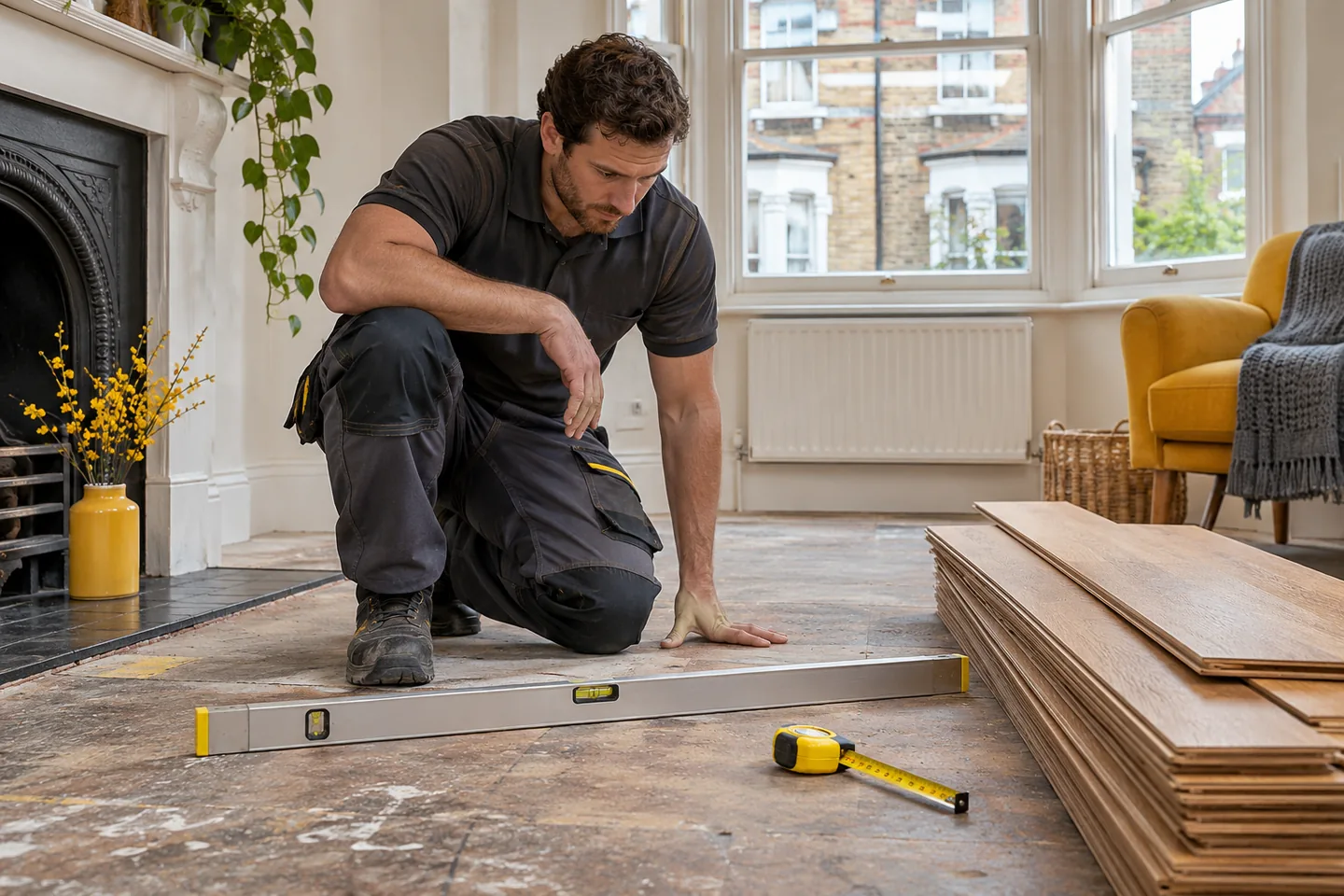
Dining tables need their joints checked before their feet
A table that rocks may have an uneven floor, a loose underframe or a damaged connector. We check each separately while protecting the tabletop. For new assembly, we identify leg orientation and the correct bolts before bringing the frame together. Bolts need to engage correctly by hand rather than being driven into a crossed thread. We follow the product’s tightening sequence where supplied and avoid over-compressing soft panels.
With the table upright, we check joint movement and contact at each foot in its intended position. Adjustable feet can deal with the conditions they are designed for; they should not disguise a loose frame. An extending table also needs its slides, leaves and catches checked without forcing a misaligned mechanism. We leave the floor protected, account for spare fittings and explain any damaged or missing hardware that prevents the table from being used as intended.
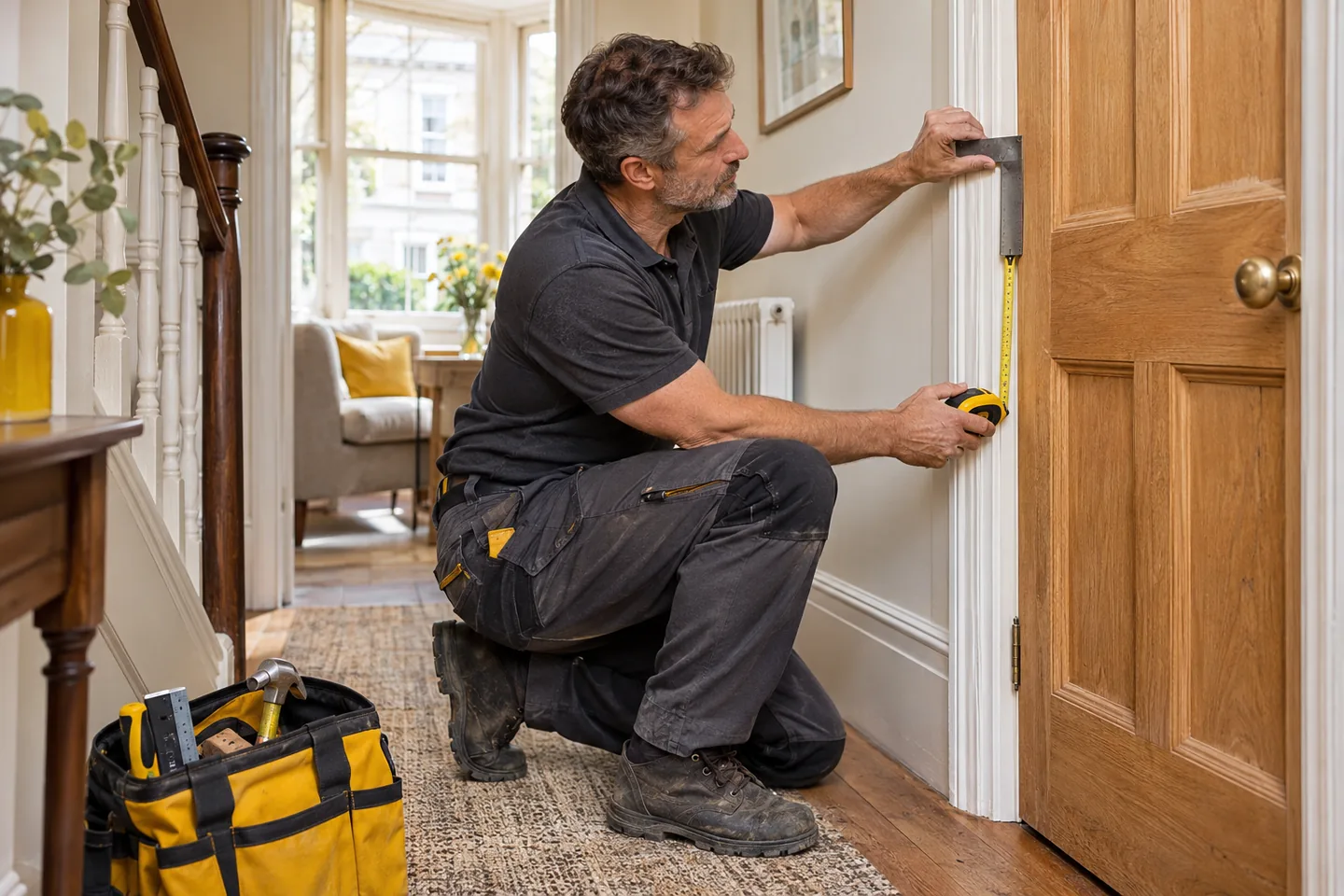
Choose a door stop from the point of impact
The mark on the wall shows where a handle lands, but the right stop position depends on the door and its surroundings. We examine the swing, skirting, floor finish and any heating pipe or concealed service risk. A stop placed too close to the hinges can put greater strain on the fixing and the door. A floor-mounted fitting can also become an obstruction if it sits in a walking route.
We agree the position before drilling and select a suitable fixing for the actual support. Where a wall stop is preferred, it needs a sound fixing point and contact with a suitable part of the door. We test the door slowly through its movement and confirm the handle clears the wall without restricting necessary access. If a closer or fire function affects the door’s operation, the stop must not interfere with that function; we raise that issue before fitting.
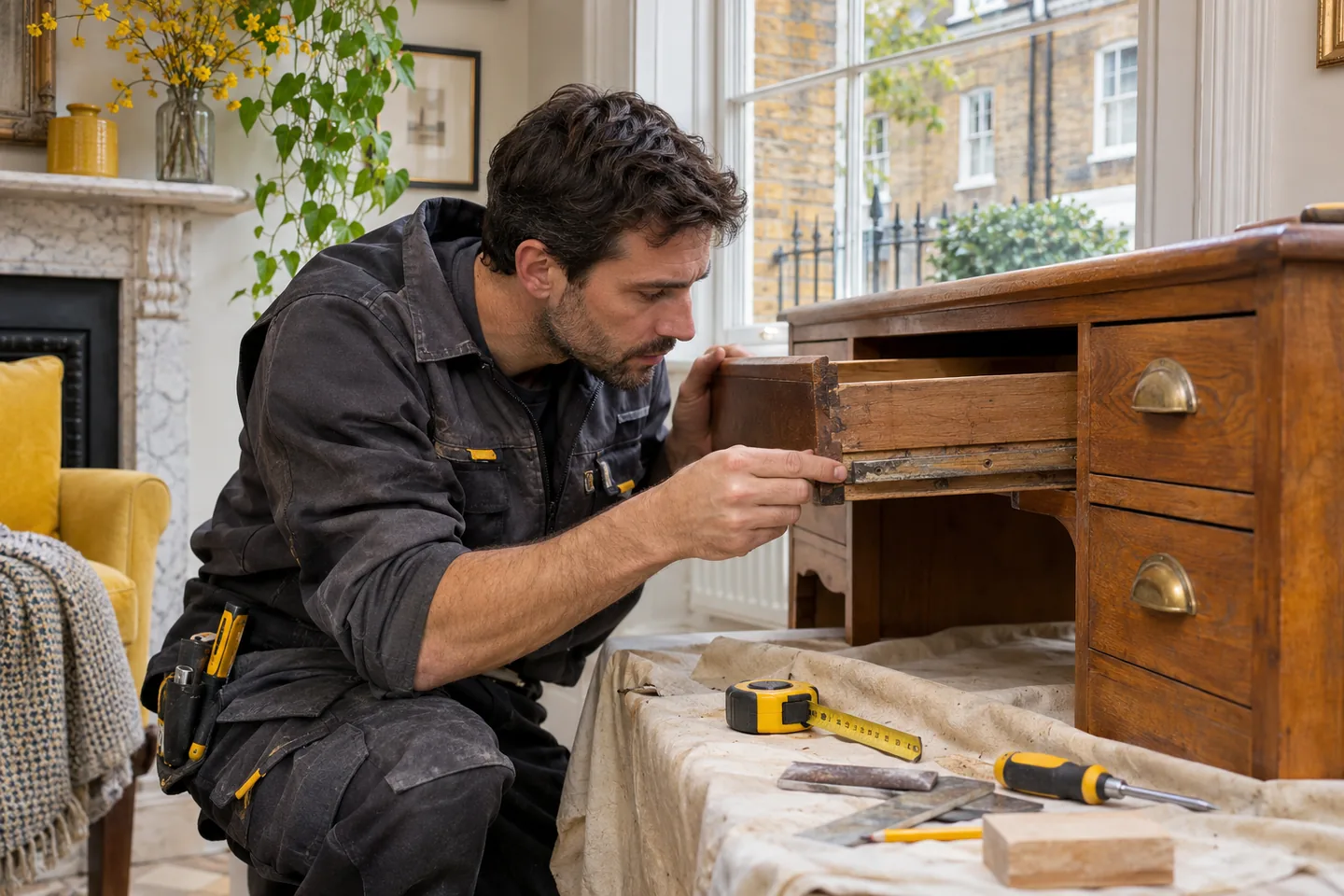
A drawer should travel without lifting the front
We start a drawer repair by emptying it and watching where the resistance occurs. A drawer that sticks at the final few centimetres may have a different problem from one that drops as soon as it opens. We inspect the runners, stops, drawer box and cabinet squareness, including whether a loose base is rubbing below. The front can hide a twisted box, so its appearance alone is not enough.
We clean accessible runner debris, check the correct fixing positions and adjust within the fitting’s design. A bent runner or broken catch may need a matching replacement rather than an extra screw. We secure a repairable drawer base using a method suited to its construction and check the diagonal shape before returning it to the cabinet. The final test covers full travel and closure without lifting the handle or forcing a catch, with the intended contents discussed where loading contributed to failure.
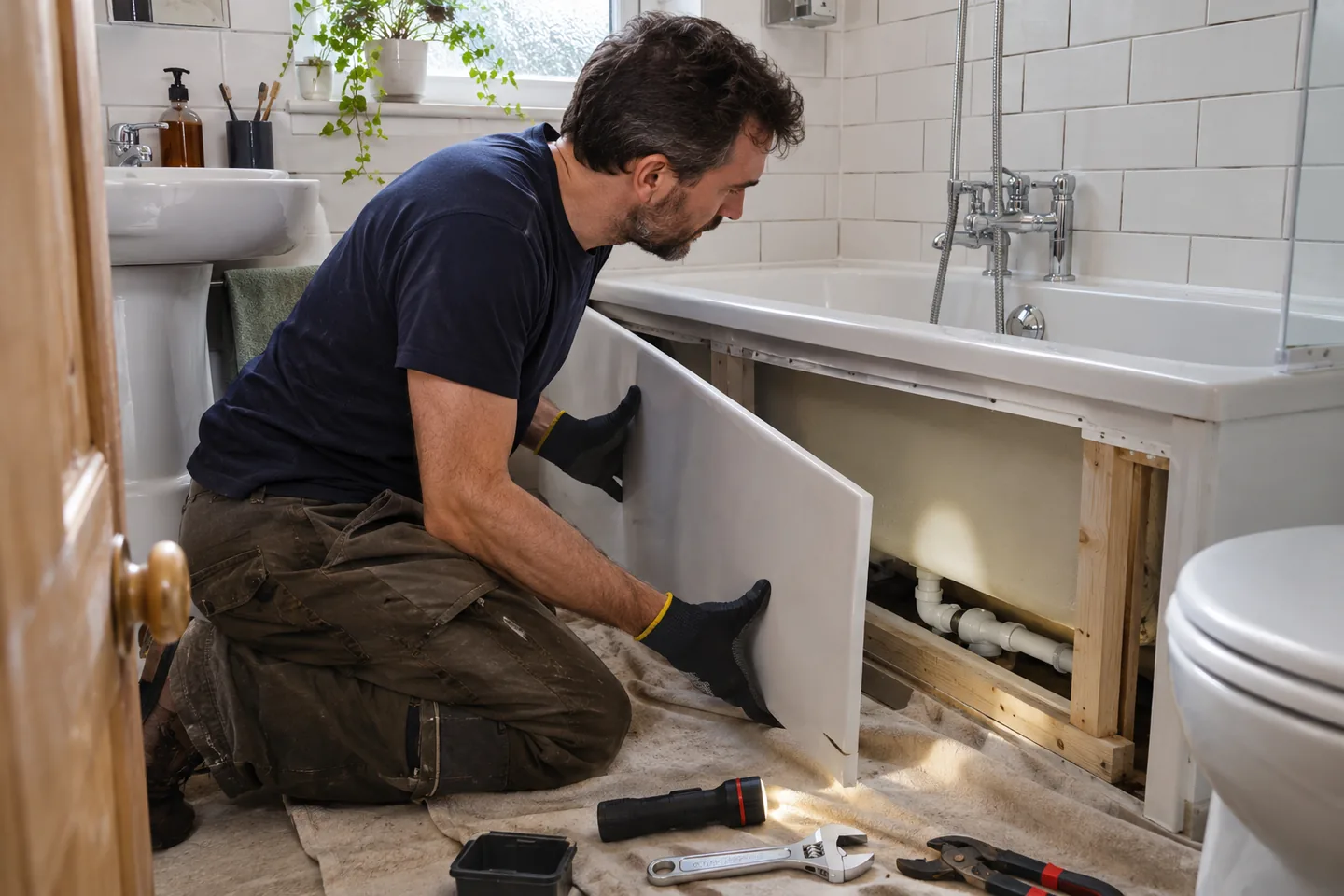
Bath panels must allow the next repair
A bath panel often provides the route to the waste and other connections. When it rattles or bows, we inspect its clips, support and edge condition before deciding whether it can be refitted. Water damage may have weakened a board panel, while a plastic panel may have cracked at an over-tightened fixing. We check for signs of leakage behind it and do not close the area simply because the panel is easy to replace.
We fit suitable supports or the product’s intended clips without obstructing the pipework. The panel should sit securely and allow the agreed access method to remain usable. If sealing is required at an edge, we discuss how future removal will work and avoid bonding a service panel permanently into place. After refitting, we check alignment, exposed edges and contact with the floor, and identify any plumbing or moisture issue that needs separate attention.
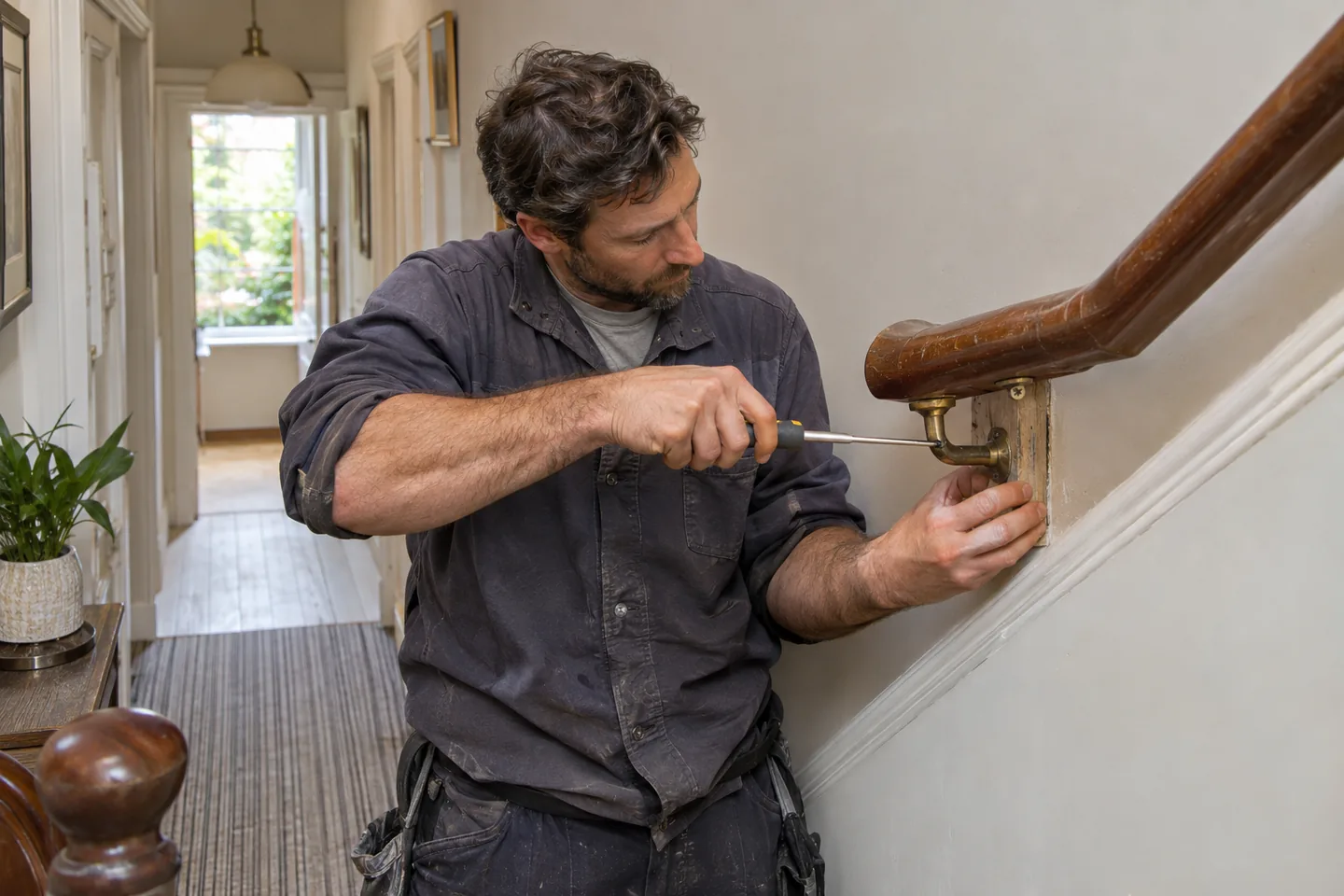
Repair a timber threshold without trapping movement
A timber threshold can split around a screw or rock because its underside no longer bears evenly. We inspect the adjoining floor edges and the condition of the timber before proposing a repair or replacement. The doorway may also need clearance for floor movement and the door’s swing. We measure the profile and check whether the threshold is structural, decorative or covering a change between finishes.
Where replacement is appropriate, we prepare the support, cut the new piece accurately and pre-drill suitable fixing points to reduce splitting. The finish and exposed edges need to suit the location. We check the door through its complete swing, confirm that the transition does not create a loose edge and leave adjoining movement gaps working as intended. Damp timber, soft flooring or an unexplained height change needs investigation beyond replacing the visible strip.
THE AREA / THE ACTUAL ADDRESS
Battersea access and building details worth sharing
Wandsworth Council publishes separate conservation appraisals for Battersea Park and Battersea Square. Their existence does not determine the status of every Battersea address. If work affects an external fitting or an older feature that may be protected, use the council’s address map and confirm any necessary permission before arranging alterations. Tell us about the building’s own requirements as well as the item you want repaired.
For an indoor job, we need the practical route to the work: the entrance to use, floor level, lift arrangements and space to carry a mirror or furniture panels. A clear description is particularly useful where the postal entrance and the room access are different. We discuss protection for the route, a place for tools and how other occupants will use the room while work is under way. Confirm access permissions before the visit so the repair can be planned around the property.
EMERGENCY LOCKSMITH ENQUIRIES
Door alignment and lock faults can overlap
A key that turns freely with the door open but catches when it is shut can point towards the relationship between the door and frame. A key that will not operate in either position raises different questions. We ask about those symptoms when you contact us, without expecting you to remove a cylinder or take apart a locking mechanism. Tell us whether the door can currently be secured and whether the problem affects entry, exit or both.
We can discuss locksmith work with your other Battersea repair needs, but the proposed work depends on the actual lock, door and authority to proceed. A flat entrance, shared door or managed access system may involve another decision-maker and functions that must be preserved. We need those details before agreeing an alteration. Our call line is available 24/7 on 020 3746 0607, and attendance is confirmed for the enquiry. If the issue also involves split timber, loose hinges or damaged fittings around the lock, we explain what has to be assessed together. The aim is an agreed repair whose locking and door movement are checked in normal use, rather than a new part fitted without finding why the old arrangement became difficult.
BEFORE YOU BOOK
Questions about the work here.
Can we choose the mirror height on the day?
We can discuss the height with the mirror and furniture in position. Tell us its dimensions beforehand so handling and access can be considered. The final fixing points also depend on the wall and the product’s hanging arrangement, not just the preferred centre line.
Will new sealant match the old colour?
We can discuss an appropriate colour and product, but an exact match to aged material is not assured. The condition of the joint matters first. We remove failed material and agree the visible finish rather than apply a thin covering to conceal a damaged bead.
Can a missing table bolt be replaced with a similar one?
The thread, length, head and intended connector all matter. Send the instructions or product reference and a photograph of an undamaged fitting if available. An unsuitable bolt can damage an insert or fail to clamp the joint correctly.
Can we repair damage behind a cupboard hinge?
That depends on the panel material, how much has broken away and the space for a sound repair. We inspect the holding area and hinge geometry. A repair plate may be appropriate in some situations, while a badly damaged panel can require replacement.
Do we need a separate enquiry for decorating?
Include making good in the same task list, with photographs of the surrounding finish. We distinguish a small repair from repainting a whole surface, and discuss drying and preparation where filler or moisture is involved. A patch may remain visible against an older finish.
When can we call about a Battersea repair?
Our call line is open 24/7 on 020 3746 0607. Give us the postcode, the items needing attention and any building access arrangements. Availability, the proposed work and any assessment needed are confirmed for your enquiry.
TELL US WHAT NEEDS ATTENTION
Discuss your Battersea repair list.
Call 020 3746 0607 with the property address, the items needing attention and the available access. We review the work and confirm the arrangements before a visit is booked.
Original illustrative work scenes show the activities described; they are not photographs of completed customer jobs in this neighbourhood.