
HANDYMAN / CLAPHAM
Handyman in Clapham.
A clearer repair list.
Several small faults can make a home feel unfinished. We help turn the list into specific repairs, checking what has failed, which parts are needed and what should happen before another fitting is covered or loaded.
Call line 24/7 · Work and availability confirmed for your address.
REPAIR LISTS / FURNITURE / FITTINGS
Can a handyman visit cover a move-in repair list?
We can discuss compatible tasks together. Send the list and photographs, identifying anything unstable, leaking or affecting access. We assess the work rather than assume a fixed number of jobs fits a visit. Parts, preparation and any specialist assessment need establishing for the actual list.
Can furniture be taken apart and rebuilt in another room?
We inspect its construction and condition first. Some connectors and panels do not tolerate repeated dismantling well. We need the product details, access route and final position, including restraint requirements, before agreeing whether disassembly and reassembly are suitable.
THE WORK IN YOUR HOME
Describe the symptom before choosing the part.
It is tempting to order a new handle when a door is difficult, or new runners when a drawer sticks. The problem may be in the surrounding alignment or support instead. We start Clapham handyman enquiries with what you notice in use: where it rubs, when water appears or which joint moves. That helps us discuss the inspection and materials without committing you to a part that may not address the cause.
A useful list can include small carpentry repairs, furniture assembly, mounting, resealing and minor maintenance. We ask which tasks affect security, access or normal use and which are improvements you want to add. Dependencies matter: a wardrobe should be stable before its shelves are loaded, and a leak needs attention before the cupboard is made good. We explain those relationships while keeping each job’s proposed work and visible finish clear.
Useful details for your enquiry
- Write down what happens when the fitting is used, including any change since it last worked.
- Photograph matching undamaged parts if a replacement may be needed.
- Give the furniture model rather than only its approximate dimensions.
- Separate active leaks and unstable items from cosmetic repairs in the enquiry.
- Tell us who can approve changes in rented or shared property.
A moving-in list begins with the working doors
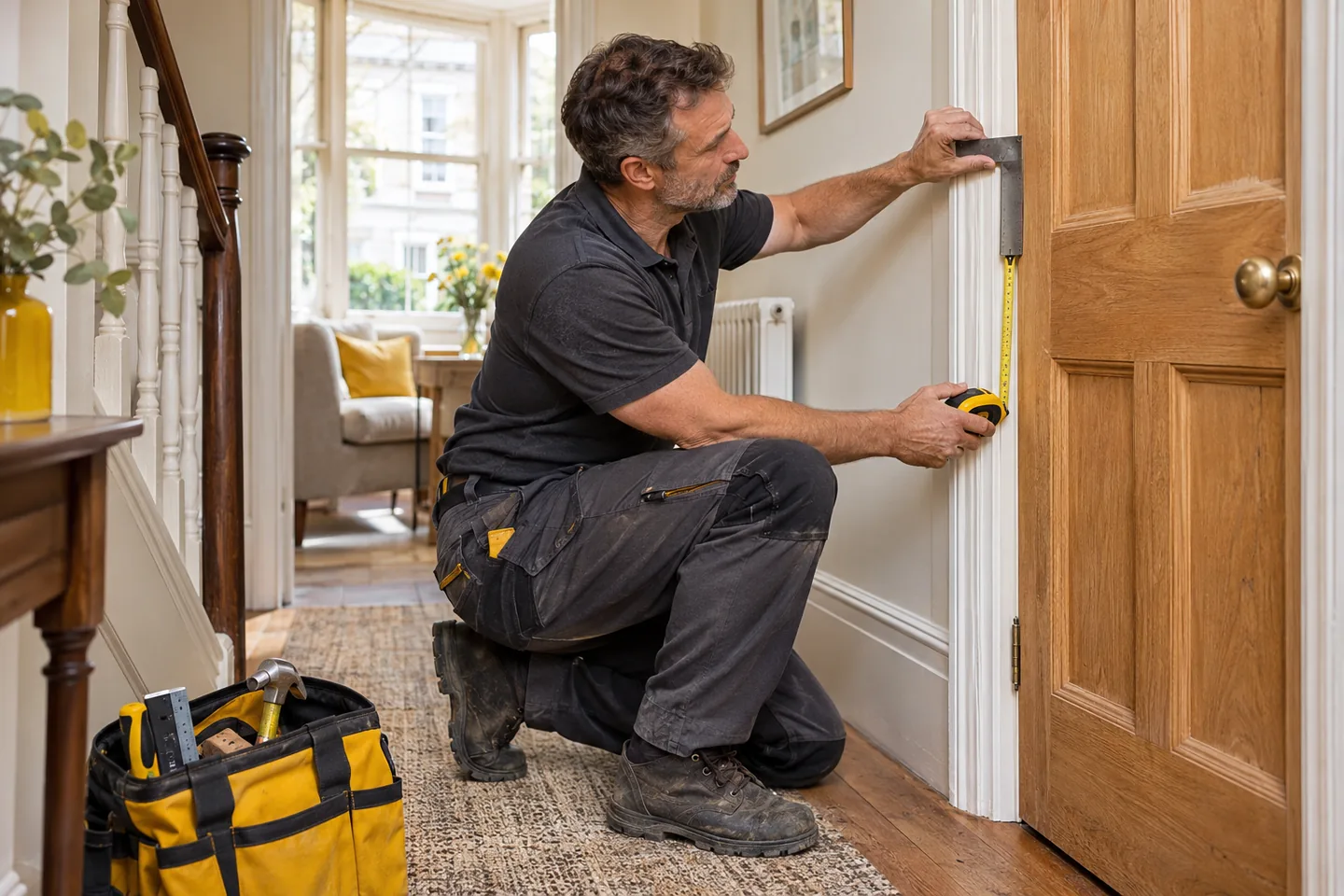
We check the door’s swing and latch before deciding whether the handle is the failed part. A newly occupied room can have a loose hinge, a damaged strike or a door rubbing on a changed floor finish. We establish whether it is an ordinary internal door or one with safety or security duties before proposing an adjustment.
For a suitable repair, we support the door as needed, restore sound fixing and check hardware compatibility. We avoid trimming unidentified fire doors or removing components that affect their function. We test from both sides and check that the door closes without lifting or excessive force. Frame movement or extensive timber damage needs explaining separately from a small hardware repair.
MATCH THE REPAIR
Sort the list by the repair needed
These examples show how we distinguish a replacement part from preparation or a wider fault.
5 service options.
| Problem or task | What we inspect | Work to discuss | Related service |
|---|---|---|---|
| Door needs lifting | Hinges, frame and latch position | Restore appropriate alignment | Carpentry services ↗ |
| Furniture needs moving rooms | Connectors, panels and carrying route | Agree suitable dismantling and reassembly | Furniture assembly ↗ |
| Blind does not fit old holes | Installed dimensions and reveal condition | Set out a suitable new support arrangement | Hanging wall mounting ↗ |
| Drawer base drops | Box joints, groove and base material | Repair the box before loading | Carpentry services ↗ |
| Water around a tap | Movement, seals and connections | Resolve the plumbing cause before making good | Plumbing ↗ |

Dismantling furniture should preserve its connectors
Before dismantling a wardrobe or desk, we identify its parts and how they are connected. We inspect damaged cam holes, split panels and fixings that may already have been repaired. The route to the next room matters: a large panel can be harder to carry than the assembled furniture appears. We agree whether the product is suitable for the proposed move.
We label and retain hardware, protect panel edges and dismantle in an appropriate sequence. During reassembly, we check the body square and restore the specified backs and braces before adjusting moving parts. The final position needs stable floor contact and any required restraint. If a connector cannot be reused securely, we discuss a suitable replacement or the limitation before the unit is loaded.

A bathroom latch needs the handle and keep aligned
A privacy latch can resist because its bolt catches the keep, its spindle is unsuitable or the handle is binding. We inspect operation with the door open and closed, including any emergency-release provision supplied by the product. We compare the existing cut-outs and door thickness before choosing replacement hardware so a new fitting does not expose avoidable gaps.
We fit compatible components, secure them without pinching the mechanism and check the bolt’s travel. Any strike adjustment needs sound fixing and appropriate clearance. The final check includes operation from both sides and the intended release function. We do not treat a safety or access concern as cosmetic, and explain when damage to the door itself prevents an ordinary hardware replacement.
Blind replacement needs a fresh measurement
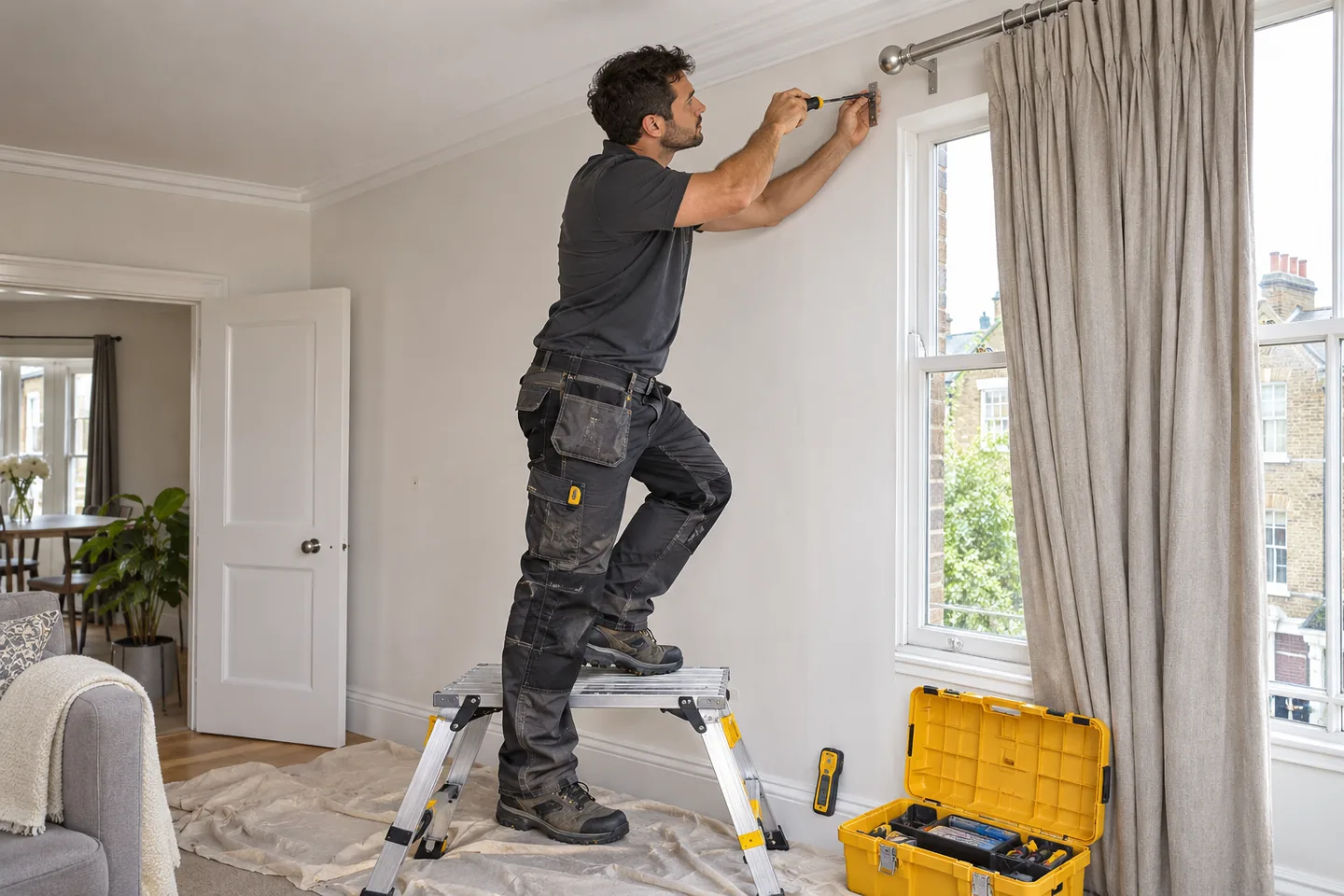
A replacement blind with the same nominal width can have different brackets, end caps and fabric clearance. We measure the opening and compare the product’s installed dimensions, including projection from the wall. Window handles and opening sections need room. Old holes may be badly placed or weak, so we inspect them rather than automatically reuse them.
We agree the bracket positions, check the drilling area and fix into suitable material. The product’s safety devices need installation as instructed. We then test the full travel, end stops and the way the blind sits when lowered. If the reveal cannot support the chosen arrangement, we discuss another mounting position before making new holes or modifying the product.
THE AREA / THE ACTUAL ADDRESS
Clapham permissions depend on the address
Lambeth Council lists separate profiles for Clapham and Clapham High Street and explains how a property search can show conservation constraints. Use the individual address when checking any proposed alteration to a protected feature or external fitting. Send relevant consent or building requirements with the enquiry so they can be considered before work is agreed.
For the visit itself, describe the entrance, floor level and route to the room. A furniture move or assembly may need a clear turning area and somewhere to lay panels down. A repair list may require access to several cupboards or rooms, so tell us what can be cleared and which areas must stay in use. Those details help us discuss protection, preparation and the order of related tasks without assuming the same arrangement for every property.
Address information: Lambeth Council: conservation area profiles and property checks
PLAN THE WORK
Explore the time and labour budget.
Select the task, quantity and visit period. Assembly benchmarks and entered time assumptions stay visible; other repairs need an individual assessment.
Plan your Clapham repair enquiry
Choose the work, enter quantities and review the assumptions. We confirm the repair, working time and availability before booking.
Assembly benchmarks assume complete product parts, instructions and a clear working area. For other repairs, a known condition does not establish a standard duration.
Compare the assembly work
Published London assembly ranges for one item. These are external planning benchmarks, not our recorded job times or guaranteed completion periods.
Time evidence: published London assembly ranges, checked 3 November 2026. Product, staffing and access differences require assessment. Carrying, missing parts and wall restraint are not automatically included.
Compare labour for the same working time
Comparison uses the selected day and visit period. These are labour categories at equal time, not fixed job prices. One-hour minimum; subsequent half hours. Materials, sourcing time, parking and congestion charges are separate. Rates include taxes. Daytime: handyman 08:00–18:00; plumbing/electrics 08:00–18:00 weekdays and 08:00–17:30 weekends. Outside-daytime availability needs confirming.
What changes the repair decision?
This compares the checks needed for the selected repair, not a scored difficulty or a promised duration.
A washing-area shelf must leave connections reachable
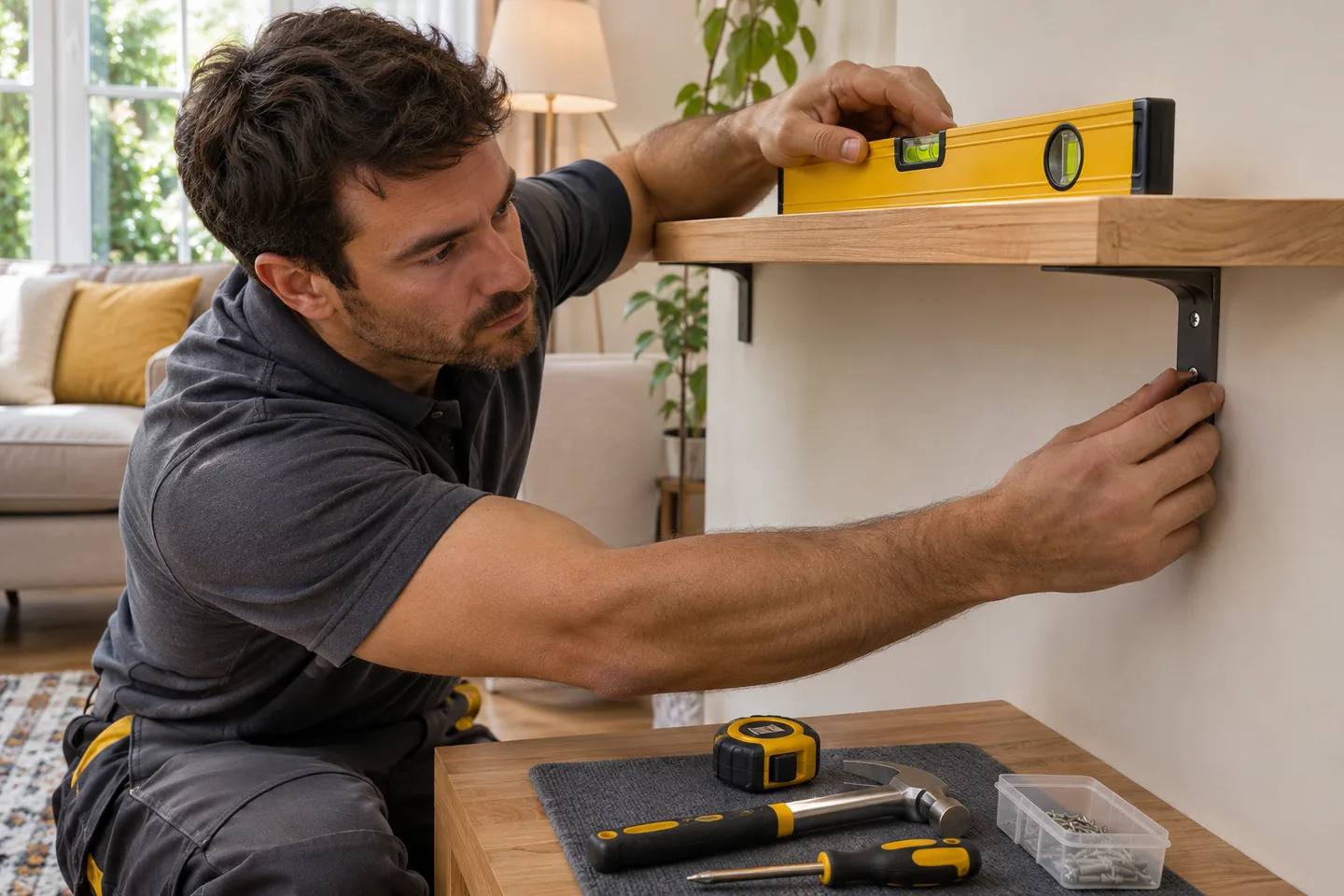
A shelf beside laundry equipment can make a useful storage area, but hoses, plugs and valves need access. We establish the intended contents and inspect the supporting surfaces. We also check that the shelf will not obstruct required ventilation or create a narrow gap where a container could fall behind equipment.
We prepare a shelf and support system appropriate to the span and load, avoiding concealed service routes. A removable arrangement may be useful where maintenance access is limited. We check clearances with doors and drawers open, not just with everything closed. If the wall or cabinet side is unsuitable for the intended load, we explain a different support arrangement instead of relying on decorative board.
Loose drawer bases need the box examined
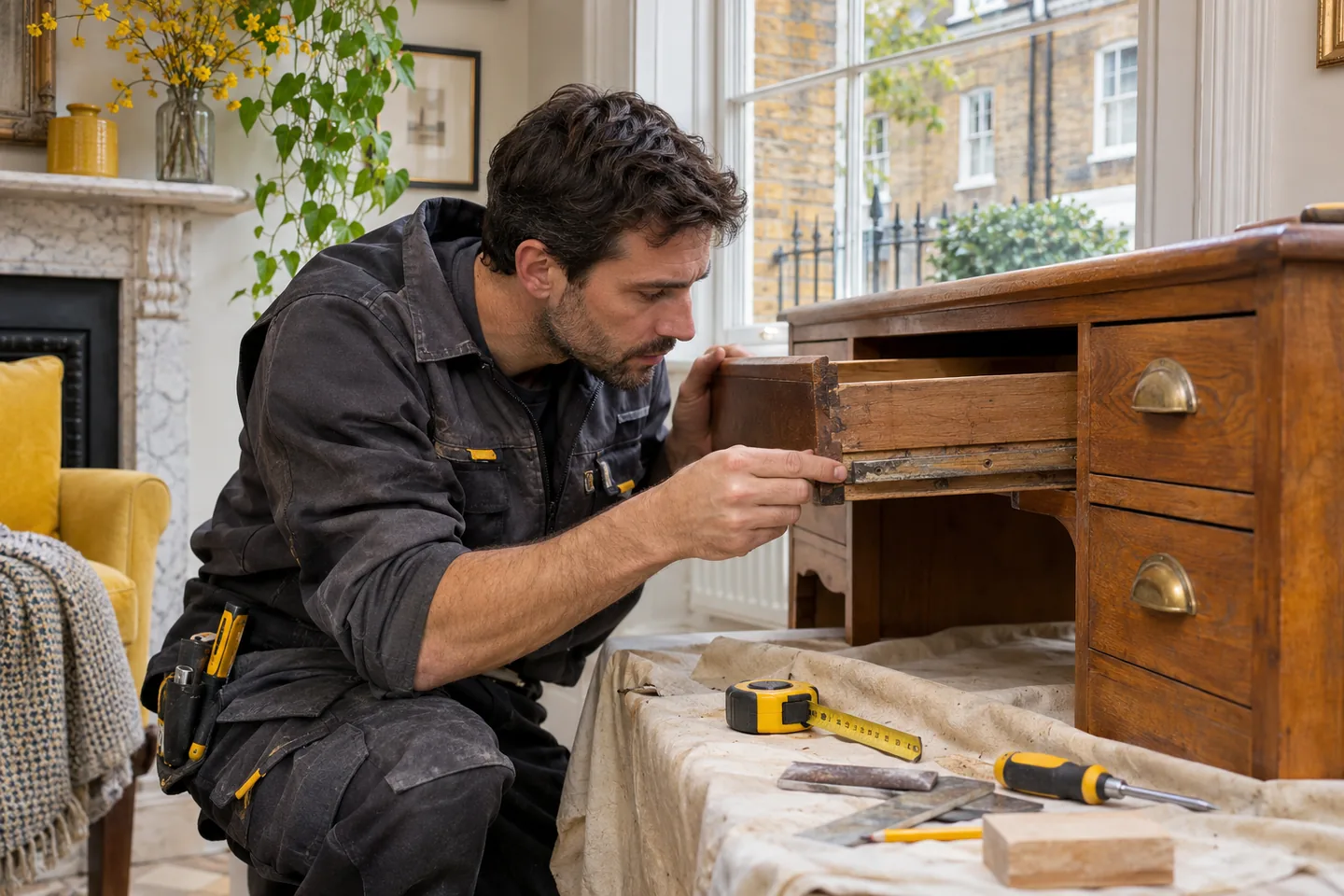
A base that drops out can be caused by an overloaded drawer, spread sides or a failed retaining detail. We remove and empty the drawer, inspect its joints and check the base material. A thin panel can bow enough to escape its groove even when the front still looks straight. We establish whether the box can be restored to its correct shape.
We repair suitable joints and retain the base with a method appropriate to the furniture. A cracked panel may need replacing; extra screws in a thin edge may only create more damage. We check square, runner engagement and complete travel before discussing reloading. If the drawer’s construction is too damaged for a sound repair, we explain that rather than hide the base failure under a liner.
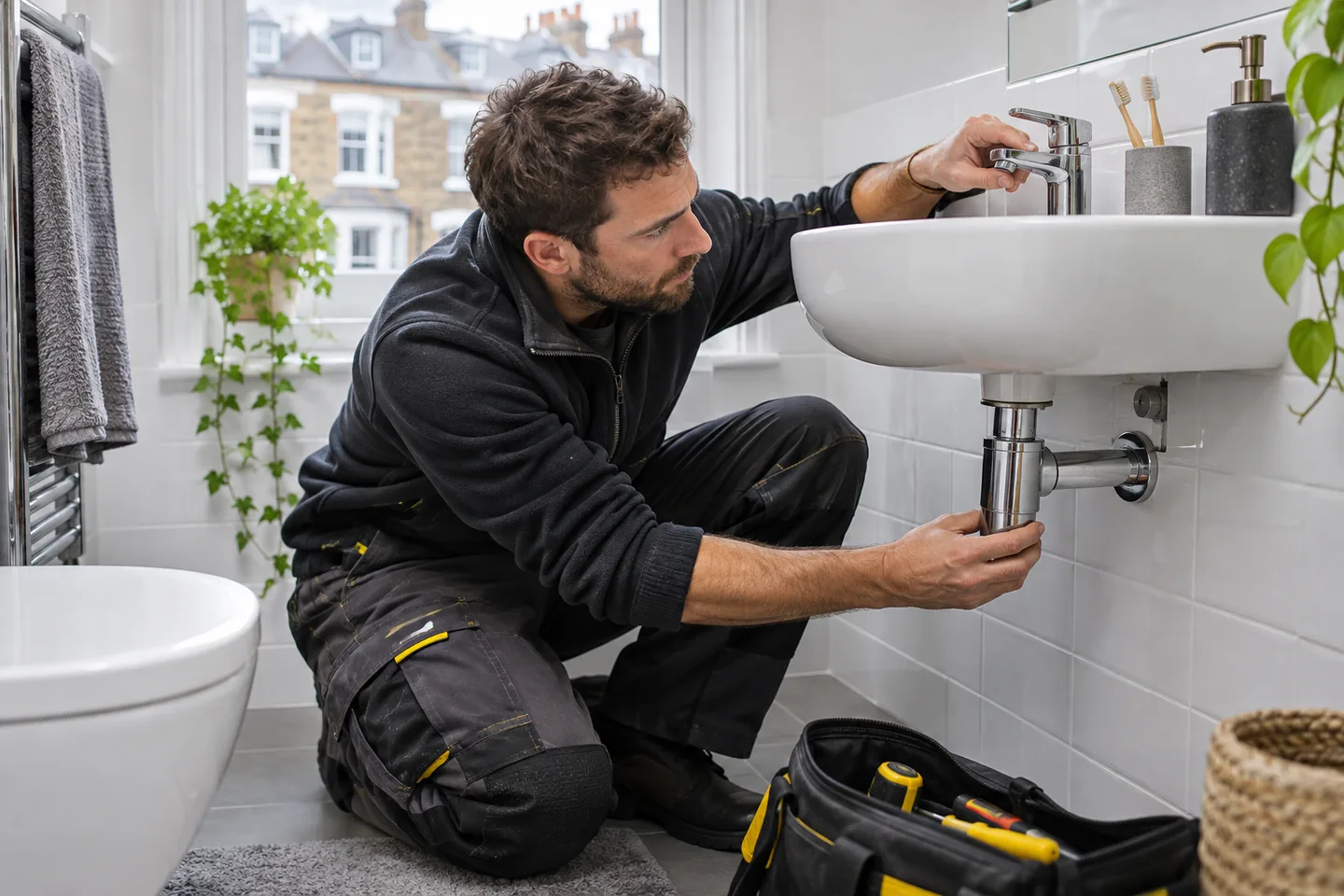
A loose tap area is not a sealant-only problem
Water around a tap may be a failed seal, a moving fitting or water travelling from a connection below. We inspect both sides where accessible and ask when the wetness occurs. A tap that rocks can damage the surface and continue to open the joint. We establish isolation arrangements before work that could disturb a supply connection.
The appropriate plumbing repair depends on the actual fittings and condition. We secure or replace compatible parts where agreed and test under controlled use. Resealing nearby surfaces is considered only once movement and leakage are addressed. Swollen worktop or cupboard material needs a separate assessment, and we keep connections accessible for the checks rather than immediately close the cabinet around them.
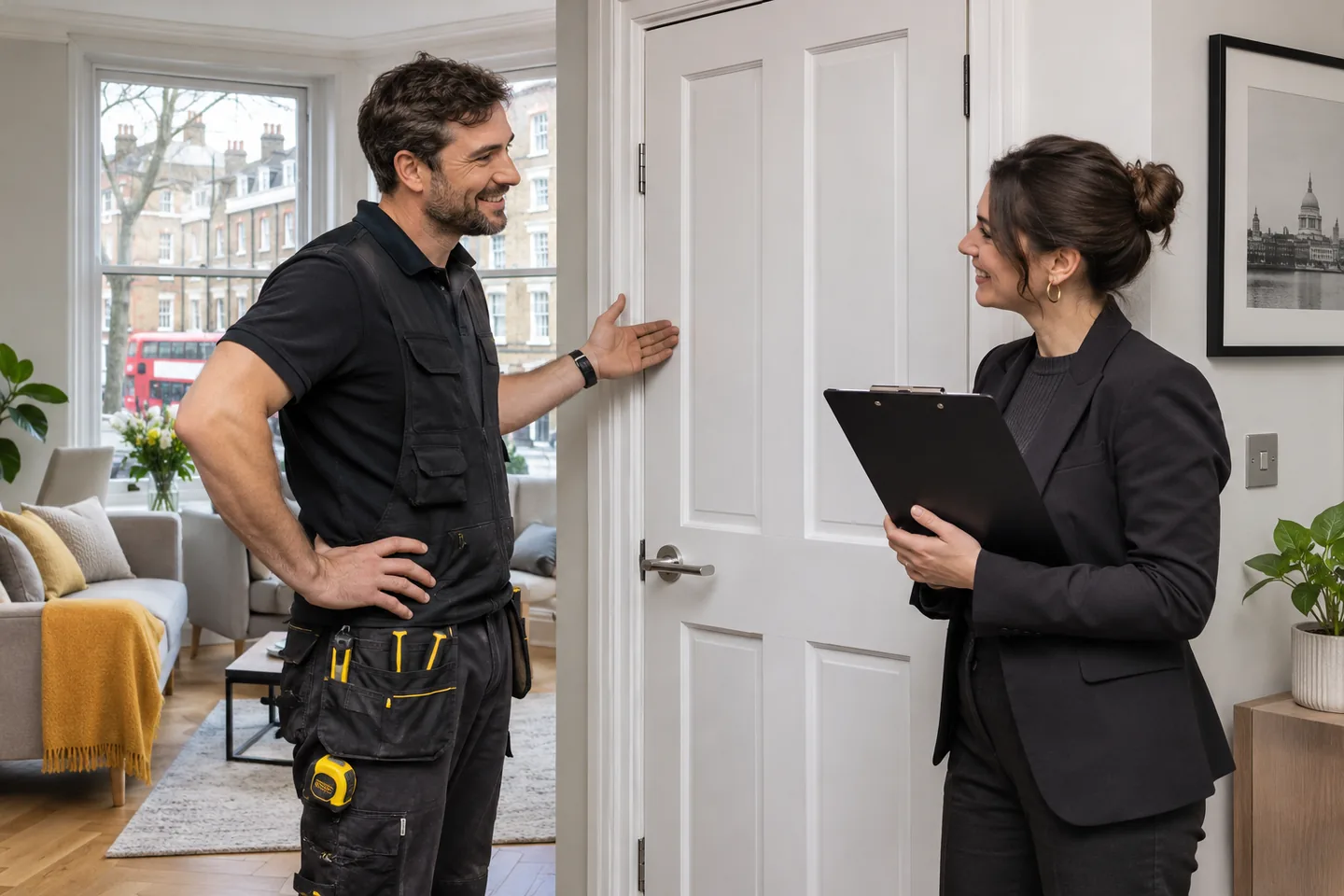
Handover includes the repairs you can see and use
For a mixed job list, we keep track of the work agreed and the condition found. We discuss any additional damage before extending the repair. That is especially useful when an old fitting reveals weak board or a damp patch after removal. We also agree what making good means, since filling a hole and repainting a wall are different tasks.
We test the moving fittings, check supported items and explain relevant curing or loading instructions. We leave useful spare parts and product information together, and identify any work that could not be completed because of missing components or an unsuitable background. The aim is a clear record of the repaired items and the remaining decisions, so the next repair does not begin by guessing what was changed.
EMERGENCY LOCKSMITH ENQUIRIES
Make the locking fault a clear priority
If an entrance cannot be secured, identify that at the start of your enquiry rather than leave it among cosmetic repairs. Tell us the door and lock type if known, what the key does and whether the difficulty changes when the door is open. A dropped door can put pressure on a lock, while a damaged mechanism can bind independently. We use those observations to discuss the appropriate assessment without asking you to force a key or dismantle security hardware.
We take locksmith enquiries for Clapham alongside handyman work and establish who can authorise the particular repair. Shared entrances, managed access and rented property may involve a building manager or owner. Any fire or other safety duties of the door need to remain part of the decision. Our call line is open 24/7 on 020 3746 0607, with attendance and the proposed work confirmed for the circumstances. If hinges, timber damage or strike position are involved, we explain how they affect the locking problem. The agreed work should be checked in the normal opening and closing cycle, including secure engagement, rather than simply proving that a key can turn with the door held away from the frame.
BEFORE YOU BOOK
Questions about the work here.
Do we need separate calls for every small job?
No. Send a combined list so we can discuss related work and priorities. We still assess each task, including parts and access. A list length alone does not tell us the time or type of repair required.
Can we reuse old blind brackets?
Only if they are compatible with the new blind and remain sound. Product systems differ even at similar widths. We inspect their fixing and condition before considering reuse; existing holes do not establish the right position for a new product.
Will a furniture move include wall restraint?
The manufacturer’s restraint requirements need considering at the new position. Tell us about the wall and retain the hardware. Reassembly is not complete simply because doors and shelves are fitted if the product also requires a suitable restraint.
Should we buy drawer reinforcement brackets?
Send photographs first. A reinforcement product may not suit the drawer material or reason for failure. We need to inspect the box, base and runners before deciding whether a bracket, new panel or another repair is appropriate.
Can we add more work during the visit?
Raise it with us so parts, access and the proposed work can be discussed. Additional tasks are not automatically included, particularly if they need a different assessment or preparation. We agree changes before proceeding.
What is the Clapham contact number?
Call 020 3746 0607. Our call line is available 24/7. Include the postcode, photographs and any access or approval requirements; the available visit and work are confirmed for your enquiry.
TELL US WHAT NEEDS ATTENTION
Discuss your Clapham repair list.
Call 020 3746 0607 with the property address, the items needing attention and the available access. We review the work and confirm the arrangements before a visit is booked.
Original illustrative work scenes show the activities described; they are not photographs of completed customer jobs in this neighbourhood.