
HANDYMAN / GOLDERS GREEN
Handyman Golders Green.
Make the room work again.
A wardrobe that needs assembling, a cupboard that will not close or a shelf that has worked loose: we look at the cause, the materials and the way you use the room before agreeing the repair.
Call line 24/7 · Work and availability confirmed for your address.

Practical repairs, from loose fittings to furniture assembly.
Can you assemble a wardrobe in a furnished Golders Green bedroom?
We first need the room dimensions, wardrobe model and clear assembly space. Some units must be built flat and raised; others permit upright assembly. We check the manufacturer’s method, ceiling clearance, access to the fixing position and whether existing furniture can safely remain in the room.
What should I send about a loose kitchen cupboard?
Send an overall view, a close photograph of the hinge and its fixing plate, and a picture showing the damaged screw holes. Tell us whether the door has dropped, the hinge has snapped or the cabinet board is crumbling. Those are different repairs, even when the symptom looks similar.
THE WORK IN YOUR HOME
Start with the furniture and fittings you already have
Small faults often change how a room works. A sticking drawer becomes a place nobody uses; a loose cupboard door catches on its neighbour; an unassembled wardrobe leaves boxes across the bedroom. We provide handyman help in Golders Green for those everyday problems, bringing the individual tasks together around access, suitable materials and a sensible order of work. Photos help us understand the enquiry, but the condition of the actual fixing or furniture can still change what is possible.
We ask what has moved, what has already been tried and whether parts are available. For a new item, the product instructions and pack contents matter as much as its advertised dimensions. For a repair, a view of the damaged connection is often more useful than a picture of the whole room. We explain whether the answer is adjustment, replacement hardware, a repaired mounting point or a different installation position before making permanent changes.
Useful details for your enquiry
- Furniture assembly with a check of parts, orientation and final footprint.
- Cupboard hinges and drawer runners inspected before replacement parts are selected.
- Shelves and storage brackets matched to the actual wall construction.
- Interior door and handle adjustments with clearance checks.
- Accessible plumbing and resealing enquiries assessed separately from concealed faults.
MATCH THE REPAIR
What the symptom tells us to check
These are assessment examples, not diagnoses from a photograph. The condition found at the property determines the repair.
6 service options.
| Problem or task | What we inspect | Work to discuss | Related service |
|---|---|---|---|
| Wardrobe doors overlap | Carcass square, hinges and floor contact | Adjust only after the unit is stable | Furniture assembly ↗ |
| Cupboard hinge pulls away | Board condition and mounting plate | Repair the mounting or match replacement hardware | Carpentry services ↗ |
| Shelf plug has loosened | Wall background, old hole and intended contents | Use a suitable support position and fixing method | Hanging wall mounting ↗ |
| Drawer catches halfway | Runner alignment, stops and drawer box | Correct the cause rather than force movement | Carpentry services ↗ |
| Water in basin cabinet | Accessible joints and when water appears | Resolve the water source before cabinet repairs | Plumbing ↗ |
| Seal splits at worktop | Joint movement and dry sound surfaces | Prepare and reseal only when appropriate | Tiling grouting re sealing ↗ |
A wardrobe begins with its final position
We measure the available footprint against the actual unit, allowing for the skirting, nearby sockets, door swing and the space needed to open drawers. A tall cabinet that fits along a wall may still block a bedroom door when its own door is open. We also check the route from the delivery point, particularly where a large panel must pass a turn or a narrow landing. The assembly area needs protection without creating a slippery surface underneath the work.
Panels are identified before the fittings are distributed. We keep cam locks, dowels, screws and hinge components organised so a similar-looking fastener does not end up in the wrong joint. The back panel and diagonal measurements help establish whether the carcass is square. Once the manufacturer’s assembly sequence is complete, we check door gaps, drawer travel and the proposed anti-tip connection. We do not substitute an unverified wall fixing simply because it came in the furniture pack.
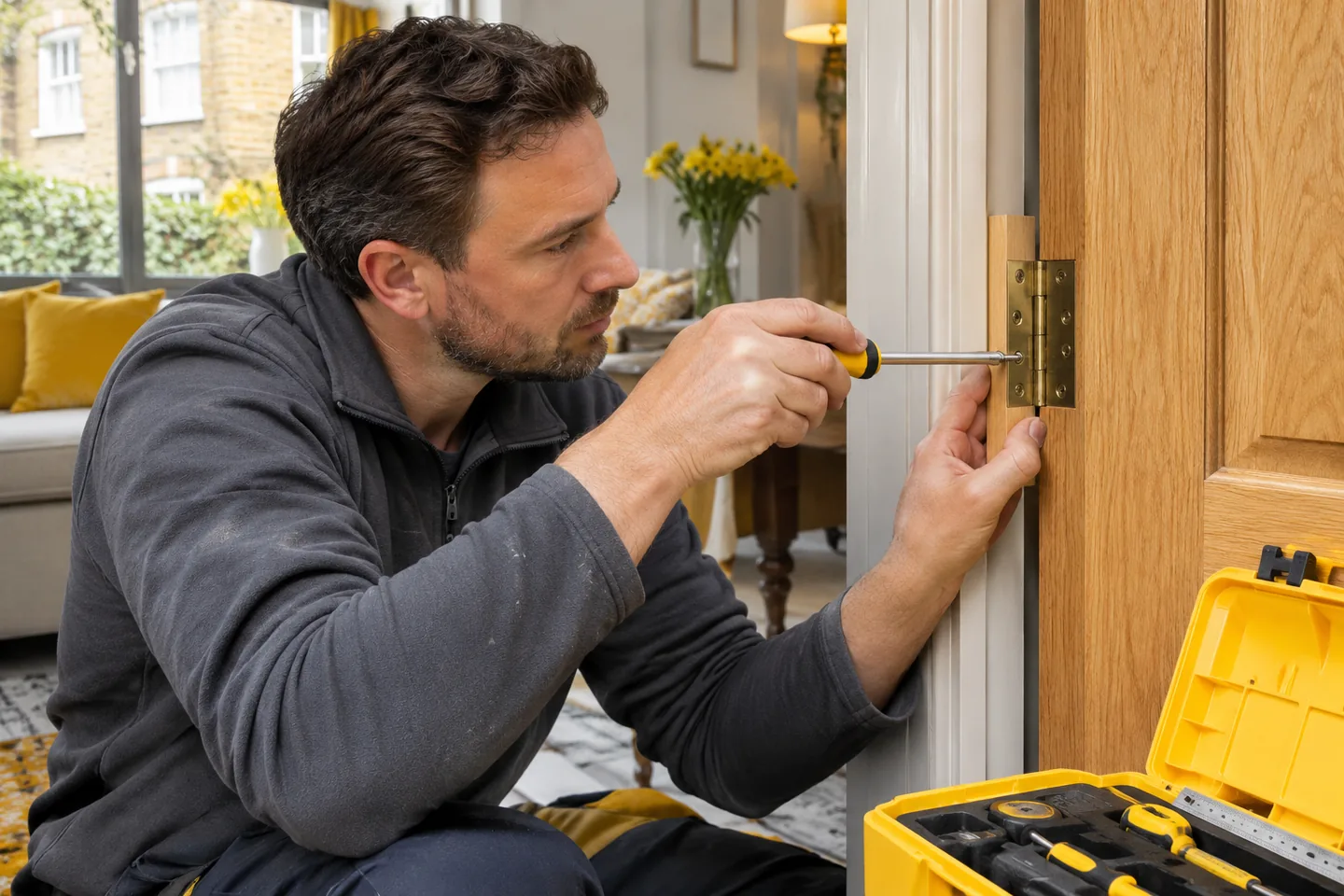
Cupboard doors: find the failed connection
A dropped kitchen door can come from adjustment screws backing out, a worn hinge or a mounting plate pulling out of the cabinet side. We support the door while examining the hinge cups and board. Tightening every screw without checking the surrounding material can enlarge a damaged hole and make the eventual repair harder. Moisture-swollen board needs a different discussion from a sound panel with one stripped screw hole.
Where a suitable repair is possible, we select compatible hardware and prepare the fixing area before re-hanging the door. Concealed hinges vary in cup size, opening angle and overlay, so a replacement needs to match the cabinet arrangement rather than simply look similar. Final checks include the door’s clearance from adjacent fronts, its closing action and the load placed on each hinge. Our carpentry service also covers related timber adjustments where the cabinet itself needs attention.
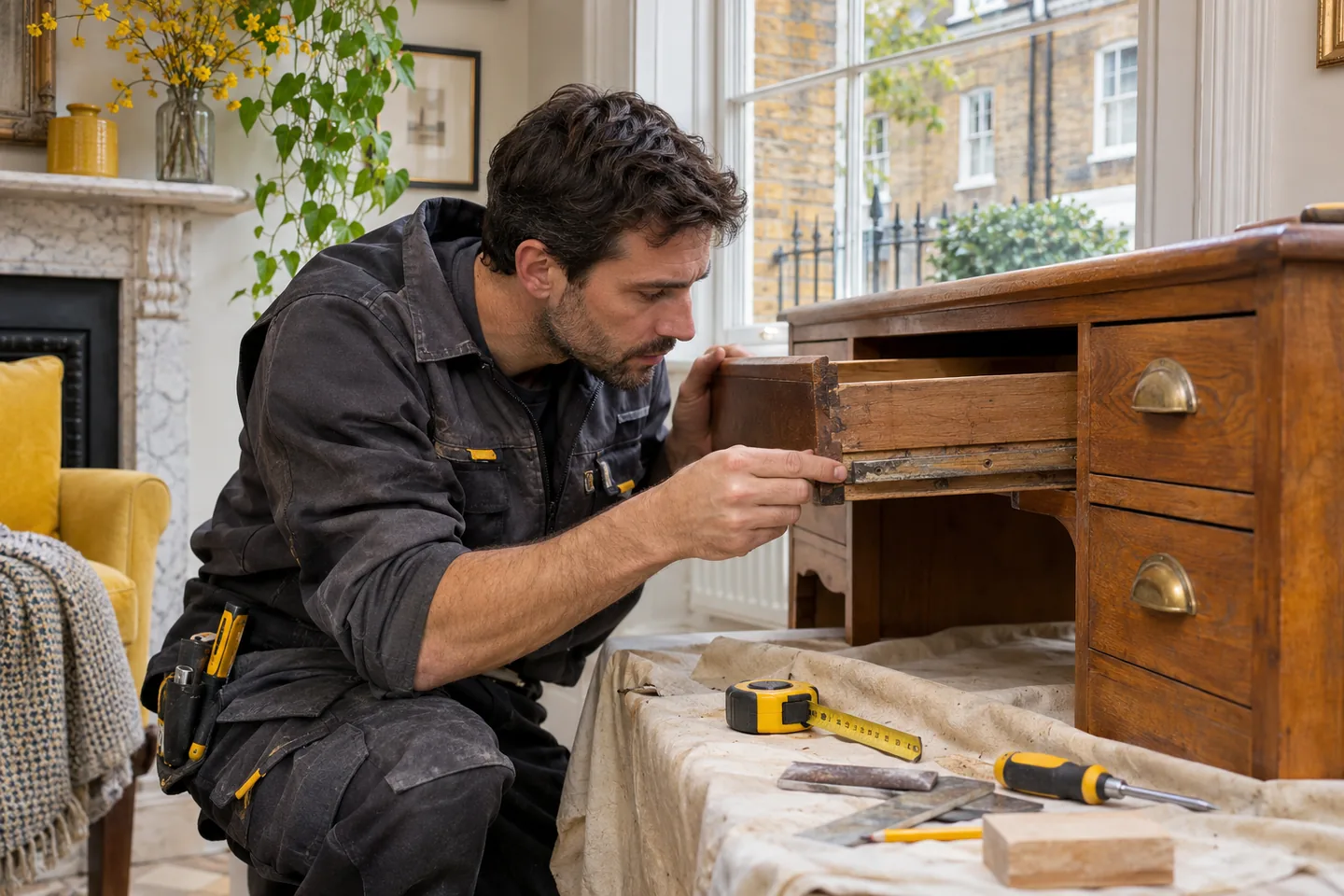
Drawers should travel without being forced
We remove the contents before diagnosing a drawer that jams or drops at the front. The runner may be bent, the cabinet may be out of square or the drawer bottom may have slipped out of its groove. A loose handle can also make a sound drawer feel defective. We inspect the movement from a supported position and compare the runner fixings on both sides, rather than repeatedly pulling harder on the front.
Replacement runners need the correct length, mounting arrangement and clearance. Where the existing runner remains serviceable, we may be able to correct its position or renew a failed fixing in sound material. A damaged drawer box may require timber repair instead. We test the empty drawer first, then discuss a sensible return to use with its normal contents. Soft-close mechanisms, stops and removal catches are checked for their intended action; we do not promise that adjustment will restore a broken mechanism.
PLAN THE WORK
Explore the time and labour budget.
Select the task, quantity and visit period. Assembly benchmarks and entered time assumptions stay visible; other repairs need an individual assessment.
Plan your Golders Green repair enquiry
Choose the work, enter quantities and review the assumptions. We confirm the repair, working time and availability before booking.
Assembly benchmarks assume complete product parts, instructions and a clear working area. For other repairs, a known condition does not establish a standard duration.
Compare the assembly work
Published London assembly ranges for one item. These are external planning benchmarks, not our recorded job times or guaranteed completion periods.
Time evidence: published London assembly ranges, checked 3 November 2026. Product, staffing and access differences require assessment. Carrying, missing parts and wall restraint are not automatically included.
Compare labour for the same working time
Comparison uses the selected day and visit period. These are labour categories at equal time, not fixed job prices. One-hour minimum; subsequent half hours. Materials, sourcing time, parking and congestion charges are separate. Rates include taxes. Daytime: handyman 08:00–18:00; plumbing/electrics 08:00–18:00 weekdays and 08:00–17:30 weekends. Outside-daytime availability needs confirming.
What changes the repair decision?
This compares the checks needed for the selected repair, not a scored difficulty or a promised duration.

Shelves need sound support behind the finish
A wall painted a uniform colour may contain several different backgrounds. We establish the likely construction, inspect old holes and assess the intended shelf position before drilling. Pipes, cables and the position of sockets or switches affect the decision. A detector is one part of that assessment, not proof that every concealed service has been found. Tell us what the shelf will hold and provide the shelf and bracket information if you have already bought them.
We mark the bracket positions with attention to the shelf span, the manufacturer’s requirements and available support. Loose plaster cannot become a dependable fixing just because a larger plug is used. We explain when the position needs to move or a different fixing arrangement needs consideration. After installation, we check level, bracket contact and visible movement. Our wall mounting service covers related mirrors, rails and pictures, with each item assessed for its own construction and use.
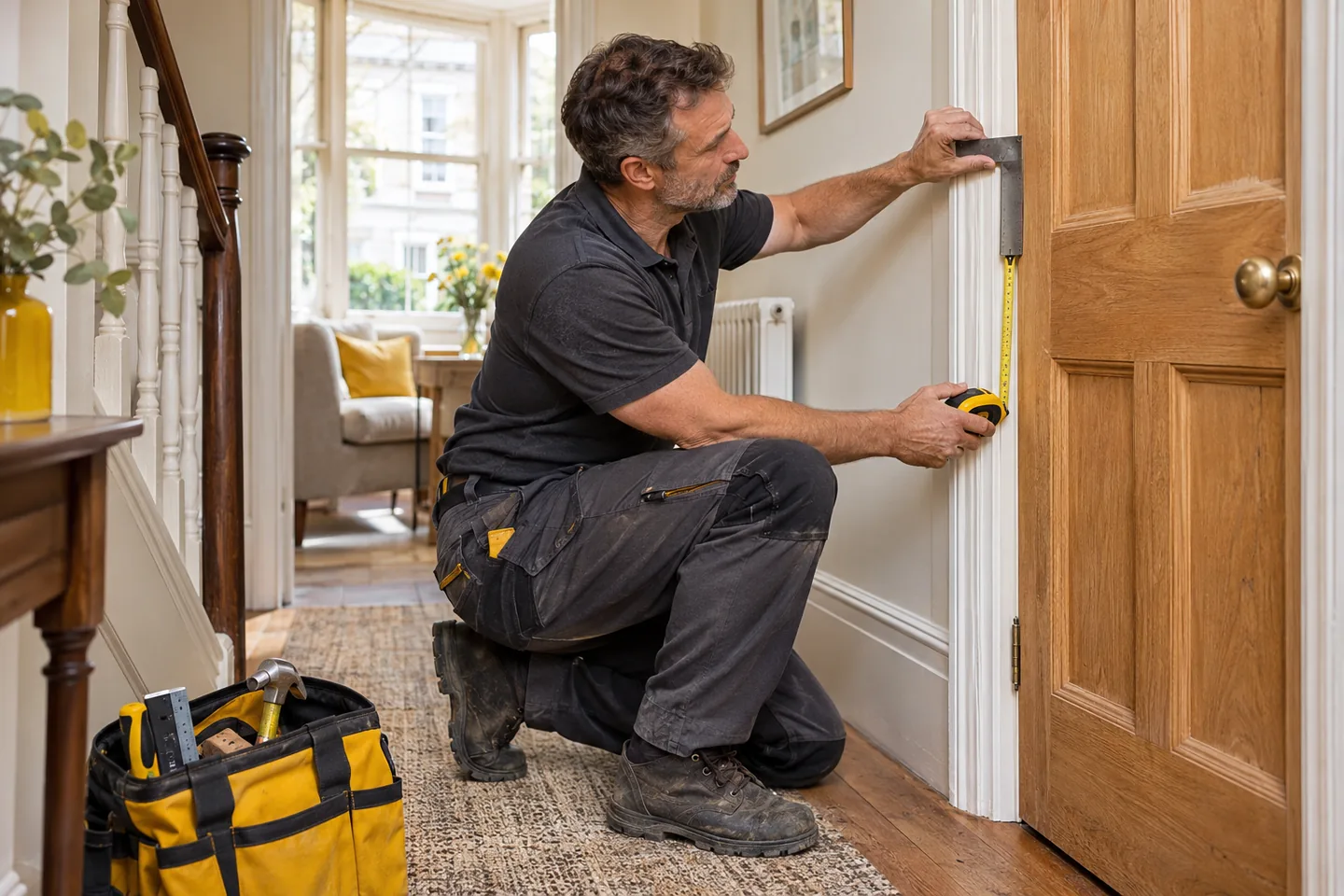
Interior doors that catch after furniture moves
A newly positioned cabinet or a rug can reveal a clearance problem that was previously unnoticed. We check what the door is touching before proposing a change to the door itself. Loose hinge screws, a shifted hinge leaf, a catching latch and a tight bottom edge each leave different signs. We look at the frame gaps, the contact marks and the movement of the handle while supporting the door where necessary.
An adjustment can be straightforward when the timber and fixings are sound. If material needs removing, we explain the proposed edge and finish before cutting; some doors have limited trimming allowances. We check that the latch engages without slamming and that the door opens past the furniture in its new position. Fire-resisting doors, unusual security hardware or damage to the frame need an appropriate assessment, rather than treating every door as a standard internal timber leaf.
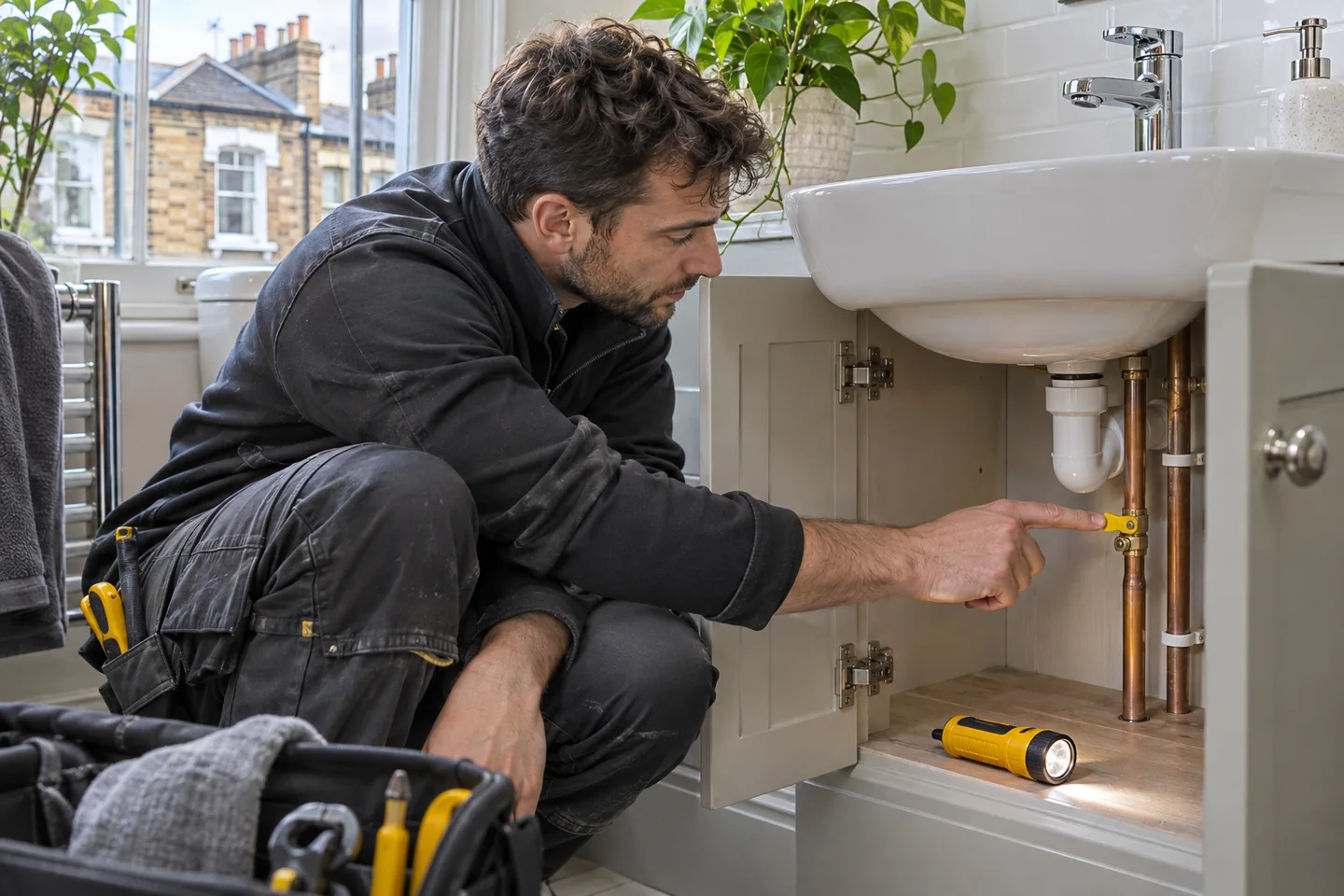
Accessible tap fittings and water beneath storage
A damp cupboard base deserves attention before another shelf liner hides the mark. We ask when the water appears: while the tap is running, after the basin empties or when the room has not been used. We inspect accessible connections and the condition of isolation fittings. Stored bottles and cleaning products need removing so the area can be seen and protected. We do not diagnose a concealed pipe from the shape of a stain alone.
For a suitable accessible repair, we agree the fitting or component needed and how the supply will be isolated. Seized valves, badly corroded connections or inaccessible pipework can change the job. Afterwards, we dry the area and check it under normal operating conditions so fresh moisture is visible. Cabinet damage caused by an earlier leak is a separate issue: the leak must be resolved before we discuss repairing board, repainting or replacing a unit. See plumbing repairs for related work.
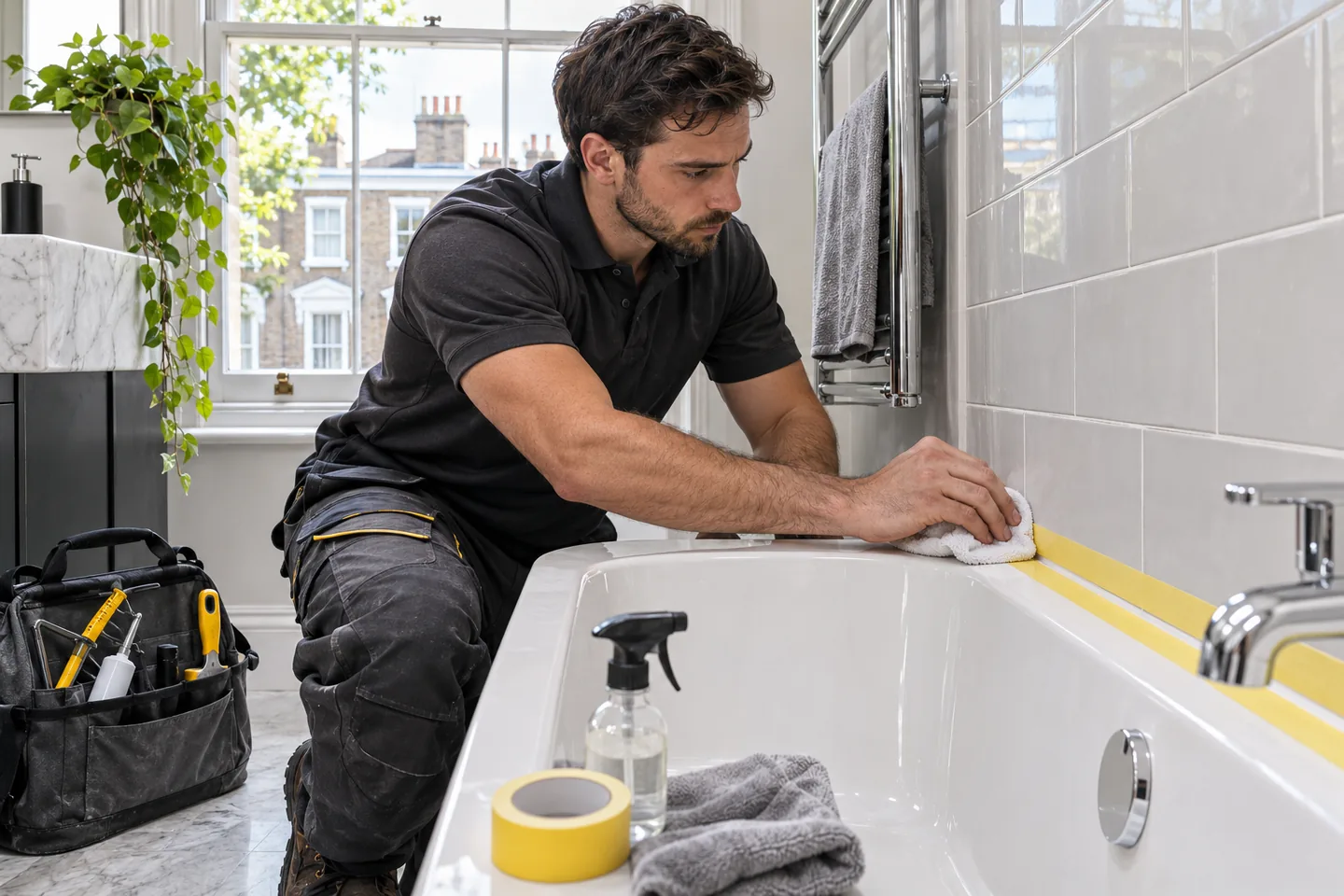
Resealing without hiding a wet background
A split joint behind a basin or along a worktop can let water reach vulnerable board. We inspect the joint, the movement between surfaces and signs that water is arriving from somewhere else. A surface bead will not solve a leaking fitting, a loose basin or persistent water behind the finish. If the background is wet or deteriorating, we explain that preparation and repair may be needed before a new seal can be applied.
When resealing is appropriate, the failed material is removed and the contact surfaces are cleaned and prepared for the selected product. We protect neighbouring finishes and form a continuous joint suited to the junction. The product’s curing and use instructions are part of the handover; a freshly applied bead should not immediately be exposed to cleaning or running water. Our tiling, grouting and resealing page explains the distinction between a surface joint and faults in the surrounding finish.
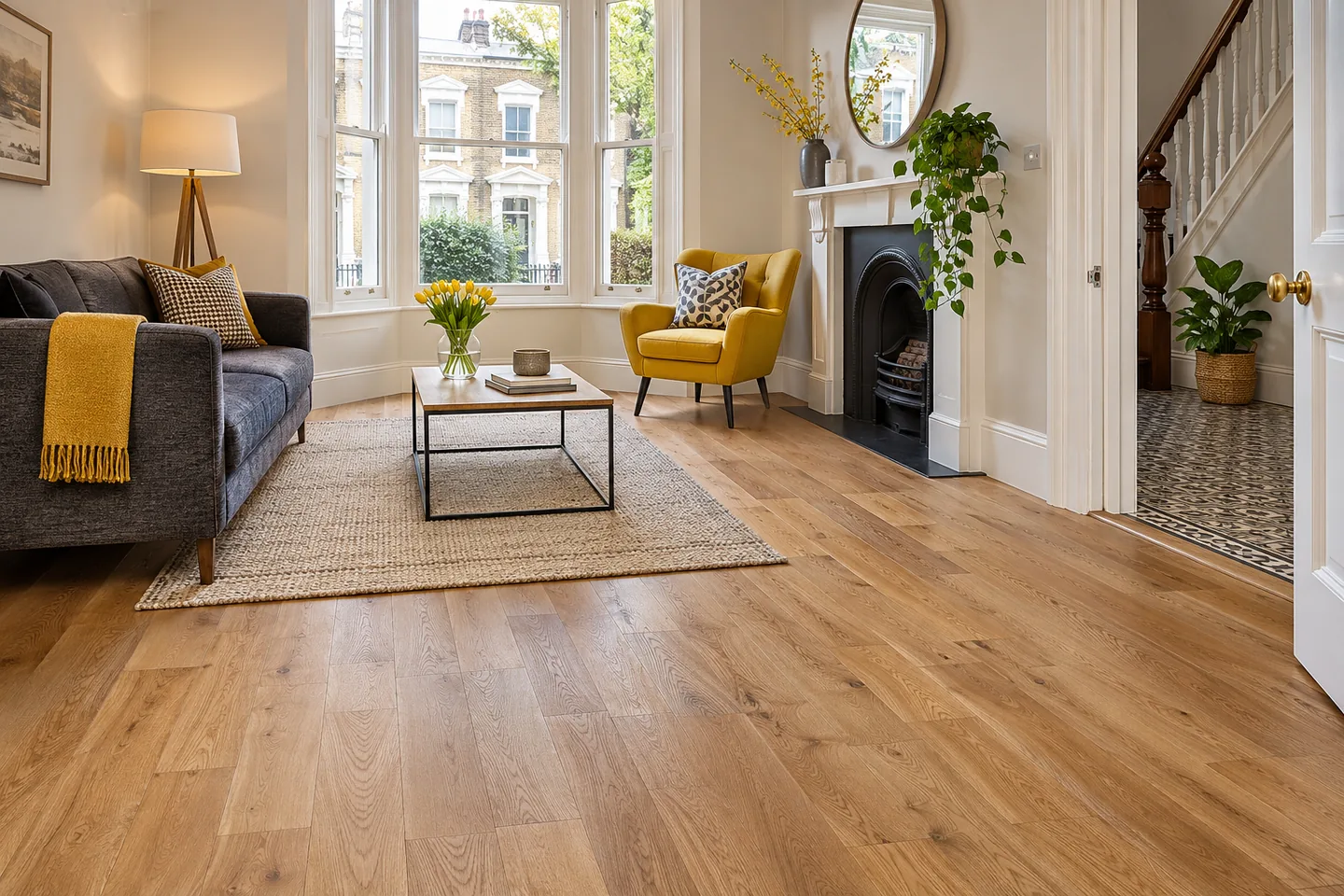
Finish with the way the room will be used
We revisit the movement of repaired items after the tools are cleared. A door that opens properly with the work area empty might hit a chair when the room is put back. A drawer may need a handle tightened after its runner alignment is corrected. We check the affected fittings together, keeping new furniture instructions and unused proprietary parts available for you rather than mixing them into general waste.
Before leaving, we explain any remaining limitation: an unsuitable wall area, a missing manufacturer’s part, a panel affected by moisture or a finish that needs separate decorating. We distinguish the work completed from work that still needs agreement. If you have a longer list, our odd jobs service can help organise it, but the list should identify each task and location. That lets us bring the right materials and avoid assuming that several visually similar faults share a cause.
THE AREA / THE ACTUAL ADDRESS
Planning a visit in Golders Green
Barnet Council identifies Golders Green as one of its main town centres. Its conservation-area information describes the centre around Finchley Road, Golders Green Road and North End Road, with shops and residential accommodation above in the designated area. That makes the exact entrance useful information: a shopfront address may have a separate residential entrance, and the work may be on another floor.
We ask for your full postcode, access instructions and any restrictions on carrying panels or tools through shared space. If permission is needed for a permanent fitting, arrange it before installation. Local context helps us prepare the visit; it does not establish the construction of your wall or the condition of your furniture. Nearby service information is available for Hampstead, Hendon Central, Finchley Central and Mill Hill, while the task photographs remain the best starting point for your own repair.
Address information: Barnet Council: town centres · Barnet Council: Golders Green conservation area
EMERGENCY LOCKSMITH ENQUIRIES
A door repair may involve the lock as well
A latch that will not meet its keep is not always a failed lock. The door may have dropped, the hinges may be loose or the frame may have moved. We ask whether the key turns normally with the door open and whether the handle returns on its own. Those observations help distinguish alignment trouble from a lock mechanism problem, without asking you to dismantle the lock or force the key. If the door cannot be secured, tell us that clearly when you call so the enquiry can be assessed appropriately.
We also take locksmith enquiries through our call line 24/7 on 020 3746 0607. Tell us the address, the type of door and what happened immediately before the fault. A clear photograph of the lock edge or existing hardware may help if it is safe to take one. We explain the proposed work and price before proceeding; attendance and working arrangements are confirmed for the actual enquiry. We confirm the practical attendance arrangements when reviewing your enquiry. Where identification or authority to access the property is needed, have the relevant information ready. After an agreed repair, the door and lock need checking together, with the door opening, closing and securing in the intended way.
BEFORE YOU BOOK
Questions about the work here.
Do I need to buy furniture fixings in advance?
Keep all supplied fittings and the instructions together, but avoid buying alternative wall plugs before the wall has been assessed. We need to match the fixing method to the item, background and intended use. If a proprietary part is missing, the manufacturer’s replacement may be the appropriate answer.
Can several furniture repairs be combined?
Yes, send a separate description and photographs for each item. We check whether the tasks need different parts or access. An assembly job and an existing cabinet repair may share tools but still need different hardware and preparation.
Will a photograph confirm whether a wall can take a shelf?
A photograph helps show the location, surrounding services and visible damage. It cannot confirm the wall’s construction or condition behind the finish. We may need to inspect the proposed fixing points before agreeing an installation.
Can you adjust a door without repainting the whole room?
Some adjustments affect only hardware; trimming or timber repairs can disturb the finish. We explain the likely affected area before work. Matching an aged paint finish is a separate consideration, and we discuss decorating if the repaired edge needs protection.
Should I empty cupboards before you arrive?
Empty the affected unit and clear a safe route where you can. Leave heavy or unstable items in place until we discuss moving them. For a leak, keep the area accessible and tell us whether the water supply can be safely isolated.
Can you give a price from my list?
We can review the list and explain what further information is needed. Dimensions, product models, photographs and access details improve that discussion. The price and work are agreed for your enquiry; an unseen damaged background or missing part can require a revised decision.
TELL US WHAT NEEDS ATTENTION
Discuss your Golders Green repair list.
Call 020 3746 0607 with the property address, the items needing attention and the available access. We review the work and confirm the arrangements before a visit is booked.
Original illustrative work scenes show the activities described; they are not photographs of completed customer jobs in this neighbourhood.