
HANDYMAN / FINCHLEY CENTRAL
Handyman Finchley Central.
Know the item.
Agree the work.
We turn the details you know into a practical repair discussion. Product models, fault descriptions and accessible condition help us review the work before a visit is agreed.
Call line 24/7 · Work and availability confirmed for your address.
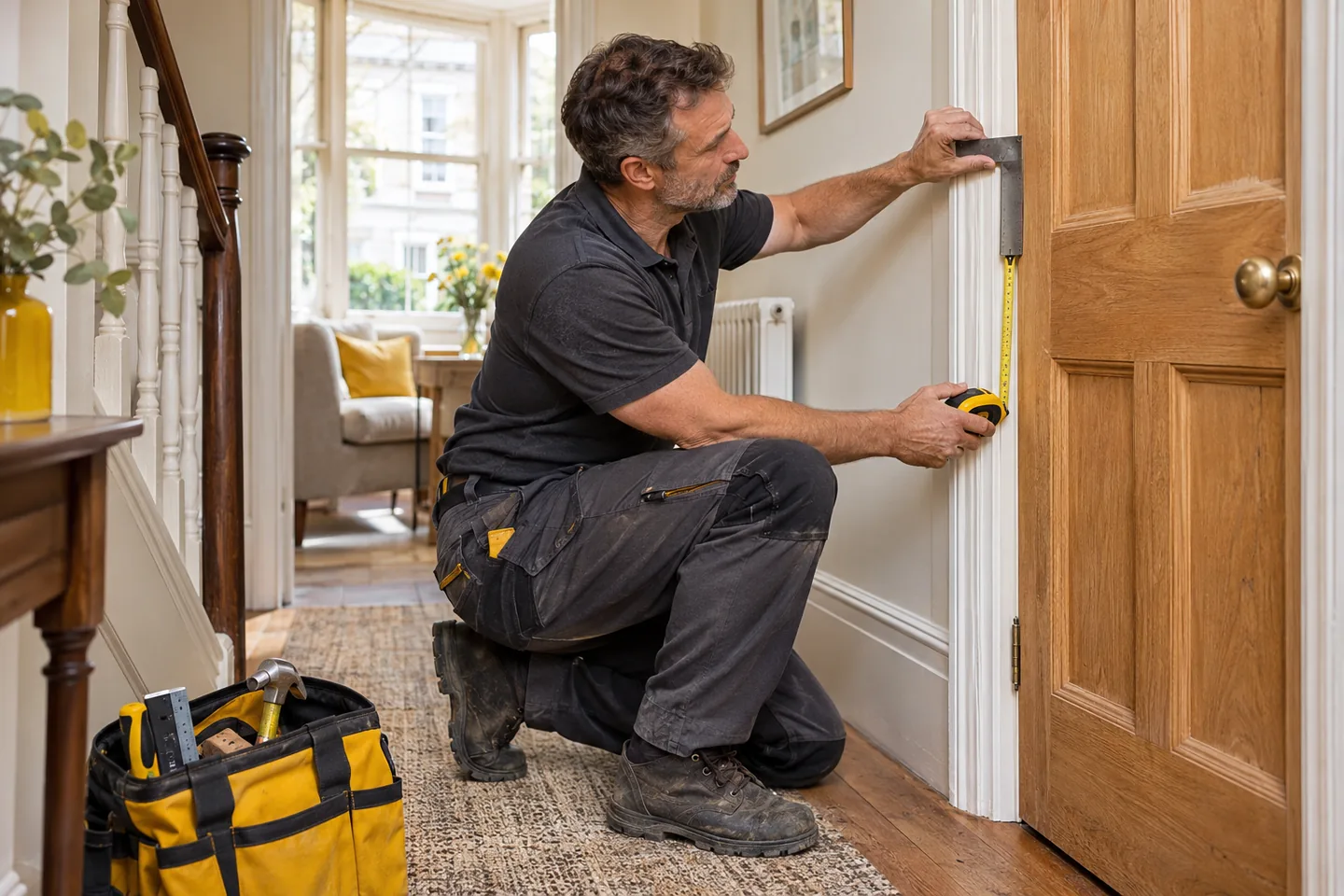
Useful details lead to clearer repair decisions.
What is the most useful first message for a repair enquiry?
Give us the full postcode, item and what happens when it is used. Add a photograph of the whole fitting and any accessible damaged connection. If you have a replacement in mind, share the product details before assuming it suits the existing arrangement.
Is Church End a separate location from Finchley Central here?
The names can refer to the same local town-centre setting. We use the Finchley Central enquiry page and ask for the exact address, avoiding duplicate location assumptions. Barnet identifies Finchley Central among its main town centres, while the individual property supplies the access details.
THE WORK IN YOUR HOME
A clear enquiry describes more than a room name.
Bedroom repairs can mean a bed to assemble, a door that catches or a drawer with broken support. Each needs different information. We ask for the item, symptom and any product details so that the proposed work can be reviewed without guessing what sits behind a general description. Photographs of the complete fitting and accessible connections are usually more useful than a close view of one damaged spot.
We take Finchley Central handyman enquiries for assembly, fitting and practical household repairs. Tell us about access, parts already purchased and the person approving decisions. We discuss what needs inspection, which components appear relevant and where another trade should be considered. The arrangement is confirmed for the actual property, with working time and price based on the reviewed task rather than room size or item count alone.
Useful details for your enquiry
- The item, room and observed fault.
- Exact models for furniture or replacement products.
- Views of accessible connections and nearby surfaces.
- Previous changes, repairs or missing components.
- Entrance, working space and authorised contact.
A door enquiry should identify the point of interference.
Tell us whether the door rubs at the floor, contacts the frame or fails to engage its latch. We inspect the swing, hinge attachment and accessible gaps, asking about recent flooring or decoration. Those observations help distinguish adjustment from damaged support or another obstruction. A door label alone cannot establish the repair method.
We discuss suitable work after considering the construction and any specialist requirement. Compatible hardware or local connection repair may be appropriate before any material is removed. We protect immediate surfaces and check closing and engagement after agreed work. Exposed edges or old fitting marks are explained as finishing questions, with remaining material issues identified separately.
MATCH THE REPAIR
Which detail helps us assess the task?
Send the item and context together. The information supports a repair discussion rather than a universal duration.
6 service options.
| Problem or task | What we inspect | Work to discuss | Related service |
|---|---|---|---|
| Door catches | Contact point, gaps and recent changes | Identify cause before adjustment | Carpentry services ↗ |
| Drawer sticks | Mechanism and surrounding frame | Assess support and compatible repair | Carpentry services ↗ |
| Cupboard front drops | Open hinge and fixing material | Match hardware and repair attachment | Carpentry services ↗ |
| Furniture in boxes | Model, instructions and room | Review product-specific assembly | Furniture assembly ↗ |
| Mirror, shelf or picture | Rear hardware or brackets and wall | Agree layout and suitable support | Hanging wall mounting ↗ |
| Basin connection leaks | Pattern of use, access and isolation | Assess the actual joint before repair | Plumbing ↗ |
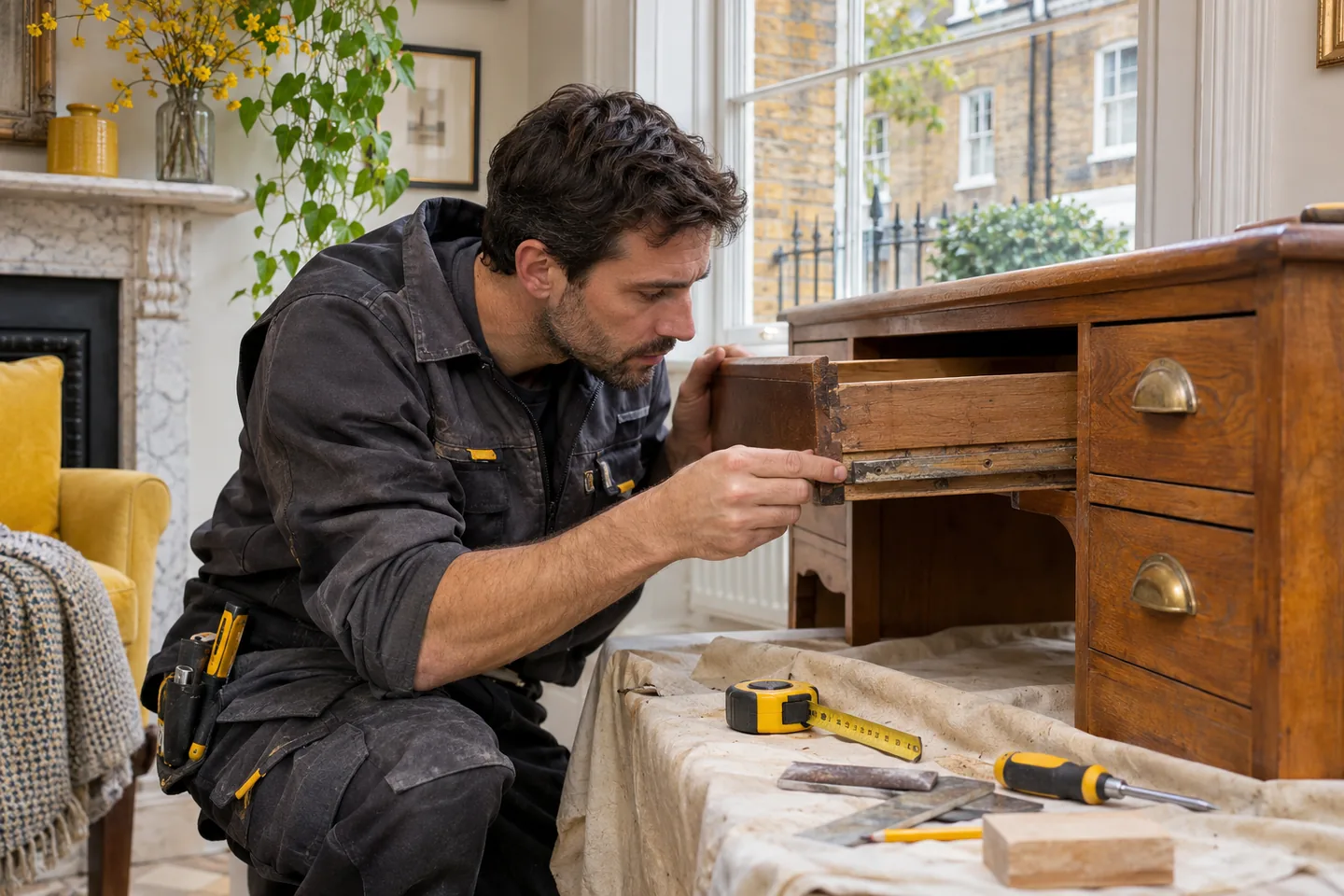
A drawer photograph should include the cabinet around it.
We review runner type, frame alignment and support beneath the attachment. A close-up of a broken part helps identify hardware, while the full unit can show uneven positioning or a loose back. Tell us whether the drawer catches empty or during ordinary loading and whether the furniture was moved recently. Product information helps with compatible replacement.
We agree suitable material repair, adjustment or mechanism replacement before altering panels. Travel, stops and front clearance are checked after the connection is appropriate. A product-specific runner may need ordering, and damaged board can need separate attention. We explain those decisions rather than force the drawer to close once and treat that as a complete operating check.

Cupboard hinges need an open view and their product geometry.
We ask for the cup, arm, plate and surrounding material in photographs where accessible. A dropped door can result from worn hardware or damaged fixing support. The required opening and overlay arrangement affect compatible components. A similar appearance is not enough to establish that a replacement hinge belongs in the existing furniture.
We support the front during assessment and agree repair or compatible hardware before adjustment. We review gaps and clearance against neighbouring fronts and handles. Closing and soft-close action are checked where fitted. Any changed plate outline or damaged panel is explained, including where further material or decoration work is needed beyond an alignment adjustment.
PLAN THE WORK
Explore the time and labour budget.
Select the task, quantity and visit period. Assembly benchmarks and entered time assumptions stay visible; other repairs need an individual assessment.
Plan your Finchley Central repair enquiry
Choose the work, enter quantities and review the assumptions. We confirm the repair, working time and availability before booking.
Assembly benchmarks assume complete product parts, instructions and a clear working area. For other repairs, a known condition does not establish a standard duration.
Compare the assembly work
Published London assembly ranges for one item. These are external planning benchmarks, not our recorded job times or guaranteed completion periods.
Time evidence: published London assembly ranges, checked 3 November 2026. Product, staffing and access differences require assessment. Carrying, missing parts and wall restraint are not automatically included.
Compare labour for the same working time
Comparison uses the selected day and visit period. These are labour categories at equal time, not fixed job prices. One-hour minimum; subsequent half hours. Materials, sourcing time, parking and congestion charges are separate. Rates include taxes. Daytime: handyman 08:00–18:00; plumbing/electrics 08:00–18:00 weekdays and 08:00–17:30 weekends. Outside-daytime availability needs confirming.
What changes the repair decision?
This compares the checks needed for the selected repair, not a scored difficulty or a promised duration.
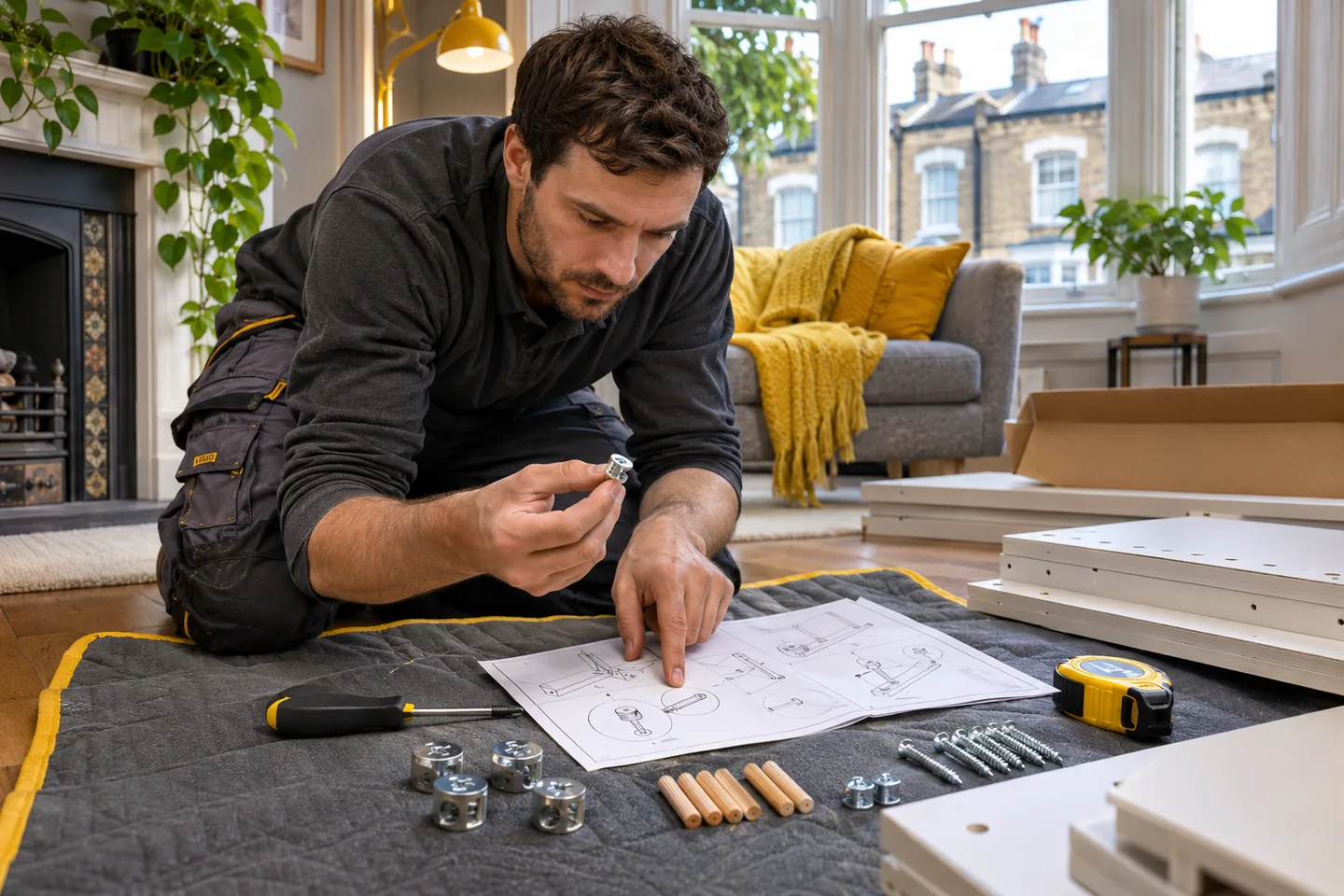
Furniture models describe work that the box count cannot.
A wardrobe with interior fittings differs from an open shelving unit, even when both arrive in several packs. We review the exact models, instructions and available components before discussing assembly. The room needs clear working space for the specified method. Tell us about ceiling height, fixed furniture and packages stored away from the intended position.
We follow the product’s connection sequence and check the frame before operating parts are adjusted. Required restraints are reviewed with their brackets and the actual wall. Missing fittings or damaged board are identified before normal use. Carrying, removal and larger packaging arrangements need discussion separately, so the assembly decision reflects both the product and the practical property setting.
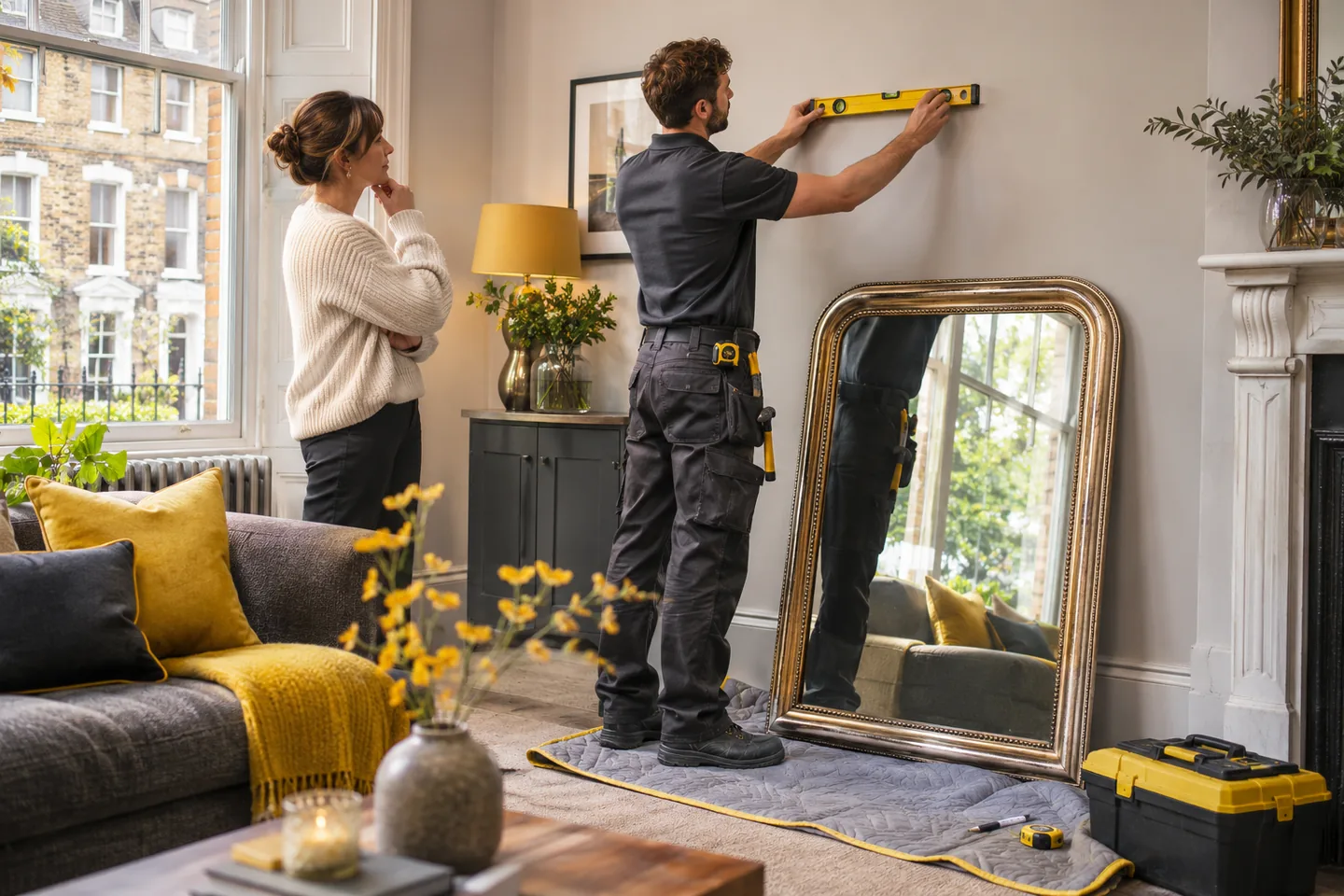
A wall-fitting enquiry needs the item’s hidden attachments too.
For a mirror or picture, rear hooks, rails and wires determine fixing positions. For a shelf, brackets and intended contents affect the assessment. Send those details with dimensions and a view of the proposed wall. We inspect accessible background and existing damage, and ask about known services before agreeing the attachment arrangement.
We set out the agreed position with measuring tools and use appropriate detection with its limitations explained. Compatible fixings depend on the assessed material and product. We check connections, level and clearance after fitting. Weight or an advertised anchor figure alone does not prove the suitability of uncertain support, and old holes require a separately understood making-good extent.

Curtain fittings need the opening and the product shown together.
A pole length or blind width is useful but does not show bracket space, reveal construction or movement past a handle. We review the complete opening and fitting instructions. Tell us about old brackets and damage at their holes. The new product may need different spacing, so the original layout is not automatically the starting point for drilling.
We agree line, clearance and compatible support after assessment. Suitable tools are used for the accessible background, with known services and uncertainty considered before work. We check the product’s operating movement and bracket connections afterwards. Where the preferred position conflicts with the opening, we discuss an alternative before changing the product or making additional holes.

A plumbing symptom needs the time and condition of use.
For water beneath a basin, explain whether it appears during tap use, drainage or periods without use. We review accessible connections and nearby material, with relevant isolation confirmed before supply work. Product details help if a replacement fitting is planned. Restricted cabinet access or seized parts can change the repair and should be discussed before a simple replacement is assumed.
We protect nearby finishes and use suitable tools and compatible components for the assessed connection. After agreed work, we check the relevant operating condition and explain remaining moisture or concealed concerns. Cabinet making-good or a sanitary seal repair may need a separate decision. A visible local repair is not presented as an inspection of every hidden part serving the room.

The final explanation should be as specific as the enquiry.
We review what was repaired or fitted and check the intended movement or accessible connection. The original symptom remains the useful reference point. We identify incomplete parts, limitations of the assessed background and any further trade decision. A general completion statement should not replace the details needed to understand what is ready for use.
We explain care, drying or curing for the actual materials used, along with remaining finishing work. Tell us who should receive that information if the property is managed by someone else. Waste and larger packaging require an agreed arrangement. If another maintenance enquiry follows, it can begin with a clear account of completed tasks and the components or approvals still outstanding.
THE AREA / THE ACTUAL ADDRESS
Finchley Central is the useful local label; the address completes it.
Barnet Council identifies Finchley Central among its main town centres. We use that recognised location for the enquiry and ask for the exact property rather than infer access from a broad local name. Tell us about known listing, conservation or management requirements where an existing feature would be altered.
For practical work, provide the entrance and route to the fitting, including stairs, lifts or fixed furniture affecting access. Product models and clear fault descriptions help us review the task before the visit is agreed. Identify who can approve a component replacement or additional finding. We confirm the available service arrangement for that address and explain any information, parts or preparation still needed, keeping geographic orientation separate from the repair decision.
Address information: Barnet Council: Finchley Central in the town-centre network
EMERGENCY LOCKSMITH ENQUIRIES
Give the locking symptom and the actual entrance details.
We take Finchley Central locksmith enquiries through our call line 24/7. Tell us whether access is lost, hardware is damaged or the door cannot be secured normally. Provide the full address and visible door and lock information. We review the request and confirm available visit arrangements, with the proposed price basis explained before booking.
A photograph can help identify hardware, but it does not establish the cause alone. Alignment, a receiving keep and a cylinder can affect operation differently. We ask about the behaviour at the key, handle and closing edge without asking you to dismantle security components. Tell us who can authorise the work and whether a shared entrance or specialist door requirement applies.
After assessment, suitable repair or compatible replacement is discussed with the surrounding material considered. Related carpentry or making-good is identified separately. We check relevant opening and locking operation after agreed work and explain remaining components or limitations. If the enquiry includes other household tasks, each still needs its own product, condition and access review. The security arrangement remains a clear decision for the authorised property contact, rather than an assumed extra adjustment within a general visit.
BEFORE YOU BOOK
Questions about the work here.
Do you need close-ups or views of the whole fitting?
Both can help. A close view identifies hardware or damage, while the whole item shows its setting and support. Send accessible photographs without forcing a damaged mechanism or dismantling security, electrical or concealed components.
Can I provide a retailer name instead of the furniture model?
The exact model or product link is more useful. The same retailer may supply very different connectors, doors and internal fittings. We review the product and room before discussing assembly time and required restraints.
Should I measure a replacement handle before buying?
Share its dimensions and fixing pattern with the existing arrangement. We also need to assess the material and related operation. A fitting that covers the same visible area may still be incompatible with its mounting or latch requirements.
Can a leak photograph establish the repair price?
It helps prepare the enquiry, but the source, access and component condition may need inspection. We discuss the proposed repair and price basis after review, with materials and applicable additional costs identified separately.
Why use Finchley Central rather than another Church End page?
The enquiry is organised around this local town-centre name, with the full address providing the precise location. Using another label for the same setting would not add useful property information. Tell us the entrance and work required instead.
Can a calculator replace the product and condition review?
No. It helps explore stated planning ranges or a working period you enter. Actual parts, damaged support and access still need assessment. We confirm the work, time basis and available arrangement through the enquiry before booking.
TELL US WHAT NEEDS ATTENTION
Discuss your Finchley Central repair list.
Call 020 3746 0607 with the property address, the items needing attention and the available access. We review the work and confirm the arrangements before a visit is booked.
Original illustrative work scenes show the activities described; they are not photographs of completed customer jobs in this neighbourhood.