
HANDYMAN / MITCHAM
Handyman Mitcham.
Sort the repairs
around daily life.
A repair list can span the kitchen, bedroom and hallway. We look at each fault, the access it needs and how the rooms are used, then discuss which tasks can sensibly be arranged together.
Call line 24/7 · Work and availability confirmed for your address.
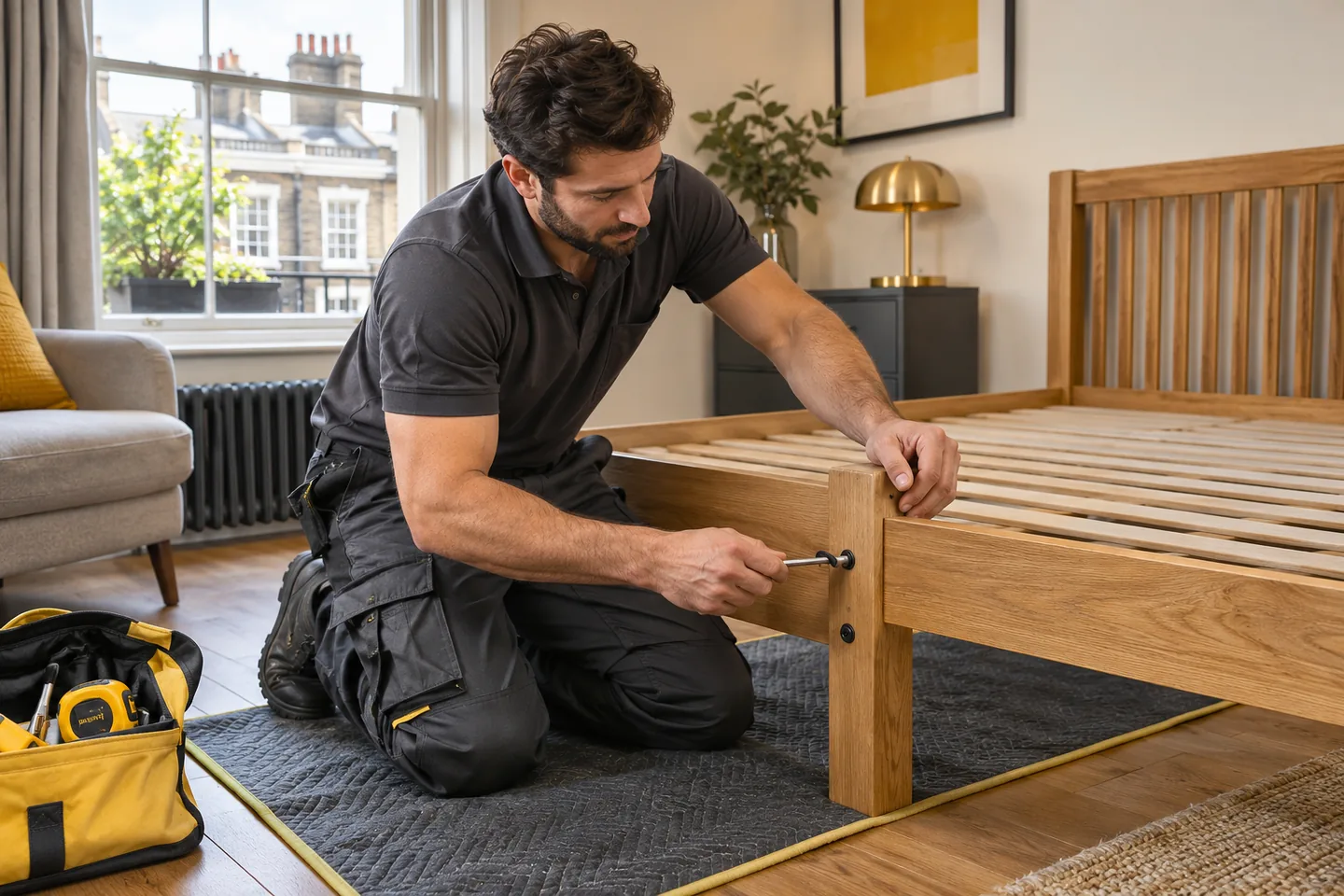
Different rooms. Specific repair decisions.
Can you review bedroom and kitchen repairs in one Mitcham enquiry?
Send both tasks with quantities, photographs and any product details. We assess the parts and trade requirements separately and discuss a suitable arrangement. The same address does not establish that the work needs identical preparation or that every task can be completed together.
What information helps when the property stays occupied?
Tell us which room must remain available, where tools can be set down and what belongings need protection. Include the entrance route and any shared access instructions. We discuss a workable arrangement before treating the room as clear for assembly or drilling.
THE WORK IN YOUR HOME
A useful list describes the fault, not just the room.
We take Handyman enquiries in Mitcham for individual household repairs and mixed lists of fitting, adjustment and assembly work. Tell us whether the bedroom task is a loose bed connection, a damaged drawer or furniture still in boxes. Those descriptions point to different tools, parts and space requirements. We review what the item needs to do and what has changed before deciding how the work can be approached.
We discuss priorities as well as quantities. A door that prevents a room closing may matter before a new shelf is fitted, while an inaccessible valve can affect whether another repair should begin. We do not assume that every task on a list belongs to one trade or that all can proceed at the same time. We explain the relationship between the jobs and any information still needed before agreeing arrangements.
If the home remains occupied, let us know which rooms need to stay usable and where belongings can be kept clear of the work. We plan protection and movement of tools with those requirements in mind. The person approving work should understand any parts, making-good or related service outside the original description. We keep those decisions specific, so a longer list does not become an open-ended instruction.
Useful details for your enquiry
- Name each item and describe the movement or fault.
- Give quantities and product details for assembly work.
- Identify the task that affects everyday use most.
- Photograph connections as well as the whole fitting.
- Explain which rooms must remain accessible.
- Confirm entry and who can authorise additional work.
A bed connection should be checked before the frame is tightened.
We identify the frame model where possible and inspect the corner joints, centre support and slat arrangement. Movement at a loose connector differs from a split support or missing part. We compare the accessible structure with the product information and discuss what is contributing to the problem, rather than applying more force to every visible fixing.
We create working access around the relevant joint and protect the floor. We use a suitable driver or key for the specified connector and support components where the repair requires it. After an agreed adjustment or compatible part replacement, we check alignment and the support arrangement again. A missing component or weakened member needs a separate decision before the bed is returned to use.
MATCH THE REPAIR
Separate the tasks before combining the visit.
Use this table to describe the affected fitting and the decision we need to assess. Different tasks can require different parts, protection and access.
7 service options.
| Problem or task | What we inspect | Work to discuss | Related service |
|---|---|---|---|
| Bed frame moves at a joint | Connectors, centre support and product details | Identify repairable movement or missing material | Furniture assembly ↗ |
| Drawer tilts as it opens | Base, runners and cabinet support | Repair the failed connection before adjustment | Carpentry services ↗ |
| Door catches the frame | Hinges, gaps and latch line | Assess support and appropriate clearance work | Carpentry services ↗ |
| Cupboard front hangs low | Hinge plate and surrounding board | Confirm compatible fixing or hardware repair | Odd jobs ↗ |
| Water appears below a basin | Leak timing, access and isolation | Review the relevant fitting and connection | Plumbing ↗ |
| Shelf needs a new position | Use, background and nearby services | Agree suitable support and installation | Hanging wall mounting ↗ |
| Bath joint separates | Movement, damp and old material | Resolve preparation and product requirements | Tiling grouting re sealing ↗ |
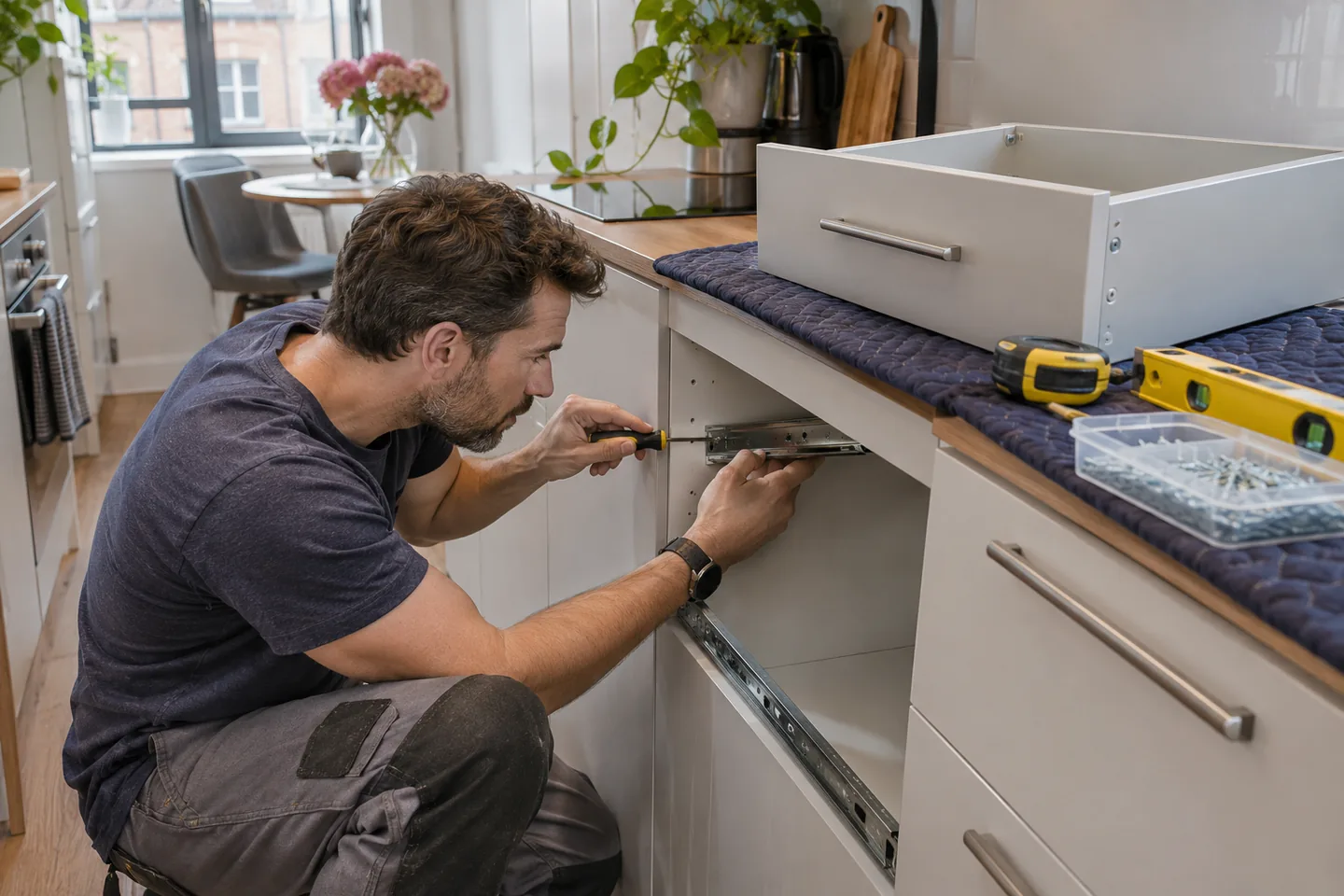
A bedroom drawer can need more than a front adjustment.
We observe the drawer through its travel and inspect the base, side connections and runner attachments where accessible. A drawer may drop because a base has shifted, because a runner has failed or because the cabinet support is loose. We distinguish these conditions before deciding whether an adjustment will address the actual fault.
We remove the drawer according to its design and keep its fittings together. We inspect the material at the fixing points before reseating or repairing an agreed connection. A replacement runner needs compatible dimensions and mounting details, not merely a similar length. Once refitted, we check travel, clearances and closing position, explaining any remaining mismatch or damage to the surrounding unit.

An interior door is assessed along its whole closing line.
We look at where the door touches, the gaps around its edge and the point where the latch meets the keep. We inspect hinge support and ask whether another change, such as a floor finish, has affected the clearance. A contact mark helps locate the symptom, but it does not by itself establish that timber should be removed.
We discuss suitable support repair or adjustment and protect nearby surfaces before working. Door construction and any fire-safety function must be understood before trimming or replacing ordinary hardware. We use appropriate tools for the agreed work, then check the swing, closing line and latch together. The repair should restore the intended movement without concealing a loose or damaged connection.

Kitchen hinges need the cabinet material considered.
We compare the door gap and movement with adjacent fronts and inspect the hinge plate and board around it. A dropped front can be caused by adjustment, loose attachments or damaged support. We check the hardware type and its available range before treating an adjustment screw as the answer to every gap.
We clear the affected unit, protect the surrounding finish and support the front while reaching the attachment. A compatible plate repair or replacement component is selected with its mounting arrangement in mind. We refit and check closing action, neighbouring handle clearance and any soft-close function. If the board cannot provide suitable support, we explain the further repair or replacement material that needs consideration.
THE AREA / THE ACTUAL ADDRESS
Prepare for the Mitcham address and its access.
Merton Council provides conservation-area mapping and lists the Mitcham Cricket Green area, with information for checking the actual property. Tell us about applicable restrictions before an enquiry would alter an existing protected feature. That context does not establish the construction of an internal wall or mean every household fitting needs the same permission.
For practical access, explain the entrance route, where tools can be unloaded and the available parking arrangement. Merton’s loading guidance distinguishes restrictions by signs and kerb markings, so the street needs checking rather than an assumed exemption for a work vehicle. We use the full address and repair details to discuss the visit, with no journey-time assumption based on the broader neighbourhood name.
Address information: Merton Council conservation-area list · Merton Council conservation mapping · Merton Council loading guidance
PLAN THE WORK
Explore the time and labour budget.
Select the task, quantity and visit period. Assembly benchmarks and entered time assumptions stay visible; other repairs need an individual assessment.
Plan your Mitcham repair enquiry
Choose the work, enter quantities and review the assumptions. We confirm the repair, working time and availability before booking.
Assembly benchmarks assume complete product parts, instructions and a clear working area. For other repairs, a known condition does not establish a standard duration.
Compare the assembly work
Published London assembly ranges for one item. These are external planning benchmarks, not our recorded job times or guaranteed completion periods.
Time evidence: published London assembly ranges, checked 3 November 2026. Product, staffing and access differences require assessment. Carrying, missing parts and wall restraint are not automatically included.
Compare labour for the same working time
Comparison uses the selected day and visit period. These are labour categories at equal time, not fixed job prices. One-hour minimum; subsequent half hours. Materials, sourcing time, parking and congestion charges are separate. Rates include taxes. Daytime: handyman 08:00–18:00; plumbing/electrics 08:00–18:00 weekdays and 08:00–17:30 weekends. Outside-daytime availability needs confirming.
What changes the repair decision?
This compares the checks needed for the selected repair, not a scored difficulty or a promised duration.

A basin connection needs a leak description and access.
We ask when water appears: while the tap runs, as the basin drains or at another time. We inspect accessible joints and nearby material and discuss the relevant isolation before disturbing a fitting. The symptom and available access help define the plumbing enquiry; the presence of water in a cupboard does not identify a particular replacement part.
We protect the immediate work area and use tools and seals compatible with the assessed fitting. Restricted or seized connections may need a different arrangement from a simple accessible joint. Following agreed work, the connection is checked under the relevant use, including drainage where appropriate. Concealed damage, ongoing moisture or wider pipework problems are explained separately from the visible fitting repair.

A shelf position should be agreed with the room in use.
We consider the intended contents, mounting height and surrounding furniture before selecting a position. A shelf above a bed or alongside a frequently used doorway needs its use and clearances discussed. We examine the accessible wall and previous holes and assess the proposed fixing area for services. The painted surface alone cannot establish the construction behind it.
We mark out with a tape and level and select suitable brackets and fixings for the assessed background and product. We protect the local area and contain immediate drilling debris. We check the fitted connections and alignment and explain any limitation identified in the supporting material. An unsuitable background may require preparation or another position before mounting can be agreed.

Bathroom sealing is planned around the condition and later use.
We inspect the joint and adjoining surfaces for remaining old material, movement and damp. A loose fitting or unresolved leak may affect whether renewal is suitable. We discuss that condition before treating the task as application of a new bead. We also need to know when the room must be used, since the chosen product can impose restrictions after the labour is finished.
Where preparation is appropriate, we remove the failed material carefully and clean the accessible joint as required by the compatible sanitary sealant. We apply and shape it and inspect continuity against the prepared surfaces. We explain the product-specific curing and care requirements. A longer maintenance list does not remove those requirements or make the repaired edge ready for immediate wet use.

Agree the handover for the complete list and each repaired item.
We check individual functions rather than judging the list only by how many tasks have been crossed off. A drawer is operated, a repaired door is closed against its keep and an accessible plumbing connection is observed under relevant use. Where repairs are related, we look again at their surrounding clearances. We explain any condition that changes the original expectation.
We collect small debris arising from the agreed tasks and discuss packaging or larger waste before work starts. We identify outstanding parts, finish repairs or product restrictions and confirm which items need a separate decision. In a rented home, tell us who should receive that information. An additional task is reviewed for its own requirements instead of being assumed within the existing visit.
EMERGENCY LOCKSMITH ENQUIRIES
Include an emergency entrance problem in the enquiry.
We can also take an emergency locksmith enquiry for your Mitcham address. If you are locked out or cannot secure the property, explain that before listing the other household repairs. Tell us which entrance is affected, whether the door is open or shut and whether the problem concerns a lost key, a broken key or the operation of the lock. These details help us discuss the appropriate service.
A shared entrance, rented property or specialist door can involve further authorisation or building information. Tell us who is responsible for approving the work and whether a landlord or manager needs to be contacted. Describe any change in door alignment or damage around the fitting, as a latch problem and a lock mechanism fault can require different decisions. Avoid forcing the hardware or dismantling it to make the enquiry.
Call 020 3746 0607 on our call line 24/7. We confirm locksmith availability, the proposed work and price arrangements before booking a visit. Any associated timber repair or making-good is explained separately. If the locksmith enquiry accompanies a planned Handyman list, we keep the requirements clear for both services rather than assuming the same parts or arrangement will cover them.
BEFORE YOU BOOK
Questions about the work here.
Can I prioritise the door before the decorative fitting?
Tell us which problem affects use of the home most. We discuss priorities alongside the materials and trade requirements. The order also depends on access and whether another condition must be resolved before the repair can proceed.
Does tightening a bed frame always stop movement?
Not if a support is split, a connector is damaged or a component is missing. We inspect the relevant structure and product requirements before deciding whether adjustment is suitable. Forcing an attachment can leave the underlying fault unresolved.
What should I photograph beneath a leaking basin?
Show the accessible fitting and surrounding area without removing fixed components. Explain when the water appears and whether isolation is available. The leak pattern helps us review the enquiry, but we may still need to inspect the actual connections.
Should all rooms be cleared for a mixed repair list?
We discuss the working space needed for each task. Clear the immediate area where you safely can, and tell us what must remain in place. Large assembly panels can need more space than an isolated hinge adjustment.
Can a new shelf be positioned over old fixing holes?
We examine the background and the proposed bracket arrangement. Old holes can be damaged or unsuitable for the new installation. We discuss preparation or another position where the assessed support does not meet the intended use.
Can another household task be added on the day?
Describe the task so its parts, trade and access requirements can be reviewed. We confirm whether it can be included in the available arrangement. A new fault is not automatically covered by a previous repair description or time assumption.
TELL US WHAT NEEDS ATTENTION
Discuss your Mitcham repair list.
Call 020 3746 0607 with the property address, the items needing attention and the available access. We review the work and confirm the arrangements before a visit is booked.
Original illustrative work scenes show the activities described; they are not photographs of completed customer jobs in this neighbourhood.