
HANDYMAN / CAMDEN
Handyman in Camden.
Fit it with the room in mind.
Before a bracket goes into a wall or a panel is trimmed, there are useful questions to settle. We look at support, clearance and access so the fitting works with the room and the repair can be maintained afterwards.
Call line 24/7 · Work and availability confirmed for your address.
FIXINGS / ASSEMBLY / FINISHING DETAILS
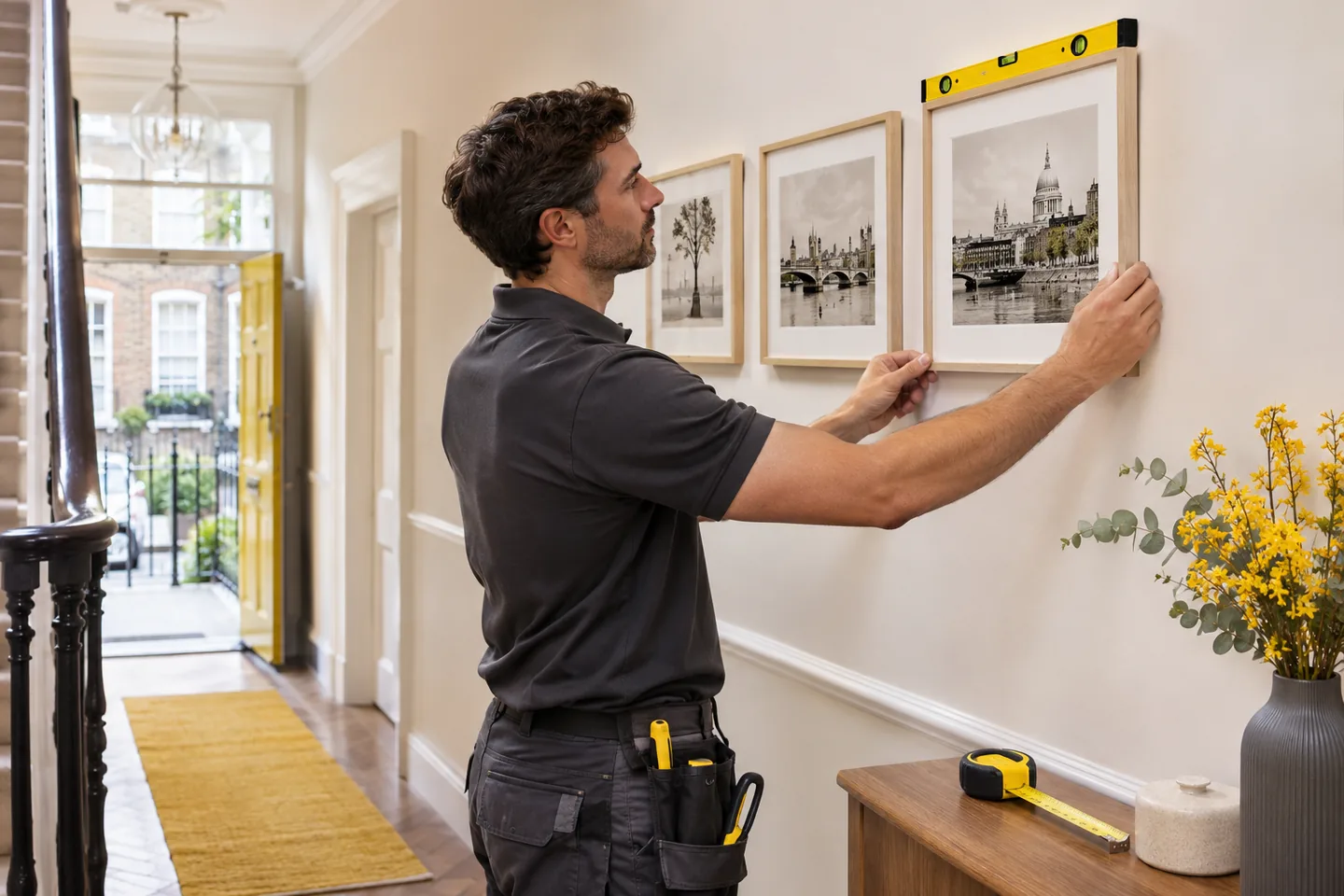
Can we use an existing picture rail instead of drilling?
We inspect the rail, its attachment and the proposed hanging system. A decorative moulding is not automatically a load-bearing picture rail. The frame weight, hook fit and condition of the support all matter. If it is suitable, the suspension arrangement still needs checking before the picture is released.
Can furniture be assembled in a small Camden room?
Send the product instructions and room measurements. Some furniture must be assembled flat and then raised, requiring more height and floor space than the finished unit. We check that requirement, access and the final position before agreeing the build, including any wall restraint or space needed for moving parts.
THE WORK IN YOUR HOME
The small measurements can decide the whole job.
A hook rail that is a little too low can make coats drag across a heater. A shelf that is a little too deep can stop a cupboard door opening. We discuss those practical details when planning handyman work in Camden. Send us the proposed product and a photograph of the surrounding area, not just the blank space where you want it fitted. We can then consider the way it will be used before deciding where it should go.
Our work can include mounting, furniture assembly, carpentry repairs and finishing tasks. We keep the decisions visible: what is being retained, what needs a new fixing and what cannot be established until the old fitting is removed. Existing holes, uneven walls and concealed services can all affect the plan. If the enquiry includes a leak or electrical work, we explain the relevant assessment separately, while considering how it may affect the furniture or decoration around it.
Useful details for your enquiry
- Provide the actual product dimensions, including handles and opening parts.
- Show the route to the room if long panels need carrying through a tight turn.
- Identify fittings that must remain removable for maintenance.
- Tell us before work if the building has restrictions on drilling or alterations.
- Keep pets, fragile objects and stored items clear of the agreed working area.
PLAN THE WORK
Explore the time and labour budget.
Select the task, quantity and visit period. Assembly benchmarks and entered time assumptions stay visible; other repairs need an individual assessment.
Plan your Camden repair enquiry
Choose the work, enter quantities and review the assumptions. We confirm the repair, working time and availability before booking.
Assembly benchmarks assume complete product parts, instructions and a clear working area. For other repairs, a known condition does not establish a standard duration.
Compare the assembly work
Published London assembly ranges for one item. These are external planning benchmarks, not our recorded job times or guaranteed completion periods.
Time evidence: published London assembly ranges, checked 3 November 2026. Product, staffing and access differences require assessment. Carrying, missing parts and wall restraint are not automatically included.
Compare labour for the same working time
Comparison uses the selected day and visit period. These are labour categories at equal time, not fixed job prices. One-hour minimum; subsequent half hours. Materials, sourcing time, parking and congestion charges are separate. Rates include taxes. Daytime: handyman 08:00–18:00; plumbing/electrics 08:00–18:00 weekdays and 08:00–17:30 weekends. Outside-daytime availability needs confirming.
What changes the repair decision?
This compares the checks needed for the selected repair, not a scored difficulty or a promised duration.
A picture rail needs an identifiable job
We look at the moulding’s profile and fixing before treating it as a picture support. Paint can conceal loose joints or a repair, and a hook that almost fits may not sit securely. We compare the picture’s weight and hanging points with a suitable suspension arrangement. The position also needs to keep the frame clear of furniture and avoid a cord rubbing on a sharp edge.
Where the rail and system are suitable, we set the suspension length and check the frame’s final position without relying on the decorative finish to hold it. We inspect engagement and the condition of frame hardware, then check the picture sits as intended. If the rail cannot be relied upon, we discuss an alternative supported fixing rather than add more hooks to the same uncertain moulding.

Storage beds need operating space as well as floor space
A storage bed can fit between walls yet leave too little room to operate its base. We check the instructions, lifting direction and clearances before assembly. The panel condition, connector count and mechanism parts need confirming first. Components that look symmetrical may have a defined left and right position, particularly around hinges or lifting hardware.
We assemble in the specified sequence and keep hands clear of moving joints while checking the mechanism as instructed. The mattress and loading requirements affect how some products operate, so we do not judge an incomplete mechanism by forcing it. We check the frame’s square shape, support points and final clearances, and explain any missing part or damaged fitting that prevents safe completion. Storage should not block ventilation the product requires.
MATCH THE REPAIR
Fit, support or movement?
The inspection separates these questions before materials are cut or new holes are drilled.
5 service options.
| Problem or task | What we inspect | Work to discuss | Related service |
|---|---|---|---|
| Picture rail moves | Moulding fixing and hanger fit | Choose a verified support arrangement | Hanging wall mounting ↗ |
| Storage bed catches | Assembly sequence and operating clearance | Correct the build or position | Furniture assembly ↗ |
| Alcove shelf rocks | Wall shape and bearing points | Fit the shelf and supports together | Carpentry services ↗ |
| Towel ring rotates | Cover screw and wall anchor | Repair the failed connection | Odd jobs ↗ |
| Floor beading lifts | Fixing position and movement gap | Restore trim without pinning the floor | Flooring ↗ |
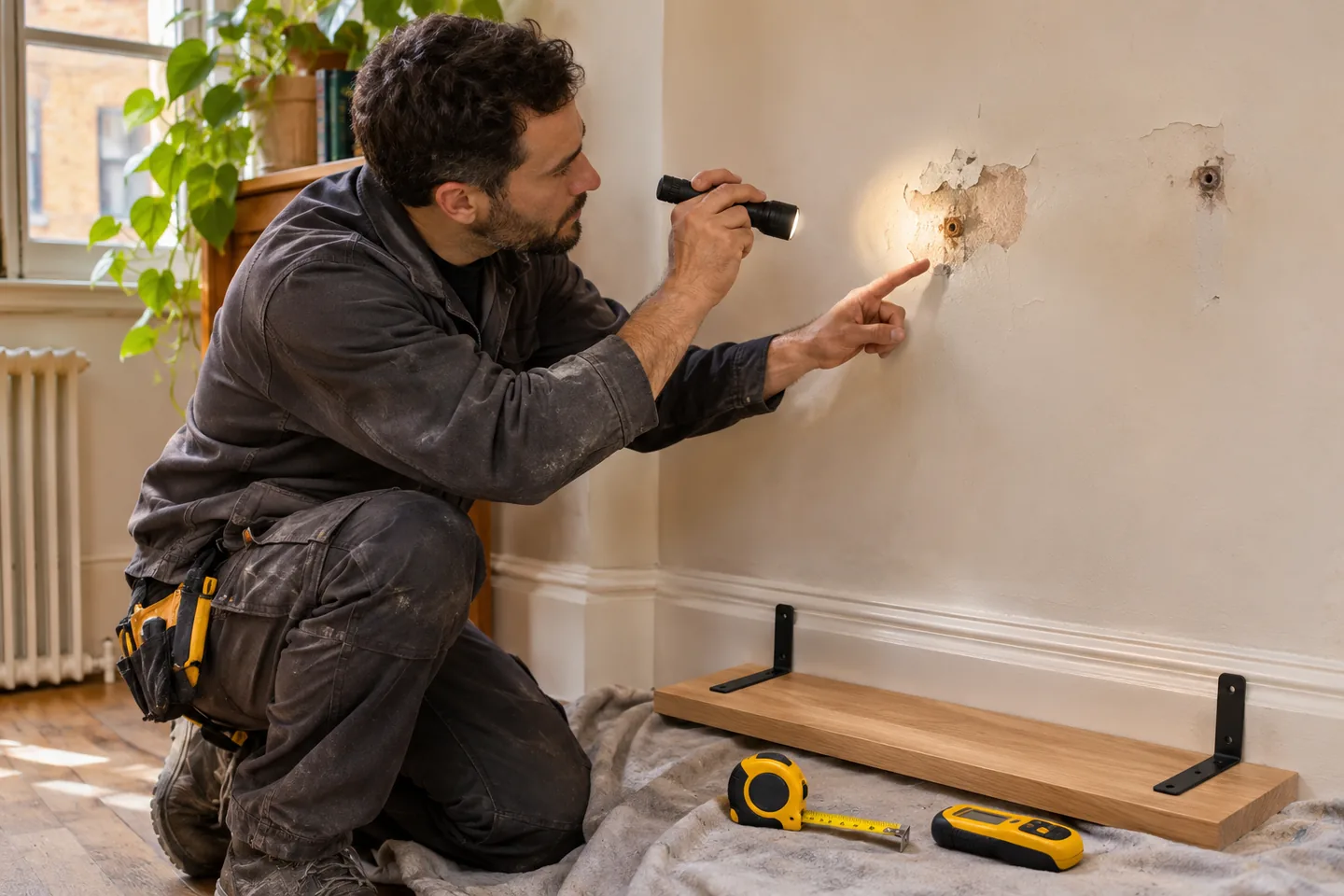
Alcove shelves rarely have identical ends
We measure an alcove at several positions because its sides may not be parallel. The desired depth, contents and support style all affect the cut and fixing arrangement. A neat front edge cannot compensate for a shelf bearing on only one corner. We inspect the wall surfaces and identify where support can be secured without assuming the plaster reflects the construction beneath.
We prepare the shelf and supports for the agreed load and finish, protect the room during cutting and drilling, and check the shelf’s bearing before use. A removable arrangement may be appropriate where services need access. We discuss visible gaps and making good in advance, especially where walls are uneven. After fitting we check level, edge finish and support contact rather than disguise a poor fit with a thick line of filler.

A closing door may need the right person involved
A closer that slams or fails to latch can be affected by the door, hinges, seals or the closer itself. We ask whether it is a flat entrance, a common door or an ordinary internal fitting before agreeing work. Those distinctions affect who authorises the repair and what functions must be preserved. We observe the movement and identify rubbing or loose hardware without disabling the closer.
Any adjustment or repair must be appropriate to the door system and agreed responsibilities. We do not remove seals, wedge a required closing door or plane an unidentified fire door to make it easier to move. If the issue requires a suitable specialist or building-manager decision, we explain the observation clearly. The final operation needs checking as a whole, including closing and latch engagement, rather than just reducing the speed.

Bathroom accessories need a water-aware fixing plan
A towel ring or toilet-roll holder can loosen because its small concealed screw is loose, or because the wall anchor is moving behind the cover. We identify which part moves before removing the fitting. For a new position, we consider reach, door swing, tile edges and possible pipe routes. The fitting’s appearance does not indicate how much force it may receive during daily use.
We use the product’s fixing system with support appropriate to the background, taking care with tile drilling and edge distances. We discuss sealing where required by the installation arrangement without masking a loose anchor behind silicone. After fitting we check the cover lock and stability. A grab rail or other safety support is a different enquiry and must be assessed for its intended function rather than treated as a larger towel rail.

Coat hooks load the wall away from the fixing
A loaded hook rail pulls outward as well as down, particularly when bags are hung from it. We check the rail’s fixing holes, material and intended position before selecting wall fixings. The height needs to suit the users and leave coats clear of nearby equipment or doors. We also examine the rail itself for split timber or weak individual hooks.
We mark the rail level, check for concealed services and secure it to suitable material. Where the mounting holes do not align with useful support, a different rail or backing arrangement may be needed. We check each hook and the rail’s contact with the wall after fitting. If the wall is unsuitable for the intended use, moving the rail is preferable to fitting it in a weak position simply because the height is convenient.
THE AREA / THE ACTUAL ADDRESS
Camden work starts with the property details
Camden Council publishes a dedicated Camden Town Conservation Area appraisal and management strategy. If an enquiry concerns historic joinery, an external fitting or another feature with possible protection, check the individual address and relevant consent before altering it. The council’s documents provide context for the area; they do not replace the permissions needed for a particular building or job.
Inside the property, describe the entrance route, stairs and space available around the fitting. For a storage bed or tall cabinet, send room measurements and note low ceilings or tight turns. For mounting, show the surrounding switches, sockets and fitted furniture. We also ask about building rules for access and working arrangements. Those details let us discuss the preparation and protection needed for your room rather than make assumptions about the property from the neighbourhood name.
Address information: Camden Council: Camden Town appraisal and management strategy

Floor beading follows the movement gap
Beading beside a floating floor normally covers an expansion gap; it should not prevent the floor moving as intended. We inspect the loose section, adjoining skirting and floor edge before refitting. A strip that keeps lifting may be too tightly trapped or fixed in the wrong place. We also check whether moisture or floor movement explains the gap.
We cut appropriate joints and fix the trim to the correct supporting surface for the flooring arrangement. The finish should cover the edge neatly without clamping the floor down. We inspect corners for sharp projections and check door clearance where the beading approaches a lining. Widespread lifting, dampness or a missing expansion allowance calls for a flooring assessment rather than a cosmetic trim repair.
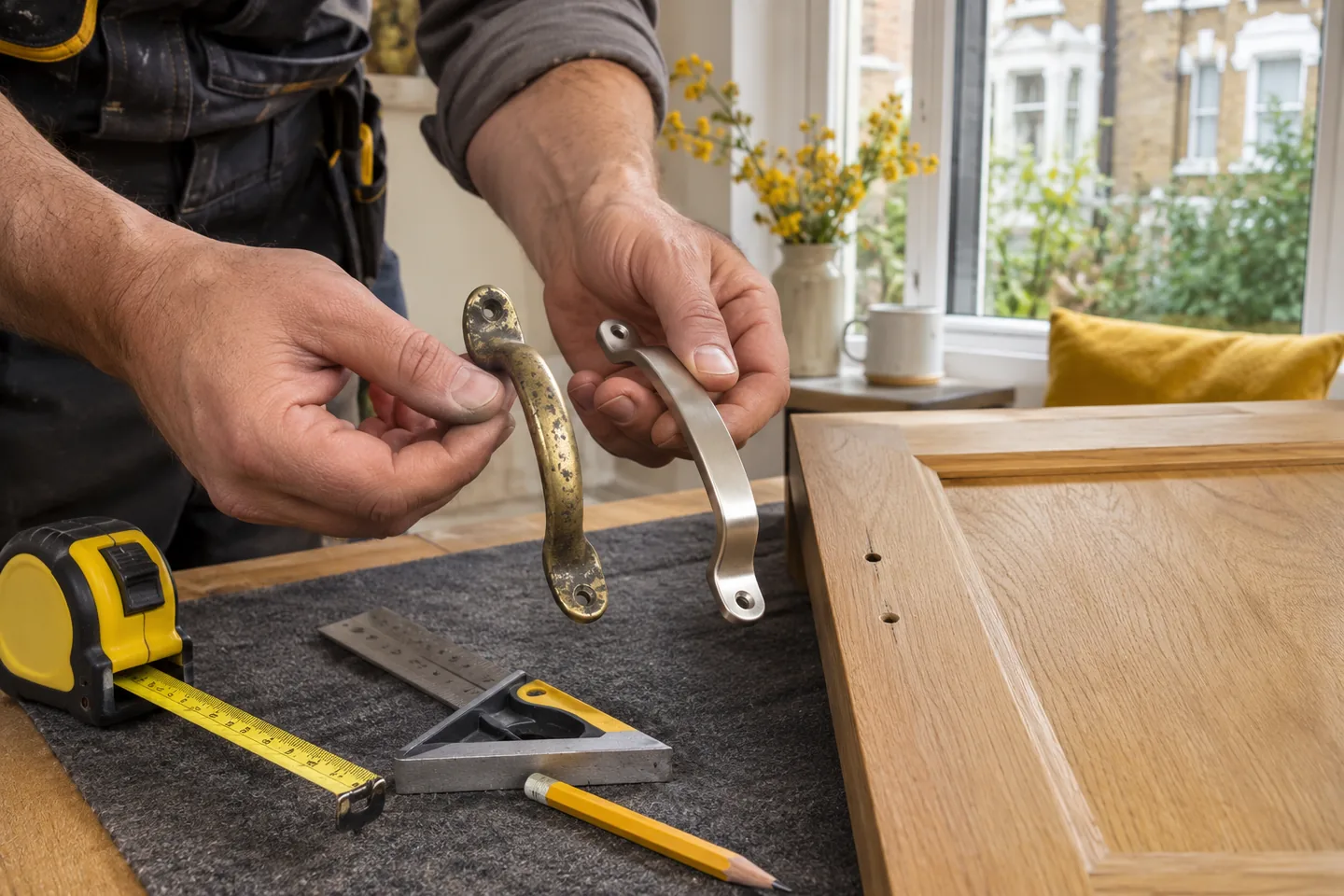
Cabinet feet can change the way every door sits
A cabinet can develop uneven gaps because one foot has shifted or the floor has changed, rather than because every hinge needs adjustment. We inspect the unit’s contact points and check its overall shape before removing doors. Stored items may need clearing so the load can be considered and the feet accessed without stressing the cabinet.
Where the fittings allow it, we stabilise and level the unit, then adjust doors within their intended range. We check any connection to neighbouring units and the condition of wall restraints. The final check includes full door and drawer travel, not just the appearance of the closed fronts. A split side panel or broken foot can require a replacement component before the cabinet can be made stable.
EMERGENCY LOCKSMITH ENQUIRIES
Explain what the door and key each do
A lock enquiry is easier to assess when we know both the key’s behaviour and the door’s movement. Tell us whether the key goes in normally, whether it turns with the door open, and whether the latch meets its opening without pushing or lifting the door. Those observations can suggest different causes. We do not need you to dismantle a lock or remove an entrance fitting to provide the initial information, and forcing a reluctant key can make the problem worse.
We discuss locksmith help in Camden with the authority to work on the particular entrance established first. Shared doors, rented property and managed access systems may require another person’s approval. Let us know whether the property can currently be secured and whether anyone is unable to enter or leave normally. Our call line is open 24/7 on 020 3746 0607; availability and the proposed work are confirmed for the situation. Where damaged timber, hinge movement or a closer affects the lock, those details need assessing together. An agreed repair should be checked with the whole door in use, including its existing safety and security functions, rather than rely on a new cylinder to compensate for a door that no longer lines up.
BEFORE YOU BOOK
Questions about the work here.
Can you mount fittings onto tiles?
We assess the tile condition, background and possible services before agreeing a position. Cracked or hollow areas can affect the decision. The fitting needs suitable support behind the tile; the tile face alone does not establish its capacity.
Can we shorten furniture to fit an alcove?
That is not part of ordinary flat-pack assembly. Cutting may remove connectors, weaken panels or affect the product’s intended use. Send the product details and required dimensions so we can discuss whether a separate carpentry solution is appropriate.
Will a shelf fit flush to an uneven wall?
We can discuss scribing or a deliberate finishing detail, but the result depends on the wall and shelf material. Tell us the visible finish you expect. We agree how gaps will be handled before cutting, rather than promise a flush fit from one width measurement.
Can you stop an entrance door slamming?
Describe the door, building arrangement and closer. We need to establish its function and who is responsible for it. Adjusting or repairing a door with safety duties requires the appropriate assessment; removing the closer is not an ordinary solution.
Can old fixings stay behind new fittings?
Only if the new installation can be made properly with them in place. We assess redundant anchors and the condition of the surrounding wall. Sometimes removal and making good are needed to provide a sound or visually acceptable result.
What should we send for a Camden enquiry?
The postcode, a short task list, photographs and product references are a useful start. Include access and approval requirements. Call 020 3746 0607; our call line is available 24/7, with the work and attendance confirmed for the enquiry.
TELL US WHAT NEEDS ATTENTION
Discuss your Camden repair list.
Call 020 3746 0607 with the property address, the items needing attention and the available access. We review the work and confirm the arrangements before a visit is booked.
Original illustrative work scenes show the activities described; they are not photographs of completed customer jobs in this neighbourhood.