
HANDYMAN / TOOTING
Handyman Tooting.
Keep the useful
parts working.
We look beyond the visible fault in cupboards, bathroom fittings and household joinery. We discuss what is damaged, which parts fit and how the repair should be checked.
Call line 24/7 · Work and availability confirmed for your address.
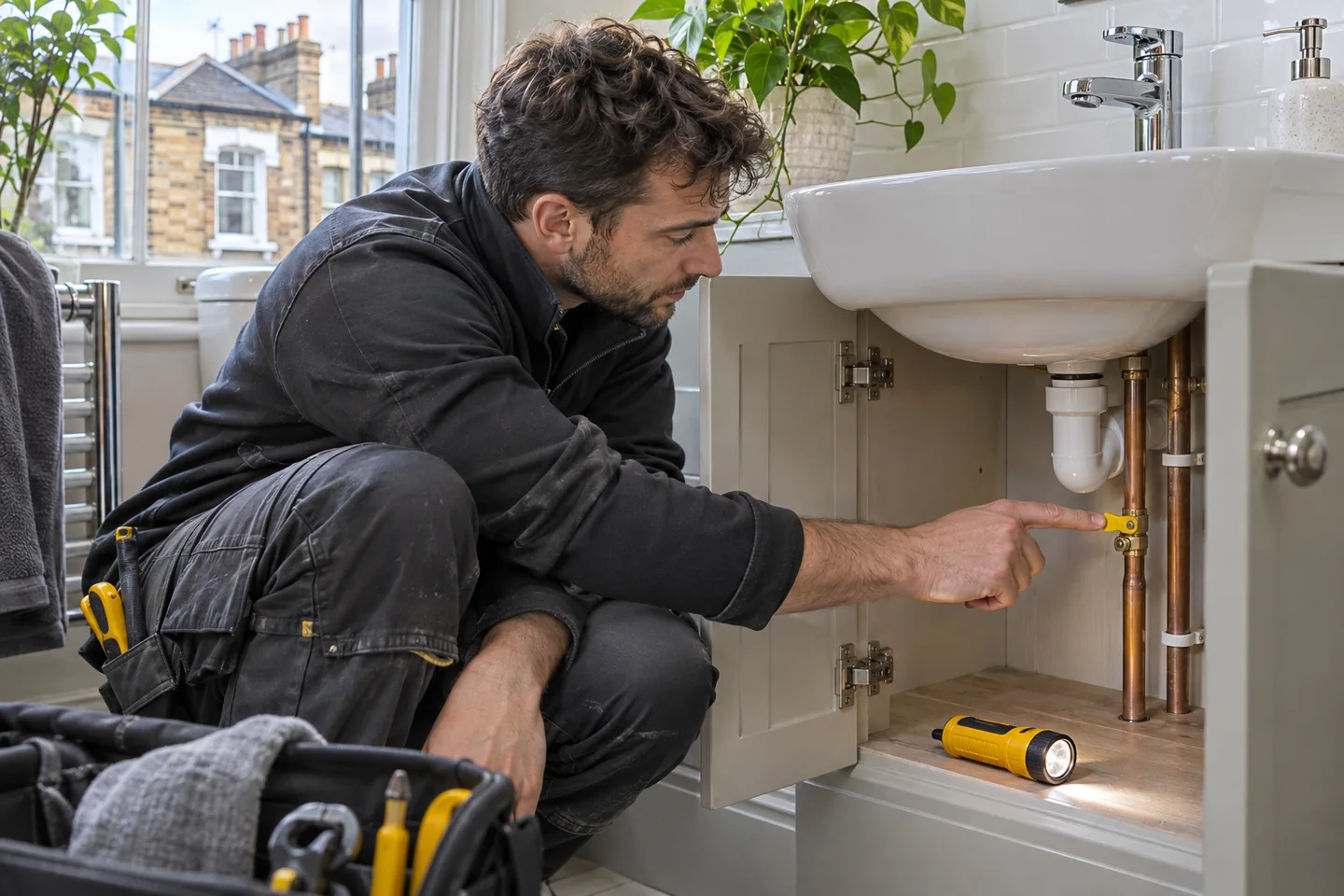
A practical repair begins with the cause.
Can you review a leaking connection and a damaged cupboard together?
We can discuss both in the same enquiry, but the leak source needs establishing before a timber or cabinet repair is planned. Send photographs of the wet area and the cupboard construction. We identify the trade work and any drying or replacement material required.
Does a Tooting postcode establish planning restrictions?
No. The specific address and proposed alteration matter. Wandsworth provides an interactive conservation-area map and recommends checking additional controls before work. Tell us about any known restrictions; ordinary internal fitting enquiries and changes to protected features need different consideration.
THE WORK IN YOUR HOME
Bring the kitchen and bathroom problems into one clear enquiry.
Water appearing beneath a basin and a cupboard door hanging at an angle can look like separate nuisances. Sometimes they involve the same damaged cabinet; sometimes their causes are unrelated. We ask you to describe each symptom before deciding which work belongs together. The aim is to prepare the right assessment, materials and access, rather than book a general allowance and discover that the necessary component is missing.
We arrange handyman enquiries in Tooting around the actual property and tasks. That includes fitting and timber repairs, furniture assembly and related service enquiries where a plumbing or electrical trade is required. We identify those distinctions before discussing the visit. Tell us which room must remain usable, whether the water can be isolated and who can approve changes to an existing fixture.
Useful details for your enquiry
- Where the fault appears and when you notice it.
- Photographs of the whole fitting and surrounding cabinet.
- Any damp, movement or previous repair nearby.
- Product details for parts you have already bought.
- Access to the fitting and the person authorising work.
PLAN THE WORK
Explore the time and labour budget.
Select the task, quantity and visit period. Assembly benchmarks and entered time assumptions stay visible; other repairs need an individual assessment.
Plan your Tooting repair enquiry
Choose the work, enter quantities and review the assumptions. We confirm the repair, working time and availability before booking.
Assembly benchmarks assume complete product parts, instructions and a clear working area. For other repairs, a known condition does not establish a standard duration.
Compare the assembly work
Published London assembly ranges for one item. These are external planning benchmarks, not our recorded job times or guaranteed completion periods.
Time evidence: published London assembly ranges, checked 3 November 2026. Product, staffing and access differences require assessment. Carrying, missing parts and wall restraint are not automatically included.
Compare labour for the same working time
Comparison uses the selected day and visit period. These are labour categories at equal time, not fixed job prices. One-hour minimum; subsequent half hours. Materials, sourcing time, parking and congestion charges are separate. Rates include taxes. Daytime: handyman 08:00–18:00; plumbing/electrics 08:00–18:00 weekdays and 08:00–17:30 weekends. Outside-daytime availability needs confirming.
What changes the repair decision?
This compares the checks needed for the selected repair, not a scored difficulty or a promised duration.
A basin leak should be traced under the conditions that produce it.
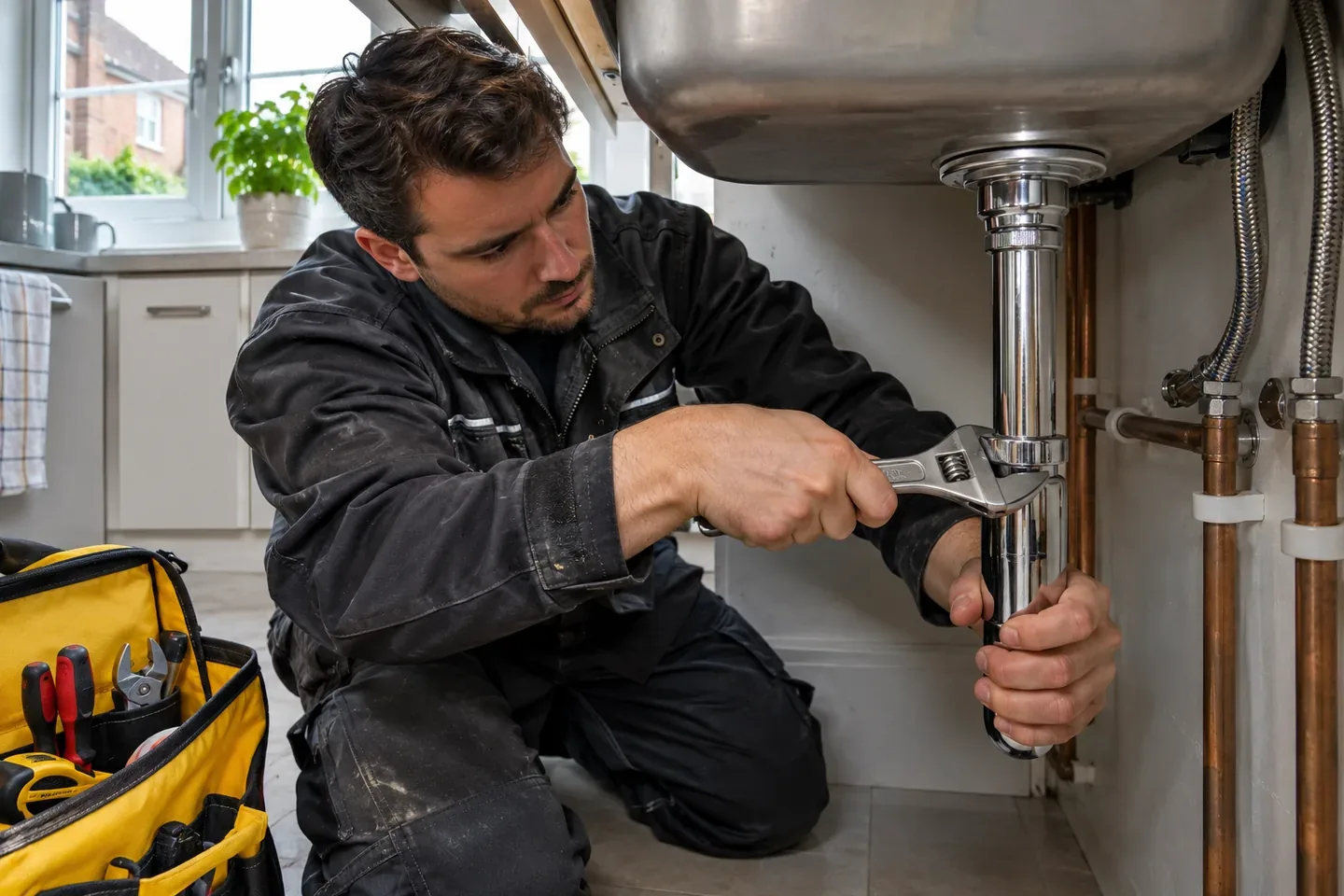
We distinguish water that appears during filling, drainage or periods without use. Your observations help us prepare, but the visible drip point may not be the source. We examine accessible supply and waste connections and look at the surrounding surfaces. Before a supply fitting is disturbed, its relevant isolation arrangement needs confirming. An inaccessible valve or seized connection changes what can sensibly be attempted.
We protect the cabinet and use tools suited to the actual joint, supporting components rather than allowing pipework to take unnecessary force. Compatible seals and replacement parts are selected after assessment. We check the repaired fitting during the relevant use and inspect for remaining moisture. If the fault extends into concealed pipework, we explain the further investigation rather than treating a dry cabinet at one moment as proof that everything behind it is sound.
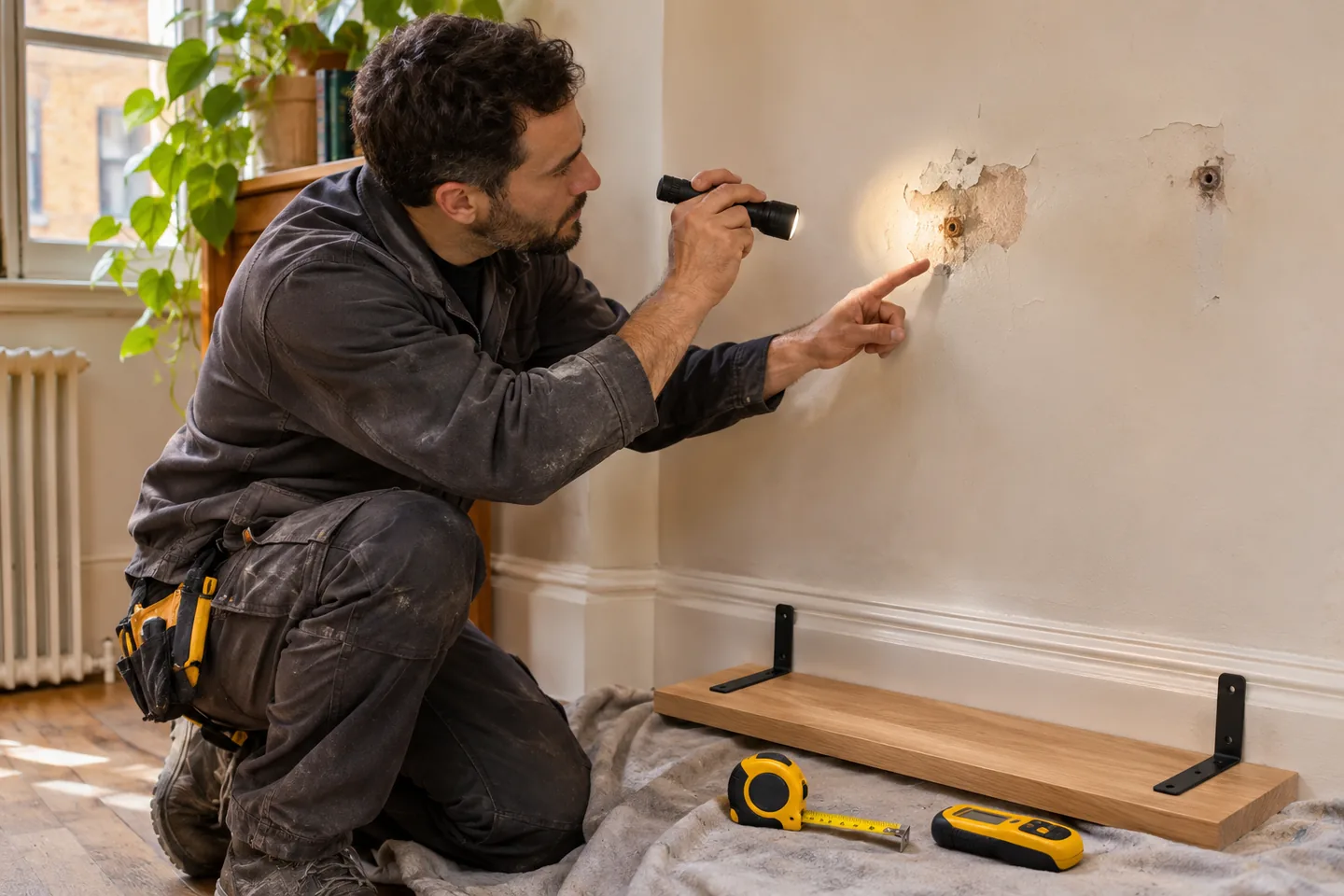
Cupboard material affected by water needs an honest repair decision.
A swollen panel or softened fixing area can remain damaged after a leak has stopped. We examine the cabinet construction, the attachment points and any movement before proposing new hardware. Moisture-affected board may no longer hold a screw as intended. We discuss whether a local repair is feasible or whether a panel or unit component needs replacing, with the source of water addressed first.
Where an appropriate repair is agreed, we protect neighbouring finishes and remove only the components needed for access. Matching parts and their dimensions matter, particularly around fitted worktops or fixed services. We check the repaired connection and the way doors or drawers operate. Filling a visible edge cannot restore every damaged internal fixing, so we explain the limits instead of making a cosmetic repair sound structural.
MATCH THE REPAIR
Which condition needs attention first?
The repair sequence depends on the actual findings, not just the number of tasks on the list.
6 service options.
| Problem or task | What we inspect | Work to discuss | Related service |
|---|---|---|---|
| Wet cabinet base | Accessible connections and leak pattern | Address the source before cabinet work | Plumbing ↗ |
| Cupboard hinge pulls out | Board condition and hinge support | Decide local repair or replacement material | Carpentry services ↗ |
| Tap needs changing | Mounting, isolation and product | Confirm compatibility before fitting | Plumbing ↗ |
| Shower seal splits | Movement and joint preparation | Assess the background before renewal | Tiling grouting re sealing ↗ |
| Utility door catches | Clearance and hinge attachment | Find the cause before trimming | Carpentry services ↗ |
| Storage arrives boxed | Product and working room | Plan assembly and required restraint | Furniture assembly ↗ |

Tap replacements depend on the existing mounting and access.
Send the proposed tap model and a view beneath the basin or sink. The product needs to suit the mounting arrangement, connections and intended use. Restricted space behind the bowl can affect how the old fittings are reached. We also ask about isolation and any existing leak, since a replacement chosen for appearance alone may not address the original fault.
We discuss removal, compatible connections and any surrounding material needing attention before the work starts. During the agreed task, the basin or worktop and cabinet are protected from tools and water. We check the attachment and operation and inspect accessible connections afterwards. If an unsuitable component or damaged fixing prevents the intended installation, we explain the alternative rather than adapt an incompatible product without agreement.
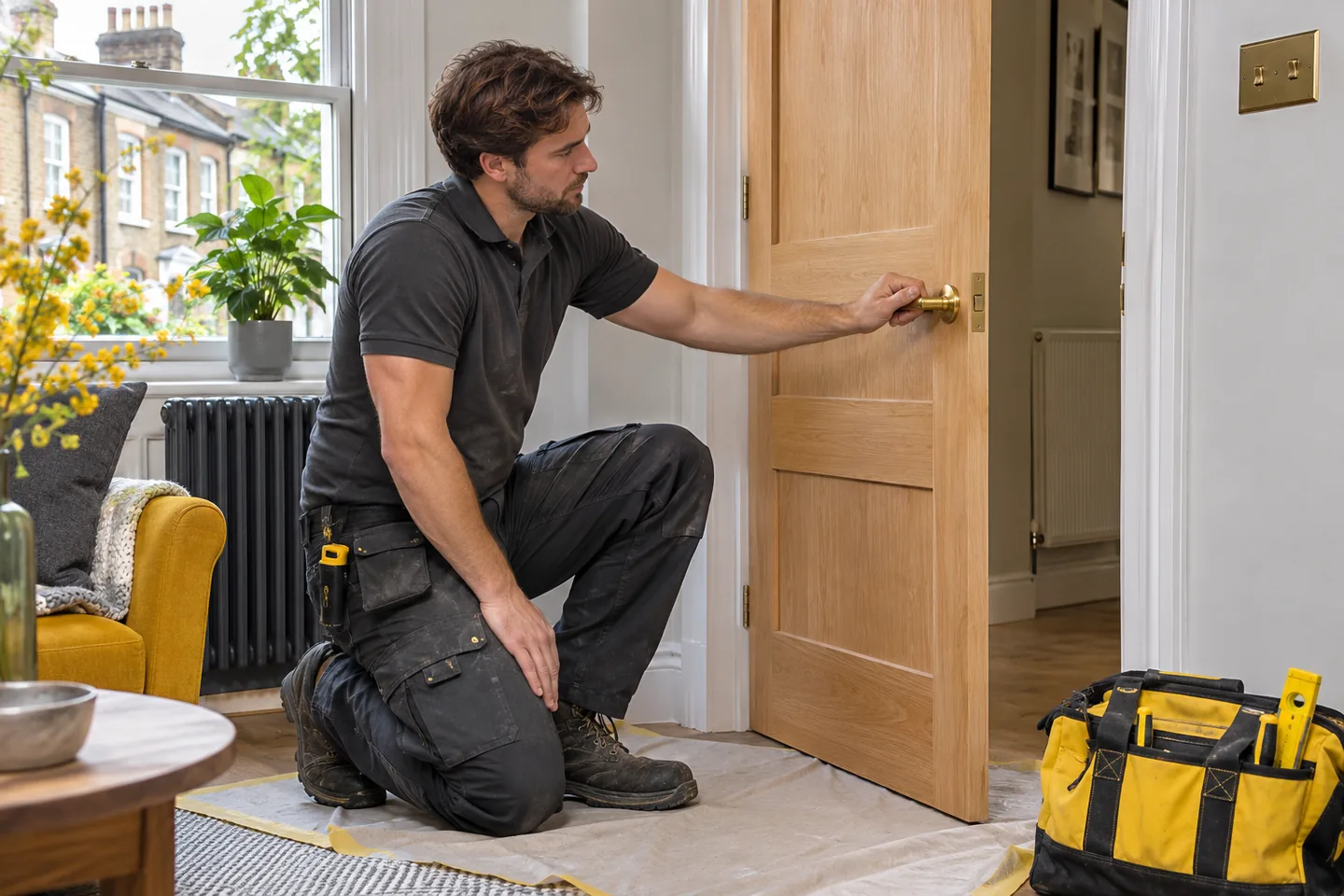
Kitchen doors should close without pulling on weakened fixings.
We support the front while looking at the hinge cup, plate and cabinet side. A screw that repeatedly loosens may be telling us about the material, not simply a lack of tightening. We compare the gap and height with adjacent fronts and identify the available hinge adjustment. Keep any detached screws or parts available so that we can understand the original arrangement.
Once the connection is suitable, we align the door using the correct hardware adjustment and check clearance past handles or neighbouring panels. A replacement hinge needs compatible geometry and fixing positions. We review the opening angle, closing action and soft-close feature where fitted. Any visible change around old holes or plates is discussed, including whether separate preparation and decoration would be needed.
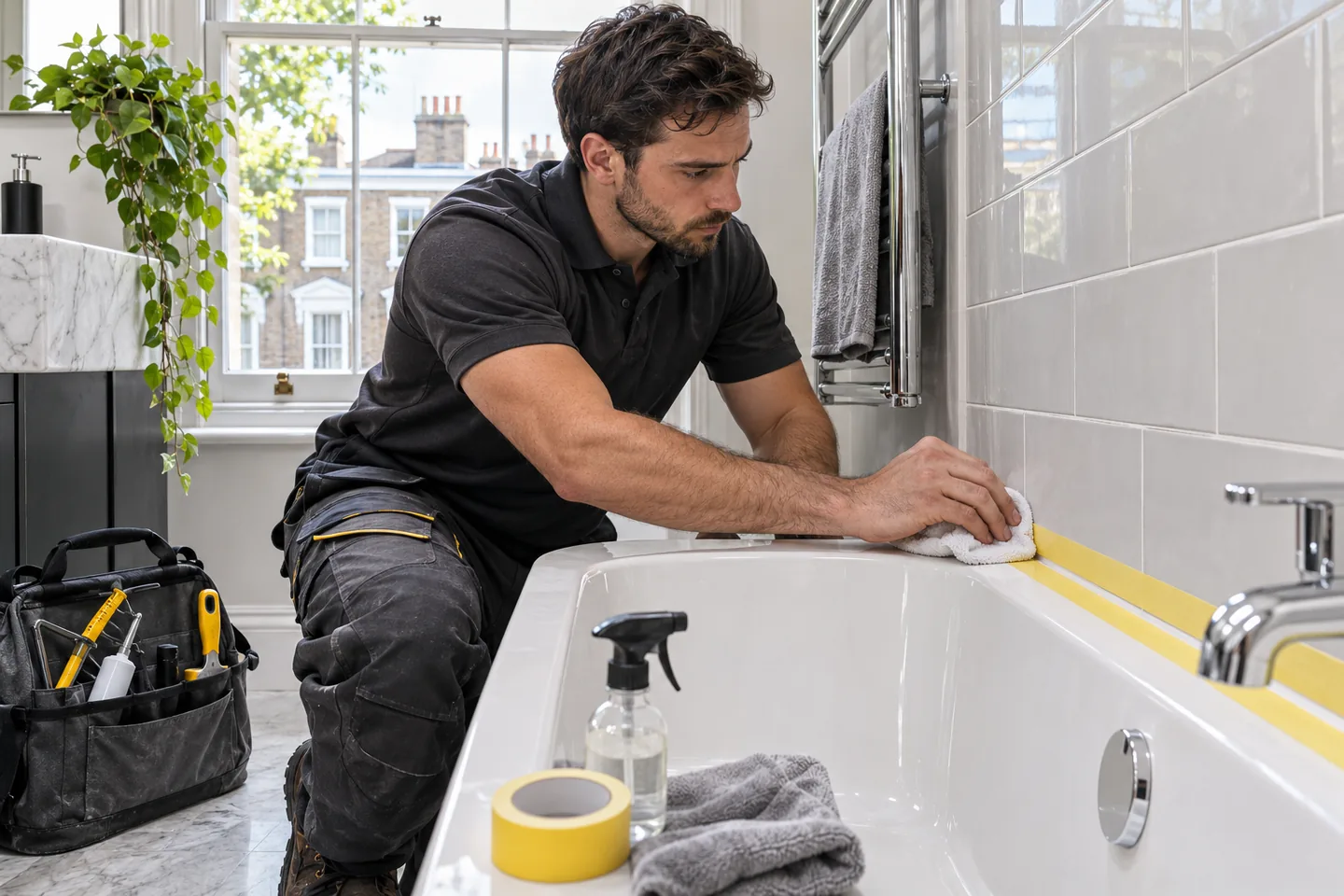
Re-sealing is appropriate only when the joint can be prepared.
We inspect the bath or shower edge for movement, damaged surfaces and continuing moisture. If the fitting shifts or the background remains wet, a new bead may fail for the same reason as the old one. Tell us whether previous renewal has lasted and whether water appears elsewhere. We discuss any plumbing or surface issue that should be assessed before sealant is removed.
For an agreed renewal, we carefully clear the old material and prepare the accessible joint for a suitable sanitary product. Cleaning, dryness and application conditions follow its instructions. We shape the replacement and examine the continuity of its contact with the surfaces. We explain the relevant curing restriction separately from labour time. The fitting should not be put back into wet use simply because the application work has ended.
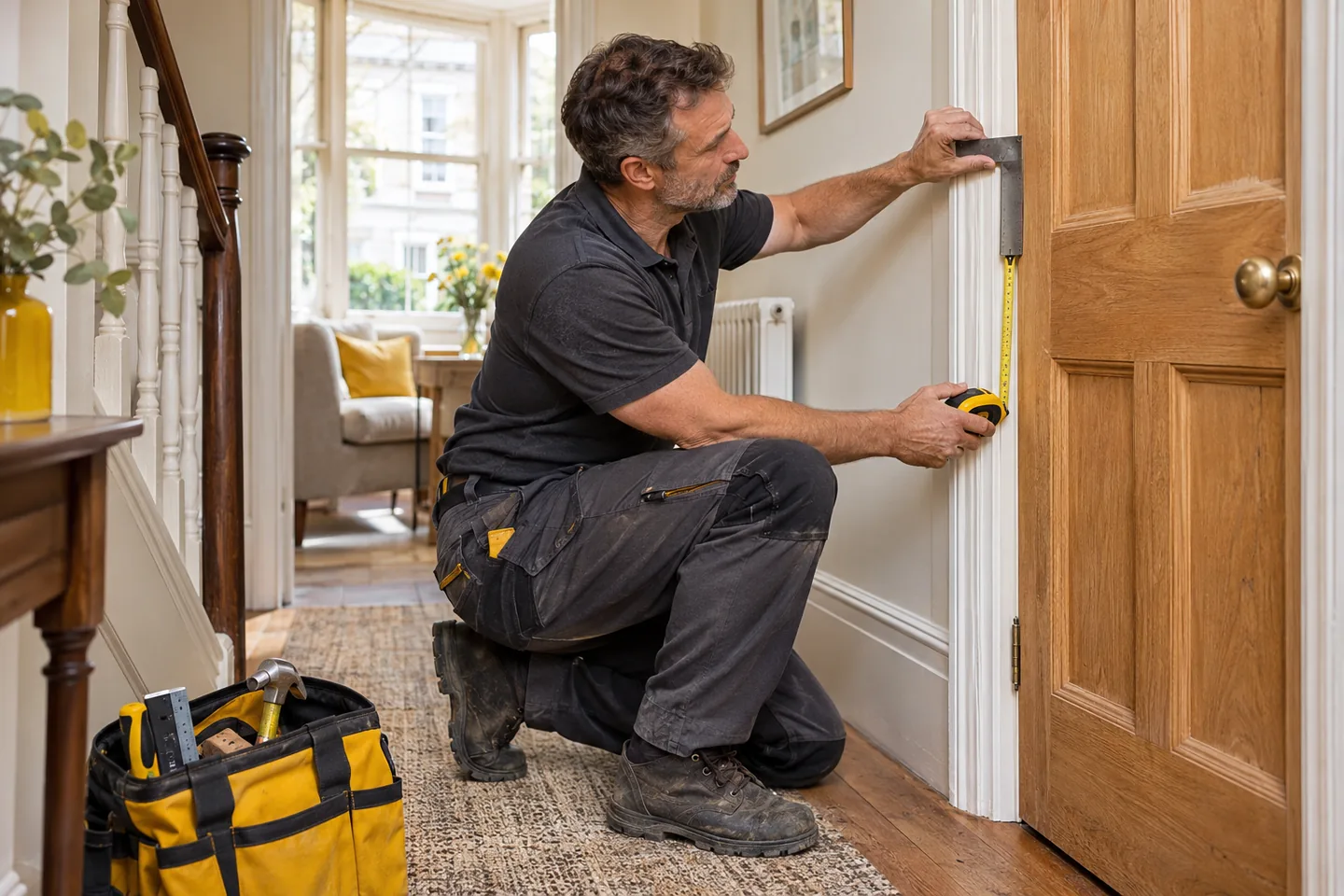
An awkward utility-room door may be a clearance problem.
We watch the door move and examine the relationship between its edge, frame and nearby appliance or floor. A changed machine position, loose hinge or newly fitted threshold can affect clearance. We check accessible hardware and ask what has changed since the door worked properly. That avoids removing timber to compensate for a problem that should be resolved elsewhere.
Where adjustment or a compatible fitting repair is suitable, we agree it with the person responsible for the property. Doors with fire-safety or other specialist requirements need those restrictions understood before alteration. We protect the working area, support components and check opening, closing and latch engagement afterwards. Any remaining conflict with an appliance or surrounding finish is explained rather than hidden by reducing normal door movement.
THE AREA / THE ACTUAL ADDRESS
Check the property, not an assumed neighbourhood rule.
Wandsworth provides an interactive map for conservation areas and advises owners to check additional controls before property work. We use that as a prompt to ask about the address and the alteration, particularly where doors or existing features are involved. We do not infer a building’s status from the word Tooting or from its appearance in a photograph.
The practical visit also needs its own details. Tell us the entrance, floor, access to the fitting and how loading or parking will be arranged. If the kitchen or bathroom must remain available at particular times, include that information before the work is agreed. Council context helps us ask relevant questions; the repair method, parts and service availability are confirmed for your property.
Address information: Wandsworth Council: conservation-area property check
New storage needs product information and a working area.
For a flat-pack kitchen trolley, cabinet or freestanding storage unit, we ask for the exact model and instructions. Similar dimensions do not mean similar assembly. Keep all packs and loose fittings together and tell us about the route from the entrance. We review the floor area needed while the product is built, including the space to turn panels and reach the rear.
We follow the specified connectors and assembly order, checking the frame before drawers or doors are adjusted. Wheels, stops and adjustable components are reviewed according to the actual product. A required anti-tip attachment needs separate attention to the wall and bracket. We explain incomplete parts, damage or anchoring restrictions; the assembled shape alone does not establish that an item is ready for normal use.
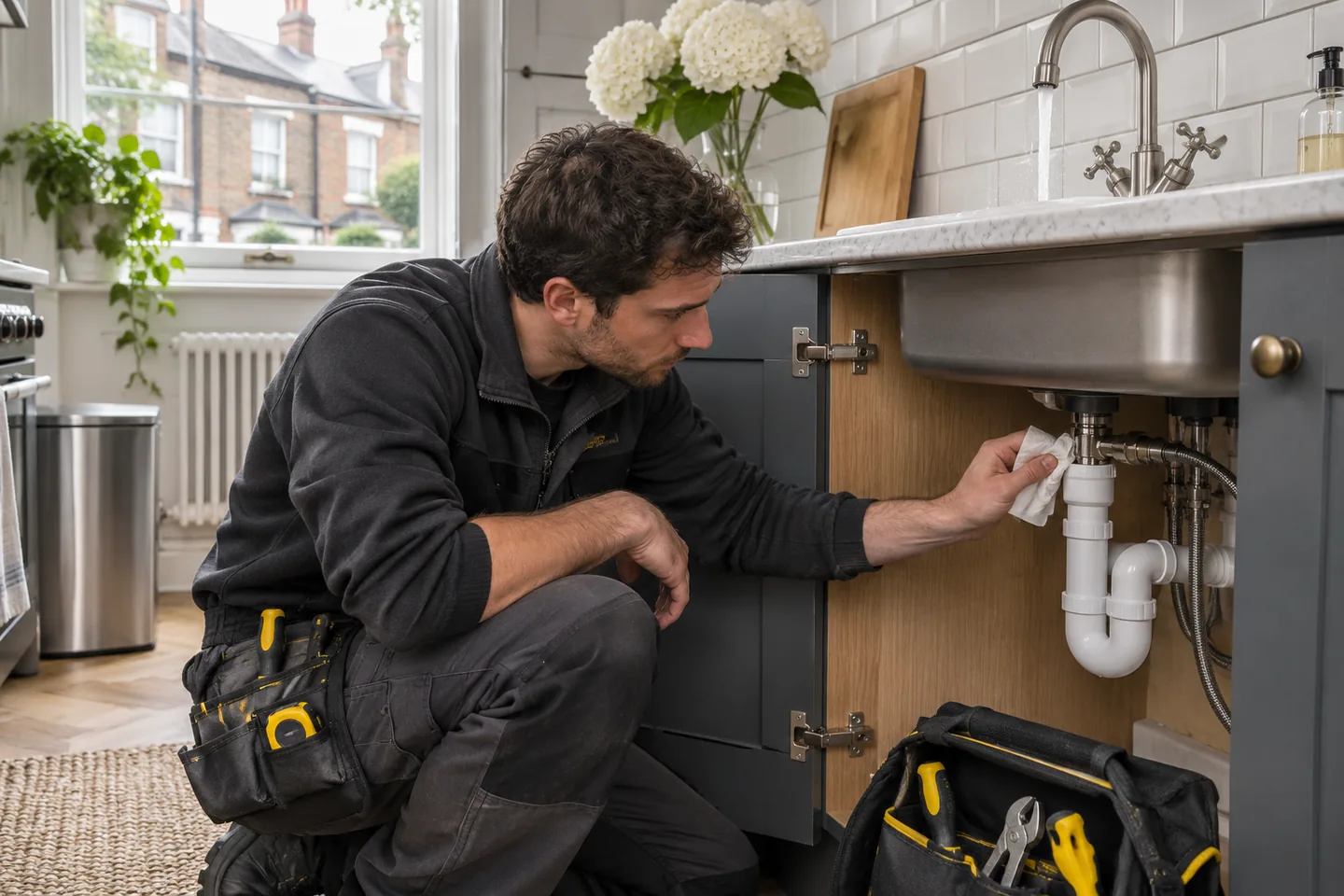
The last check should answer the original complaint.
We return to the symptom used to describe the job. Does the door now close as agreed? Does the drawer travel without the previous obstruction? Does the repaired connection remain dry under the relevant use? Those checks are more useful than a general statement that the room has been looked at. We also review accessible nearby surfaces for anything disturbed by the task.
We explain remaining questions and any separate trade, drying requirement or replacement part still needed. If you are organising the visit for a tenant or family member, identify who should receive that information. Waste, packaging and making-good should be agreed rather than assumed. A longer property maintenance list can be discussed afterwards with the immediate repair decisions recorded clearly.
EMERGENCY LOCKSMITH ENQUIRIES
Lock difficulties belong in a clear security enquiry.
We answer locksmith enquiries through our call line 24/7. For a Tooting property, give us the full address and explain whether access is lost, the lock is damaged or the door catches when you try to secure it. Tell us the door material and any known lock model without removing the hardware. We confirm the available arrangement for the circumstances rather than promising a standard arrival period.
A problem at the key can have a different cause from a problem at the keep. We ask what happens when the door is open and closed, where you can observe that safely, and whether another component is loose. That description helps us prepare the assessment. It does not establish that a cylinder change alone will solve a door alignment issue.
We discuss authority to approve access or replacement and identify any managed-building or fire-door requirements. Suitable parts depend on the assessed fitting and surrounding material. The proposed action and price basis need agreement before work is arranged. Following the repair, we check the relevant operation and explain any additional carpentry, finishing or component issue that remains. A locksmith enquiry can accompany the maintenance list without being treated as an ordinary cupboard adjustment.
BEFORE YOU BOOK
Questions about the work here.
Can you repair the cupboard before the leak is resolved?
We need to understand the source and condition first. Repairing a fixing into material that remains wet or damaged may not be appropriate. We discuss the plumbing and cabinet tasks together, then agree a workable order.
Do I need to choose a replacement tap myself?
If you have a product in mind, share its model and technical details before purchasing or booking. We review the mounting and existing connections. The preferred appearance must still work with the fitting and the property.
Can a leaking waste just be tightened?
The joint needs assessment. A damaged seal, incompatible component or misalignment may be involved. Applying more force without understanding the connection can cause further problems. We identify the repair and check the fitting under use afterwards.
Will the sealant budget include its curing period?
Working time and curing are different. We explain the selected product’s use restrictions after assessing the joint. An online labour calculation cannot determine when every repaired shower or bath may safely be wetted.
Who should approve work in a rented kitchen?
Tell us who is responsible for the repair and who can approve drilling, component replacement or an additional finding. We discuss the arrangement before proceeding. The person providing access may need to contact the landlord or managing agent.
Where can I check conservation constraints in Tooting?
Wandsworth’s address-level interactive map is the starting point. The council advises checking whether additional controls apply before property work. Bring any known designation or consent information into the enquiry, particularly for changes to existing protected features.
TELL US WHAT NEEDS ATTENTION
Discuss your Tooting repair list.
Call 020 3746 0607 with the property address, the items needing attention and the available access. We review the work and confirm the arrangements before a visit is booked.
Original illustrative work scenes show the activities described; they are not photographs of completed customer jobs in this neighbourhood.