
HOME REPAIRS / ISLINGTON
Handyman Islington.
Repair the detail.
Improve the everyday.
A door that catches, a shelf that pulls away, a cupboard that will not close. We investigate the fitting and its background, agree the repair and check how it works before we clear the space.
Call line 24/7 · Work and availability confirmed for your address.
A better fit.
A door that works.
Can you combine several repairs in an Islington flat?
Yes. Send us the full list, including the room and quantity for each task. We check the trade requirements, access and materials before agreeing which jobs belong in the same visit. A loose hinge and a dripping tap may need different parts and preparation.
Do you work around shared entrances and occupied rooms?
We discuss stairs, lifts, building access and the rooms that must remain usable. For a flat near Upper Street or Essex Road, give us the actual entrance and any managing-agent instructions. We confirm availability for the address; the neighbourhood name alone does not book a visit.
REPAIR THE CAUSE
Small repairs deserve a proper diagnosis.
We provide handyman repairs and fitting in Islington for homes with an individual fault or a growing maintenance list. We begin with what the item is doing: a drawer tilting as it opens, a shelf moving at one bracket, or a latch missing its keep. That description helps us distinguish an adjustment from damaged material or an unsuitable previous fixing. Photographs of the whole item and the affected joint are more useful than a close-up that hides its surroundings.
We organise the work around the property you actually have. An older timber door in a converted house needs a different assessment from a cabinet hinge in a recently fitted kitchen. We ask about the building and the item without assuming that every Islington address has the same construction. Where a repair involves plumbing, electrical work or a wider surface problem, we discuss the relevant service instead of treating every fault as an interchangeable odd job.
Before agreeing a visit, we clarify the parts already available, the person authorising the work and any restrictions on noise or access. We can review a mixed list, but we do not promise that its item count establishes the time required. The tools on this page help you prepare the enquiry and explore a labour budget. We confirm the work and arrangements after reviewing the details.
What helps us prepare
- The room, item and visible problem for each repair.
- The number of fittings and any product or model details.
- Clear photographs showing the background and existing fixing.
- The floor, stairs, lift and shared entrance arrangements.
- Any landlord, freeholder or managing-agent permissions.
- Materials already purchased and your priority for the visit.
CHOOSE THE WORK
Which repair matches your problem?
Filter the table by the item or symptom. Each result explains what we check and where the related service fits.
7 service options.
| Problem | What we inspect | Repair decision | Service |
|---|---|---|---|
| Door catches or fails to latch | Hinges, frame, timber and clearance | Support or repair the fixing before adjustment | Carpentry ↗ |
| Shelf or mirror moves | Item, wall construction, fixings and services | Assess the background and intended use | Wall mounting ↗ |
| Cupboard door drops | Hinge type, mounting plate and cabinet side | Repair the connection, align and check closing | Odd jobs ↗ |
| Flat-pack item needs building | Model, components, room and restraint requirements | Follow product instructions and check operation | Furniture assembly ↗ |
| Water appears under basin | Leak pattern, access and isolation | Identify the connection before repair | Plumbing ↗ |
| Bath seal fails | Movement, joint condition and product compatibility | Prepare the joint and explain curing | Sealing ↗ |
| Switch or light fault | Installation, circuit and safe access | Arrange the appropriate electrical assessment | Electrics ↗ |
A catching door: we check the movement before removing timber.
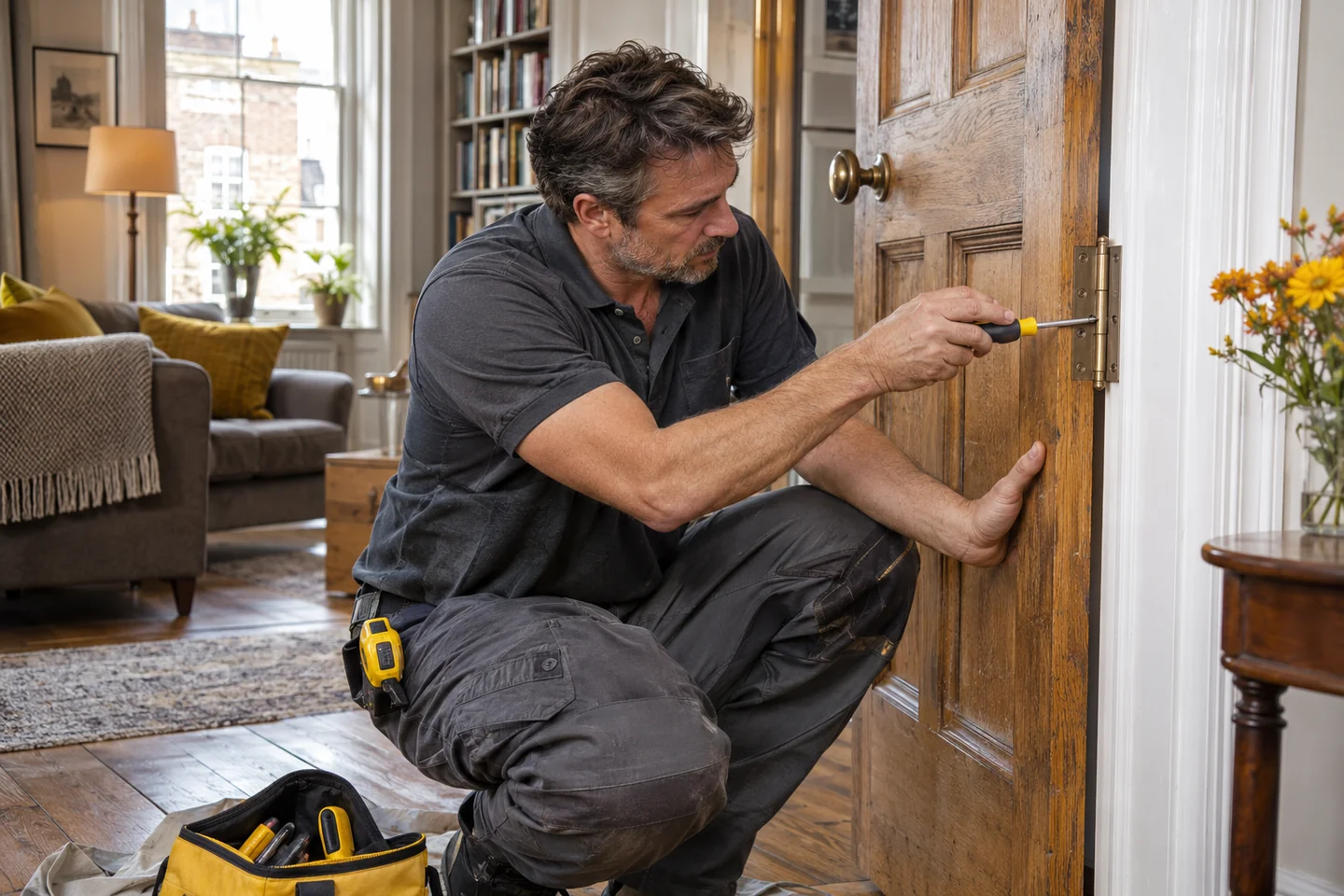
We open and close the door to see where it contacts the frame and whether the gap changes as it moves. We inspect the hinge leaves, screws, frame and latch alignment. If a hinge has loosened in weakened timber, tightening a screw into the same damaged hole may not provide a durable repair. We discuss suitable reinforcement or fixing repair before adjusting the door, keeping the existing finish and hardware in view.
Where an adjustment is appropriate, we protect the floor, support the door as needed and use hand tools or controlled trimming suitable for the material. We examine the edge and clearance rather than removing wood indiscriminately. We then check the swing, closing action and latch engagement together. If the door may be fire-resisting, we identify that requirement before alteration; ordinary trimming or replacing hardware cannot be assumed suitable. Our carpentry service covers the timber assessment and related repair.
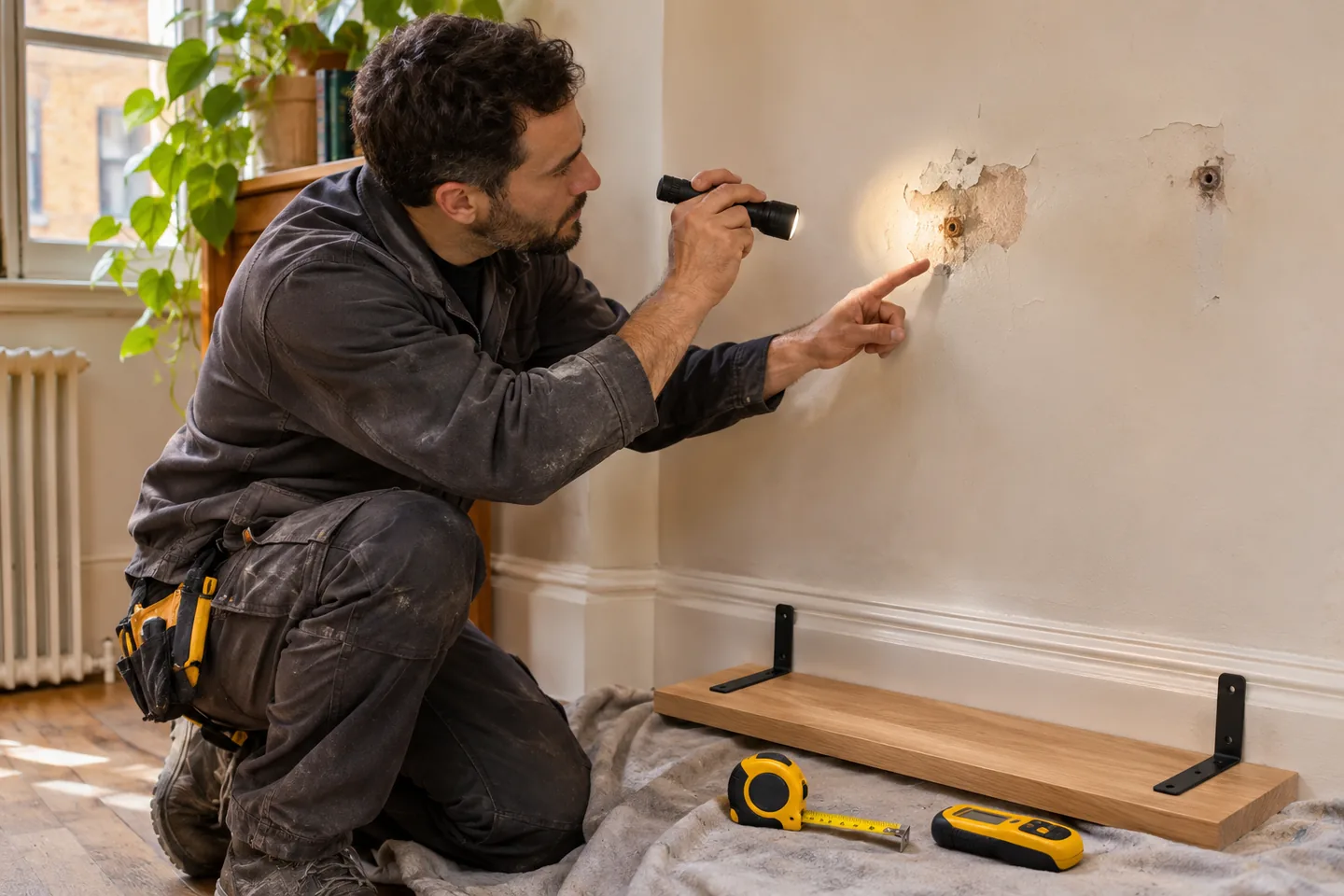
Shelves and wall fittings need sound support behind the paint.
We look at the item, intended use and proposed position before selecting the fixing. The surface may be plaster over masonry, a stud partition or an area containing an older repair. A neat paint finish does not identify the supporting construction. We inspect the accessible background and check for services before drilling. If the wall is loose or the intended position unsuitable, we explain the preparation or alternative arrangement needed rather than inserting a larger screw into failing material.
We set out the bracket positions with a tape and level, taking account of the supplied instructions and the item dimensions. We choose compatible fixings for the assessed background and keep drilling dust contained as far as the work allows. After fitting, we check alignment, connection and stability against the agreed use. Heavy mirrors, television brackets and loaded storage require their own assessment; dimensions alone do not prove a safe capacity. See our hanging and wall-mounting service for the information to send.
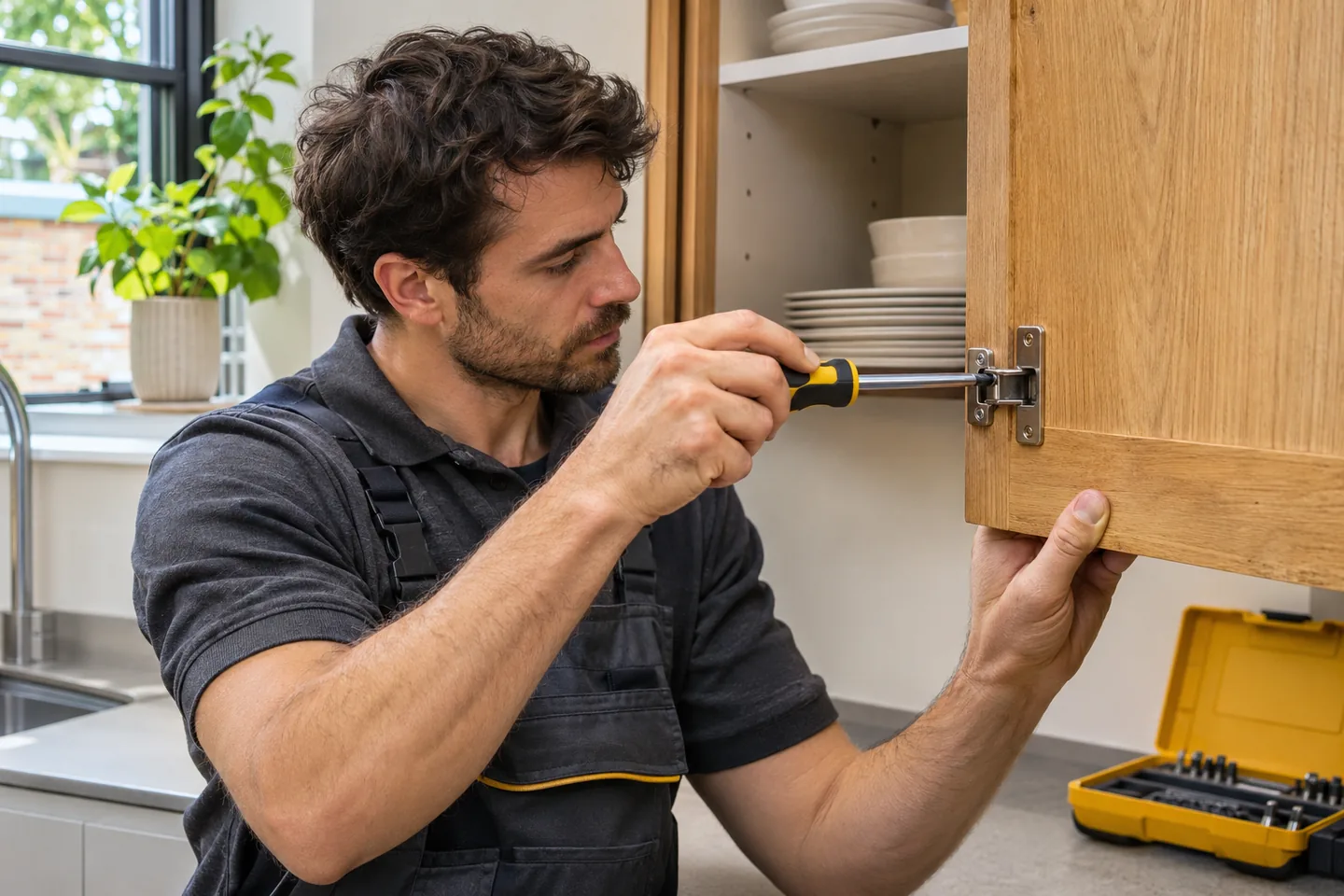
Kitchen cupboards: repair the connection, then adjust the door.
A door hanging low may have a loose mounting plate, worn hinge or damaged cabinet side. We examine those connections and compare the door position with the neighbouring fronts. We identify the hinge type and its available adjustments before deciding whether a replacement part is needed. A similar-looking hinge can have a different opening angle or mounting arrangement, so a photograph or product detail helps us plan the repair.
We protect the worktop and remove only the components needed to reach the fixing. Where the board has deteriorated, we assess whether a suitable repair can support the plate or whether replacement material needs discussing. We refit or replace compatible hardware and adjust the gap, closing action and alignment. We check that the door clears adjacent handles and that any soft-close mechanism operates as intended. Drawers receive the same attention to runners, fixings and movement rather than a cosmetic adjustment that leaves the cause untouched.
TIME, COST & THE ACTUAL JOB
Build a useful repair enquiry.
Choose a task and quantity, then review the time basis and labour budget. For repairs without a verified duration, we ask for an individual assessment.
Plan your Islington repair list
Choose the work, enter quantities and review the assumptions. We confirm the repair, working time and availability before booking.
Assembly benchmarks assume complete product parts, instructions and a clear working area. For other repairs, a known condition does not establish a standard duration.
Compare the assembly work
Published London assembly ranges for one item. These are external planning benchmarks, not our recorded job times or guaranteed completion periods.
Time evidence: published London assembly ranges, checked 3 November 2026. Product, staffing and access differences require assessment. Carrying, missing parts and wall restraint are not automatically included.
Compare labour for the same working time
Comparison uses the selected day and visit period. These are labour categories at equal time, not fixed job prices. One-hour minimum; subsequent half hours. Materials, sourcing time, parking and congestion charges are separate. Rates include taxes. Daytime: handyman 08:00–18:00; plumbing/electrics 08:00–18:00 weekdays and 08:00–17:30 weekends. Outside-daytime availability needs confirming.
What changes the repair decision?
This compares the checks needed for the selected repair, not a scored difficulty or a promised duration.
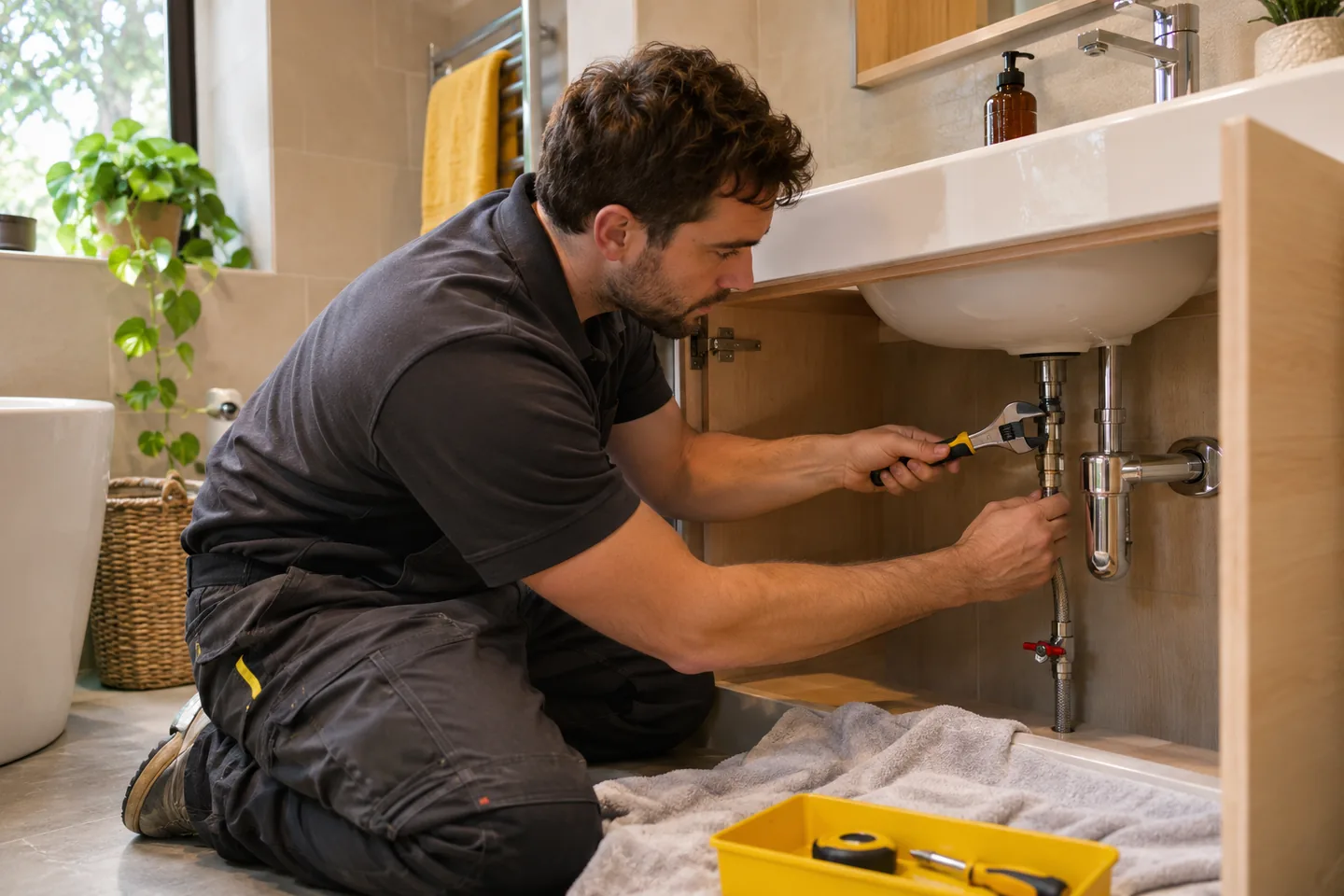
A basin leak needs access, isolation and a check under use.
We ask where water appears and whether it is associated with running the tap, emptying the basin or leaving the fitting unused. We inspect accessible joints and the surrounding cabinet for signs that help locate the problem. Before disturbing a fitting, the relevant water isolation needs confirming. Restricted access, seized components or damaged pipework can change the repair and must be discussed before treating the job as a straightforward replacement.
We use suitable spanners, grips and compatible seals or replacement components for the assessed fitting. We avoid forcing an unsuitable part into an existing connection and protect nearby finishes from tools and water. After the work, we restore the agreed supply arrangement and inspect the repaired connection while the fitting is used. A waste connection is checked as the basin drains as well as when it is empty. Wider or concealed faults belong in a separate plumbing enquiry; we explain what remains to be assessed.
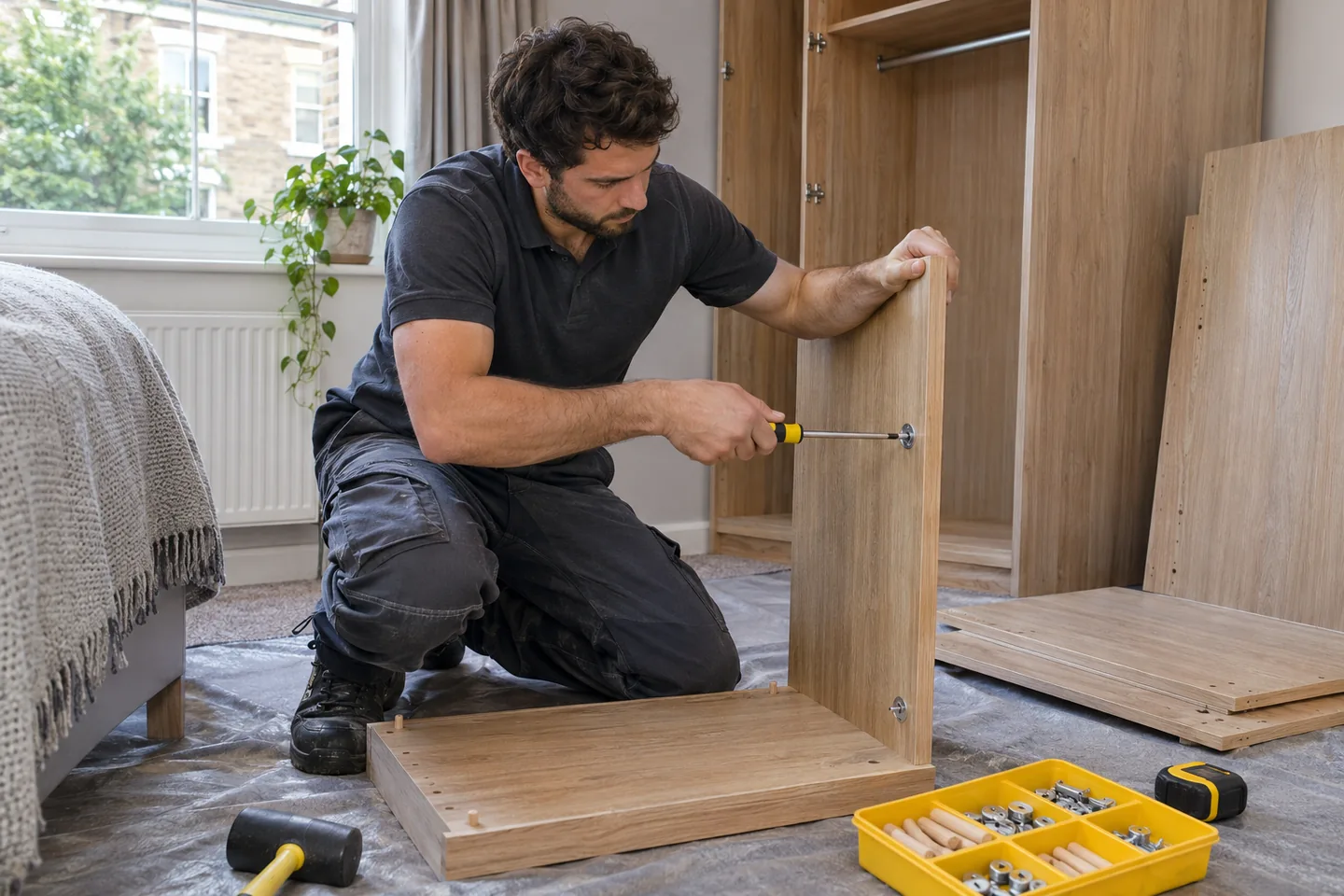
Furniture assembly starts with the model and the working space.
For a bedroom off a narrow hallway or a room already in use, we check more than the finished wardrobe dimensions. We need room for panels, tools and safe movement during assembly. Tell us the product model, package count and the route from the entrance. We discuss whether the item should be built in its final room and whether access permits the required orientation. Published assembly ranges help initial planning, but they cannot account for missing fittings or a room that cannot be cleared.
We lay out the components against the instructions, protect the floor and keep fittings organised. We build and square the carcass using the specified connectors, then fit doors, drawers and internal components in the appropriate order. Anti-tip restraint is considered with the product instructions and the actual wall construction. We check the operation of moving parts and explain any remaining restriction. The furniture assembly page provides a product-led enquiry planner; the time tool on this page makes its assumptions visible.

Bath joints: the condition beneath the seal matters.
We inspect the joint and the adjacent surfaces before agreeing to renew a sanitary seal. Loose fittings, movement, damaged grout or continuing damp may be contributing to failure. A fresh bead over old material does not resolve those conditions. We discuss what needs removing and whether the background can be prepared for the chosen product, including any problem that requires plumbing or surface repair first.
Where renewal is suitable, we remove the existing seal carefully, clean the accessible joint and prepare it in accordance with the selected product. We apply a compatible sanitary sealant with controlled joint shaping and check that the edge is continuous and properly bonded to the prepared surfaces. We explain the product-specific conditions for use afterwards. Cure time is separate from hands-on labour and depends on the actual material; the planner does not turn a labour estimate into a promise that the bath can immediately be used. See tiling, grouting and re-sealing for related work.
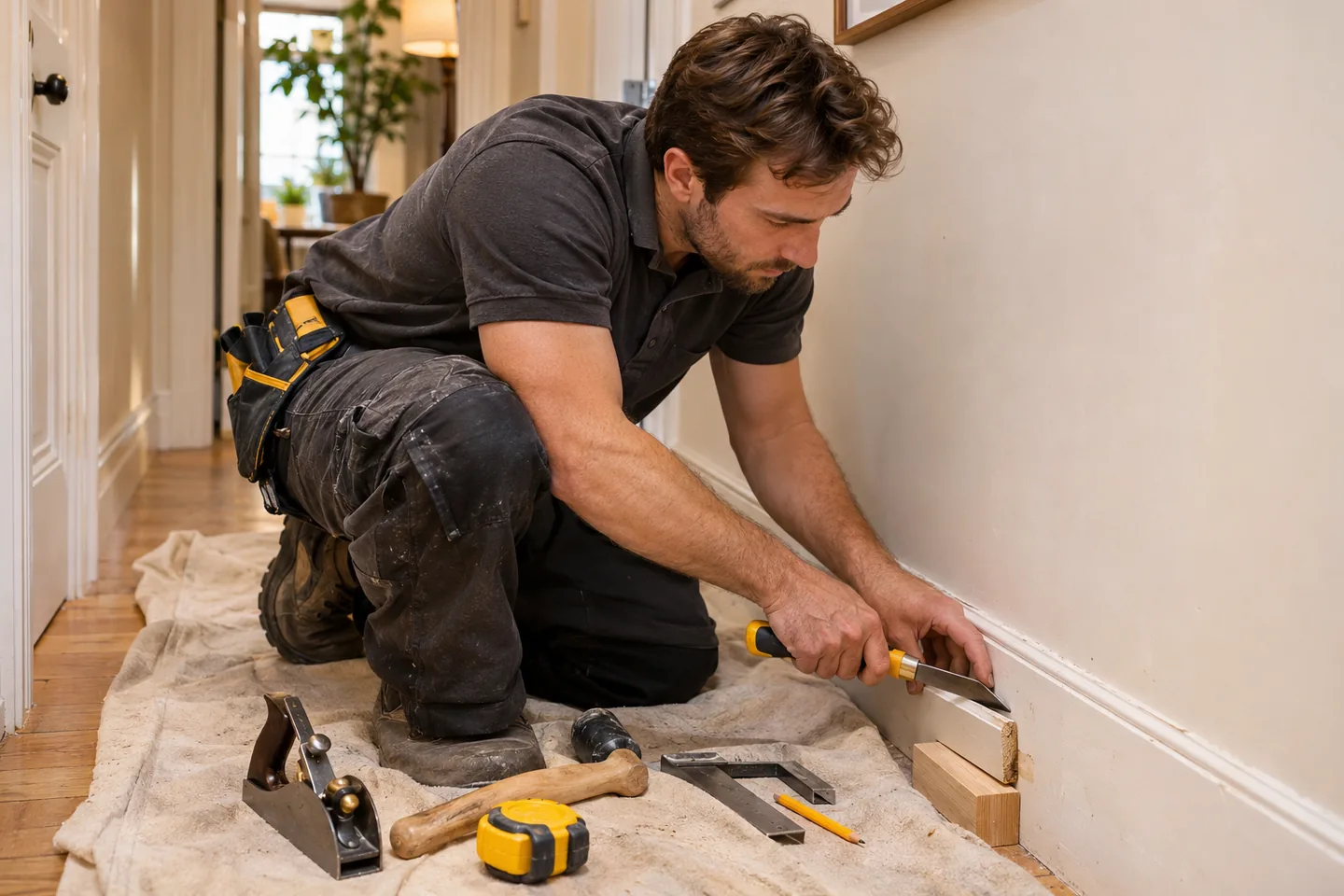
Shared hallways and protected buildings change the preparation.
We agree a route for tools and materials and keep shared circulation in mind when setting up. Tell us about entry systems, lift bookings, stairs and any period when the hallway needs to stay clear. We use appropriate protection for the accessible floor and nearby finishes and keep loose fixings contained. For a skirting repair, we inspect the damaged section, its fixing and adjacent decoration before removing material. We then discuss the join and finish so that a local repair has a defined stopping point.
Islington Council publishes conservation-area and listed-building guidance. We ask whether your property is affected and what permissions apply to the proposed work. We do not assume that an internal fitting, replacement door or external fixing can be altered without checking. Street access also varies: provide the actual address and tell us about available loading or parking arrangements. We review these details for the visit rather than promising a particular journey time from the name of a nearby station.
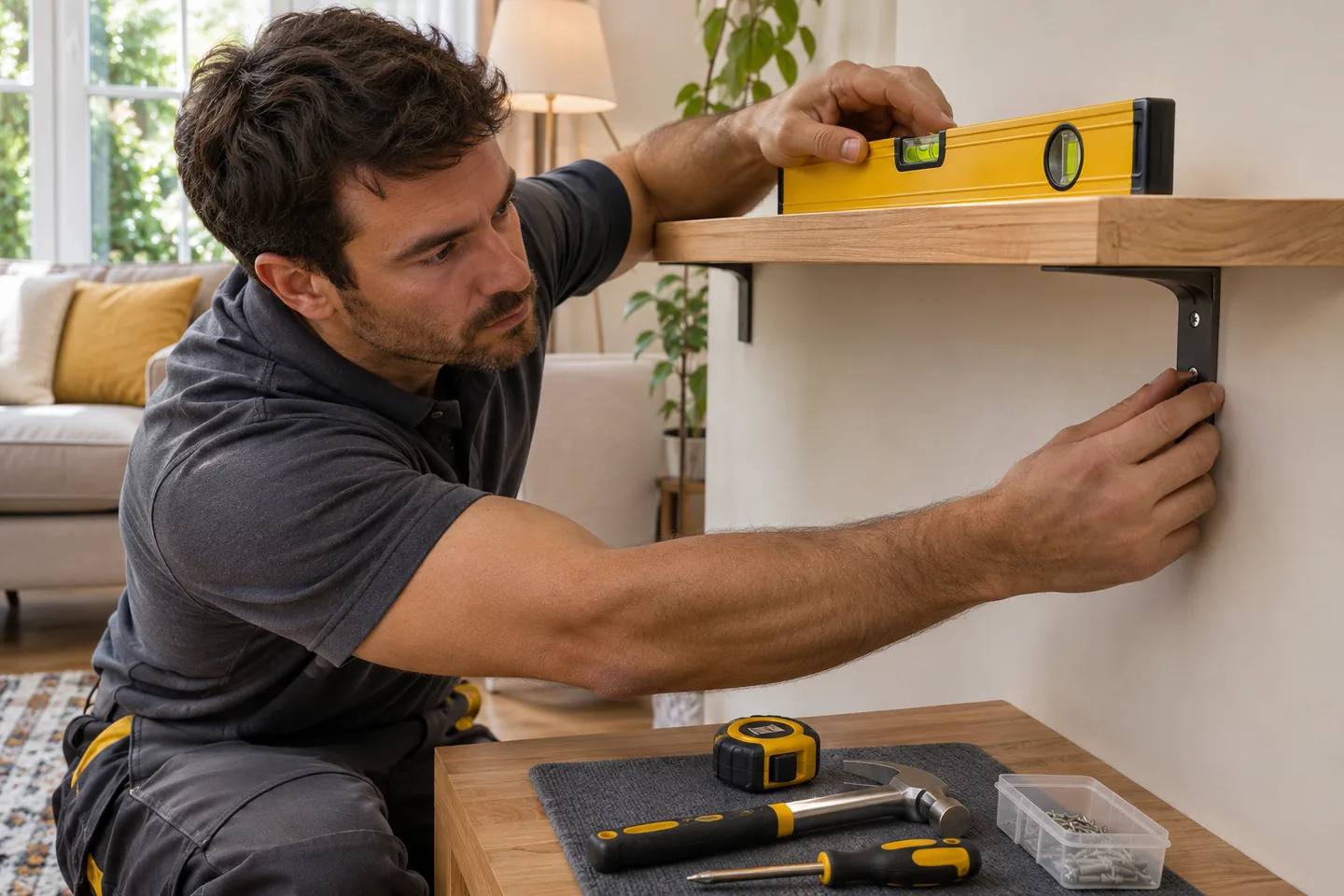
We finish with the operation, the area and the remaining questions.
We check the repaired item in the way it will be used: a drawer through its travel, a door against the latch, or a fitted shelf for alignment and secure connections. We look at the surrounding accessible material for anything disturbed by the work. If an adjustment exposes a further defect or a replacement cannot match the existing finish, we explain it before additional work is agreed. We keep a repair decision connected to the condition rather than hiding a limitation in a general description.
We remove the small work debris arising from the agreed task and discuss any larger waste or packaging arrangement in advance. We explain product care, curing restrictions and anything that needs a separate trade or return arrangement. For a rented or managed property, tell us who should receive the repair summary and who can approve extra work. Our property maintenance service can help organise a longer list; the immediate enquiry should still identify the individual faults and priorities.
ISLINGTON / ADDRESS FIRST
The entrance matters
as much as the postcode.
We take handyman enquiries for Islington, including addresses around Upper Street, Essex Road, Canonbury and Barnsbury. Tell us the full address so we can check the work, access and available arrangement. We agree the visit details for the individual property.
Upper Street & Essex Road
We need the actual entrance, floor and unloading arrangement. Active unloading and parking for the work are different questions. We review the street signs and any building instructions for the visit.
Canonbury & Barnsbury
Tell us whether the property is listed or subject to conservation restrictions. We check the proposed alteration against the information for that address rather than treating the neighbourhood name as permission to change a feature.
Shared entrances & occupied flats
We discuss the route for panels and tools, lift access and the space that must remain usable. A clear route can matter to furniture assembly as much as the number of items.
Nearby Handyman areas
We also take enquiries in the nearby areas below. Share the property address so we can discuss the work and availability.
Address checks: Islington Council conservation-area guidance · loading and unloading rules · permission to park. Check the current requirements for the property and street.
LOCKED OUT / LOCK PROBLEM
Emergency locksmith enquiries
in Islington.
We can also take your enquiry for an emergency locksmith in Islington. If you are locked out, have lost a key or cannot secure the door, call us on 020 3746 0607 and describe what has happened. Tell us whether the door is shut or open, whether a key has broken in the lock and whether anyone has access to another entrance. We use those details to discuss the appropriate locksmith enquiry and check the available arrangement for your address.
For a flat with a communal entrance, explain which door is affected and whether the building manager or landlord needs to be involved. A fault at the shared entrance is different from a problem with your own front-door lock. We ask for the property details and discuss the authority to access or alter the affected door. If the lock is damaged, a replacement should be considered with the door, existing hardware and relevant building requirements.
Our call line is open 24/7. We confirm locksmith availability, the proposed work and the pricing arrangement before a visit is booked; we do not give an automatic arrival promise from the postcode. Mention any door-alignment problem as well as the lock fault so that the enquiry reflects the whole problem.
BEFORE YOU BOOK
Your Islington repair questions.
Can you adjust an internal door in a converted Islington house?
We can assess the door, frame and hardware. Tell us whether the door has a fire-safety function or any building restrictions. We check hinge support and clearances before deciding whether adjustment, compatible hardware or timber repair is appropriate.
What should I send for a shelf pulling away from the wall?
Send a photograph of the whole shelf, the affected bracket and the surrounding surface, together with the shelf dimensions and intended contents. We need to assess the supporting construction and existing damage; a larger wall plug alone may not be the right repair.
Can you work while a tenant is at home?
We discuss the rooms in use, access and any restrictions on noise or movement. Please identify the person who can authorise the repair and tell us if furniture or belongings need moving before we arrive. We agree the working arrangement with the actual property in mind.
Does the assembly time include carrying boxes upstairs?
The published ranges concern assembly, not an automatic allowance for carrying, clearing a room or missing parts. Tell us where the packages are and describe the access. We assess those requirements separately before agreeing the visit length.
Will a renewed bath seal be ready for immediate use?
We follow the chosen product requirements for preparation and curing. The time spent applying a seal does not establish when it can be wetted. We explain the relevant restriction for the actual material after assessing the joint and background.
Can you quote before seeing the property?
Clear photographs, item details and access information may help us review the enquiry. We may still need to inspect the background or fault before agreeing a repair. The online labour calculation is a budget for its stated assumptions, with materials and applicable additional costs separate.
TELL US WHAT NEEDS ATTENTION
Bring us the repair list.
We’ll discuss the work.
Call 020 3746 0607 with your Islington postcode, the affected items and any access restrictions. We’ll review the job and confirm the available arrangement before a visit is booked.
Images illustrate the repair activities described; they are generated work scenes, not photographs of completed Islington customer projects.