
WATER DAMAGE RESTORATION / LONDON
Water damage
restoration London.
After the leak.
We assess water-affected interiors, arrange extraction and dehumidification where required, and discuss the repairs that follow. The cause, materials and extent of the damage determine the work.
Call line 24/7 · Appointment and work confirmed for your job.

Water damage restoration.
Work worth discussing.
Can you assess water damage at my London property?
Call with the full postcode, what happened and which rooms or surfaces are affected. Tell us whether the source is still active and about any access or electrical concerns. We discuss the assessment and available arrangements before agreeing a visit.
Can you restore the room as well as remove the water?
We provide water extraction and dehumidification alongside related repair services. We assess the affected materials and plan making good around their condition and readiness. Drying, plumbing repairs and replacement finishes may involve different work or visits, so we discuss them together before agreeing the arrangement.
THE SERVICE
Removing the water
is not the whole repair.
Our water damage restoration service in London deals with the effects of leaks, burst pipes, appliance failures and other water incidents affecting interiors, including floors, ceilings and accessible basement areas. We need to understand the source, how long the area has been affected and which materials have taken up moisture. A small visible patch can sit beside water held in a floor or concealed junction, so the finish alone does not establish the extent of the work.
We discuss water extraction, dehumidification and the repairs required for the property. The practical plan depends on access, the water involved and the condition of the affected surfaces. We do not promise that every material can be retained or that a room will dry within a fixed number of hours. We explain what can be assessed and what needs checking before finishes are repaired or replaced.
Useful details for your enquiry
- What caused the incident and whether the source has been addressed.
- The rooms, floors, walls or ceilings affected, with photographs where accessible.
- Whether water remains present and how the property can be accessed.
- Any electrical, access or condition concerns in the affected area.
- The finishes involved and any records or permissions needed for the proposed work.
PLAN THIS SERVICE
Describe the affected area
Use the details you know to prepare an enquiry. We assess the condition, materials, access and actual working time before a visit is agreed.
Describe the affected area
Select the work and add relevant quantities or measurements. The result helps us review your enquiry; the final repair and price still need confirming.
WHAT THIS WORK INVOLVES
Standing water remains
Source, water involved, access and affected materials.
What we need to check
Limits & related work
Working time needs a job-specific assessment. Measurements and quantities describe the work; they do not establish a completion time or a confirmed price.
Discuss a project quotation
- Use room geometry only to describe the affected area.
- No numerical drying rate or job duration is assumed.
- Water damage restoration requires an individual assessment and quote; do not apply a generic hourly tariff automatically.
Your selections stay in this browser until you choose to email them. An email draft does not book a visit. Calculations add no assumed waste or hidden allowances.

Establishing the source and affected area
We ask how the incident occurred and what has happened since. A leak from a fitting, an appliance discharge and water entering from outside can affect the property differently. We discuss whether the source has been stopped and what repair is still needed. Restoration cannot be planned properly around a continuing source of water, so any relevant plumbing work needs considering alongside the visible damage.
We look at the accessible affected area and the materials involved. Water can move beneath a floor covering or along a junction before it becomes visible. We use the information available at the property to discuss what is affected and where further access may be needed. A room measurement or photograph helps the enquiry but does not establish the full condition of hidden materials or the building structure.
COMPARE THE WORK
What the water has affected
Select the closest description for the enquiry. The affected area helps planning, but it does not set a drying time or restoration price.
| Visible condition | What we assess | Possible work to discuss | What the selection cannot establish |
|---|---|---|---|
| Standing water on an accessible floor | Source, water involved, access and materials | Water extraction and assessment of remaining moisture | The condition beneath the visible surface |
| Damp wall or stained finish | Cause, material and readiness for repair | Drying assessment and appropriate making good | A dependable drying duration from appearance alone |
| Changed or lifted floor covering | Floor material, edges and accessible background | Drying, access work and flooring repair or replacement | That every affected board can be retained |
| Water-affected skirting or timber | Material condition and adjacent junctions | Assessment, drying and related carpentry | The condition of concealed adjoining areas |
| Several rooms or mixed damage | Extent, access and the sequence of different trades | A job-specific restoration and repair plan | A fixed total price from room count alone |
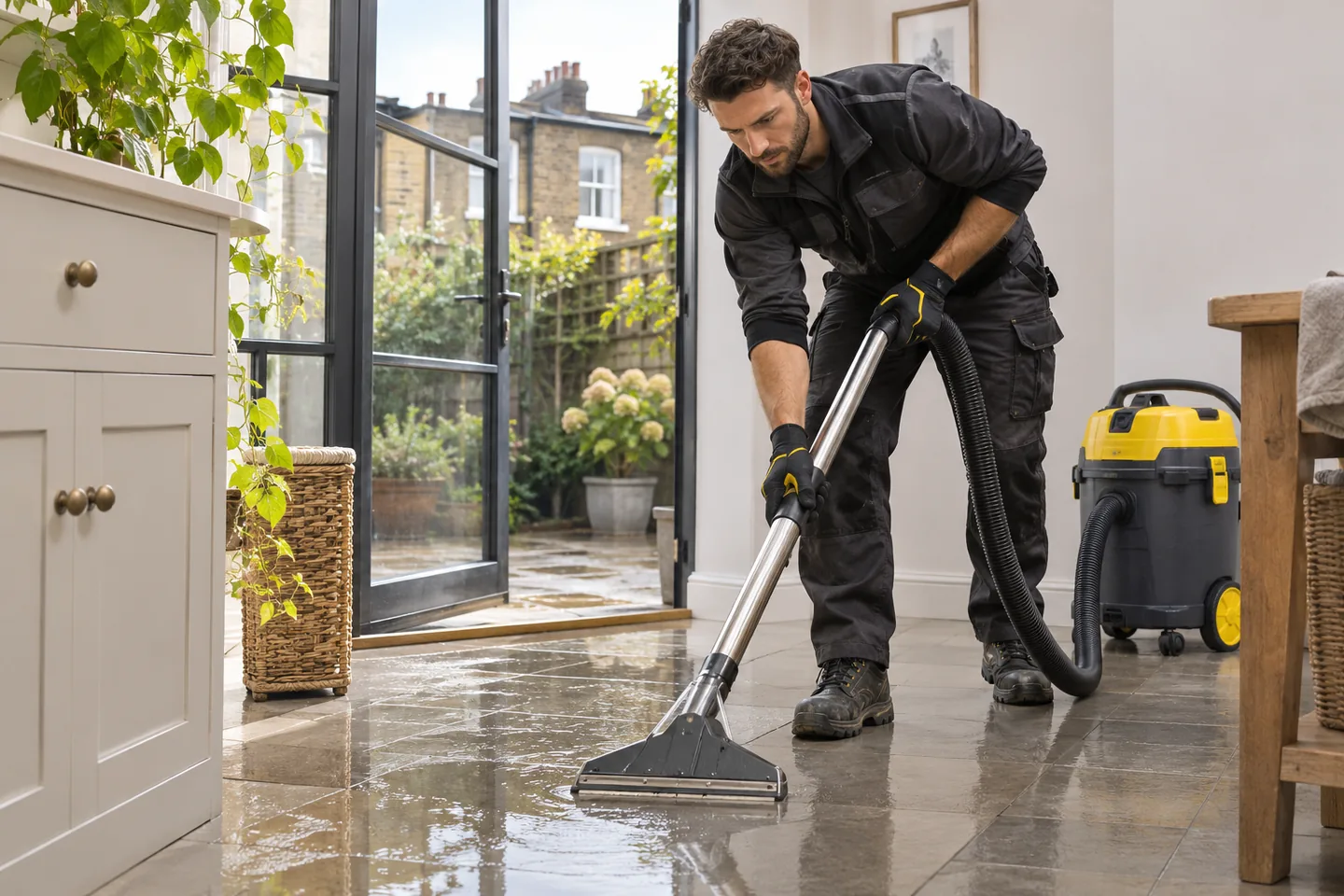
Preparing access for extraction and drying
We discuss the practical working area before equipment is brought in. Furniture, stored items, access routes and the location of electrical fittings can affect what can be undertaken. Tell us who can provide entry, which rooms are occupied and whether the building has restrictions on equipment, parking or working arrangements. We need those details to plan a sensible assessment and the next work.
Where standing water remains, we assess the extraction required and the suitability of the working conditions. The water involved and the condition of the area matter; we do not treat every incident as the same clean-water repair. If the condition requires a different specialist arrangement or further assessment, we explain that limitation. We also discuss which belongings or finishes can remain in place and which may restrict access to affected materials.
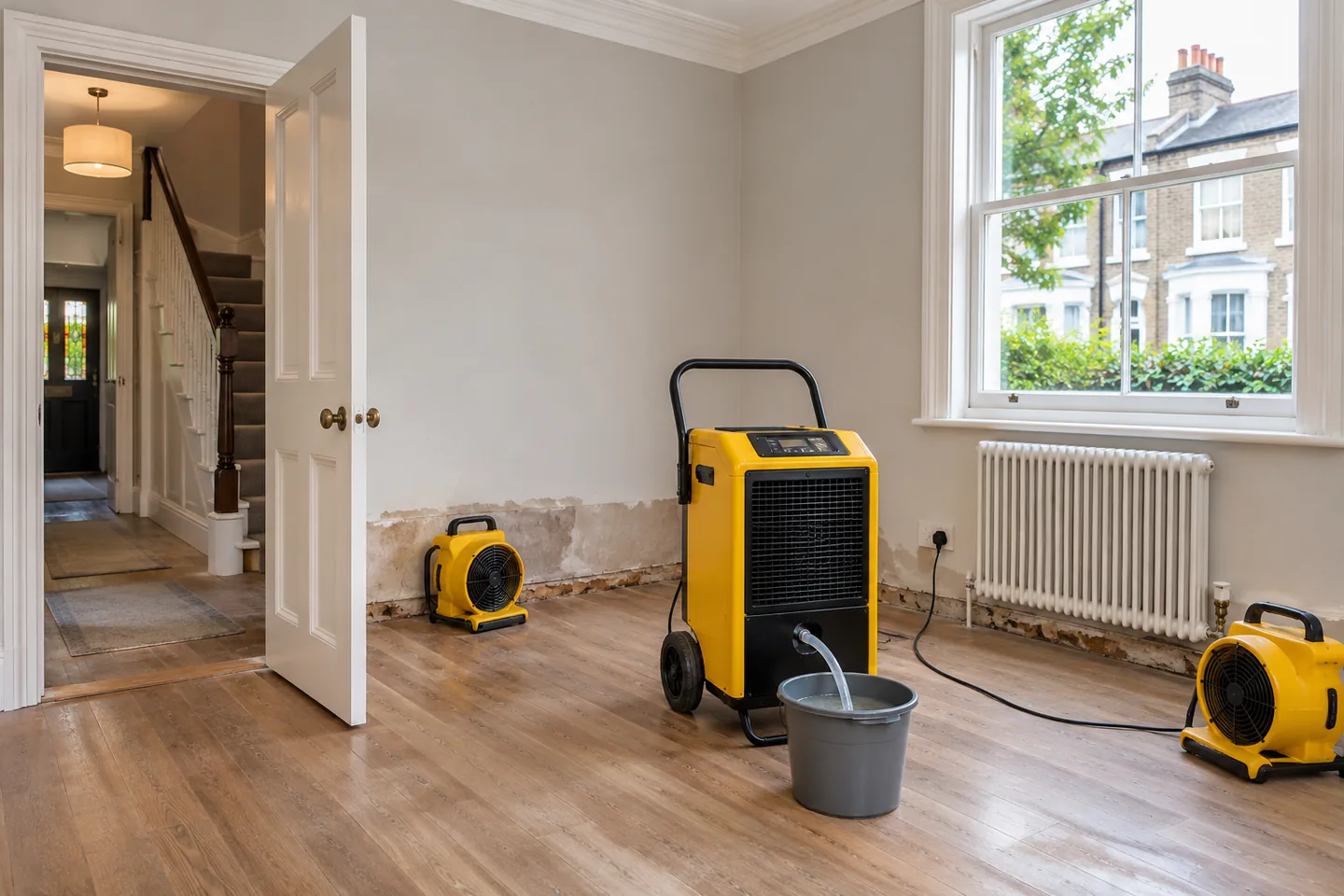
Water extraction where it is needed
We use water extraction equipment where the incident and accessible surfaces call for it. Removing accessible water reduces what remains at the surface, but it does not establish that the floor or wall underneath is ready for repair. We consider the material, the route the water may have taken and any areas that cannot be reached without further work.
We discuss the distinction between extracting water and repairing damaged finishes. A floor covering that has changed shape, a weakened board or a deteriorated surface may need a different repair from the room beside it. We do not assume extraction will reverse damage already sustained by a material. Any removal, access work or replacement needs assessment and agreement as part of the restoration plan.
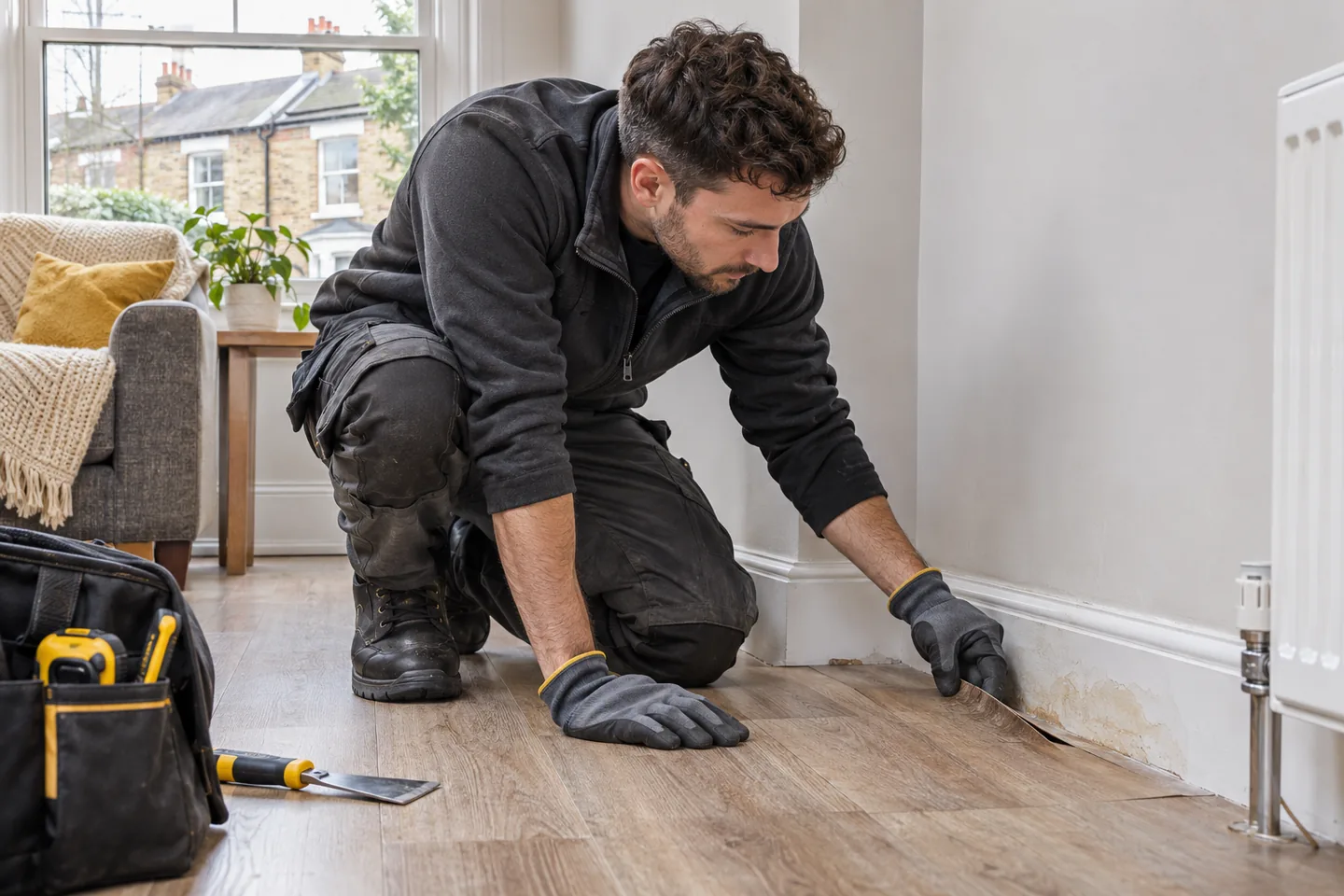
Dehumidification and moisture assessment
Dehumidification forms part of our water damage restoration service where drying the affected interior requires it. We discuss the equipment arrangement around the room, access and the materials being dried. The purpose is to address the moisture condition before replacement finishes are fitted, not simply to make the air feel drier for a short period.
We assess the accessible materials and discuss what the condition means for the next work. Drying depends on the amount and spread of moisture, the construction, the room conditions and the materials involved. We do not infer a dependable drying duration from floor area alone. Where readings or further inspection are required to review progress, we explain the arrangement and any limitation caused by concealed or inaccessible areas.

Floors, skirting, walls and ceilings
Different finishes respond differently to water. Timber and laminate can change shape, board materials can weaken, and a decorated surface may show staining after the source is repaired. We inspect what is accessible and discuss whether the affected material can remain or needs repair or replacement. The visible appearance is one part of that assessment, not a guarantee about the material underneath.
We consider the junctions between finishes as well as the main surface. Skirting, thresholds and the edges of a floor can restrict access or show damage beyond the first visible patch. We discuss the work required before disturbing them. If the repair calls for flooring work or carpentry, we identify that separately so that the proposed restoration includes the actual material and fitting work rather than a vague promise to make everything new.
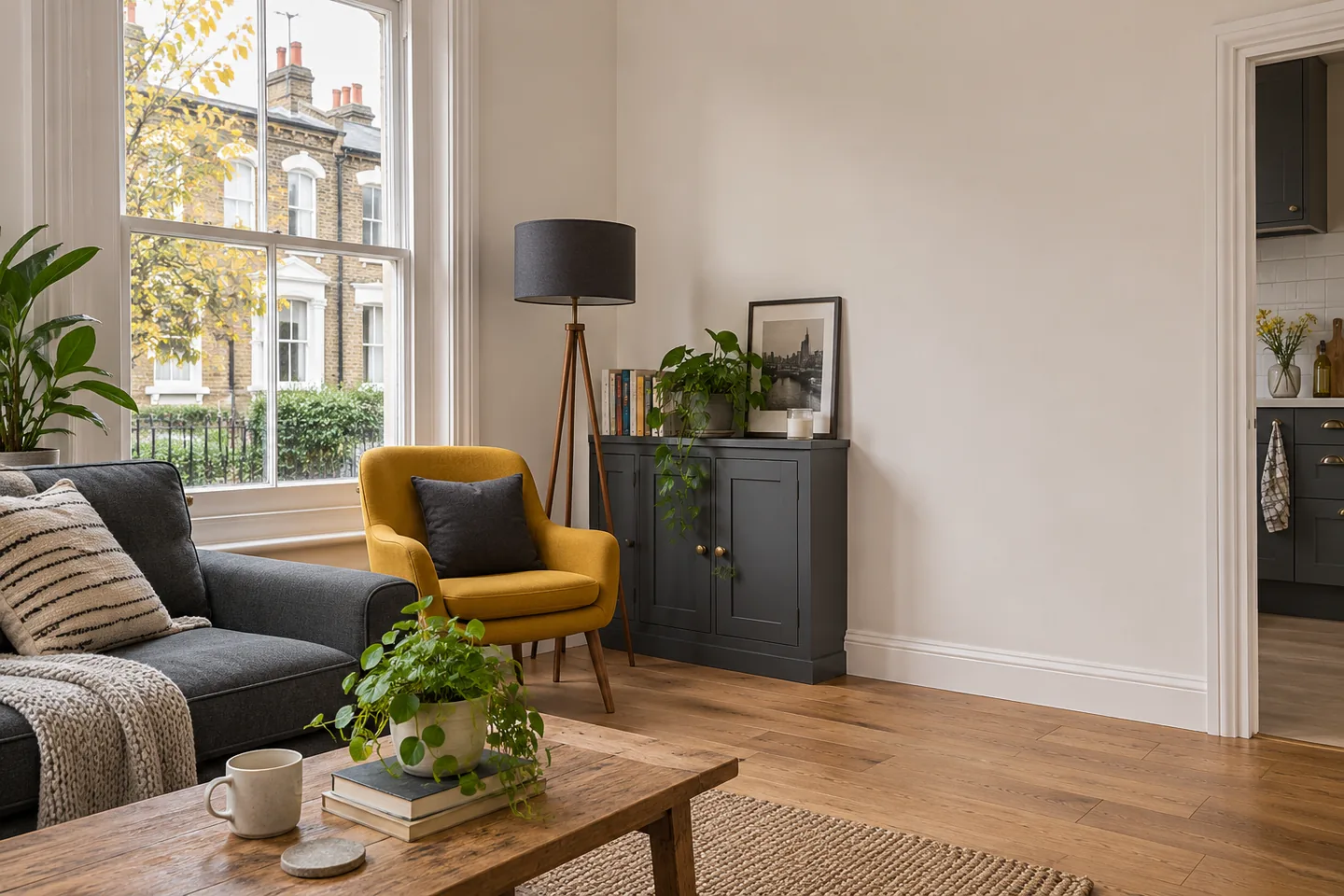
Repairing and redecorating after the assessment
We plan making good around the condition of the affected background. Filling, local surface repairs and redecoration need a suitable, ready surface and an appropriate product system. Painting over a water mark while the source or moisture condition remains unresolved does not deal with the incident. We discuss what preparation and related repair are needed before choosing the finish.
Our painting and decorating service and property refurbishment service can form part of the work that follows. Matching an existing finish may involve a wider continuous area rather than a small patch, especially where old paint or flooring has changed with use. We explain those practical choices and the materials required before replacement finishes are ordered or applied.

Reviewing the condition and the next work
We discuss what has been extracted, what drying or assessment has been undertaken and what still needs attention. The handover should distinguish a visible finish from an inaccessible area or a repair that remains to be agreed. We do not describe a newly painted patch as evidence that every concealed part of the property has been assessed or restored.
If records are needed for a landlord, managing agent or insurer, mention that at the enquiry stage so that the information required can be discussed. We confirm what can be provided for the work being arranged. For occupied properties, we also discuss access during the work and the practical use of the affected rooms. A clear list of remaining repairs helps us plan any property maintenance or further restoration without treating the incident as finished simply because the most obvious water has gone.
BEFORE YOU BOOK
Questions about
the work.
How quickly will a water-damaged room dry?
We cannot establish a dependable duration from the room size or a photograph alone. The materials, amount and spread of moisture, construction and room conditions affect the work. We assess the area and discuss the drying arrangement and any review needed before replacement finishes are planned.
Does removing standing water mean the floor is ready to repair?
No. Extraction deals with accessible water, while moisture may remain in or beneath the affected materials. We assess what can be reached and explain when further access or drying is needed. The condition of the background matters before flooring or other finishes are repaired or replaced.
Can you keep all the original flooring and skirting?
Retention depends on the material and the damage it has sustained. Some finishes change shape or lose strength after getting wet. We inspect the accessible condition and discuss the practical repair rather than promising every item can be saved. Any removal or replacement work needs agreement.
Will repainting cover a water stain permanently?
The source and background need addressing before we discuss the finish. A stain may require specific preparation, and a damp or weakened surface may need other work. We assess those requirements and explain the proposed coating and related repair. We do not use a cosmetic patch as a substitute for investigating the incident.
What information helps you assess a restoration enquiry?
Tell us what happened, when it was noticed, whether the source has been addressed and which rooms or surfaces are affected. Accessible photographs, approximate dimensions and details of the finishes help. We also need the postcode, access arrangement and any building restrictions or related electrical concerns.
Can the online area tool calculate my restoration bill?
The area tool can record rectangular room measurements for a useful enquiry. It cannot determine hidden damage, drying requirements or the repair system. Water damage restoration needs an individual assessment and quote. The affected area alone cannot establish the cost or drying requirements.
TELL US WHAT NEEDS DOING
Tell us what happened.
Plan the restoration properly.
Call 020 3746 0607 with your postcode, the source and the affected rooms. We’ll discuss the assessment, access and available arrangements before you book.