
CARPENTRY SERVICES / LONDON
Carpentry services London.
Make the fitting work again.
A catching door, loose hinge or drawer that will not run needs its cause checked. We assess the timber and hardware, agree the repair and check the movement again afterwards.
Call line 24/7 · Appointment and work confirmed for your job.
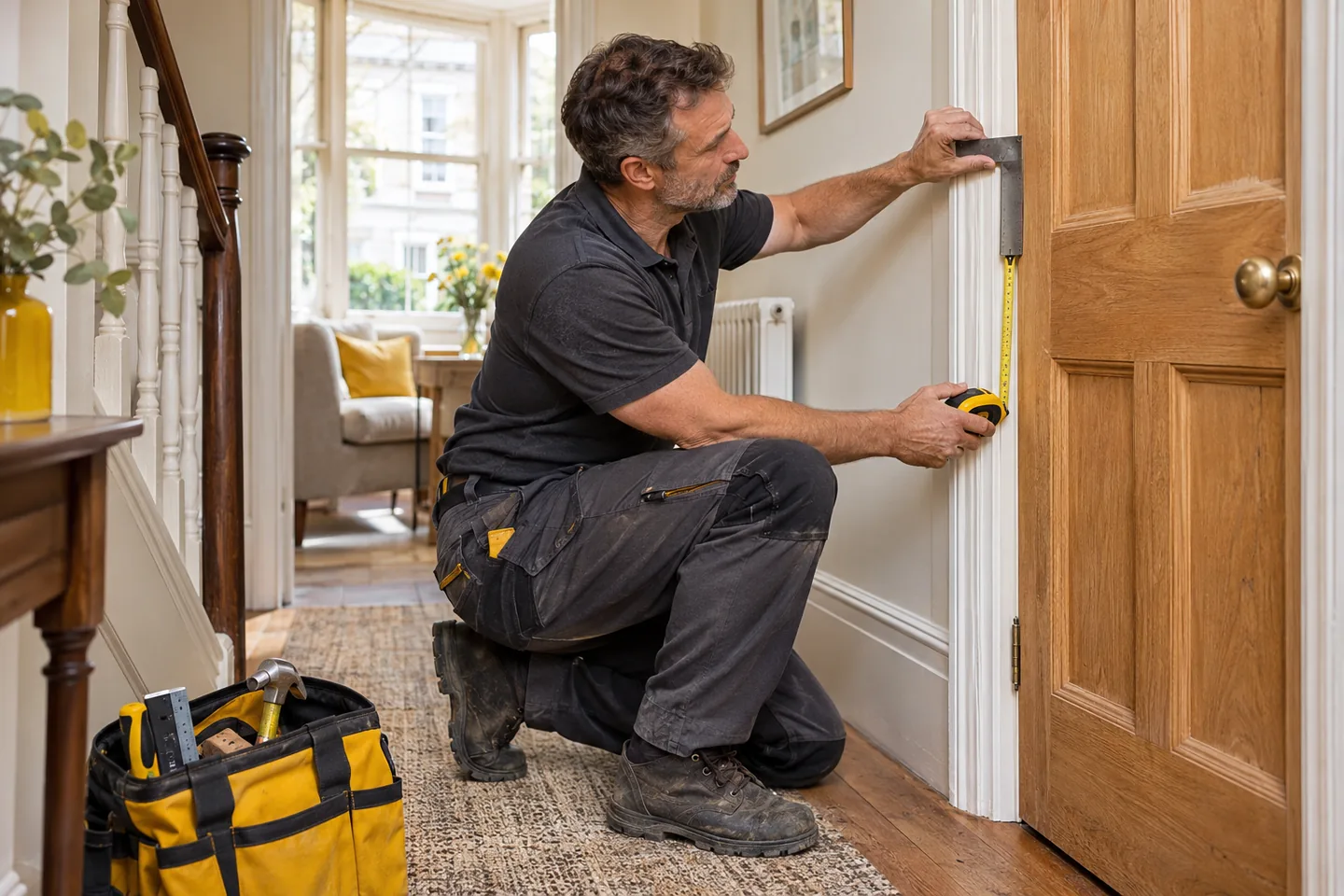
Carpentry services.
Work worth discussing.
Can you repair an interior door that catches?
We can assess the door, hinges, frame and nearby floor to understand the obstruction. Tell us where it catches, when the problem began and whether flooring or other work has changed. The repair depends on those findings; trimming the door is not automatically the right answer.
Can carpentry be combined with other repairs at my London property?
We can discuss a list of timber, furniture and fitting repairs alongside our other services. Send the complete list and your postcode so we can review materials, access and working time. Decoration, flooring or other trades may need a separate arrangement or a particular order.
THE SERVICE
We look at the connection, the movement and the timber.
Our carpentry work covers practical timber repairs and fitting tasks in London homes and workplaces. A door that no longer closes properly, a drawer rubbing against its cabinet or a loose furniture joint can have several possible causes. We examine the accessible parts and discuss what has changed before deciding how to repair the fitting. The visible symptom is the start of the enquiry, not a diagnosis.
We review the condition of the material around the hardware as well as the hardware itself. A hinge can be sound while the screw holes have broken down; a new handle may not suit the existing drilling; an old drawer can have a problem in the frame rather than its runner. We explain the repair proposed and identify any wider condition that needs assessment before work is agreed.
Useful details for your enquiry
- Photos of the whole fitting and the area that is not working.
- Details of rubbing, movement, noise or a connection that has loosened.
- Any recent flooring, decorating, moving or dismantling work.
- The material, available replacement hardware and product information.
- Access, permission and the finish you want left after the repair.
PLAN THIS SERVICE
Tell us which fitting needs repair
Use the details you know to prepare an enquiry. We assess the condition, materials, access and actual working time before a visit is agreed.
Tell us which fitting needs repair
Select the work and add relevant quantities or measurements. The result helps us review your enquiry; the final repair and price still need confirming.
WHAT THIS WORK INVOLVES
Door catches / will not close
Door type, contact point, hinge attachment and recent changes.
What we need to check
Limits & related work
Working time needs a job-specific assessment. Measurements and quantities describe the work; they do not establish a completion time or a confirmed price.
Explore a labour budget
- Record door type, symptom and hardware details without assigning an automatic repair method.
- Dimensions and quantities organise the enquiry; they do not set a completion time.
- Any proposed material removal or change to a specialist item needs assessment.
Your selections stay in this browser until you choose to email them. An email draft does not book a visit. Calculations add no assumed waste or hidden allowances.
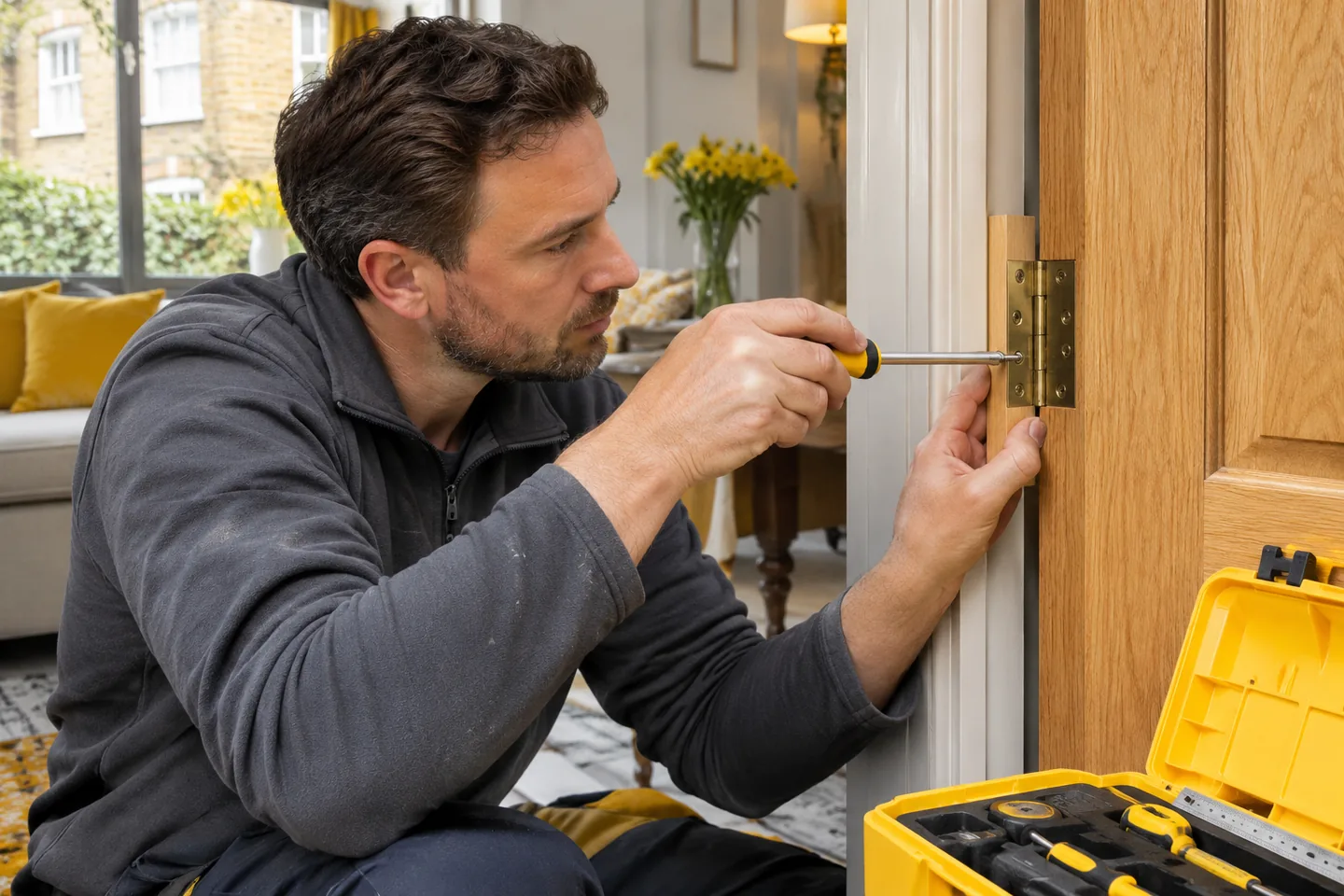
A door problem needs an assessment before adjustment.
We check how the door moves through its opening and where it contacts the frame or floor. The gaps, hinge attachment, latch position and surrounding finishes can all help explain the problem. We ask whether it has always caught or whether the fault followed a change such as new flooring, decorating or a loose fitting. That history helps us review the work required.
The next action depends on what we find. An adjustment to the hardware is different from removing material from the door or repairing a damaged fixing area. We discuss the visible effect and any finishing work before making a change. Doors with specialist performance requirements or product-specific restrictions need the appropriate assessment; we do not treat every door as suitable for the same general adjustment.
COMPARE THE WORK
What is the fitting telling us?
Select the closest symptom for your enquiry. The actual cause and working time need assessment at the property or from suitable product information.
| Symptom | What we examine | Possible agreed work | Checks afterwards |
|---|---|---|---|
| Door catches at an edge | Hinges, gaps, frame and contact point | Adjustment or a suitable local repair | Movement, clearance and closing |
| Hinge or handle is loose | Hardware, holes and surrounding timber | Fixing repair or compatible hardware | Attachment and operation |
| Drawer rubs or will not run | Runner, drawer, front and cabinet position | Adjustment, repair or product-specific part | Travel, alignment and stops |
| Cabinet joint has movement | Original connection and material condition | Suitable joint or component repair | Connection and intended use |
| Door issue after flooring work | New floor, threshold and door arrangement | Assessment of a suitable carpentry adjustment | Clearance and item restrictions |
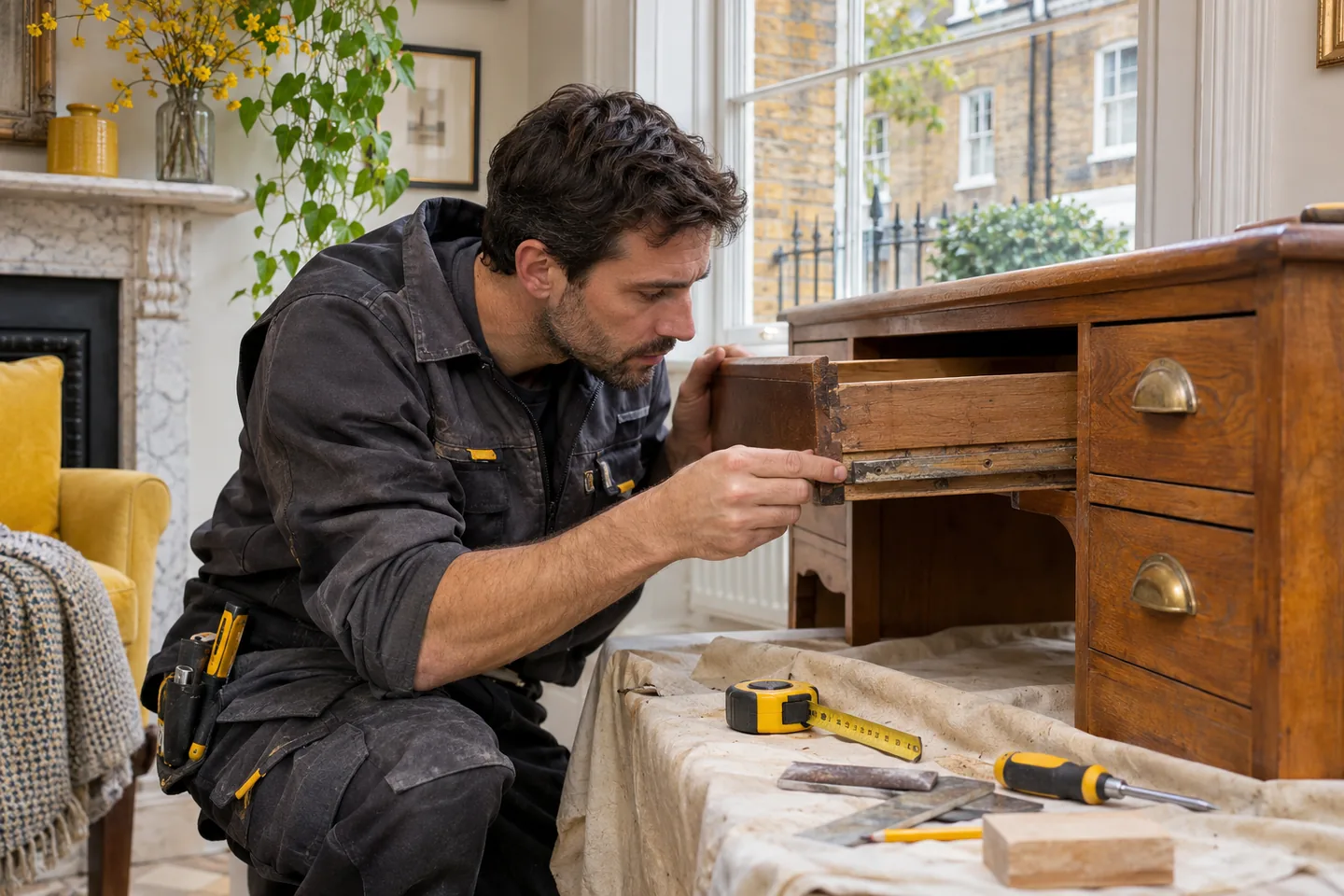
Hinges rely on the timber around the screws.
We look at the hinge attachment on both the door and frame. Loose screws, worn holes, damaged timber or an incorrectly seated hinge can affect the movement. Simply tightening a screw may not repair a fixing that no longer has sound material to hold it. We examine the accessible condition and explain whether the connection, timber or hardware needs attention.
Where a local timber repair or a different fitting arrangement is appropriate, we agree it before proceeding. The size and position of a repair matter to the way the hinge is supported and how the door sits. We check the movement as the work progresses, rather than making several changes and assuming the result will be correct when everything is tightened.
Handles, catches and the position of the closing parts.
A handle that feels loose or a latch that misses its receiving position may need more than a new visible part. We check the attachment, existing holes and relationship between the door and frame. If the door is out of alignment, changing a catch position alone can conceal the symptom without addressing the movement that caused it. We discuss the parts together.
Before fitting replacement hardware, we compare its dimensions and fixing pattern with the existing arrangement. New holes or a differently sized plate can affect the appearance and the timber left around the connection. Tell us if you have already purchased a replacement and send the product details. Specialist locking or security work needs to be discussed as its own enquiry, not assumed to be included in a general carpentry visit.
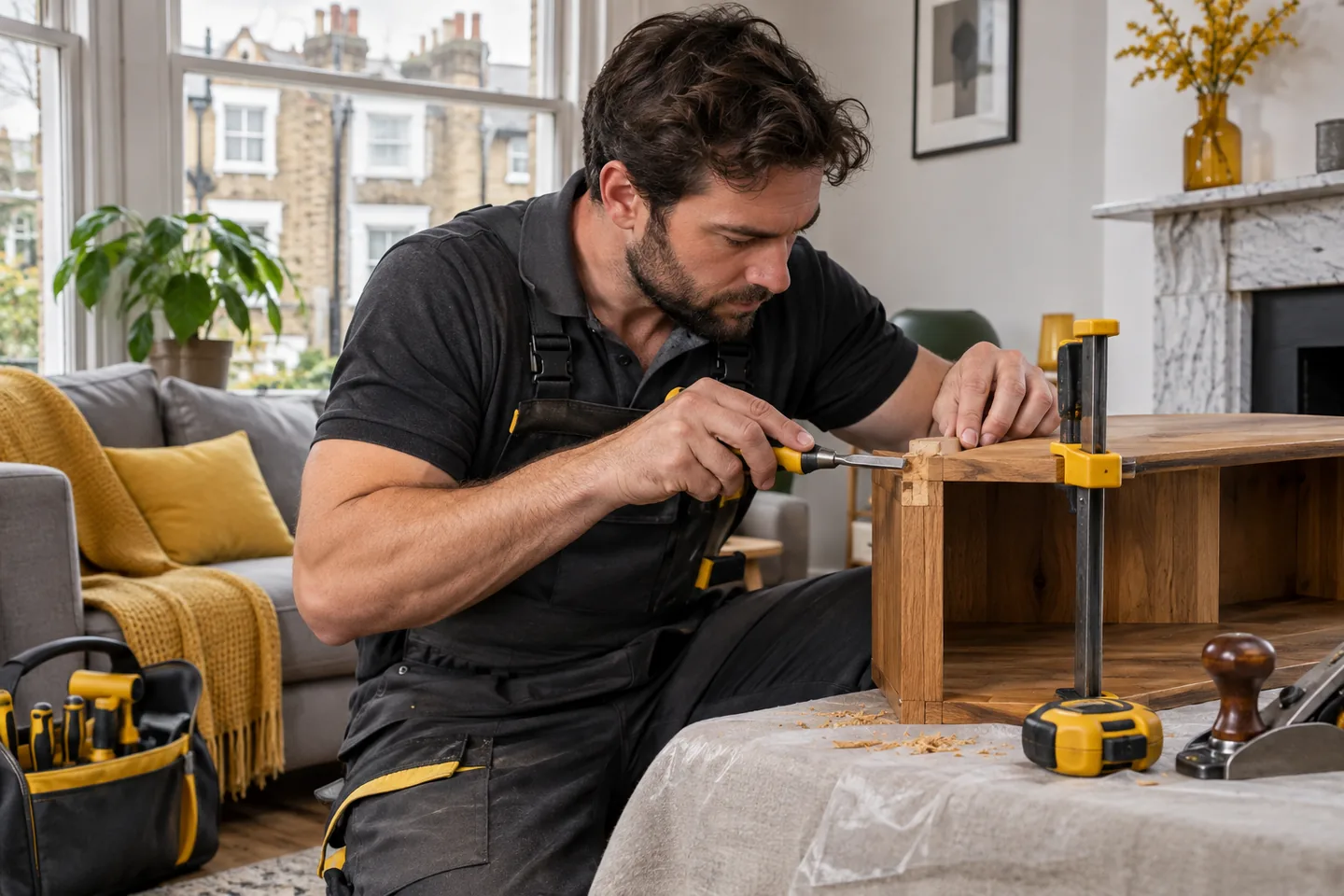
Drawers need their frame and runners checked together.
We inspect the drawer, its runners and the surrounding cabinet where accessible. A rubbing front can come from the way the cabinet stands, a worn guide, a loose runner or damage to the drawer itself. We check the movement through the intended travel and look at the connection points before deciding whether adjustment, repair or a replacement component is needed.
Older timber guides and modern manufactured runner systems do not always use interchangeable parts. We discuss the available repair and any product-specific replacement. If a drawer or cabinet is being reassembled after dismantling, the condition of the joints and fixing holes also matters. Our furniture assembly service can be considered with the carpentry repair when the work involves both rebuilding and adjustment.
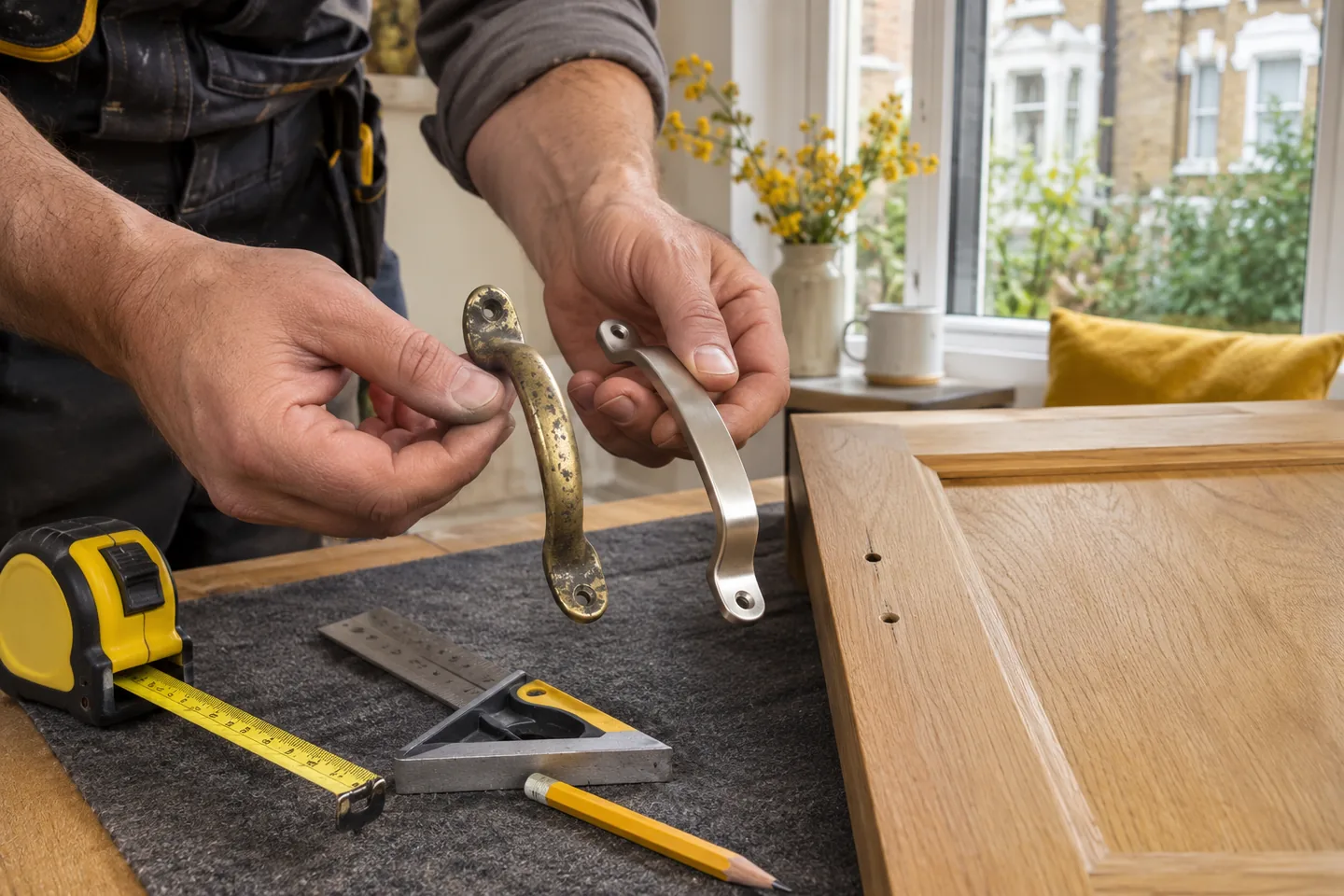
Cabinet joints and small timber fittings.
We examine a loose joint to see how its parts were intended to connect and which material has failed. The repair may involve a local timber connection, compatible hardware or replacing a damaged component, depending on the construction. We discuss what will remain visible and how the fitting is used before agreeing a repair to a cabinet, shelf or other timber detail.
Not every broken panel can be restored by adding more screws or adhesive. Thin material, previous damage and limited access can restrict the repair. We explain those limits rather than making an alteration without agreement. Where a wall attachment forms part of the problem, we can discuss the relevant hanging and wall-mounting work so that the support behind the timber fitting is also considered.
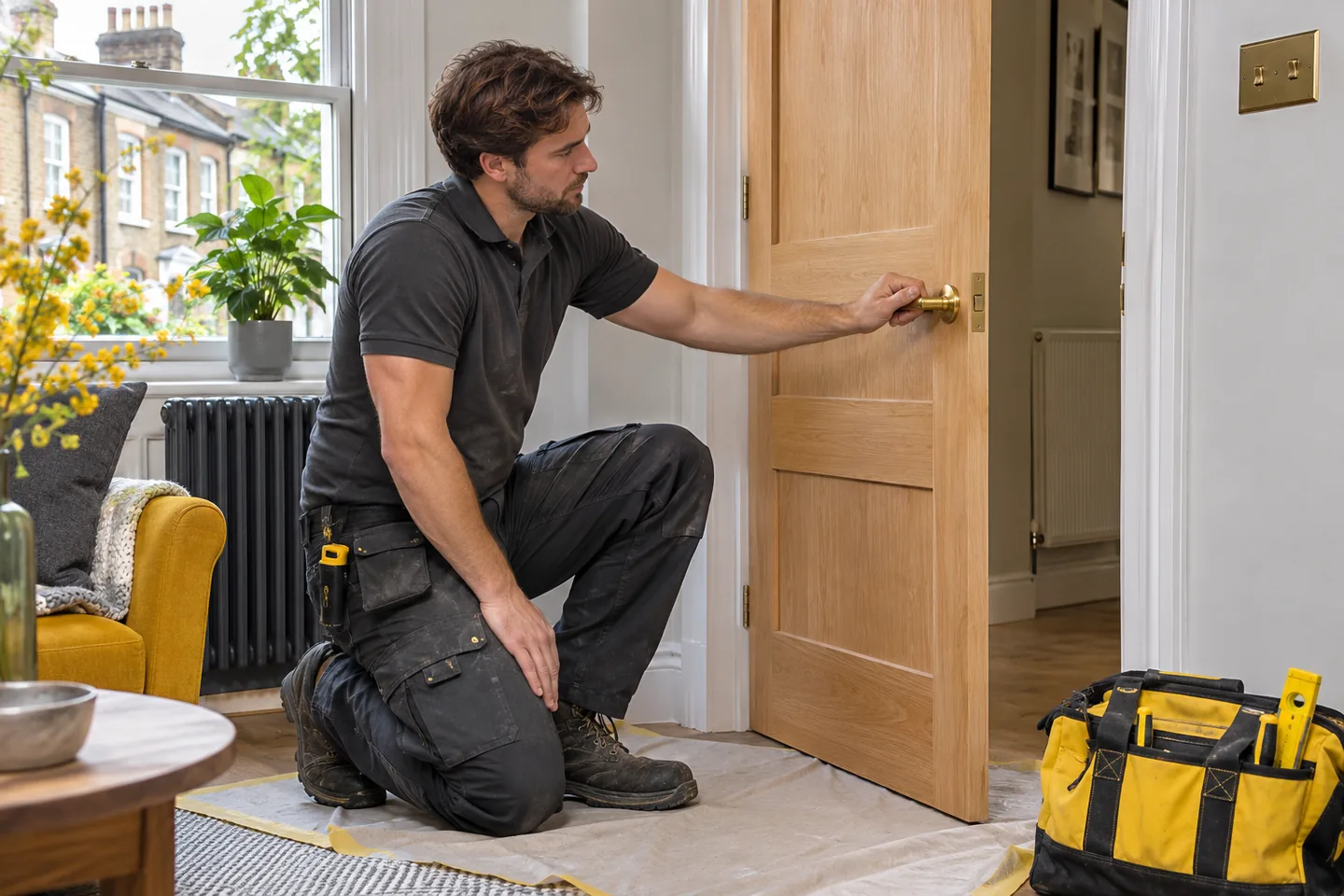
We prepare a working area suited to the repair.
We review the space needed to remove, support or adjust the item without damaging nearby surfaces. Some work can be done in position; other repairs require a door, drawer or panel to be supported elsewhere. We discuss the practical arrangement and protect the immediate working area as the task requires. Tell us about fixed furniture, narrow access or surfaces needing particular care.
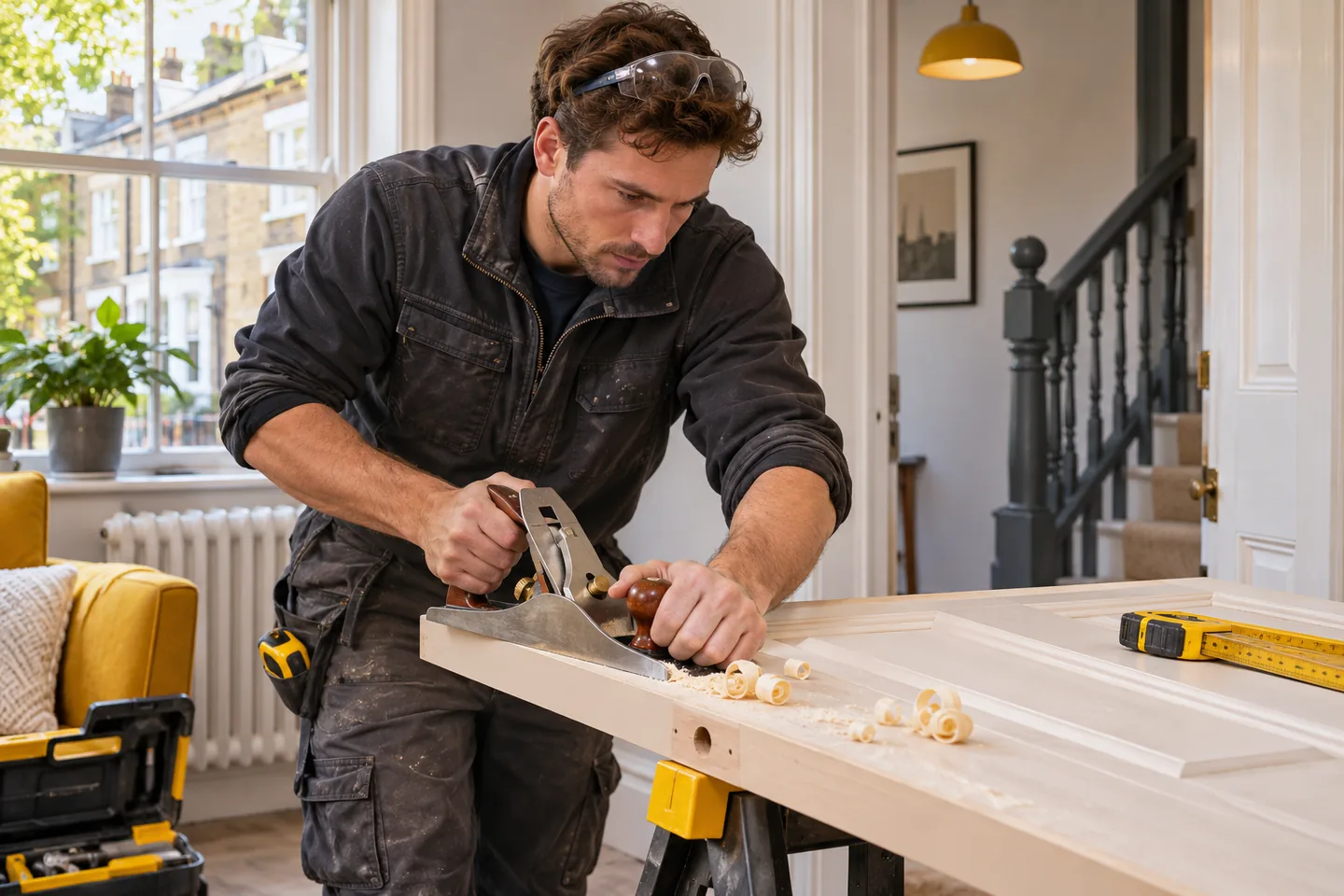
We use measuring tools, appropriate hand tools, driver bits, clamps and other equipment suited to the timber and connection. A hand plane or local cutting adjustment is only used where that work has been agreed and is appropriate to the item. We keep the condition of the existing finish in view, because removing material or changing a fitting can create a separate need for preparation and decoration.

Repairs and finishes need the right order.
Where a door or timber fitting needs decorating, we discuss the carpentry first. A new finish will not correct a loose hinge or a catching edge, and later adjustment may disturb fresh paint. We identify the repair and the areas that will need making good so that the work can be arranged with the proposed painting and decorating rather than treating them as unrelated jobs.
Flooring can also change the conditions around a door or threshold. If a new finish is planned or has already been installed, tell us its details when enquiring. We can review the carpentry alongside our flooring service where relevant. We do not assume that altering a door is appropriate without understanding the floor, the item and any specialist requirements.
The handover includes the way the fitting operates.
We check the repaired item in its intended movement and explain what we have done. A door should be reviewed through opening and closing, a drawer through its travel and a repaired joint in the way it will be used. We also look at accessible hardware and any clearance affected by the adjustment. If another condition remains outside the agreed repair, we make that clear.
Some materials or repair products can have use or finishing requirements after the practical work is complete. We explain those requirements for the repair carried out, along with any decoration or component replacement still needed. If you have several issues around the property, include them in an odd jobs or property maintenance enquiry so that priorities and the working arrangement can be discussed together.
BEFORE YOU BOOK
Questions about
the work.
Will you always trim a door that catches?
No. We assess where it catches and why. Hinges, alignment, frame condition and a changed floor can each affect movement. Removing material is a different action from adjusting hardware and may not be appropriate for the door. We explain the proposed repair and any effect on the finish before it is agreed.
Can you replace hardware I have already purchased?
We need its product details and the existing arrangement. We compare the dimensions, fixing pattern and the material around the holes before fitting. A replacement that looks similar may need different drilling or leave a visible difference. We discuss compatibility and any additional timber or finishing work before using it.
What if the screw holes no longer hold?
We inspect the material around the fixing and how the connection is intended to work. Tightening the same screw may not resolve a damaged hole. A local repair or different fitting arrangement may be possible, but its suitability depends on the timber, available space and the item. We explain the proposal before proceeding.
Can you repair a drawer without knowing its brand?
A brand or model can help where the drawer uses a manufactured runner system, but clear photographs are also useful. We examine the accessible mechanism and cabinet before deciding what is needed. Some parts are product-specific, while other timber repairs require assessment of the existing construction. We do not assume that all runners are interchangeable.
Will the repaired area need painting?
It may. Adjusting an edge, repairing timber or replacing hardware can expose a different surface or leave an area needing finishing. We discuss that consequence with the repair. If decoration is required, we can review the related painting work, but a general carpentry enquiry does not automatically include repainting an entire door or room.
Can you tell me how long the repair will take from the symptom?
The symptom helps us prepare, but it is not a reliable duration benchmark. A loose handle in sound material and one with damaged fixing holes involve different work. We review photographs, product details and access, and confirm working time after the condition and proposed repair are understood.
TELL US WHAT NEEDS DOING
Tell us what catches, moves or will not close.
Call 020 3746 0607 with your postcode and photographs of the fitting. We’ll discuss the timber, hardware and practical repair before agreeing the work and available visit.