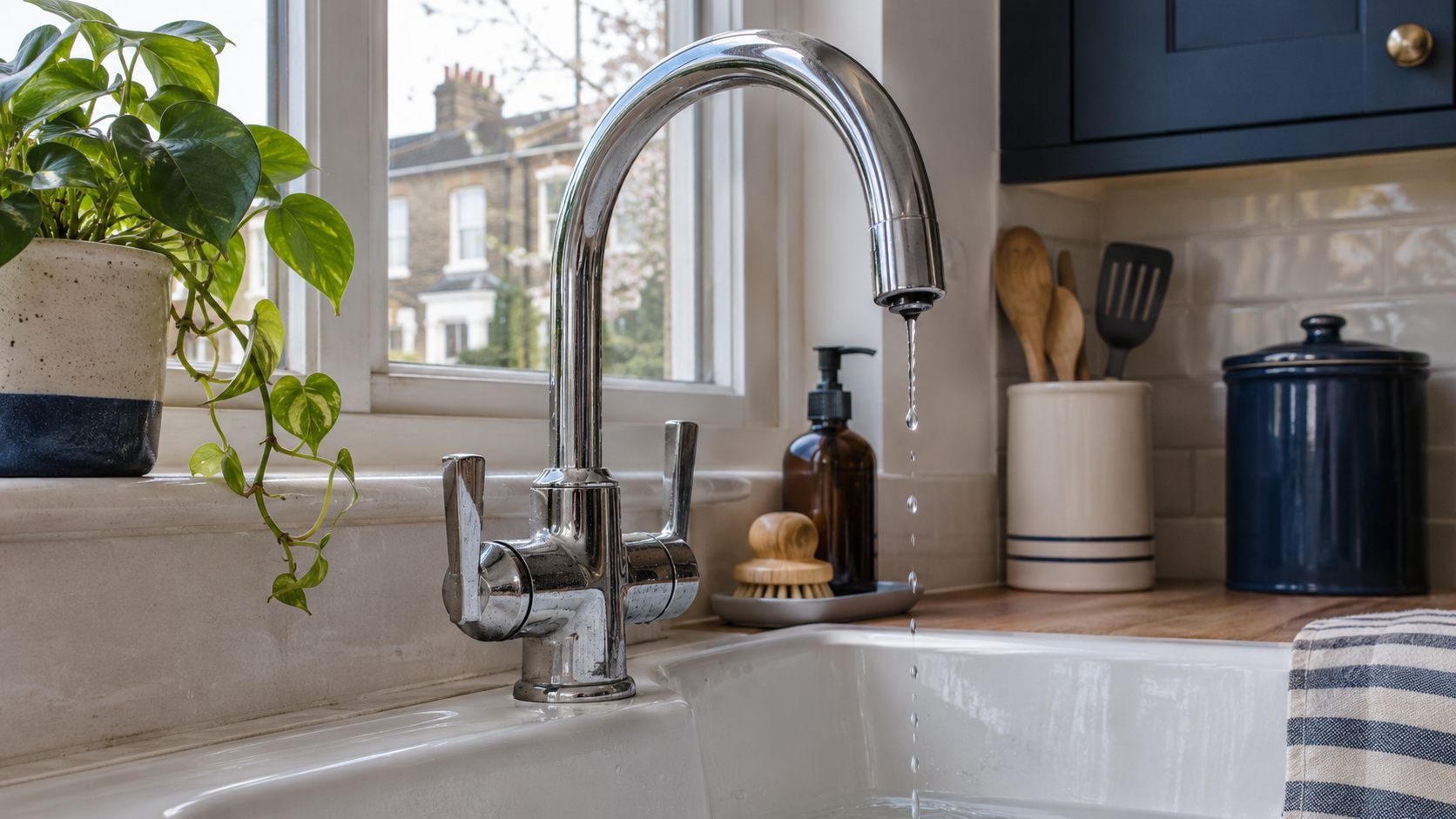
If your tap is leaking, tell the plumber where the water appears, when it happens, how quickly it escapes and whether you can safely isolate the supply. A photograph of the tap and a second photograph beneath the sink usually explain more than a guess about which part has failed. Add the tap’s make or model if you know it, but do not delay reporting an active leak while looking for a label.
That short description helps distinguish a drip from the spout from water escaping at the base, handle or pipe connections. Those are different repair enquiries, even though people often call all of them a “leaking tap”. It also lets the person arranging the visit ask about access and parts before anyone arrives.
Start with the exact place you see water
Look at the tap without taking it apart. Does water drip from the end of the spout after you turn it off? Does it appear around one handle while the tap is running? Is the worktop wet around the tap base, or is the first sign a puddle inside the cupboard? Say which of these you can actually see. If you cannot tell, say so. A precise uncertainty is more useful than a confident diagnosis based on a photograph alone.
Try to separate the point where water appears from the place where it collects. A drop can travel along a pipe or the underside of a worktop before it falls. For example, a wet cupboard floor does not by itself prove that the waste trap is leaking. The water may have run down from a tap connection above it. If it is safe to look, note which surfaces are damp and which remain dry. Do not reach into a cramped cabinet beside electrical equipment or disturb a connection to find out.
The same distinction matters in a bathroom. A damp patch behind a basin, water at the tap base and a drip beneath the basin might be related, but they might also have separate causes. Describe the sequence you notice rather than combining everything into a single assumed fault.
Explain when the leak occurs
The timing gives the plumber a useful clue. A spout that drips with both handles closed behaves differently from a connection that only becomes wet while the tap runs. Mention whether the leak is constant, starts when you use hot water, starts when you use cold water, or appears only after the sink has been filled and emptied. If the tap is a mixer, say whether one side seems to make a difference.
You do not need to run the water repeatedly to prove the point. One safe observation is enough, especially if water is reaching a cupboard, floor or electrical fitting. A brief note such as “water appears beneath the left-hand side of the sink within a minute of turning on the cold tap” is far more useful than “the tap has been bad for ages”. If you have seen the leak only once, give the date and what was happening at the time.
Estimate the amount in ordinary terms. A drop every few seconds, a thin trickle and a connection that sprays water are not equivalent. Avoid a false measurement if you have not made one. Say whether a bowl catches the water, whether the cupboard floor is becoming wet, and whether the leak is getting worse. An active flow that cannot be contained should be reported as such when you call.
Take two useful photographs
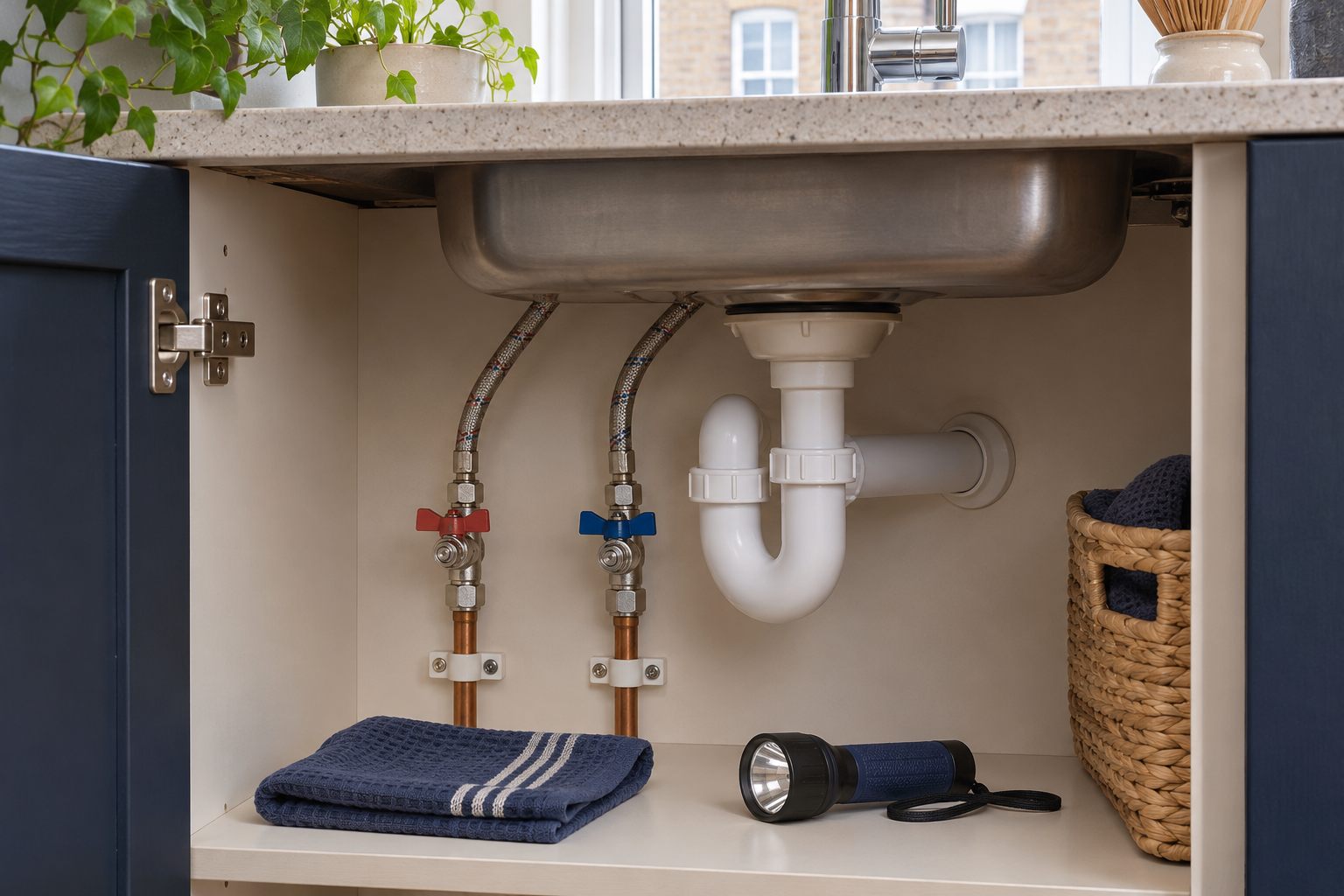
A clear photograph of the whole tap shows the type of fitting and where it sits. Include the handles, spout and surrounding worktop or basin. Then take a wider photograph of the accessible space beneath it, if that can be done without moving pipes or exposing yourself to water near electrics. The second image can show whether the tap connections are visible, whether there is room to work and whether storage or a fixed panel blocks access.
If you can see a particular wet point, take one close photograph as well. Good light matters more than an elaborate video. Put the camera far enough back to keep the location recognisable; an extreme close-up of one shiny nut may give no context. A short video can help with an intermittent drip, but keep it brief and do not operate a fitting just to create footage if doing so makes the leak worse.
Photographs should not be presented as a diagnosis. They are a way to show what you have observed. If the area is difficult to reach or unsafe, skip the photograph and explain why. The plumber can assess the connection on site.
Say whether the water can be isolated
For an active leak, the first practical question is whether the water supply can be stopped safely. Thames Water advises using the inside stop valve as the quickest normal way to turn off a home’s water; it says the outside valve should be used only in an emergency. If you already know where the inside valve is and can operate it without force, tell the plumber whether it has stopped the flow. If a valve is stuck, inaccessible or unfamiliar, say that instead of forcing it. A plumber may need to discuss the next safe step with you.
Some taps also have local isolation valves on their supply pipes. Their presence is useful information, but do not assume a valve works or that it isolates the particular leak. If you have safely used one before, say which side you turned off and what happened. If you have not, a photograph is enough. Never pull at pipework or dismantle a fitting while the supply is live.
Water near sockets, appliances, switches or exposed wiring changes the priority. Keep away from the wet electrical area and tell the person taking the call exactly what is affected. Electrical assessment may be needed in addition to the plumbing repair. The site offers electrical repairs as a separate service; do not treat a wet socket as an ordinary tap job.
Identify the tap and surrounding fittings
If you know the manufacturer or model, share it. A product page, instruction booklet or receipt can help. If you do not have any of those, describe the visible arrangement: one lever or two handles, wall-mounted or mounted on the basin or worktop, separate hot and cold taps or a mixer. Mention whether the tap has a pull-out spray, filter connection or other extra feature. These details can affect the parts and time required.
Do not buy a replacement part based only on a photograph unless the plumber has confirmed compatibility. Similar-looking taps can use different internal components and connections. If you already have a replacement tap, send its product link or packaging details and say whether all supplied fittings are present. A visit to replace a complete tap is a different scope from a visit to investigate a drip.
Access matters as much as the model. Tell the plumber if the underside of the tap is inside a narrow cupboard, behind a fixed panel or beside a built-in appliance. Note whether the cabinet is swollen, the worktop is damaged or a previous repair has left unusual fittings. These observations help the business plan the visit, but the final repair approach still depends on what is found on site.
Prepare the space without disturbing the plumbing
Clear loose items from the sink cupboard if the area is dry and safe to reach. Leave fixed panels, pipe clips and connections in place. If water is collecting, use a container or cloth only where you can do so safely, and explain that this is a temporary measure rather than a repair. Keep photographs of any damaged items or surfaces before moving them, particularly if the leak has affected a rented property or another part of the building.
Make sure the person who will provide access is available and knows where the tap is. For a flat, mention any building entry system, concierge arrangement or restricted working hours. If the property is rented, tell the landlord or managing agent promptly and establish who can authorise the repair. Citizens Advice recommends reporting repair problems to a landlord and keeping useful details of the problem in writing. Do not assume the person booking the visit can approve extra work on behalf of an owner.
If water has reached flooring, cabinets or a wall, include that in the enquiry. Stopping a tap leak and restoring water-damaged finishes are separate decisions. The site’s water damage restoration service is relevant when moisture has affected surrounding materials; the cause of the water must be dealt with before cosmetic finishes are replaced.
Use a brief that a plumber can act on
You can keep the first message short. For example: “The kitchen mixer tap drips from the spout after it is turned off. It began last week and now drips every few seconds. The cabinet beneath is dry. I can send a photograph of the tap and the accessible pipework. The inside stop valve is under the sink and I have not needed to use it.” That gives the location, timing, severity and access without pretending to know the failed part.
For a more urgent example: “Water is running into the sink cupboard when the cold tap is used. I have stopped using it and turned off the inside stop valve, which appears to have stopped the flow. The cupboard base is wet; no electrical fitting appears wet. Please advise on availability and whether you need more photographs.” If the valve has not stopped the flow, say that plainly and call rather than relying on an online form.
When you contact Emergency Handyman London’s plumbing repairs service, include your full postcode and ask the team to confirm the appropriate service and next available appointment. The site gives 020 3746 0607 as its call number and states that the call line is available 24/7. That does not mean a fixed arrival time has been promised; availability and the work are discussed for the particular job.
What happens after the description
The plumber still needs to inspect the fitting. A drip at the spout might suggest an internal component, while water at a connection points to a different part of the installation, but photographs and symptoms cannot settle every case. Hidden damage, previous modifications, seized valves or an unsuitable replacement component can change the scope. A sensible enquiry makes room for that uncertainty.
Before work begins, confirm what is being assessed, whether a repair or replacement is proposed, what parts are needed and how the price will be agreed. After the work, ask to see the tap operated and the repaired area checked for leaks. If the cabinet or adjacent surface has been wet, ask what should remain accessible for observation and whether further drying or repair is needed.
The useful preparation is simple: report what you can see, protect yourself from an active leak, share clear photographs where safe, and make access straightforward. That gives the plumber a better starting point while leaving the diagnosis and repair to the person inspecting the tap.
Need help with a leaking tap?
Tell us what is happening and share your postcode. We will discuss the repair and check appointment availability.
Explore plumbing repairs ↗ Call 020 3746 0607 ↗