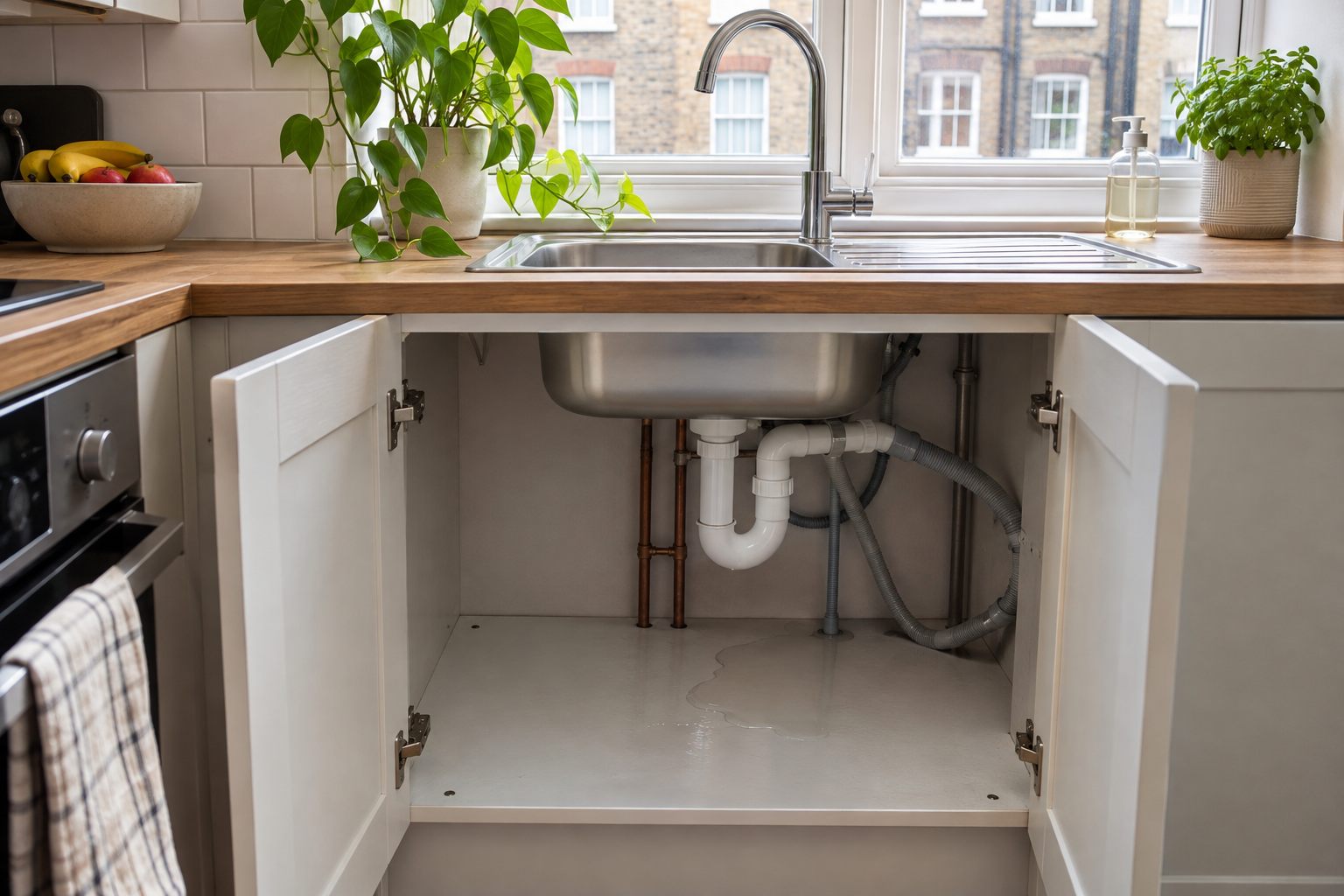
Water beneath a kitchen sink does not always come from the same place. It may appear while the tap runs, while the sink drains, after a dishwasher cycle or even when nobody has used the kitchen. Before calling a plumber, note when the water appears, where you first see it and whether the flow can be stopped safely. Keep away from any wet electrical fitting. Those observations are more useful than taking a joint apart to look for a fault.
Deal with an active leak before investigating
If water is spreading across the cupboard base or floor, concentrate on containing the water and protecting people rather than proving which component failed. Stop using the tap, dishwasher or washing machine connected nearby. If you know the location of your inside stop valve and can reach it safely, Thames Water says this is the easiest normal way to turn off the home’s water supply. It should not need excessive force. If it is stuck, inaccessible or unfamiliar, tell the plumber rather than forcing it. A stiff valve can create another problem just when you need it most.
A small container or towels may reduce damage while you arrange help, provided the area is safe to reach. Do not put your hands into water beside a socket, appliance connection or exposed cable. Do not touch a wet appliance to unplug it. Move away from the affected electrical area and describe the risk when you call. The repair may need electrical assessment as well as plumbing work. If water is reaching a neighbour’s property, a shared part of a building or a flat below, tell the building manager or relevant neighbour promptly as well as arranging the repair.
Turning off the supply is a way to limit an active supply leak, not a diagnosis. Water already sitting in a pipe, trap or sink can continue to drain after the valve is closed. A leaking waste connection may also keep dripping briefly when the sink is emptied. Note what changed after you stopped using the fixtures and, if you used a valve safely, whether the flow slowed or stopped. Do not reopen the supply repeatedly just to create a video of the leak.
Note the timing before looking at fittings
The timing often narrows the enquiry without requiring any dismantling. Does the cupboard become wet only while water is running into the sink? Does it happen several seconds after the plug is pulled and the bowl empties? Is there moisture after the dishwasher drains? Does a drop appear when everything has been switched off for hours? Write down the sequence as you saw it. If the event happened once, include the date and what was in use. Avoid saying that it is definitely a tap or waste problem unless you have actually seen water leave that part.
The location where water collects can be misleading. A drip may travel along the underside of the worktop, a pipe or the back of a cupboard before falling onto the base. A wet patch near the waste trap does not prove the trap leaks. Equally, a damp cupboard wall behind the sink may be receiving water from the worktop edge rather than a visible connection. Look for the first visible wet point, but stop when the view becomes cramped or unsafe. An honest “I cannot see where it starts” is useful information for the person planning the visit.
Try to distinguish a continuing leak from an old wet patch. If you can do so safely, place a dry cloth on the cupboard base without moving any pipes, then see whether a new drip appears during ordinary use. There is no need to run the tap longer than you normally would. A photograph taken before and after can show whether the patch grew. If the floor is already very wet, the leak is flowing quickly or a nearby fitting is electrical, skip this check and arrange help.
Look at the sink area as a whole
The cabinet may contain several separate water routes: hot and cold supplies to the tap, the tap itself, a sink waste, an overflow, a dishwasher or washing-machine hose, and sometimes a filter or small water heater. You do not need to identify every fitting by name. A wide photograph of the open cupboard helps a plumber understand what is present and how much room there is to work. Take a second photograph of the sink and tap from above. If one particular point is visibly wet, a closer image can supplement the wide view.
When photographing, leave connections, clips and valves alone. Pulling a hose forward for a clearer image may loosen it. Do not remove a fixed panel or reach behind an integrated appliance. If cleaning products or stored items block the view and the cupboard is dry enough to approach, move only loose items. If those items are wet, photograph them first in case you need a record of damage. Keep a clear route for the plumber to reach the cupboard, but do not attempt a repair simply because you can now see the pipework.
Describe visible surfaces as well as fittings. Is the cupboard base swollen, soft or discoloured? Is the wall behind the sink damp? Is there water along the front edge of the worktop? Has the laminate lifted? These details help separate stopping the leak from dealing with damage to surrounding materials. A plumber’s visit can address the water source, while cabinetry or finish repairs may be a later decision after the area has dried and the cause has been resolved.
Make a clear, short record
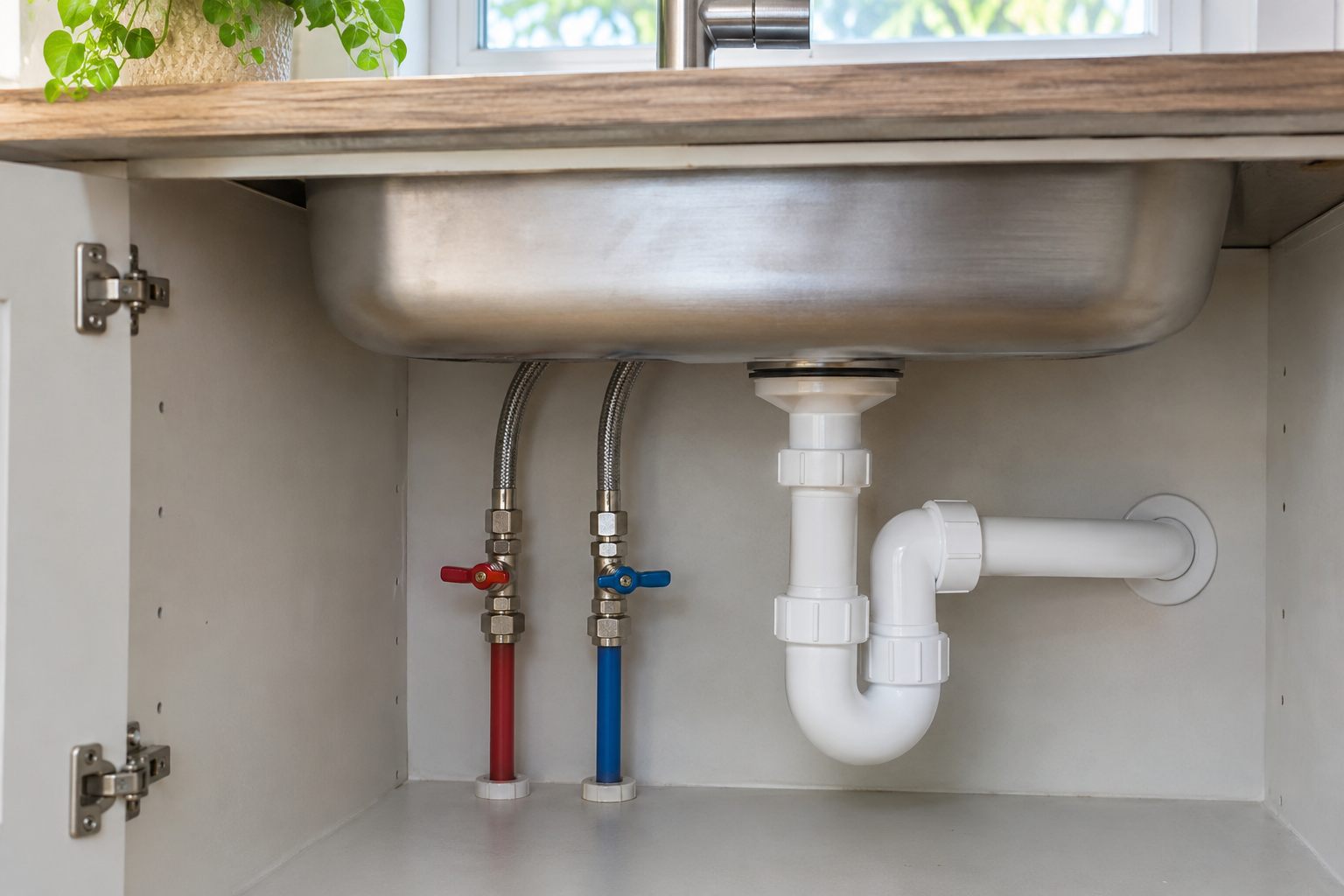
A useful repair note can fit in a few sentences. Include the room, the fixture in use, when the water appears, the apparent amount, any step taken to stop it and any immediate safety concern. For example: “Water appeared on the base of the kitchen sink cupboard after the sink was emptied this morning. I cannot see the starting point. The tap supplies look dry from the front, but I have not moved anything. The cupboard base is damp and I have stopped using the sink.” That describes observations without assigning blame to a component.
Another example is: “A steady drip falls from a visible connection beneath the kitchen sink even when the tap is off. I used the inside stop valve, which appears to have stopped it. There is no wet electrical fitting that I can see. I can send photographs of the cupboard and connection.” If the valve has not stopped the flow, make that clear at the start of the call. A plumber should not have to infer urgency from a photograph or a vague message saying only “the sink leaks”.
Give the full postcode and explain access arrangements. In a London flat, that may mean a concierge, entry code, parking restrictions or an agreed time when the occupier can let someone in. Mention whether another person must authorise the work. If you are renting privately, Citizens Advice advises telling the landlord or letting agent about a repair problem in writing and keeping evidence such as photographs and messages. If the leak is active, make the urgent call as well; written evidence and prompt action serve different purposes.
Decide what to leave for the plumber
Do not tighten a visible nut simply because it is closest to the puddle. A leak can track from elsewhere, and a fitting that looks loose may be fragile or under pressure. Avoid chemical drain cleaners or improvised sealants while the source is uncertain. They can obscure the original problem and complicate inspection. If someone has already attempted a repair, tell the plumber what was changed and when. This is practical information, not a confession that has to be hidden.
If the water seems linked to the dishwasher or washing machine, give the make and model if readily available and say whether the appliance itself appears wet. A plumbing connection and an appliance fault may call for different work. Do not pull a built-in machine out or handle a wet plug to investigate. A wide photograph and a clear account of the last cycle are enough for an initial enquiry. The person arranging the visit can then advise what service is appropriate.
Also tell the plumber if a local isolation valve is visible and whether you have ever operated it successfully. Do not assume a small valve isolates every part beneath the sink. If you used the main inside stop valve, say whether other taps in the home stopped running after any residual water cleared. These observations can help with planning, but the on-site inspection must establish the actual cause and safe repair method.
What to ask before work starts
When arranging kitchen plumbing repairs, ask what information the team needs, whether photographs would help and what availability they can confirm for your postcode. The site gives 020 3746 0607 as its call number and describes a 24/7 call line; that does not establish a fixed arrival time for a particular job. Keep your first description factual so the team can discuss the correct service and next step.
At the visit, show the plumber the area where water first appeared and your photographs of the earlier condition. Ask them to explain the identified source, the proposed repair and whether any part needs replacing. If a second fault is found, discuss the changed scope and price before additional work begins. After repair, ask to see the sink and nearby connections checked under normal use. Keep an eye on any previously damp cupboard or floor, and ask what should remain accessible while it dries.
The most valuable first checks are deliberately modest: stop an active flow when you can do so safely, stay clear of wet electrics, note the timing, photograph the whole sink area and communicate what you actually saw. That gives a plumber a sound starting point without turning a small leak into a larger one.
Need help with this repair?
Tell us what you have observed and share your postcode. We will discuss the work and check appointment availability.
Explore the relevant service ↗ Call 020 3746 0607 ↗